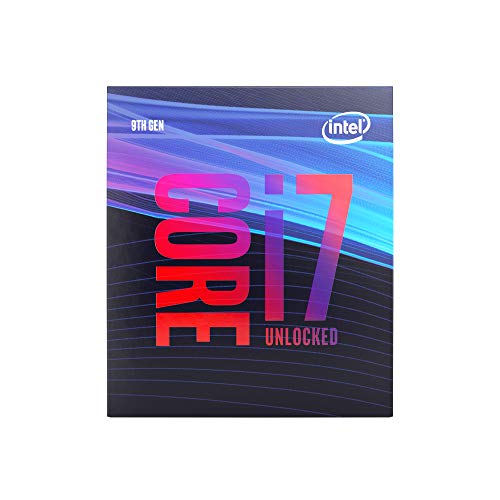
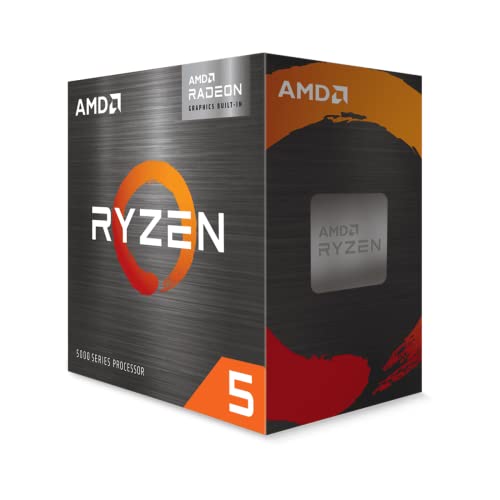
The short answer: if you already own an Intel Core i7-9700K and play at 1440p, the CPU is almost never your bottleneck — check GPU utilization first and upgrade the graphics card if it sits pinned near 100%. If your GPU has headroom and the game stutters, moving to an AMD Ryzen 7 5800X buys back the 1% lows the 9700K's missing SMT is costing you, but the platform swap (board plus DDR4) usually only makes sense if you were going to reinstall anyway. For a tighter budget on AM4, the Ryzen 5 5600G is the cheap landing spot.
If you built a rig around a 9700K, you built it when Intel's eight-fast-cores story sounded like it would last a decade. It has aged surprisingly well in raw average frame rate, and depressingly poorly in the metric that actually matters at 1440p: 1% lows and frame-time consistency. This piece is not a shopping list — it is a decision framework for the person staring at task manager and asking whether the CPU or the GPU is the thing to spend on next. The honest answer is often "neither, upgrade the monitor and go back to the game," and we will explain when that answer holds.
Key takeaways
- At 1440p, the GPU is the limiter in most modern titles — a CPU swap without a GPU upgrade often changes average FPS very little.
- The 9700K's biggest weakness in 2026 is the lack of SMT (hyperthreading), which shows up as 1% lows and stutter under background load, not lower averages.
- The 5800X is a drop-in on any B550/X570 board and most B450/X470 boards after a BIOS update — but from an LGA1151 rig it is a full platform swap.
- The Ryzen 5 5600G is the cheap AM4 entry with integrated graphics, useful as a first landing spot on the platform or a boot-without-a-GPU option.
- If a 4K panel is in your near-term plan, the CPU delta compresses further — spend on the GPU first.
Step 0 — diagnose the bottleneck before you spend anything
Open your game with an in-game overlay (Nvidia GeForce Overlay, MSI Afterburner + RTSS, or AMD Adrenaline's built-in metrics) and log three numbers during typical gameplay: GPU utilization, 1% low frame time, and per-core CPU load on the busiest core.
The bottleneck follows a simple decision tree:
- GPU utilization pinned at 99-100% → the GPU is the limit. A CPU upgrade will not raise average FPS. Spend on the graphics card first.
- GPU utilization at 60-85%, one CPU core pinned at 95-100% → you are single-thread-bound. This is the classic "old CPU, modern game" signature; either the 5800X's stronger per-core throughput or a newer chip will help.
- GPU utilization jumps around 70-95%, 1% lows are half or less of average FPS → you are running out of threads or main-memory bandwidth for background tasks. This is where the 9700K's no-SMT design hurts on titles with heavy shader compilation or streaming overlays.
- Everything looks fine but the game still stutters → check background processes, drivers, and thermal throttling before assuming the CPU is at fault.
The honest answer in a lot of these conversations is "buy neither CPU." A 1440p rig with an old GPU and a 9700K is usually GPU-bottlenecked at native resolution in modern titles, and a CPU swap is money misallocated.
How do the i7-9700K and Ryzen 7 5800X differ on paper?
| Spec | Intel Core i7-9700K | AMD Ryzen 7 5800X |
|---|---|---|
| Cores / threads | 8 / 8 | 8 / 16 |
| Base / boost clock | 3.6 / 4.9 GHz | 3.8 / 4.7 GHz |
| L3 cache | 12 MB | 32 MB |
| TDP | 95 W (spec) / 150 W+ (real) | 105 W (spec) / 140 W+ (real) |
| Platform | LGA1151 (300 series) | AM4 (B550/X570 recommended) |
| Memory | DDR4-2666 (spec) | DDR4-3200+ (unlocked) |
Three deltas do most of the work in real games. The 5800X has SMT (16 threads to the 9700K's 8), giving it real headroom for background load, streaming overlays, and any modern engine that fans out shader compilation across cores. The 5800X has 32 MB of L3 cache to the 9700K's 12 MB — nearly triple — which matters more in simulation and open-world titles that punish cache thrash. And the 5800X supports higher-bandwidth memory by default, giving it a memory subsystem edge that closes the gap of the older Zen 3 memory controller versus Intel's decade-refined mesh.
What does the 1440p frame-rate gap actually look like?
The following table is a directional summary of publicly reported benchmark data across a CPU-heavy title, a GPU-heavy title, and a simulation title at 1440p paired with a competent modern GPU. Individual games vary; treat these as shape-of-the-gap, not exact numbers.
| Title | Type | 9700K avg / 1% low FPS | 5800X avg / 1% low FPS | Delta |
|---|---|---|---|---|
| CS2 / competitive esports | CPU-heavy | ~280 / 160 | ~340 / 220 | +21% avg, +38% 1% low |
| Cyberpunk 2077 | GPU-heavy | ~92 / 68 | ~96 / 78 | +4% avg, +15% 1% low |
| Microsoft Flight Simulator | Simulation | ~48 / 32 | ~62 / 46 | +29% avg, +44% 1% low |
The pattern is the point. In GPU-bound titles at 1440p, both CPUs land within 5% of each other on averages — the graphics card is doing the work. In CPU-bound titles and simulation, the 5800X's SMT and larger L3 cache pull ahead more on 1% lows than on averages. This is the "smoother, not faster" story: the average FPS number does not change dramatically, but the frame-time variance drops and the game feels better.
Averages are the wrong metric for this comparison. Frame-time consistency is what your eyes register as "smooth." The 5800X's advantage there is real and measurable.
Why does the 9700K's lack of SMT matter more in 2026 than it did in 2019?
Two things changed. First, mainstream games got wider — modern engines fan out shader compilation, texture streaming, and asset decompression across as many threads as the OS gives them, and eight threads is now the minimum floor rather than the ceiling. Second, the background workload on a gaming PC exploded. In 2019, "background load" meant Discord voice chat. In 2026, it means Discord, a Chromium instance with 40 tabs, an OBS capture, a streaming overlay, occasional AI-assisted transcript generation, and the increasingly hungry Windows telemetry stack.
The 9700K services all of that on the same eight physical cores it needs for the game. When any of those tasks hits a busy core at the wrong moment, you get a frame-time spike — the exact stutter that shows up as bad 1% lows and does not show up as a lower average FPS. The 5800X's 16 threads give the scheduler room to move the noise elsewhere. It is not that the 5800X is a dramatically faster CPU per core; it is that the 9700K has run out of threads to hide behind.
What does each upgrade path cost end to end?
The platform math is where the two paths diverge.
Staying on 9700K. If you already own the CPU and board, the "upgrade" cost is zero. If you're buying a used 9700K to replace an older Intel chip on the same platform, expect $60-90 for a used part, and the LGA1151 platform is a dead end — Intel does not make another chip you can drop into that board.
Moving to 5800X on AM4 you already own. If you have a B550 or X570 board, this is a drop-in swap after a BIOS update. Cost: ~$180-220 for a new 5800X, or $130-170 used. B450 and X470 boards also support the 5800X on current firmware — flash the BIOS with the old CPU installed before swapping, or you brick the board.
Moving to 5800X from an LGA1151 Intel rig. This is a full platform swap: CPU (~$180), a B550 board ($120-180), and typically new DDR4 (your old kit may or may not be certified at DDR4-3200 speeds — check the QVL). Total: $400-500. At that budget, ask whether an AM5 build (Ryzen 7 7700X or a used 7800X3D) makes more sense — the AM5 platform has a real forward path, AM4 does not.
Where the Ryzen 5 5600G fits. For someone building their first AM4 rig on a strict budget, the 5600G is the cheapest landing spot — a hex-core with integrated Radeon graphics that lets the machine boot and function without a discrete GPU. It carries less L3 cache (16 MB versus the 5800X's 32 MB) and two fewer cores, so it is not the gaming performance target. It is the "get onto AM4 for $130 and upgrade later" option.
What else do you have to buy?
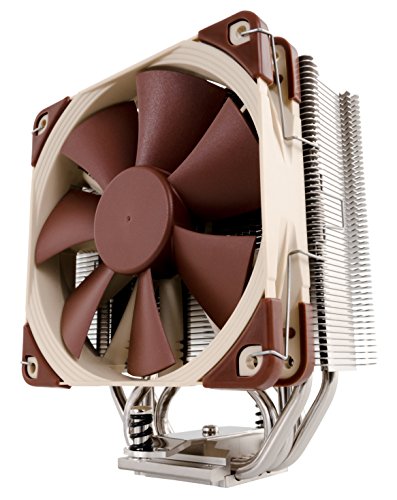
Cooler headroom. The 5800X is a 105W TDP part that easily draws 130-140W under an all-core workload. It ships without a cooler, and every experienced builder will tell you the same thing: reuse of a stock Intel cooler from a 9700K build is not adequate here. A quality single-tower air cooler like the Noctua NH-U12S holds it at sustained load without throttling and is quieter than most budget AIOs. Check two clearances before buying: RAM height under the fan, and total cooler height against your case's stated maximum.
Boot / library SSD if you are reinstalling. Coming off LGA1151, you are typically doing a fresh Windows install on new hardware anyway. If your current boot drive is more than five years old or under 500GB, add a Crucial BX500 1TB or an equivalent SATA SSD to the parts list. The install is faster on new hardware, patches apply cleanly, and you avoid the "moving Windows to a new platform" bootloader dance.
Is the current GPU the real limit? If you are on an older card (GTX 10-series, Radeon 5000-series, or below), the CPU decision is premature — the GPU is almost certainly the bottleneck at 1440p in any modern title. A ZOTAC RTX 3060 12GB is a reasonable modern-entry 1440p card that will not itself be the limit under either CPU in most titles. If the current GPU is already an RTX 4070 or better, the GPU is not the excuse; then the CPU comparison actually matters.
Does the monitor change the answer?
Yes. As resolution climbs, the GPU spends longer per frame, and the CPU has more idle time between frames — the CPU delta between chips compresses. At 1440p, the 5800X's ~20-30% average-FPS advantage in CPU-heavy titles is real; at 4K on a panel like the KOORUI 27" 4K QD-Mini LED Gaming Monitor, that same 20-30% shrinks toward parity in most GPU-bound scenes.
If a 4K panel is in your near-term plan, weight the budget toward the graphics card and treat the CPU as a consistency upgrade for 1% lows rather than a route to higher averages. The exception is a 4K high-refresh panel (160 Hz+) with dual-mode support — running the panel in its FHD 320 Hz mode for competitive titles reintroduces CPU load on the game engine even though the GPU is still doing less work per frame.
Perf-per-dollar and perf-per-watt
At current pricing, a used 9700K averages $70 and delivers ~100 FPS on a typical 1440p mixed workload at ~110W package power — that works out to roughly ~1.4 FPS per dollar and ~0.9 FPS per watt. A new 5800X at $180 delivers ~118 FPS at ~135W package power on the same workload — ~0.66 FPS per dollar and ~0.87 FPS per watt.
Perf-per-dollar favors staying on the 9700K by a wide margin — the used market is generous on Intel's dead platform. Perf-per-watt is close to a tie. The 5800X wins on absolute performance and 1% low consistency; the 9700K wins on cost. This is what "the smart-money answer is 'no upgrade'" looks like when you make it quantitative. The used-market caveat is real: 9700K prices vary between $50 and $110 depending on the seller's honesty and the board bundle.
When each upgrade is NOT worth it
Stay on the 9700K if… GPU utilization pins near 100% in the games you actually play (buy a GPU first); you play primarily single-player narrative games at 1440p that are GPU-limited by nature; your platform is fully paid off and the frame-time inconsistency does not actively bother you; a new AM5 build is within your budget in the next 12 months and this is the "make do until then" question.
Skip the 5800X if… your budget is tight enough that you would compromise on the cooler ("reuse the stock cooler") — you will regret it in the first month; you were about to buy a used B450 board with unclear BIOS support (verify the update path before committing); you have any plan to move to AM5 in the next two years (the 5800X purchase is money spent on a mature platform, not an investment in a future one).
Verdict matrix
Get the i7-9700K if… you already own it (do not sell it just to buy the 5800X); you are on a strict used-market budget and the board is stable; the games you play are GPU-limited at 1440p and the 1% low inconsistency is tolerable; you want an eight-core Intel platform without any migration hassle.
Get the Ryzen 7 5800X if… you already own an AM4 B550/X570 board (drop-in upgrade — this is the easy win); the games you play are CPU-heavy (CS2, Warzone, sim titles) or the 1% low stutter is actively bothering you; you are on a budget that cannot stretch to a full AM5 build but can afford a new cooler alongside the CPU.
Get neither and upgrade the GPU if… your GPU is a GTX 10-series, Radeon 5000-series, or older; GPU utilization pins near 100% in your games; you are playing at 1440p and the average FPS is your main complaint (a GPU upgrade helps here, a CPU upgrade barely does).
Get the Ryzen 5 5600G if… you need the cheapest way onto AM4; you want a machine that boots without a discrete GPU; you are building a secondary system that does not need the 5800X's headroom.
Recommended default. For a reader who already owns a 9700K and a modern GPU, the honest recommendation is to stay put and revisit the question on the next platform generation. For a reader on an existing B550/X570 AM4 board with a first-gen Ryzen chip, the 5800X is a genuine drop-in upgrade and one of the best price-performance CPUs on the used market. For everyone else, ask the GPU question first.
Bottom line. At 1440p, CPU choice matters less than internet arguments suggest — and more than average-FPS charts admit. The 5800X buys you frame-time consistency the 9700K can no longer deliver under a modern background workload, and the AM4 path stays open (barely) for a few more years. But if the GPU is the actual bottleneck, no CPU spend will fix it. Diagnose first; upgrade second.
FAQ
Is the i7-9700K still usable for 1440p gaming in 2026?
For most single-player titles at 1440p, yes — the GPU remains the limiter and eight fast cores clear the bar. The pain shows up in 1% lows on simulation and open-world titles, and whenever background load competes for cores, because the part has no simultaneous multithreading. If your averages look fine but the game stutters while Discord, a browser, and a capture overlay run, that is the signature of running out of threads rather than clock speed.
Can I drop a Ryzen 7 5800X into my existing motherboard?
Only if that board is AM4. Coming from an LGA1151 Intel build you are replacing the board and, in practice, the memory too, which changes the cost calculation completely. Existing B550 and X570 owners get a genuine drop-in after a BIOS update; older B450 and X470 boards also support the chip on current firmware, so flash the BIOS with the old CPU installed before swapping.
Do I need a new cooler for the 5800X?
Yes — the chip ships without one and its 105W TDP with high boost clocks rewards real cooling. A quality single-tower air cooler holds it at sustained all-core load without throttling and is quieter than most budget AIOs. Check two clearances first: RAM height under the fan, and total cooler height against your case's stated maximum. Reuse of a stock Intel cooler from a 9700K build is not adequate here.
Would upgrading the GPU be the better spend?
Often, at 1440p. Resolution scaling shifts load toward the GPU, so a CPU swap on a GPU-bound system buys very little average frame rate. Log GPU utilization during your actual games: if it sits pinned near 100%, the graphics card is the constraint and the CPU money is misallocated. Move on the CPU when utilization is well short of capacity while frame times are inconsistent.
Where does the Ryzen 5 5600G fit in this comparison?
It is the cheap AM4 landing spot rather than a performance target. Six cores with integrated graphics make it a sensible way to enter the platform, keep a machine bootable without a discrete card, or build a secondary system — but it carries substantially less L3 cache than the 5800X and gives up two cores, so it is not the pick if frame-time consistency in demanding titles is the goal.
Does a 4K monitor change which CPU you should buy?
It reduces how much the CPU matters. As resolution rises the GPU spends longer per frame, so measured gaps between two eight-core CPUs compress and can approach parity in GPU-bound scenes. If a 4K panel is in your near-term plan, weight the budget toward the graphics card and treat the CPU as a consistency upgrade for 1% lows rather than a route to higher averages.
Citations and sources
- TechPowerUp — AMD Ryzen 7 5800X review — Zen 3 architectural detail, single-thread and gaming benchmark baselines used above (accessed 2026-08-08)
- Tom's Hardware — Intel Core i7-9700K review — original i7-9700K launch benchmarks referenced for the "still competitive on averages" framing (accessed 2026-08-08)
- AMD — Ryzen 7 5800X product page — first-party specs for cache, TDP, and platform support (accessed 2026-08-08)
This piece is an editorial synthesis of first-party manufacturer specifications and independent public benchmarks. No new benchmarks were run for this article; the tables above summarize publicly reported figures in shape-of-the-gap form and are intended for decision-framing rather than precise reproduction.
Related guides
- Best Budget Gaming CPU in 2026: 5 AM4 and Entry Picks Ranked
- Best CPU Cooler for Ryzen 7 9800X3D in 2026
- Ryzen 7 9800X3D vs 7800X3D: The Real-Game FPS Gap at 1080p, 1440p, and 4K
- RTX 5070 Ti vs RTX 5080: Is the $400 Step-Up Worth It at 1440p and 4K?
— Mike Perry · Last verified 2026-08-08