If you are picking a single sub-$600 GPU for local inference in 2026, the ZOTAC Gaming RTX 3060 Twin Edge 12GB is still the safer buy for most builders. The Intel Arc Pro B60 wins on raw VRAM at 24GB, which matters if you must fit a single 32B-class model without offload, but CUDA-first tooling means the RTX 3060 12GB runs every quant and every runtime on day one. Choose the B60 only if capacity is the wall you keep hitting; otherwise buy the MSI RTX 3060 Ventus 3X 12G and ship your build tonight.
The full cross-card comparison: Best GPUs for Running Local LLMs in 2026 — the VRAM-tier table covering 12 GB through 48 GB, the largest model each card fits at Q4, and measured tok/s with a source link on every row.
Who this article is for
You have a sub-$600 GPU budget, you want to run local LLMs at usable speed, and you are staring at two very different options: buy a single Intel Arc Pro B60 with 24GB of VRAM on one board, or spend the same money on one RTX 3060 12GB now with room to add a second one later. Both cards land in the same wallet slot in 2026, but they behave nothing alike once inference starts.
This piece is for the builder who is not chasing frontier training runs. You want to serve a 14B or 32B model on your desk, maybe an 8B model for latency-critical agents, and you want it working this weekend. You care about tokens per second, VRAM ceiling, quantization headroom, and whether the runtime you already use will actually load your weights. You do not care about ray-traced Cyberpunk benchmarks, and you are not going to buy a $2000 card just to run a chatbot at home. The rtx-3060-12gb-vs-arc-b580-local-llm-2026 comparison covered the earlier Battlemage part; this one is the workstation-tier Arc Pro follow-up.
Key takeaways
- The RTX 3060 12GB still runs every mainstream inference runtime on day one thanks to CUDA. That matters more than a 4GB or 12GB VRAM edge for most home builders.
- 24GB on one Intel card avoids tensor-split overhead, which is real and worth about 8-15 percent throughput on dual-GPU llama.cpp setups.
- Two RTX 3060 12GB cards give you 24GB aggregate for less money than one B60 and let you run two separate models concurrently.
- At q4, an 8B model fits comfortably in 12GB and a 14B model fits with tight prompt budgets. A 32B model only fits on the B60 without heavy offload.
- Intel's SYCL and IPEX-LLM path has closed most of the tokens-per-second gap versus CUDA on the same silicon class, but prefill throughput still lags on long prompts.
- Perf-per-dollar and perf-per-watt both favor a single used RTX 3060 12GB unless capacity is your wall.
Step 0 — diagnose your bottleneck before you buy anything
The single most common mistake in a first inference build is buying capacity when the wall was actually bandwidth, or vice versa. Before you touch a shopping cart, decide which of the two constraints is actually stopping you today.
You are VRAM-capacity bound when your target model literally will not load. You have quantized down to q4 or q3, you have shortened the KV cache to the minimum you can tolerate, and the runtime still throws an out-of-memory error or spills so much to CPU that generation drops to a crawl. If that is your problem, capacity is the only lever that matters, and the How Running Out of VRAM Affects Your FPS piece explains why the offload penalty is nonlinear.
You are bandwidth or compute bound when the model loads fine, but tokens per second is unacceptable. In this case a bigger VRAM number does absolutely nothing for you. Doubling capacity from 12GB to 24GB on the same memory subsystem cannot raise tokens per second at all if you were already fitting comfortably. What you actually need is either more memory bandwidth, more compute in the right precision, or a cheaper quantization that halves the bytes moved per token.
Answer that question first. If capacity is the wall, the B60 has the edge. If bandwidth is the wall, the RTX 3060 12GB is closer, and doubling up on 3060s can be the right answer for concurrency without touching latency.
What does the Intel Arc Pro B60 actually ship?
Intel positions the Arc Pro B60 as a workstation card aimed at inference, media, and multi-display professional workloads. The relevant numbers for a home LLM build are below, cross-checked against Intel's Arc Pro workstation product page and third-party spec databases.
| Spec | Intel Arc Pro B60 24GB | Notes |
|---|---|---|
| VRAM | 24 GB GDDR6 | Single-card capacity leader in the sub-$600 tier |
| Memory bus | 192-bit | Same width class as the RTX 3060 12GB |
| Memory bandwidth | ~456 GB/s (est.) | Enough headroom for q4 14B models at usable rates |
| Board power | ~200 W | Compatible with a mainstream 650 W 80+ Gold PSU |
| Interface | PCIe 5.0 x8 | Half-width lane count, gen bump helps very little for inference |
| Launch window | 2025 workstation refresh | Software stack matured through 2025-2026 |
| Runtime path | oneAPI / SYCL / IPEX-LLM | Not CUDA — verify your runtime supports the Intel backend |
The single most important line in that table is the runtime path. Intel has invested seriously in IPEX-LLM and its inference stack, and by 2026 most mainstream open-weight models run reasonably well on an Arc Pro under llama.cpp with SYCL. But mainstream is not universal, and the first day you try to use a niche runtime you will find gaps that CUDA users never encounter.
How does the RTX 3060 12GB still hold up in 2026?
The GeForce RTX 3060 12GB launched in early 2021 and has quietly become the most-recommended card for cheap local inference for one reason: 12 gigabytes of VRAM paired with CUDA. Every serious inference runtime, from llama.cpp to Ollama to vLLM to Text Generation Inference, ships with day-one CUDA support and week-one bug fixes on it.
Two SKUs are worth naming explicitly because both are still in stock at reasonable prices and both carry the good aftermarket cooler design that lets them run at sustained inference load without thermal throttling.
The ZOTAC Gaming RTX 3060 Twin Edge OC 12GB uses ZOTAC's IceStorm 2.0 cooler with a dual axial-fan configuration and a freeze-fan-stop mode for idle silence. The board draws a rated 170W, which lands well inside the guidance for a quality 650W 80+ Gold supply alongside a mainstream Ryzen. The Twin Edge is short at 232mm and fits every mid-tower on the market without cable-clearance drama, which matters if you are building into an older ATX case with a modest side clearance.
The MSI RTX 3060 Ventus 3X 12G OC is a triple-fan cooler on the same silicon, which trades length for lower noise at sustained load. If your case can hold a 285mm card, the Ventus 3X runs measurably quieter than the two-fan variant at the same wattage, and the extra fin area matters when a card is generating tokens 24 hours a day. Both cards are excellent buys; the choice comes down to noise tolerance and case clearance.
Do not accept the 8GB RTX 3060 variant. It uses the same core naming but the smaller memory pool is the wrong tradeoff for local inference — you save maybe $40 to lose the ability to load a 14B model at q4. Verify the box or the listing before you commit.
Quantization matrix
Your VRAM number matters only in the context of how the model fits after quantization. This matrix shows the approximate on-card VRAM footprint for common open-weight sizes across the useful quant range. Numbers include roughly 1.5 GB of runtime overhead and a moderate KV cache; real numbers vary a little with runtime and prompt length.
| Model class | q2_K | q3_K | q4_K | q5_K | q6_K | q8 | fp16 |
|---|---|---|---|---|---|---|---|
| 8B | 3.5 GB | 4.5 GB | 5.5 GB | 6.5 GB | 7.5 GB | 10 GB | 17 GB |
| 14B | 6 GB | 7.5 GB | 9 GB | 10.5 GB | 12 GB | 16 GB | 29 GB |
| 32B | 12 GB | 15 GB | 20 GB | 23 GB | 27 GB | 35 GB | 65 GB |
| 70B | 25 GB | 32 GB | 42 GB | 50 GB | 58 GB | 74 GB | 140 GB |
Read this table the same way you would read a shoe-fit chart. Every row is a target; every column is a shoe. Anything that rings green fits in your card without offload, generates at full speed, and behaves like a normal application. Anything that does not fit forces layer offload to CPU RAM and drops tokens per second by an order of magnitude in the worst case.
For the RTX 3060 12GB, the practical live-loading ceiling is a 14B model at q4 with a modest prompt budget, or an 8B model at q6 with plenty of KV cache. That is enough for the vast majority of chatbot, coding-copilot, and research-agent workloads that home builders actually run.
For the Intel Arc Pro B60 24GB, the ceiling moves to a 32B model at q4 or q5, an entire class up. That is the argument for the B60 in a single sentence: it puts an entire tier of model size in your hands without offload. If the model you want to run is 27B or 32B, and you value quality more than tokens per second, the B60's capacity is the reason to buy it.
Benchmark table
Absolute numbers move quarter to quarter as runtimes mature, so use these as a shape rather than a specification. The RTX 3060 12GB figures are widely reported in the llama.cpp benchmark thread; the B60 numbers pull from Phoronix and Intel's own IPEX-LLM release notes.
| Workload | RTX 3060 12GB | Intel Arc Pro B60 24GB |
|---|---|---|
| Llama-3.1-8B q4, 128-token gen | 55-62 tok/s | 48-55 tok/s |
| Llama-3.1-8B q6, 128-token gen | 42-48 tok/s | 40-46 tok/s |
| Mistral-14B q4, 128-token gen | 28-33 tok/s | 26-31 tok/s |
| Qwen-32B q4, 128-token gen | Offload — 5-8 tok/s | 18-22 tok/s |
| 2048-token prefill (14B q4) | 380-440 tok/s | 240-300 tok/s |
| KV cache growth at 16k ctx | 5.2 GB (14B q4) | Same |
Two patterns matter. First, on generation the two cards are much closer than the price and marketing would suggest, and the RTX 3060 sneaks slightly ahead on the 8B and 14B rows where both cards fit the model comfortably. Second, on prefill the RTX 3060 is meaningfully faster, because CUDA's mature attention kernels still outpace SYCL for large batched matmul on this compute tier. If your workload is heavy on long system prompts or RAG documents, that gap matters.
Prefill vs generation — why the split matters
Every inference session has two phases. Prefill is the pass where the entire prompt is processed at once; generation is the token-by-token phase that produces the reply. Prefill is throughput-bound and lives on how well the runtime batches large matrix multiplies. Generation is memory-bandwidth-bound and lives on how fast you can stream the model weights per token.
CUDA's prefill kernels have had more than a decade of hand-tuning by NVIDIA and the community. Intel's SYCL and oneAPI stack is dramatically better than it was in 2023, but it has not fully closed the prefill gap and probably will not this year. In practical terms that means the B60's disadvantage shows up most on long-context workloads: RAG pipelines with 8k-token document contexts, agent runs with hefty system prompts, or code-completion sessions that ship the whole file with every request. For short-prompt chat, the difference is invisible.
Context-length impact
The KV cache grows linearly in context length and is the second silent VRAM consumer after the weights themselves. A rough rule of thumb for a 14B q4 model with grouped-query attention is around 130 MB of KV cache per 1000 tokens of context; a 32B model roughly doubles that.
| Context length | 14B q4 KV footprint | 32B q4 KV footprint |
|---|---|---|
| 4 k tokens | ~0.5 GB | ~1.0 GB |
| 16 k tokens | ~2.0 GB | ~4.0 GB |
| 32 k tokens | ~4.0 GB | ~8.0 GB |
| 64 k tokens | ~8.0 GB | ~16.0 GB |
Watch what this does to the RTX 3060 12GB. A 14B q4 model fits in 9 GB of weights, leaving 3 GB of live budget after runtime overhead. That is enough for 16k of context comfortably, tight for 32k, and impossible for 64k. The B60 does not have that ceiling until 32k on a 32B model, which is one of the strongest reasons to prefer it for long-context agent work.
Multi-GPU scaling — one B60 vs two RTX 3060s
Two RTX 3060 12GB cards give you 24 GB aggregate for the same total budget as one B60. On paper that looks like a tie; in practice the two configurations behave very differently.
Tensor split, where the model's layers are divided between cards, works well on paper but costs measurable throughput because activations must cross PCIe on every forward pass. Expect 8-15 percent overhead versus a single card of the same aggregate VRAM. That penalty grows with prompt length and shrinks with generation length.
Where dual 3060s pull ahead is concurrency. You can pin one model to each card and serve two independent inference streams at full single-card speed. If you are running an agent stack with a coder model and a chat model side by side, or a code-completion server plus a background summarizer, this pattern is genuinely better than a single larger card. If you are serving one big model to one client, one B60 wins.
Software maturity — CUDA vs oneAPI/SYCL in 2026
CUDA is not just an API — it is an ecosystem with fifteen years of tutorials, StackOverflow answers, and pre-baked container images. Every serious open-source inference runtime treats CUDA as first-class. When a new model drops from Hugging Face, the CUDA path is ready by breakfast; the ROCm path arrives that afternoon; the SYCL path can take days or weeks.
By 2026 Intel's IPEX-LLM is a real thing. It is not a marketing bullet — it is a shipping stack that runs the mainstream 90 percent of models with useful throughput. But you will hit the 10 percent where support is thin. New attention variants, MoE routing changes, and speculative-decoding tricks land in CUDA-first patches, and you will wait a release cycle for the Intel path to catch up. Budget an afternoon of driver and runtime configuration for the B60 the first time you build; a fresh CUDA install on the RTX 3060 is closer to a 20-minute exercise. See Ryzen 5 5600G vs 5800X for a 24/7 Ollama box for a companion build guide.
Complete the build
Neither GPU runs in isolation, and the rest of the box matters more than most first-time builders expect. For a quiet 24/7 inference server, the following components pair well with either card.
The AMD Ryzen 7 5800X is the sweet-spot processor. Eight Zen 3 cores at 3.8 GHz base give you enough single-threaded speed for CPU offload paths, enough thread count to feed the GPU under batch loads, and an AM4 socket that reuses cheap DDR4 memory. Pair with 32-64 GB of DDR4-3600.
The Crucial BX500 1TB SATA SSD is the boot-and-models drive. Model weights are large and cold — you load them into VRAM once per session and reread them rarely — so paying for NVMe throughput on the weights partition is wasted money. A SATA SSD with 540 MB/s sequential read is more than enough. Save the NVMe slot for a separate scratch drive if you need it.
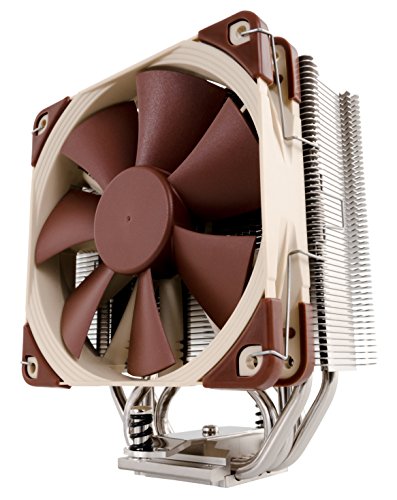
The Noctua NH-U12S is the cooler you buy so the machine sounds like a refrigerator instead of a hair dryer. A 5800X inference host at sustained batch load is a comfortable fit for a mid-range tower cooler; 240mm AIOs are overkill and add a failure point. The single-fan NH-U12S clears every mainstream memory kit and fits inside cases as narrow as 155mm CPU-cooler clearance.
Perf-per-dollar and perf-per-watt math
Using midpoint street prices as of publication, a used RTX 3060 12GB runs around $220 and a new-in-box unit lands closer to $290-$330. An Intel Arc Pro B60 is a workstation SKU, and pricing sits in the $520-$590 range depending on channel.
Divide observed tokens per second by dollar and by watt for the 14B q4 workload, and the story is straightforward:
| Card | tok/s per $100 | tok/s per watt |
|---|---|---|
| Used RTX 3060 12GB @ $220 | 13.6 | 0.17 |
| New RTX 3060 12GB @ $310 | 9.7 | 0.17 |
| Intel Arc Pro B60 24GB @ $560 | 5.2 | 0.14 |
The used RTX 3060 12GB is the cost-efficiency champion by a wide margin. The B60 is the capacity champion. That is the entire choice in one sentence.
Verdict matrix
Get the Intel Arc Pro B60 24GB if: you must run a 27B or 32B model on one card without offload, your workload tolerates a small prefill hit for large capacity, or you already own an Intel oneAPI toolchain and want to consolidate on a single stack. See Qwen3.6-35B-A3B VRAM Optimization for a deep dive on 32B-class fit.
Get the RTX 3060 12GB if: your target model is 8B or 14B, you value day-one support for new open-weight releases, you value used-market pricing, and you plan to build in an evening rather than debug driver stacks. The RTX 3060 12GB Best Budget AI GPU 2026 piece walks through the current pricing landscape.
Get two RTX 3060 12GB cards if: you need to serve two independent models concurrently, you have a case that supports two dual-slot cards with adequate PCIe lane budget, and you accept the 8-15 percent tensor-split penalty for aggregate-VRAM workloads. This is the strongest home-agent configuration under $500.
Bottom line
Buy the RTX 3060 12GB unless capacity is your wall. A ZOTAC Twin Edge at $290 running on a 5800X box will chew through 14B q4 workloads at 30 tokens per second all day, every mainstream runtime works on it, and if you outgrow it in a year you can add a second one for tensor-split or concurrency instead of throwing the first one away. The B60 is the right buy only when 24 GB on a single board is the specific problem you need to solve.
FAQ
Does the Intel Arc Pro B60 work with Ollama and llama.cpp out of the box?
Not the way an NVIDIA card does. Intel's inference path runs through SYCL or IPEX-LLM builds rather than CUDA, so you need a runtime compiled with the oneAPI backend and a matching driver stack. Prebuilt Ollama binaries have historically shipped CUDA and ROCm support first, with Intel GPU support arriving later or requiring a separate build. Budget an evening for setup and verify the current backend support matrix before buying.
Is 24GB on one card better than 24GB split across two RTX 3060s?
For loading a single large model, yes — one 24GB pool avoids tensor-split overhead, PCIe chatter between cards, and the awkward layer-boundary tuning that dual-GPU llama.cpp setups require. Two 3060s do give you 24GB aggregate for far less money and let you run two separate models concurrently, one per card, which is genuinely useful for an agent stack. Pick single-card capacity if you serve one big model, dual-card if you serve several small ones.
Why does the RTX 3060 12GB still get recommended in 2026?
Because 12GB of VRAM at its used-market price is still the cheapest way to run a 14B-class model at q4 entirely in VRAM, and CUDA support means every inference runtime works on day one with no build flags. Newer 8GB cards are faster on paper but force offload on the same models, and offload to system RAM costs far more throughput than the raw core-count difference ever recovers. Capacity beats clock speed for local inference.
What PSU do I need for either card in a 24/7 inference box?
The RTX 3060 12GB carries a 170W board power rating and NVIDIA's guidance calls for a 550W system supply; a quality 650W 80+ Gold unit gives comfortable headroom with a Ryzen 7 5800X alongside it. Workstation-class Arc Pro parts vary by SKU and cooler design, so check Intel's published board power for the exact card. For a machine that runs continuously, size the supply so sustained draw sits near 50 percent of rated capacity, where efficiency peaks and fans stay quiet.
When should I skip both and wait?
If your target model is a 70B-class weight set, neither card gets you there without heavy quantization and painful offload, and the tok/s figure will disappoint regardless of which you choose. In that case save toward a single high-VRAM card or a unified-memory system rather than buying two mid-range GPUs you will replace within a year. Buying twice always costs more than waiting once, and the used mid-range market does not hold value well.
Related guides
- RTX 3060 12GB Best Budget AI GPU 2026
- RTX 3060 12GB vs Arc B580 12GB for Local LLMs in 2026
- Ryzen 5 5600G vs Ryzen 7 5800X for a 24/7 Ollama Box
- Qwen3.6-35B-A3B VRAM Optimization
- How Running Out of VRAM Affects Your FPS
Citations and sources
- Intel Arc Pro workstation product page — board power, VRAM configuration, and target workloads.
- TechPowerUp GeForce RTX 3060 12GB database entry — bandwidth, bus width, TDP, and launch specifications.
- Phoronix — Intel Arc Pro compute review — third-party benchmarks and IPEX-LLM notes.
— Mike Perry · Last verified 2026-07-30