Jetson Orin Nano Super vs Coral USB: Which One Runs an LLM?
One of these boards runs a 3B language model at 43 tokens per second; the other cannot host a transformer at all — and they are sold in the same category.
By Mike Perry, Founder & Editor-in-Chief · Published 2026-09-10 · Updated 2026-10-14 · 17 min read
Coral USB is a 4 TOPS INT8 vision coprocessor with 8MB of SRAM. Jetson Orin Nano Super is 67 TOPS with 8GB of unified memory. Only one of them runs an LLM.
No — the Coral USB Accelerator cannot host a language model. It is a 4 TOPS INT8-only Edge TPU with roughly 8 MB of on-chip SRAM and an ahead-of-time model compiler (Google Coral). The Jetson Orin Nano Super delivers 67 TOPS with 8 GB of unified memory and runs Llama 3.2 3B at 43 tok/s (NVIDIA).
Two products sold as the same thing
If you own a Raspberry Pi and you have gone looking for "edge AI accelerator," both of these come up on the same results page, at prices that feel comparable, with marketing that uses the same vocabulary. That is the whole problem. The Coral USB Accelerator and the Jetson Orin Nano Super are not competing products — they solve two different problems that happen to share a category label.
Coral is a fixed-function vision coprocessor. It takes a quantized, pre-compiled TensorFlow Lite graph and runs it very fast at very low power. It does not run arbitrary models, it does not run PyTorch, and it does not have anywhere to put a language model's weights. The Jetson Orin Nano Super is a complete single-board computer with a CUDA-capable GPU and a shared memory pool, and it will run a quantized 3B transformer at conversational speed.
Readers arrive at this comparison from two directions. Some want real-time object detection on a battery and are being talked into a Jetson they do not need. Others want to run a local chatbot and are about to spend money on a Coral stick that physically cannot do it. Both mistakes are avoidable in one paragraph, which is what the Quick Answer above is for.
This article is editorial synthesis of vendor documentation and published community and academic measurements. No first-party testing is reported. Every number is attributed inline.
Key takeaways
Coral USB: 4 TOPS, INT8 only, ~8 MB on-chip SRAM, USB 3.0 coprocessor. It has no general-purpose memory pool for model weights (Google Coral).
Jetson Orin Nano Super: 67 TOPS, 8 GB unified LPDDR5, 6 CPU cores, 1,024 CUDA cores, at a $249 reference price (NVIDIA Jetson Orin).
The Jetson's published LLM range spans 86.5 tok/s on Llama 3.2 1B INT4 down to 19.1 tok/s on Llama 3.1 8B INT4 (NVIDIA Developer Forums, NVIDIA).
Coral's real strength is vision throughput per watt — 384.6 images/sec on MobileNet V2 at 224×224 in pure inference (Google Coral), which collapses to 54.9 images/sec end-to-end once USB 3.0 transfer is counted (Alasdair Allan).
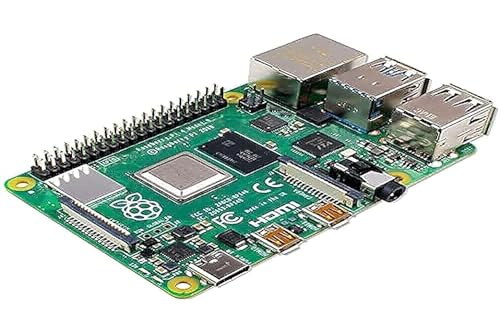
The Coral needs a host; the Jetson replaces one. A Coral build is Coral plus a Raspberry Pi 4 Model B plus storage. Budget accordingly.
Step 0: which problem do you actually have?
Answer this before spending anything. There are only two branches, and they do not overlap.
Branch A — fixed-graph inference on a known model. You want to detect people in a camera feed, classify parts on a conveyor, count birds at a feeder, or read pose keypoints. The model is chosen in advance, it is a convolutional vision network, it never changes at runtime, and you care about frames per second and watts. This is the Coral branch. The Edge TPU was designed for exactly this and it is extraordinarily good at it.
Branch B — generative language models. You want to run a chatbot, summarize documents, extract structured data from text, or drive a local coding assistant. The model is a transformer with hundreds of millions to billions of parameters, weights must be resident, and you care about tokens per second and context length. This is the Jetson branch. The Coral cannot participate at all.
The tell is whether the model's weights fit in on-chip SRAM. Coral's Edge TPU compiles a model into roughly 8 MB of SRAM and runs it there. Anything larger executes partially on the host CPU — the Tobiasz et al. edge-device comparison shows this clearly, with ResNet-50 at 26.96 inferences/sec versus MobileNet V2's 365.82, because the larger model exceeds SRAM and falls back (arXiv:2306.12093). A 3B language model at four-bit is roughly 1.9 GB of weights. There is no version of that which fits.
Spec delta table: Jetson Orin Nano Super vs Coral USB Accelerator
Why the Coral USB Accelerator cannot host a language model
Three hard constraints, each independently disqualifying.
Memory. The Edge TPU has approximately 8 MB of on-chip SRAM and no DRAM of its own. Weights that do not fit in SRAM are streamed from the host across USB, and layers the compiler cannot map execute on the host CPU. A 1B-parameter model at INT8 is roughly 1 GB — 125× the available SRAM. The academic benchmark data shows what happens even at a much smaller scale: VGG-16 lands at 35.73 inferences/sec against MobileNet V2's 365.82 at the same input resolution, precisely because the larger model overflows and falls back (arXiv:2306.12093).
Precision and operator support. The Edge TPU runs INT8 only, and only operators the Edge TPU compiler supports. Transformer attention — softmax over dynamically-sized matrices, rotary embeddings, KV cache reads and writes — is not in that operator set. A converted model does not run slowly on the TPU; it does not run on the TPU at all, and the unsupported subgraph is executed by the host.
Ahead-of-time compilation. Every Coral model is compiled to a fixed graph before deployment. Autoregressive generation is inherently dynamic: sequence length grows each step and the KV cache grows with it. The compilation model and the workload model are incompatible at a basic level.
The net result is the important part: a Coral stick plugged into a Pi running a 1B model gives you the Pi's CPU throughput. You paid for an accelerator that contributed nothing.
What the Jetson Orin Nano Super actually delivers on LLMs
Published measurements from vendor and community sources, ordered by model size. Where a figure came from a 25 W power mode rather than MAXN_SUPER it is noted, because that difference is worth 10–15% on this board.
Two things stand out. First, runtime choice matters more than power mode: NVIDIA's MLC INT4 figure for Llama 3.2 3B is 43.07 tok/s, while community llama.cpp runs at q4_K_M land at 28.7 (SmolHub). That is a 1.5× spread on identical hardware. Second, the "Super" firmware update was not marketing — NVIDIA reports gains of 1.37× to 1.63× over the original Orin Nano across this model set, from the same silicon at a higher power mode (NVIDIA).
All of that at single-digit watts, which is the number that matters on a battery or a solar-powered camera post. Independent measurement on a Raspberry Pi 4 with a Coral attached puts SSD MobileNet V1 system latency at 12 ms, against 61 ms on a Pi 3 (arXiv:2409.16808) — so a Pi 4 host with USB 3.0 is the minimum sensible pairing.
Read the fine print on those numbers, though. Google's figures measure model execution only. Alasdair Allan's end-to-end measurements including USB transfer put MobileNet V2 at 54.9 images/sec over USB 3.0 and 17.2 images/sec over USB 2.0 (GitHub). That is a 7× gap between the datasheet and the application, and USB bandwidth — not the TPU — is the bottleneck. If you plug a Coral into a USB 2.0 port, you have thrown away two thirds of what you bought.
Prefill vs generation, and context length on 8 GB of shared memory
The Jetson's 8 GB is unified: the CPU, the GPU and the display controller all draw from the same pool. There is no separate VRAM budget to spend. After the OS, the desktop session and runtime overhead, plan on roughly 6 GB usable, and run headless to claw back several hundred megabytes.
That budget has to cover two things. Weights are fixed: a 3B model at four-bit is roughly 1.9 GB, an 8B is roughly 4.7 GB. KV cache is not fixed — it scales with sequence length times batch size. An 8B model at four-bit leaves you around 1.3 GB for cache on a 6 GB budget, which is fine for short prompts and runs out on a long document. This is why the 8B row in the benchmark table above sits at 19.14 tok/s in a benchmark with modest context and why real-world long-context use on this board tends to sit lower still.
Prefill and generation stress different limits. Prefill is compute-bound and the 67 TOPS figure is what serves it; community measurements report prompt-evaluation rates around 580 tok/s on this board at 3B (SmolHub). Generation is memory-bandwidth-bound and that is where an LPDDR5 SBC will always trail a discrete GPU with GDDR6, regardless of TOPS.
Perf-per-dollar and perf-per-watt, calculated separately
Comparing these two on one axis is the mistake this article exists to correct, so here are two separate calculations.
For vision inference. Coral at roughly $60 reference and single-digit watts delivering 384.6 images/sec on MobileNet V2 pure-inference is the best images-per-watt-per-dollar on this page by a wide margin — and even at the honest end-to-end 54.9 images/sec over USB 3.0 it still wins, because the Jetson has to spend its GPU on the same job at a much higher power envelope. If your workload is Branch A, Coral is not just cheaper, it is the correct engineering answer.
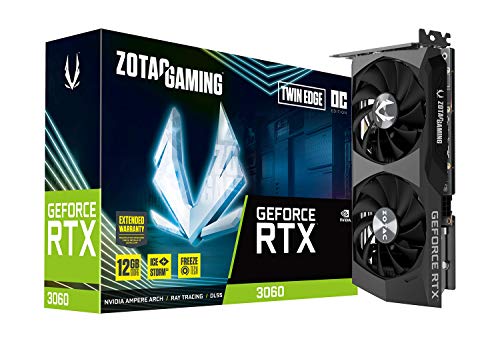
For language models. Coral's throughput is zero, so perf-per-dollar is undefined. Among devices that can actually run the job, the Jetson at $249 delivering 43.07 tok/s on a 3B model is roughly 0.17 tok/s per dollar. A ZOTAC RTX 3060 Twin Edge 12GB runs Llama 3.1 8B at Q4_K_M at 52.2 tok/s (LocalScore) — nearly 2.7× the Jetson's 8B figure, on a card costing roughly twice as much, at several times the idle power. The Jetson wins on watts and size; the desktop card wins on throughput and on how large a model you can load at all.
What to buy alongside each one
For a Coral build:
Raspberry Pi 4 Model B — the reference host, and the minimum you should pair with a Coral because of its USB 3.0 ports (Raspberry Pi). Measured Pi 4 plus Coral system latency on SSD MobileNet V1 is 12 ms (arXiv:2409.16808).
Crucial BX500 1TB SSD — 1 TB at up to 540 MB/s sequential read, for builds that log video alongside inference results.
For a Jetson build:
Yahboom Jetson Orin Nano 8GB Super Board — the official 67 TOPS board. Use the vendor-specified power supply and keep the active cooler fitted; thermal throttling on this board shows up as a quiet decline in tokens per second, not an error message.
Fast storage matters here too — the Jetson loads multi-gigabyte model files on every cold start.
Plugging a Coral into USB 2.0. Throughput drops from 54.9 to 17.2 images/sec on MobileNet V2 end-to-end (GitHub). Use a Pi 4 or newer and the blue ports.
Comparing Google's pure-inference figures to your application's frame rate. 384.6 images/sec is model execution only; 54.9 is what an application sees. Both come from legitimate measurements of the same device.
Assuming the Jetson's 8 GB is 8 GB of model budget. It is unified memory shared with the OS and display. Plan on ~6 GB and run headless.
Benchmarking the Jetson in the wrong power mode. The same Llama 3.2 1B model reports 54.2 tok/s in MAXN and 49.4 tok/s at 25 W (SmolHub). Set nvpmodel deliberately before you record anything.
Running the Jetson on microSD. Model load times dominate cold-start latency, and card wear from checkpoint writes is real. Put models on SSD.
Expecting a converted transformer to "mostly work" on Coral. It will not partially accelerate. Unsupported subgraphs run on the host CPU, and attention is unsupported.
Verdict matrix
Get the Jetson Orin Nano Super if… you want to run a language model locally at 1B–8B scale, you need CUDA and PyTorch rather than TensorFlow Lite, you want one device instead of a host-plus-stick pair, or your models will change over the project's life. 67 TOPS and 8 GB of unified memory is the smallest package that runs a real transformer at conversational speed.
Get the Coral USB Accelerator if… your model is a fixed convolutional vision network, you need frames per second at single-digit watts, you are already running a Raspberry Pi 4 or newer with USB 3.0, and you can compile ahead of time. On that job it is the most efficient option on this page and roughly a quarter of the Jetson's price.
Get neither and use a desktop GPU if… your requirement is a 7B-plus model at conversational speed, or any workload where single-digit tokens per second would frustrate you. A 12 GB card delivers 52.2 tok/s on Llama 3.1 8B (LocalScore) — an order of magnitude above what an SBC does at that size.
Bottom line
If the question is "can the Coral run an LLM," the answer is no, and no amount of configuration changes it — buy the Jetson Orin Nano Super. If the question is "which is better for my camera project," buy the Coral and a Pi 4, because 384.6 images/sec at single-digit watts is a class of efficiency the Jetson does not reach. The only wrong move is buying either one before you have answered Step 0.
As an Amazon Associate, SpecPicks earns from qualifying purchases. Prices and availability change frequently — figures quoted above are indicative and the price shown on the retailer page at the time of your visit is authoritative.
Citations and sources
NVIDIA Jetson Orin developer page — Jetson Orin Nano Super 67 TOPS, 8 GB unified LPDDR5, 6 CPU cores, 1,024 CUDA cores, $249 developer-kit reference price. Accessed 2026-09-10.
Google Coral — Edge TPU performance benchmarks — 4 TOPS INT8 Edge TPU, on-chip SRAM constraint, MobileNet V1 at 416.7 images/sec, MobileNet V2 at 384.6 images/sec, SSD MobileNet V1 at 153.8 fps. Accessed 2026-09-10.
As an Amazon Associate, SpecPicks earns from qualifying purchases; we also earn on qualifying eBay purchases via the eBay Partner Network. Prices shown were last tracked at crawl time and may vary — check the listing for the current price.
Frequently asked questions
Can the Coral USB Accelerator run any language model at all?
No transformer language model of practical size. The Edge TPU is an int8-only fixed-function accelerator with roughly 8 MB of on-chip SRAM, and models must be compiled ahead of time into a supported graph. Even a heavily quantized 1B-parameter model needs hundreds of megabytes of weights streamed through attention layers the compiler does not support, so it falls back to the host CPU and runs no faster than without the stick.
Do I still need a Raspberry Pi if I buy a Jetson Orin Nano Super?
No — the Jetson is a complete single-board computer with its own CPU, GPU and unified memory, so it replaces the Pi rather than plugging into it. The Coral USB Accelerator is the opposite: it is only a coprocessor and requires a host, which is why a Raspberry Pi 4 Model B or similar board is a mandatory line item in any Coral build budget.
How much of the Jetson's 8 GB is actually available to a model?
Less than the sticker figure, because the memory is unified across CPU, GPU and display. After the OS, desktop and runtime overhead you should plan on roughly 6 GB of usable budget, which comfortably holds a 3B model at Q4 with modest context but makes an 8B model at Q4 tight once KV cache for longer prompts is allocated. Run headless to claw back several hundred megabytes.
What power supply and cooling do these need?
The Jetson Orin Nano Super draws materially more than a Pi under sustained inference and ships with configurable power modes; use the vendor-specified supply and keep the active cooler fitted, because thermal throttling shows up as a quiet tokens-per-second decline rather than an error. The Coral USB stick runs at single-digit watts but gets genuinely hot in continuous use and wants airflow or a short duty cycle.
When should I skip both and just buy a desktop GPU?
As soon as your requirement is a 7B-plus model at conversational speed, or any workload where you would be annoyed by single-digit tokens per second. A 12 GB desktop card costs more up front and far more in idle power, but it delivers an order-of-magnitude throughput difference on the same model. Edge accelerators are for power, size and latency constraints, not for saving money on inference.