Who is asking this, and why it is not a silly question
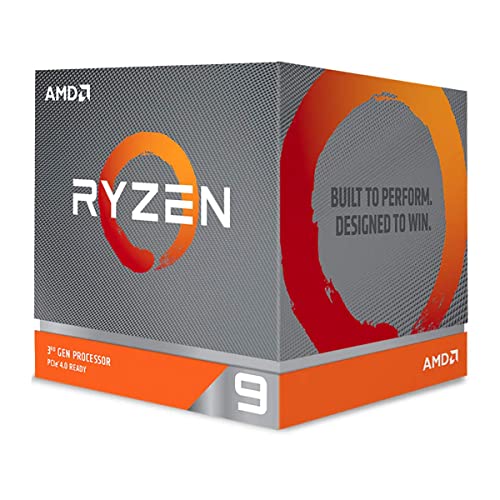
The reader here already owns an AM4 desktop. The CPU is a Ryzen 9 3900X, 12 cores and 24 threads at a 105 W default TDP per AMD's spec listing, with a PassMark CPU Mark of 31,909 per PassMark. A PCIe x16 slot is either empty or holding an old gaming card. The question is whether that much multi-threaded silicon can carry a 14B model by itself, or whether the money has to go to a used 12GB card.
It is a fair question because the CPU is genuinely fast by any normal desktop standard, and because 14B is exactly the size where the answer changes. Qwen2.5 14B has 14,770,033,664 parameters per the Hugging Face model index. Its Q4_K_M GGUF is 8.99 GB per bartowski's quant repository, which is large enough to hurt on system RAM and still small enough to sit entirely inside 12 GB of VRAM.
Two facts decide the whole comparison. First, token generation on a dense model reads essentially every weight once per output token, so the speed ceiling is set by how fast memory can be moved, not by how many cores are waiting for it. Second, prompt prefill is the opposite: it is batched arithmetic, and core count and GPU compute matter there. A 12-core CPU looks worst on the first number and least bad on the second.
This piece is editorial synthesis. Every measured figure comes from a linked public source (Geerling's llama.cpp runs, Hardware Corner's context-scaling data, llama.cpp developer Johannes Gäßler's CPU scaling notes, and vendor spec pages). Where a figure is derived rather than measured, the arithmetic is shown and labelled as an estimate. No first-party benchmarking is reported.
Key takeaways
- The GPU path measures 29.77 tok/s generation and 783.57 tok/s prefill at 4,096 tokens for a Qwen2-architecture 14B at Q4_K_M on an RTX 3060, per Geerling, with a 224 W system peak.
- Hardware Corner measures 31.2 tok/s at 4K and 22.7 tok/s at 16K context for Qwen3 14B Q4_K on the same card, per its RTX 3060 12GB page.
- The CPU path is capped near 5.7 tok/s by arithmetic: dual-channel DDR4-3200 (the 3900X's documented maximum per AMD) moves about 51.2 GB/s, divided by the 8.99 GB weight file.
- Extra cores stop helping early. Gäßler reports that "just 5 threads are enough to fully utilize the memory bandwidth provided by dual channel memory" on a Zen 2 Ryzen 7 3700X, per his llama.cpp performance notes.
- Measured 14B CPU-only results land at 1.20-5.83 tok/s across the systems in Geerling's README, from a Pi 5 up to a Ryzen AI 5 340 laptop.
- Q4_K_M plus a 4K KV cache needs about 9.8 GB, which fits a 12 GB card with headroom. Q6_K at 12.12 GB does not.
Step 0: which bottleneck are you actually hitting?
Before any hardware appears, work out which of three constraints you're up against. They lead to different purchases.
The VRAM ceiling. Say you already run 7B-8B models on an 8 GB card, and 14B spills into system RAM. Your problem is capacity. A 12 GB card fixes it outright, and the rest of this article is about confirming that.
Prefill latency. Maybe your prompts are long: a pasted 20-page PDF, a 3,000-line log, a codebase chunk. Then the wait before the first token is what hurts, not the typing speed after it. This is the metric where CPUs look worst in practice, and it is covered in its own section below.
24/7 power draw. If the box answers a handful of requests an hour and sits idle otherwise, idle watts matter more than peak tok/s. The CPU-only path has a real argument here, and it is covered in the per-watt section.
If none of these apply and you only chat interactively with a 14B model for a few hours a week, skip to the verdict. The answer is the GPU.
How much VRAM does Qwen2.5 14B actually need?
File sizes below come from bartowski's Qwen2.5-14B-Instruct GGUF repository. KV-cache size is derived from the model's published config.json: 48 layers, 8 key-value heads, and a 128-dim head (5,120 hidden ÷ 40 attention heads). At FP16 that works out to 2 × 48 × 8 × 128 × 2 bytes = 196,608 bytes per token, or 0.75 GiB (0.81 GB) at 4,096 tokens. The bits-per-weight column is llama.cpp's own measurement for each quant type, from the llama-quantize README. It is measured on Llama 3.1 8B, but it's a property of the format, so it's a fair proxy for how aggressive each quant is.
| Quant | File size | Weights + 4K KV (FP16) | Fits on 12GB? | Bits per weight (llama.cpp) |
|---|---|---|---|---|
| Q2_K | 5.77 GB | ~6.6 GB | Yes, easily | 3.16 |
| Q3_K_M | 7.34 GB | ~8.2 GB | Yes | 4.00 |
| Q4_K_M | 8.99 GB | ~9.8 GB | Yes, with headroom | 4.89 |
| Q5_K_M | 10.51 GB | ~11.3 GB | Only headless, very tight | 5.70 |
| Q6_K | 12.12 GB | ~12.9 GB | No | 6.56 |
| Q8_0 | 15.70 GB | ~16.5 GB | No | 8.50 |
| F16 | 29.55 GB | ~30.4 GB | No | 16.00 |
A 12 GB card holds 12 GiB, about 12.9 GB. The CUDA context and any desktop compositor take their own share before a single weight loads, so Q4_K_M is the practical choice. Q5_K_M technically squeezes in on a headless box with a short context. Q6_K and above belong on 16 GB-plus cards, or on the CPU path.
Quality is where the numbers get thin. Qwen doesn't publish per-quant accuracy for Qwen2.5 14B, and a perplexity figure borrowed from a different model would be a guess. What the table does show is that Q4_K_M keeps close to 5 bits per weight, and it's the quant most local-inference guides default to for this reason.
Spec delta: RTX 3060 12GB vs Ryzen 9 3900X
| Spec | MSI GeForce RTX 3060 12GB | AMD Ryzen 9 3900X | Why it matters for 14B | Source |
|---|---|---|---|---|
| Memory | 12 GB GDDR6, 192-bit interface | Dual-channel DDR4, up to 3200 MT/s | Holds the model vs. holds the model plus the OS | NVIDIA, AMD |
| Memory bandwidth | 360 GB/s | ~51.2 GB/s (2 × 25.6 GB/s per DDR4-3200 channel) | Sets the generation ceiling (~7× gap) | Hardware Corner, arithmetic |
| Compute | 3,584 CUDA cores | 12 cores / 24 threads | Prefill speed | NVIDIA, AMD |
| Power | 170 W card; 550 W system PSU required | 105 W default TDP | Load draw and PSU budget | NVIDIA, AMD |
| Memory ceiling | 12 GB, fixed | Whatever the board takes | Only the CPU path can load Q8_0 or F16 | NVIDIA |
| 14B Q4_K_M generation | 29.77 tok/s (measured) | ~4 tok/s (estimate, see below) | Interactive vs. patient | Geerling |
Street prices for both parts move weekly, and several catalog listings for these SKUs have shown scrape artifacts this month, so no dollar figure is printed here. Check the live listing before you compare. Prices may vary.
What the GPU path looks like: MSI RTX 3060 12GB and ZOTAC Twin Edge OC
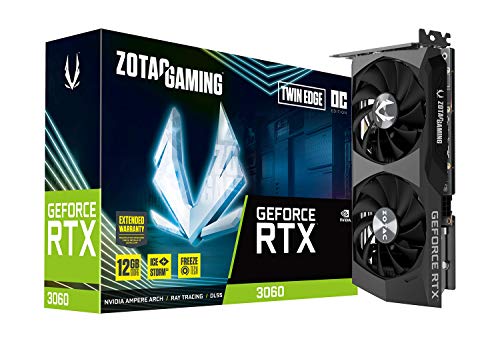
Two cards cover most in-stock 12 GB RTX 3060 buying: the MSI Gaming GeForce RTX 3060 12GB and the ZOTAC Gaming GeForce RTX 3060 Twin Edge OC 12GB. Both use NVIDIA's reference memory configuration of 12 GB GDDR6 on a 192-bit bus and 170 W board power, per NVIDIA's family page. The ZOTAC's listing specifies 15 Gbps GDDR6, a PCIe 4.0 interface and a factory overclock. The MSI uses a twin-fan Torx cooler.
For inference, the differences between the two are cooler size, noise under sustained load, and whether the card fits the case. Tokens per second is identical within noise, because both cards have the same memory bus and the same GPU. For a 24/7 box, favor whichever cooler runs quieter at a steady 170 W. For an older mid-tower, measure the drive-cage clearance first.
The measured numbers for this model class are consistent across two independent sources:
| Source | Model | Context | Prefill | Generation |
|---|---|---|---|---|
| Geerling #40 (Core Ultra 265K host, Vulkan) | DeepSeek-R1-Distill-Qwen-14B Q4_K_M | 512 / 4,096 | 1,015.72 / 783.57 tok/s | 29.77 tok/s |
| Geerling #40 (Pi CM5 host, Vulkan) | Same | 512 / 4,096 | 993.63 / 760.64 tok/s | 29.40 tok/s |
| Hardware Corner | Qwen3 14B Q4_K | 4K | 972.6 tok/s | 31.2 tok/s |
| Hardware Corner | Qwen3 14B Q4_K | 16K | 678.2 tok/s | 22.7 tok/s |
The DeepSeek distill is the closest public proxy for Qwen2.5 14B specifically. llama.cpp reports it as "qwen2 14B Q4_K - Medium" at 14.77B parameters in Geerling's output, the same architecture and parameter count as the Qwen2.5 base. Notice also that the host barely matters: a Raspberry Pi CM5 driving the card lands within about 1% of a Core Ultra 265K. Once the model sits fully in VRAM, the CPU is out of the loop.
Per-card data for the whole 3060 family lives at /benchmarks/nvidia-rtx-3060.
What the CPU path looks like: Ryzen 9 3900X and Ryzen 7 5800X
The AMD Ryzen 9 3900X and the AMD Ryzen 7 5800X are the two AM4 CPUs this reader is most likely to own. Per AMD, the 3900X is 12 cores and 24 threads at 105 W, while the 5800X is 8 cores and 16 threads at the same 105 W default TDP. Both sit on dual-channel DDR4-3200.
That shared memory configuration is the whole story for generation. Gäßler's llama.cpp performance notes were measured on a Ryzen 7 3700X with "32 GB of dual-channel memory @ 3200 MHz", the same Zen 2 generation and memory setup as the 3900X. Two of his observations apply directly. First, five threads saturate dual-channel bandwidth. Second, "more threads can actually be detrimental since they add additional overhead". He saw a drop when thread count exceeded the physical core count. For generation, the 3900X's four extra cores over the 5800X buy nothing. Run llama.cpp with -t set to the physical core count or lower, not 24.
No public source benchmarks Qwen2.5 14B on a 3900X specifically, so the estimate below brackets it from two sides.
The bandwidth ceiling. 51.2 GB/s ÷ 8.99 GB ≈ 5.7 tok/s. Real systems land below this line because of overhead and non-ideal memory timings.
A scaled measurement. TechHara measured about 10 tok/s generation on a 6-core Zen 3 Ryzen 5 5600H with Llama 2 7B Q4_0 in a CPU-vs-iGPU llama.cpp test. That model is 3.56 GiB. Scaling by weight size to the 8.37 GiB Qwen2 14B Q4_K_M gives roughly 4.3 tok/s.
Measured 14B CPU-only neighbours. Geerling's README lists deepseek-r1:14b at 2.13 tok/s on an Intel N150 mini PC, 5.83 tok/s on a Framework 13 with a Ryzen AI 5 340, and 1.20 tok/s on a Pi 5.
Treat about 4 tok/s as the realistic 3900X expectation for Qwen2.5 14B at Q4_K_M, with 5.7 tok/s as a hard ceiling. That's roughly one-seventh of the GPU figure: readable if you're patient, but not conversational.
Prefill vs generation: where the two paths diverge most
Generation is the number people quote. Prefill decides whether a long prompt feels broken.
On the card, Geerling measures 783.57 tok/s of prompt processing at 4,096 tokens. A 4,000-token paste is processed in about 5 seconds before the first output token appears.
On the CPU, prefill is compute-bound, so the 3900X's cores finally help. The only public Zen-class CPU prefill figure in this source set is TechHara's ~34 tok/s pp512 on the 6-core 5600H with a 6.74B model (TechHara). Scale that to a 14.77B model and it falls to about 15 tok/s. Double the physical cores and allow for Zen 2's lower per-core throughput, and a 3900X plausibly reaches the high teens to mid-20s. That's an estimate, not a measurement. At 20 tok/s the same 4,000-token paste takes about 200 seconds, over three minutes of silence.
| Workload | RTX 3060 12GB | Ryzen 9 3900X (estimate) | Gap |
|---|---|---|---|
| Prefill, 4K prompt | 783.57 tok/s → ~5 s | ~20 tok/s → ~200 s | ~40× |
| Generation | 29.77 tok/s | ~4 tok/s | ~7× |
| 300-token answer after a 4K prompt | ~15 s total | ~275 s total | ~18× |
This is the section most CPU-inference writeups skip, and it's why a CPU box that "does 4 tok/s" feels far worse in practice. The generation gap is about 7×. The prefill gap is about 40×.
Context length impact: 4K vs 16K vs 32K
Qwen2.5 14B's config sets max_position_embeddings to 32,768 per its config.json. KV figures below use the 196,608-bytes-per-token FP16 derivation above. The 8-bit column halves it, which is what llama.cpp's --cache-type-k q8_0 --cache-type-v q8_0 does.
| Context | KV cache FP16 | KV cache 8-bit | Q4_K_M + FP16 KV | On a 12GB card |
|---|---|---|---|---|
| 4,096 | 0.81 GB | 0.40 GB | 9.8 GB | Fully in VRAM |
| 8,192 | 1.61 GB | 0.81 GB | 10.6 GB | Fully in VRAM |
| 16,384 | 3.22 GB | 1.61 GB | 12.2 GB | Spills with FP16 KV; fits with 8-bit KV |
| 32,768 | 6.44 GB | 3.22 GB | 15.4 GB | Spills either way (~3-6 GB to system RAM) |
Hardware Corner's data agrees with the arithmetic. It reports the RTX 3060 "can comfortably run Qwen3 14B in 4-bit quantization up to 16k context", with generation falling from 31.2 to 22.7 tok/s between 4K and 16K, per its RTX 3060 page. It publishes no 32K figure for 14B on this card, which is consistent with the model no longer fitting.
The CPU path has no context wall. With 32 GB of system RAM, the 3900X holds Q4_K_M and a full 32K FP16 cache (about 15.4 GB) comfortably. But a longer context means more attention reads per token and a much longer prefill, so the CPU's advantage at 32K is that it runs at all, not that it runs well.
Hybrid: GPU layers plus CPU offload
You don't have to choose. llama.cpp's --n-gpu-layers (-ngl) puts the first N transformer layers on the card and leaves the rest on the CPU. Pairing an RTX 3060 with the 3900X lets you run what doesn't fit: Q6_K, or Q4_K_M at 32K.
Geerling's issue #9 shows what the split looks like for this exact model file. With DeepSeek-R1-Distill-Qwen-14B Q4_K_M at -ngl 33, llama.cpp reports "offloaded 33/49 layers to GPU", with 5,155.22 MiB on the GPU and 3,410.82 MiB on the CPU.
The throughput math is unforgiving. Each token has to pass through both halves, so per-token time is the sum of the GPU layers' time and the CPU layers' time. The table uses the measured 29.77 tok/s for all-GPU and the ~4.3 tok/s estimate for all-CPU:
| Layers on GPU | Estimated generation |
|---|---|
| 100% | 29.8 tok/s (measured) |
| 90% | ~19 tok/s |
| 80% | ~14 tok/s |
| 67% (33 of 49) | ~10 tok/s |
| 0% | ~4 tok/s |
The slow half dominates. Offloading 10% of layers costs about a third of your speed. The practical rule is to offload only when the alternative is not running the model at all. For Qwen2.5 14B at Q4_K_M and 8K context, that doesn't apply. Everything fits on the card.
For a deeper parts-level look at offload hosts, see the CPU-offload local LLM parts guide and i7-9700K vs Ryzen 7 5800X as an offload host.
Performance per dollar and per watt
Prices move too fast to print a dollar-per-tok/s figure that stays true. Energy per token doesn't, so the comparison below uses that, at an assumed electricity rate of $0.15/kWh. Substitute your own tariff.
| Path | Generation | Power basis | Energy per 1M tokens | Electricity per 1M tokens |
|---|---|---|---|---|
| RTX 3060 12GB | 29.77 tok/s | 224 W system peak (Geerling) | ~2.09 kWh | ~$0.31 |
| Ryzen 9 3900X CPU-only | ~4 tok/s (estimate) | 105 W package TDP only (AMD) | ~7.3 kWh (lower bound) | ~$1.09 (lower bound) |
The GPU path uses about a third of the energy per token, even when the comparison counts the whole system for the GPU and only the CPU package for the other side. The card draws more power but finishes about seven times sooner.
Idle is different. A GPU sitting in the slot adds idle draw that a CPU-only host doesn't have. If the box spends 23 hours a day waiting, total monthly energy can favor the no-GPU configuration even though every token it produces costs more. Idle draw depends on the board, PSU and fan curve, so measure your own at the wall before you decide on that basis.
Model storage: why the Crucial BX500 1TB matters more than it looks
A single 14B model at four useful quants (Q4_K_M, Q5_K_M, Q6_K, Q8_0) adds up to 47.3 GB, per bartowski's file listing. Add the 29.55 GB F16 file and one model family is past 76 GB. Two model families, plus a coder variant and a smaller draft model, and you're over 150 GB.
The Crucial BX500 1TB SATA SSD is the inexpensive answer, rated "up to 540MB/s" in its catalog listing. That rating works out to about 17 seconds to read the 8.99 GB Q4_K_M file sequentially on a cold load. Once the file sits in the OS page cache, a reload is near-instant, so drive speed only matters on first load after boot or after switching models. That's why a SATA drive is enough for the model library, while the OS can stay on whatever NVMe drive is already installed. More detail in NVMe vs SATA SSD for a local LLM model library.
Verdict matrix
Get the RTX 3060 12GB if you type at the model and wait for answers, your prompts include pasted documents or code, or you want Q4_K_M at up to 8K-16K context at 22.7-31.2 tok/s (Hardware Corner). Counter-case: if you already know you'll need Q6_K or 32K context every day, a 12 GB card forces offload, and a 16 GB card is the better single purchase.
Stay on the Ryzen 9 3900X if the workload is unattended batch work (nightly summaries, document tagging, log triage), latency doesn't matter, and the box idles most of the day. Four tokens per second is fine when nobody is watching. Counter-case: if any of that batch work involves long prompts, the ~40× prefill gap turns an overnight job into a multi-night one.
Buy the card and keep offload as an option if you want interactive 14B today and occasional 32K-context or Q6_K runs later. The 3900X is a capable offload host, since its 64 MB L3 cache and 12 cores help the CPU-side layers (AMD). Counter-case: if every run you care about would be partly offloaded, the ~10 tok/s split result is closer to the CPU experience than the GPU one. Size the VRAM up instead.
The bottom line
For the default reader, an AM4 owner who wants to use Qwen2.5 14B interactively, buy the MSI GeForce RTX 3060 12GB and keep the Ryzen 9 3900X as the host. Measured public data puts the card at 29.77 tok/s generation and 783.57 tok/s prefill on this model class (Geerling), against a CPU ceiling near 5.7 tok/s set by dual-channel DDR4. The card also uses about a third of the energy per token. The CPU-only path is a legitimate choice only for unattended, latency-insensitive work.
Frequently asked questions
Does Qwen2.5 14B fit in 12GB of VRAM without offloading?
Yes, at Q4_K_M. The file is 8.99 GB per bartowski's repository, and a 4K FP16 KV cache adds about 0.81 GB, for roughly 9.8 GB total. That leaves room for the CUDA context on a 12 GB card. At 16K context, switch the KV cache to 8-bit or it spills. Q6_K (12.12 GB) doesn't fit at all.
Is a 12-core CPU actually faster than a 6-core for CPU-only inference?
Less than buyers expect. Generation on a dense 14B model is bound by memory bandwidth, and llama.cpp developer Johannes Gäßler reports that five threads saturate dual-channel DDR4 (notes). Extra cores do help prompt prefill, which is compute-bound, so a 12-core part shortens the wait before the first token on long inputs. Steady-state generation looks nearly identical.
Will my existing power supply and case handle adding an RTX 3060?
Probably. NVIDIA lists the RTX 3060 at 170 W of graphics card power with a 550 W required system power rating, per its family page. Any competent 550-650 W unit with a PCIe 8-pin lead will do. Check the specific card's length against your case before ordering, because twin-fan and triple-fan versions differ, and older mid-towers often have drive cages in the way.
When is CPU-only inference the right answer despite being slower?
In three cases. The first is unattended batch work where nobody waits on tok/s. The second is when you need a quant or context length that 12 GB can't hold and system RAM is the only place it fits. The third is a 24/7 host where idle power dominates the bill. Keep in mind that the GPU path still uses about a third of the energy per generated token, so this only pays off when the box spends most of its time idle.
Should I run two RTX 3060s instead of one card plus CPU offload?
For a 14B model, no. Qwen2.5 14B at Q4_K_M already fits one 12 GB card, so a second card adds cost, heat and PCIe-lane complexity for no gain on this workload. Two cards start paying off at the 27B-32B class, where 24 GB of pooled VRAM holds quants a single card can't. See dual RTX 3060 vs RTX 3090 for Qwen2.5 32B.
Related guides
- RTX 3060 12GB benchmarks: every model and context tier
- RTX 3060 12GB local LLM guide: which models actually fit
- Gemma 3 12B: RTX 3060 12GB vs Ryzen 7 5800X CPU offload
- Best parts for a dual RTX 3060 24GB local-LLM build
- Best parts for a CPU-offload local LLM build
- RTX 3060 12GB vs RTX 4060 Ti 16GB for Qwen2.5-Coder 14B
Live price comparison
Current listings for the two sides of this comparison: the MSI GeForce RTX 3060 12GB and the AMD Ryzen 9 3900X. Hardware-level benchmark pages for both are at /benchmarks/nvidia-rtx-3060 and /benchmarks/amd-ryzen-9-3900x. Prices shown on product pages come from the retailer at the time of the last refresh and may vary. Confirm at checkout.
As an Amazon Associate, SpecPicks earns from qualifying purchases.
Citations and sources
- Jeff Geerling, ai-benchmarks issue #40: RTX 3060 12GB llama.cpp results (accessed 2026-09-16)
- Jeff Geerling, ai-benchmarks issue #9: DeepSeek R1 Qwen 14B layer offload (accessed 2026-09-16)
- Jeff Geerling, ai-benchmarks README findings tables (accessed 2026-09-16)
- Hardware Corner, RTX 3060 12GB LLM benchmarks and context scaling (accessed 2026-09-16)
- Johannes Gäßler, llama.cpp performance testing (accessed 2026-09-16)
- TechHara, llama.cpp benchmark: CPU vs iGPU on Ryzen 5 5600H (accessed 2026-09-16)
- Hugging Face model index, Qwen/Qwen2.5-14B-Instruct (accessed 2026-09-16)
- Qwen2.5-14B-Instruct config.json (accessed 2026-09-16)
- bartowski, Qwen2.5-14B-Instruct-GGUF (accessed 2026-09-16)
- llama.cpp, llama-quantize README (accessed 2026-09-16)
- NVIDIA, GeForce RTX 3060 family specifications (accessed 2026-09-16)
- AMD, Ryzen 9 3900X specifications (accessed 2026-09-16)
- AMD, Ryzen 7 5800X specifications (accessed 2026-09-16)
- PassMark, AMD Ryzen 9 3900X (accessed 2026-09-16)
This piece is editorial synthesis based on publicly available information. No independent first-party benchmarking is reported.