NVIDIA H200 vs B200 for LLM Inference: What Changes in 2026
Blackwell's published lead over Hopper ranges from 1.47x to 4x depending entirely on who tuned the software — here is which figure applies to your workload.
By Mike Perry, Founder & Editor-in-Chief · Published 2026-09-10 · Updated 2026-09-24 · 16 min read
B200 brings 192GB at 8TB/s against H200's 141GB at 4.8TB/s. Published throughput gains span 1.47x to 4x — here is which number applies to your workload.
Quick answer
Yes — but the size of the win depends entirely on batch size. In the one published test that ran both parts on identical software, an 8×B200 node delivered 9,870 tok/s on Llama 4 Maverick versus 6,694 tok/s on 8×H200, a 47% gain (Metrum AI). For a single-user local rig, neither card is buyable — the relevant question becomes which consumer GPU covers your model.
Who actually cross-shops these two cards
The NVIDIA H200 and B200 sit at the top of the inference stack, and almost nobody buys either one outright. The people comparing them are renting: inference startups picking an instance type, platform teams sizing a reserved cluster, and research groups deciding whether a Hopper node they already have contracted is worth swapping for Blackwell. A fourth group shows up in the search data too — home builders who read a Blackwell headline, wondered what the ceiling looks like, and want to know whether any of it translates to a machine under their desk.
All four questions have the same shape: how much more work does the newer part do per unit of money, and where does the gain disappear? That is answerable from public data, because both parts are heavily submitted to MLPerf and both have vendor and third-party throughput numbers published against named models and named runtimes.
This piece is editorial synthesis of published vendor specifications, MLCommons submissions, and third-party benchmark write-ups. No first-party benchmarking is reported. Every figure below is attributed inline to the source that published it, and where two sources disagree — which happens often, because "tok/s" means different things at different batch sizes — both numbers are shown.
Key takeaways
B200 carries 192 GB of HBM3e at 8 TB/s; H200 carries 141 GB at 4.8 TB/s. Memory bandwidth is the single biggest architectural gap, and it is a 1.67× difference (NVIDIA H200, NVIDIA DGX B200).
Same-software comparisons land near 1.5×, not 4×. Metrum AI's vLLM v0.8.4 run on Llama 4 Maverick showed 47% higher aggregate throughput for 8×B200 (Metrum AI).
Vendor-tuned, low-precision comparisons land much higher. NVIDIA reports 2.1× on Mixtral 8x7B in MLPerf Inference v5.0 using NVFP4 (NVIDIA Developer Blog) and "over 10,000 tok/s per GPU" on Llama 3.3 70B — around 4× H200 per GPU — in SemiAnalysis InferenceMAX v1 (NVIDIA Developer Blog).
B200 draws 1,000 W against H200's 700 W (NVIDIA DGX B200, NVIDIA H200). A 1.43× power increase against a 1.5–2.1× throughput increase is where perf-per-watt gets interesting.
Neither is a consumer part. A 12 GB RTX 3060 runs Llama 3.1 8B at Q4 at roughly 52 tok/s (LocalScore) — three orders of magnitude below a B200 node, and available for a few hundred dollars.
What changed between Hopper and Blackwell?
Three things matter for inference.
Die count. H200 is a single Hopper GH100 die with 16,896 CUDA cores and 528 tensor cores on a 4 nm process. B200 is a two-die Blackwell package on a 5 nm process, presented to software as one GPU, with 50 MB of L2 cache. The practical result is that Blackwell's compute and memory scale together rather than trading against each other.
Memory system. H200's 141 GB of HBM3e runs at 4.8 TB/s. B200's 192 GB of HBM3e runs at 8 TB/s. Generation throughput on an LLM is memory-bandwidth-bound at low batch sizes — every token requires reading the full weight set — so the bandwidth figure is a hard ceiling on single-stream speed regardless of how much FLOPS the die has.
Interconnect and precision. H200 uses NVLink at 900 GB/s per GPU. B200 uses NVLink 5.0 at 1.8 TB/s, exactly double, which matters for tensor-parallel serving of models that span a node. Blackwell also adds the second-generation Transformer Engine with NVFP4 — a four-bit floating-point format with per-block scaling — which is where the largest vendor-quoted gains come from (NVIDIA Developer Blog).
That last point is the one to hold onto. Much of the published "Blackwell is 4× faster" framing is a comparison of NVFP4 on B200 against FP8 on H200. It is a real, usable gain — the format is supported and the tooling ships — but it is a software-plus-hardware gain, not a pure silicon delta.
How much faster is B200 in published inference benchmarks?
This is where the answer splits. The table below groups published figures by how comparable the two runs are — same model, same runtime, same node size gets you the honest multiplier; vendor-tuned MLPerf submissions with different precisions get you the marketing multiplier.
The pattern is consistent: hold the software constant and you get roughly 1.5×. Let the vendor pick the precision, the runtime version and the batch size, and you get 2–5×. Both are true statements about the same silicon. Which one applies to you depends on whether you are willing to re-quantize your models to NVFP4 and pin your stack to a TensorRT-LLM version that supports it.
Does the 192 GB memory ceiling change which models fit?
Weights-only footprint scales linearly with parameter count and precision: roughly 2 bytes per parameter at FP16/BF16, 1 byte at FP8, 0.5 bytes at four-bit. KV cache is separate and scales with sequence length times batch size, so the numbers below are a floor, not a budget.
Model class
BF16 weights
FP8 weights
NVFP4 / INT4 weights
Fits on one H200 (141 GB)?
Fits on one B200 (192 GB)?
70B dense
~140 GB
~70 GB
~35 GB
FP8 yes; BF16 no headroom
BF16 yes, tight; FP8 comfortable
180B dense
~360 GB
~180 GB
~90 GB
INT4 yes — confirmed at 798 tok/s
INT4 and FP8 yes
235B MoE (Qwen3-class)
~470 GB
~235 GB
~118 GB
Four-bit only
FP8 no; four-bit yes
405B dense
~810 GB
~405 GB
~203 GB
Multi-GPU node required
Multi-GPU node required
671B MoE (DeepSeek-class)
~1,342 GB
~671 GB
~336 GB
Multi-GPU node required
Multi-GPU node required
The 180B row is the one worth reading twice. NVIDIA reported fitting the entire Falcon 180B model on a single H200 using INT4 AWQ weights with FP8 activations, at 798 tok/s at batch 256 — a workload that previously required eight A100s (NVIDIA TensorRT-LLM). That is a capacity story, not a bandwidth story, and it is the main reason H200 remained viable long after Blackwell shipped.
Above roughly 200B parameters, both cards need a node either way, and the interesting difference shifts from capacity to interconnect: NVLink 5.0's 1.8 TB/s is what makes B200's tensor-parallel scaling hold up at eight-way parallelism.
Prefill vs generation: where the Blackwell gain actually lands
An LLM request has two phases with completely different bottlenecks. Prefill processes the whole prompt in parallel — it is compute-bound and it batches beautifully, so it scales with FLOPS and with low-precision support. Generation emits one token at a time and must stream the entire weight set through the memory system per token, so at batch size 1 it is bound by memory bandwidth and essentially nothing else.
That explains the spread in the benchmark table. B200's largest published wins are batch-heavy, prefill-dominated, low-precision offline throughput runs — which is exactly the MLPerf offline scenario. Its narrowest wins are single-stream latency runs. NVIDIA's own minimum-latency DeepSeek-R1 configuration on an 8×B200 system reports 368 tok/s total for a single user, which works out to about 46 tok/s per GPU (NVIDIA TensorRT-LLM tech blog, via InferenceMAX comparison data) — a number a well-configured Hopper node is not far from.
If your workload is a one-user chat endpoint, you are buying the part of Blackwell that helps you least. If you are serving hundreds of concurrent requests with long prompts and short completions — RAG, classification, document extraction, agentic tool calls — you are buying the part that helps you most.
Perf-per-dollar and perf-per-watt: the rental math
Hourly instance rates move weekly and vary by provider, region and commitment, so the more stable published metric is cost per million tokens. Third-party benchmarks report the following for B200:
On perf-per-watt, the arithmetic is straightforward and favours Blackwell. B200's 1,000 W against H200's 700 W is a 1.43× power increase. Against a same-software 1.47× throughput gain, that is a wash. Against a 2.1× MLPerf gain it is a clear win, and against the 4× per-GPU InferenceMAX figure it is a large one.
Where H200 is still the better buy in 2026: when your workload is low-batch generation, when your stack is pinned to FP8 and you have no appetite for re-quantizing to NVFP4, and — most often — when H200 rental capacity is materially cheaper per hour than Blackwell capacity. Blackwell demand has kept its premium high, and a 1.5× throughput gain does not justify a 2× price gap.
What this means if you are building at home, not renting
Be direct about it: neither of these is a consumer purchase. Both ship as SXM modules on HGX or DGX baseboards, not as PCIe cards. Both need liquid or high-static-pressure chassis cooling. A single B200 node costs more than a house in most of the United States.
What is buyable is the model family, at lower precision, on hardware that fits a desktop tower. A 12 GB card is the entry point that clears 7B–14B models at four-bit with room for real context:
AMD Ryzen 7 5800X — 8 cores, 16 threads, 105 W TDP (AMD). Strong per-core clocks keep CPU-offloaded layers fed when a model spills past 12 GB, which is the failure mode that actually decides whether a 14B model is usable.
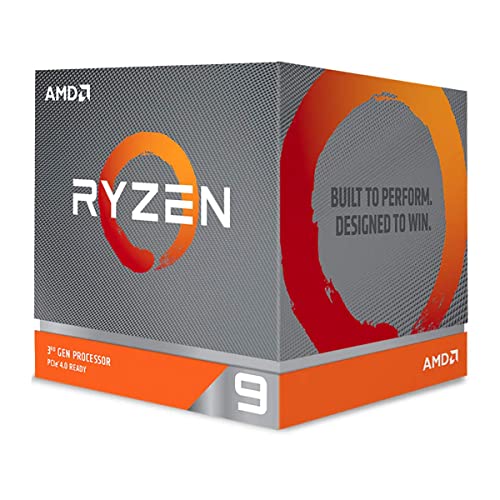
AMD Ryzen 9 3900X — 12 cores, 24 threads, and the platform PCIe lanes you want if you plan to run two cards. For a two-GPU 24 GB build, lane allocation matters more than clock speed.
Kingston A400 960GB SATA SSD — cheap model-library storage. A 7B Q4 GGUF is roughly 4.5 GB and a 70B Q4 is around 40 GB; a model collection outgrows a 500 GB boot drive fast, and SATA is fine for load-once-then-resident workloads.
Per-GPU vs per-node figures get mixed constantly. Lambda's 102,725 tok/s Llama 2 70B result is an 8-GPU system total; the per-GPU figure is about 12,841 (Lambda). Comparing a node total against a single-card number inflates the gap eightfold.
Precision is rarely held constant. Most published B200 wins use NVFP4 or FP4 against FP8 on H200. That is a legitimate capability difference, but it is not the same claim as "the same code runs faster."
Offline throughput is not serving throughput. MLPerf's offline scenario allows unlimited batching. Server and interactive scenarios on the same hardware come in materially lower — Nebius reported 58,582 tok/s offline versus 13,155 tok/s interactive for gpt-oss-120b on 8×B200 (Lambda's MLPerf write-up covers the same round).
Runtime version moves the number more than you expect. NVIDIA's own H200 figures for Llama 2 70B ranged from 3,014 tok/s on TensorRT-LLM v0.5.0 to 3,803 tok/s after enhancements, on the same card and the same input/output shape (NVIDIA TensorRT-LLM documents the same version-sensitivity for Falcon).
KV cache is the capacity surprise. The weights table above says a 70B model at FP8 fits in 70 GB. At 32k context and a batch of 64, KV cache alone can exceed the remaining capacity on an H200 — which is why long-context serving pushes you toward B200 well before parameter count does.
Verdict matrix
Get the H200 if… your stack is FP8 and stable, your workload is low-batch or single-stream generation, you need 141 GB of capacity rather than 8 TB/s of bandwidth, or H200 rental capacity is meaningfully cheaper per hour. The Falcon-180B-on-one-card result shows how much headroom the capacity alone still buys.
Get the B200 if… you serve high concurrency with long prompts, you are willing to run NVFP4 and validate the quality delta on your own evals, you need 192 GB on a single device for a 70B model at BF16, or you are building an eight-way tensor-parallel deployment where NVLink 5.0's doubled bandwidth compounds.
Get neither and build local if… you are one user, your models are 14B and below, and your real constraints are privacy, iteration speed and a fixed budget. A 12 GB desktop card and a competent host CPU cover that case for a few hundred dollars and no hourly meter.
Bottom line
For most rental buyers in 2026, B200 is the right default — the 1.47× same-software gain is real, the NVFP4 path takes it higher if you invest in it, and the 1.43× power increase makes perf-per-watt a wash at worst. The exception is narrow and specific: if you serve low-batch generation on an FP8 stack, H200 capacity at a discount is still the better dollar. And if you are reading this from a desk rather than a datacenter, the honest recommendation is neither — start with a 12 GB card and a model that fits it.
As an Amazon Associate, SpecPicks earns from qualifying purchases. Prices and availability change frequently — figures quoted above are indicative and the price shown on the retailer page at the time of your visit is authoritative.
As an Amazon Associate, SpecPicks earns from qualifying purchases; we also earn on qualifying eBay purchases via the eBay Partner Network. Prices shown were last tracked at crawl time and may vary — check the listing for the current price.
📹 Watch a review
I had given up on AMD… until today - Ryzen 9 3900X & Ryzen 7 3700X Review — Linus Tech Tips on YouTube
Frequently asked questions
Can I buy an H200 or a B200 for a home workstation?
Not practically. Both ship as SXM modules inside HGX or DGX baseboards, not as PCIe cards you drop into a desktop, and they need liquid or high-static-pressure chassis cooling plus a baseboard that costs more than most cars. Home builders reach these parts through hourly cloud rental instead, or step down to consumer 12-24 GB cards for the same model families at lower precision.
Does the B200's 192 GB let me skip quantization entirely?
For weights, largely yes at 70B-class sizes — a 70B model in fp16 needs roughly 140 GB of weights and fits with headroom left for KV cache. Above about 200B parameters you are back to fp8 or NVFP4 regardless of the card, and long-context serving eats capacity fast because KV cache scales with sequence length times batch size, not with parameter count.
Is NVFP4 worth using, or does it wreck output quality?
Published vendor evaluations report small accuracy deltas on standard benchmarks versus fp8 for well-calibrated models, but the honest answer is workload-dependent: reasoning and code tasks degrade more visibly than summarization. Treat any vendor-reported quality figure as a ceiling rather than a guarantee, and validate on your own eval set before committing a production endpoint to four-bit inference.
When is the older H200 still the better buy in 2026?
When your workload is single-stream or low-batch generation rather than batch-heavy prefill, and when H200 rental capacity is materially cheaper per hour. Blackwell's largest published gains come from wider batches and low-precision formats; a one-user chat endpoint rarely saturates either card, so you end up paying a premium for throughput headroom you never reach.
What consumer hardware runs the same models these cards serve?
Nothing matches them at full precision, but the model families overlap more than the spec gap suggests. A 12 GB card such as the RTX 3060 12GB comfortably hosts 7B-14B models at Q4, and a two-card 24 GB build reaches 27-32B-class weights. Above that, 70B-plus work on consumer silicon means CPU offload and a large drop in tokens per second.