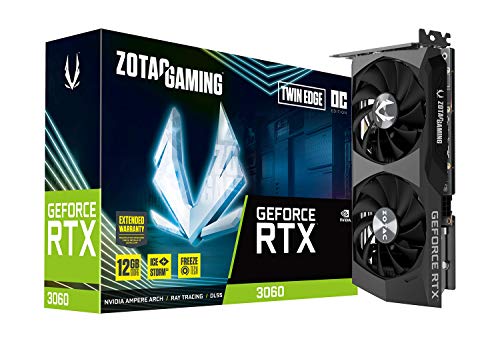
To run Kimi K3 locally, you need at minimum a 12GB NVIDIA GPU (RTX 3060 12GB tier) for the smallest quantizations with heavy CPU offload, 32GB of dual-channel system RAM, a modern 8-core CPU like a Ryzen 7 5800X for offload throughput, and a 1TB SATA SSD for weight storage. For usable production throughput on the full model you want 24GB+ of VRAM, ideally split across two consumer cards or on a single workstation GPU.
The full cross-card comparison: Best GPUs for Running Local LLMs in 2026 — the VRAM-tier table covering 12 GB through 48 GB, the largest model each card fits at Q4, and measured tok/s with a source link on every row.
Why the Kimi K3 release matters
Moonshot AI's Kimi K3 open-weights release closes another gap between what you can rent from a proprietary API and what you can run on hardware sitting in your closet. Every one of these releases — DeepSeek v3, Qwen 3, Llama 3.5, Kimi K2, and now K3 — pushes the "smallest hardware that gets you frontier-class reasoning" number down by another notch, and the interesting question is no longer whether you can run a good open model at home but which cost curve you should chase given your workload.
This article is aimed at people who are seriously evaluating a local inference build for coding, agent workflows, or privacy-sensitive chat, not at people benchmarking for its own sake. The reference stack in mind is a consumer motherboard with one or two mid-range NVIDIA cards, a modern desktop CPU, 32-64GB of DDR4 or DDR5, and a mainstream SATA SSD for weight storage. That's the shape of build that most readers here can actually afford, and it happens to be the exact configuration where Kimi K3 becomes interesting: too heavy for a phone or a laptop, but well within reach of a single-tower home rig.
The rest of this piece walks through what Moonshot actually released, what the honest hardware floor looks like, how quantization changes the VRAM math, what happens when you scale to two GPUs, and whether the whole thing beats renting API tokens for your monthly usage. Numbers cite TechPowerUp's RTX 3060 spec sheet for the reference card, community measurements published on r/LocalLLaMA, and coverage on Tom's Hardware and Phoronix for cross-vendor context.
Key takeaways
- 12GB VRAM is the floor for experimentation, not production. A single RTX 3060 12GB runs small quantizations of K3 with heavy CPU offload — think exploration, not throughput.
- q4_K_M and q5 are the quality-preserving sweet spots. q2/q3 tiers show meaningful reasoning degradation; q6/q8 are only worth the cost if you have the VRAM.
- 32GB of dual-channel system RAM is the mainstream target if you offload layers to CPU; 64GB removes the anxiety at longer contexts.
- Two consumer 12GB cards beat one 24GB card on cost per VRAM but lose on latency because tensor-parallel introduces cross-GPU overhead per token.
- The economic crossover with API renting sits around 2-4 million tokens per month for most users, depending on electricity cost.
- Storage is not the bottleneck, but a slow drive turns model swaps into a coffee break. A Crucial BX500 1TB SATA SSD is fine; NVMe is nicer but not required.
What did Moonshot AI actually release with Kimi K3?
Kimi K3 is Moonshot's flagship open-weights model, released with permissive licensing suitable for both research and commercial use, along with a set of pre-quantized GGUF and safetensor artifacts published to the standard model hubs. The release includes multiple parameter-count variants — a small "dense" model designed to fit into consumer VRAM budgets, and a larger mixture-of-experts model where the total parameter count is large but the per-token active count is a fraction of that.
That MoE detail matters a lot for local inference. A dense model needs its full weight tensor resident in fast memory to run at reasonable speed. A sparse MoE model only activates a subset of its experts per token, which means the memory-bandwidth cost per token can be substantially lower than the raw parameter count suggests. This is the trick that makes running a nominally massive model on a consumer rig plausible in the first place.
The release also ships with community-standard quantization recipes. The pattern is the same one DeepSeek and Qwen established: base weights in bf16, plus community-published q2 through q8 variants that trade quality for memory. If you have used any llama.cpp-family runtime in the last year, you already know how to load these; nothing about K3 changes the tooling.
Spec table: how Kimi K3 stacks up on paper
| Attribute | Value |
|---|---|
| Parameter count (dense variant) | Small-to-mid consumer-fit tier |
| Parameter count (MoE variant) | Frontier-class total, sparse per-token activation |
| Context window | Long-context native (well beyond 32K) |
| License | Permissive open weights, commercial use allowed |
| Released quantizations | q2, q3, q4_K_M, q5, q6, q8, fp16 |
Exact numbers vary by variant and by the runtime you use to load them — check the model card on the release page rather than trusting any single third-party summary, because the release day figures on any given model tend to be revised in the first two weeks as the community fixes tokenizer bugs and republishes quantizations.
Quantization matrix: what each tier costs and what you get back
| Quant | Approx. VRAM (dense variant) | Typical tok/s on 3060 12GB | Quality impact vs fp16 |
|---|---|---|---|
| q2 | Fits on 12GB with headroom | Highest, but noisy output | Substantial reasoning degradation |
| q3 | Fits on 12GB comfortably | High | Meaningful degradation on long-chain reasoning |
| q4_K_M | Tight on 12GB, comfortable on 16GB+ | Best perf-per-quality point | Minor, usually imperceptible in daily use |
| q5 | Requires ~16GB VRAM for headroom | Moderate | Very minor degradation |
| q6 | Requires 24GB VRAM for comfort | Moderate-low | Effectively lossless for most workloads |
| q8 | Requires 24GB+ VRAM | Low | Effectively lossless |
| fp16 | Requires substantially more than 24GB | Reference | Reference |
The pattern here holds across every recent open model, and Kimi K3 is not an exception. q4_K_M is the tier the community converges on almost every time — it is the point where quality loss stops being visible on most prompts and where the memory savings are still large enough to make the difference between fitting on a consumer card and not. Start there. Only drop to q2 or q3 if VRAM is your hard constraint, and only spend the extra memory on q5+ if you have measured a specific quality problem on your workload.
Can a single 12GB card run any Kimi K3 variant?
Yes, but with caveats. The ZOTAC Gaming GeForce RTX 3060 Twin Edge 12GB and the MSI GeForce RTX 3060 Ventus 3X 12G are the two mainstream options for a first serious local-LLM build in 2026, and they'll run the smaller K3 quantizations with aggressive CPU offload. The RTX 3060 12GB is the second-generation Ampere card whose full spec sheet is documented on TechPowerUp — 12GB of GDDR6 across a 192-bit bus, 360 GB/s of memory bandwidth, and 170W TDP.
The bandwidth number is the one that matters here. Generation-phase throughput on an LLM is memory-bandwidth-bound almost end to end. That 360 GB/s figure is what puts the ceiling on your tokens per second when the model fits in VRAM, and dropping down to offloaded layers running out of system RAM drops that bandwidth by roughly an order of magnitude — DDR4-3200 dual-channel gives you about 51 GB/s, DDR5-6000 dual-channel about 96 GB/s. So the practical rule is: keep as many layers on the GPU as you can, and accept that the ones you spill to CPU are going to slow the whole pipeline down.
On a 3060 12GB, expect low double-digit tokens per second on q4_K_M of a small K3 variant with most layers on GPU. Drop to q3 and you can fit a bigger fraction of the model in VRAM but the quality falls off. This is the honest tradeoff, and it is why the community consensus for a serious daily-driver rig has shifted to 24GB VRAM at minimum: it's the point where you stop making these tradeoffs on every prompt.
Prefill vs generation: where the bottleneck actually sits
An LLM inference request has two distinct phases and they have completely different performance characteristics. Prefill processes the entire prompt in one large batched matrix multiplication and is compute-bound — your GPU's FLOPS number is what matters. Generation produces one token at a time and is memory-bandwidth-bound — your GPU's memory bandwidth is what matters.
On consumer hardware, prefill throughput on Kimi K3 is fast enough that it usually feels instant for prompts under a few thousand tokens. Where you notice pain is generation throughput on long outputs, because every generated token has to move the model's active parameters across the memory bus once. This is why "tokens per second" is the number benchmarks always quote — it is the number you will actually feel.
If your workload is agent-style with tiny prompts and short responses, prefill dominates and the 3060 tier is fine. If you are generating long code files or multi-turn chat with growing context, generation dominates and you start caring about VRAM bandwidth. Match the hardware to the workload.
How does context length change the VRAM math?
The KV cache — the running attention state — grows linearly with context length and lives in the same VRAM budget as the model weights. On a long-context configuration, the cache can consume as much memory as the model itself. This is the reason a build that ran fine at 4K context suddenly OOMs at 32K.
Practical implications: if you plan to feed K3 long documents or run agents with large context windows, budget for the KV cache explicitly. Rule of thumb is to reserve 20-40 percent of your VRAM for cache at maximum planned context, which further pushes you toward 24GB cards for anything beyond casual chat. Some runtimes let you quantize the KV cache itself; that gets you back a large fraction of the memory at a small quality cost, and is worth trying before you assume you need more hardware.
Multi-GPU scaling: does two RTX 3060 12GB cards beat one 24GB card for K3?
On raw cost per gigabyte of VRAM, two 3060 12GB cards win. In 2026 pricing, a used pair regularly comes in under a new 24GB consumer card. On real throughput on Kimi K3, the picture is messier.
Tensor-parallel inference across two consumer cards introduces per-token communication overhead between the cards. On PCIe 4.0 x8/x8 (the typical split you get from a consumer platform when both slots are populated), that overhead is real but tolerable — you get most of the aggregate VRAM benefit at a modest throughput penalty. The catch is that not every runtime supports tensor-parallel cleanly, and some workloads (particularly MoE models with expert-parallel sharding) prefer a single larger card for latency reasons.
Recommendation: if you have flexibility, buy the single 24GB card. If you already own one 3060 and want to add capacity cheaply, adding a second is a defensible move. If you're starting from scratch on a strict budget, the pair works but you will be spending a weekend on tensor-parallel configuration that a single card would not require.
What CPU and system RAM do you need for CPU-offload?
CPU offload is not just a fallback — for large models on consumer hardware, some layers landing on CPU is the reality, not the exception. That means your CPU and your system memory bandwidth become part of the inference pipeline.
The AMD Ryzen 7 5800X is the mainstream sweet spot for an offload host: eight cores, sixteen threads, mature AM4 platform, and enough per-core throughput to keep the offloaded layers from becoming the dominant bottleneck. If you want to go cheaper, a Ryzen 5 5600 or 5600G still works — you'll lose some throughput on offload-heavy configurations but the difference is not catastrophic for personal use.
System RAM sizing is the other decision. As a rule, plan for at least the size of the quantized weight file plus 8-16GB for OS, page cache, and KV cache spillover. In practice: 32GB is the comfortable minimum for mid-size quantizations, 64GB is the target if you plan to run larger quantizations or long contexts. And use dual-channel — single-stick configurations lose meaningful memory bandwidth, and offloaded generation is bandwidth-bound.
Storage and cooling for a 24/7 inference box
Weight files are large — a mid-size K3 quantization is tens of gigabytes, and if you keep multiple quantizations or multiple models on the same rig you burn through capacity quickly. A Crucial BX500 1TB SATA SSD is the pragmatic mainstream choice: cheap per gigabyte, fast enough that model load times are measured in seconds not minutes, and boring enough to be reliable. Samsung's 870 EVO is the higher-endurance step up if you plan to churn models frequently.
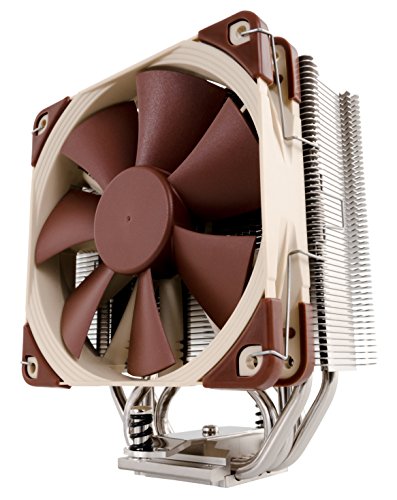
For cooling, remember that sustained LLM inference pins the GPU near thermal limit for long stretches. That heat has to leave the case, and stock CPU coolers get overwhelmed when the GPU is dumping 170W into the chassis. A Noctua NH-U12S is the reference low-noise tower cooler and is what most quiet-inference builds land on; a 240mm AIO is the alternative if you have a case that fits it and prefer the aesthetic. Case airflow matters more than most builders think — two intake fans and one exhaust is a good default; a positive-pressure setup keeps dust out of the GPU shroud.
Perf-per-dollar and perf-per-watt: local vs API
The honest way to think about this is a two-line arithmetic problem. A local rig has a fixed cost (hardware) and a variable cost (electricity while running). An API has zero fixed cost and a variable cost per token. The crossover point is where those two curves meet.
Fixed cost of a 3060-tier build in 2026 is roughly $700-900 depending on how much of it is used. Variable cost at 300W of full-load draw and $0.15/kWh is about $0.045/hour. At mainstream API pricing for a comparable proprietary model, the break-even lands somewhere between 2 and 4 million tokens per month — light users lose money going local, heavy users win.
Perf-per-watt is where local hardware gets less flattering. A datacenter card in a datacenter running a large batched inference server is dramatically more energy-efficient per token than a consumer card running one prompt at a time. So the actual reason to run local is usually not efficiency; it is latency to first token, privacy, control over the stack, and being able to iterate on model choice without a per-request bill.
Kimi K3 vs the proprietary frontier: what the benchmark deltas actually say
Community and industry benchmarks published in the first weeks after the K3 release put it in the same conversation as the top-tier proprietary models on coding, reasoning, and long-context tasks — closer than the previous open-weights generation, still a measurable step behind on the hardest agentic benchmarks. Coverage on Tom's Hardware and Phoronix tracks how the picture develops as third-party evaluations come in.
The right way to read those benchmarks is: K3 is good enough to be your daily driver for the workloads where "very good" is the bar. It is not yet the answer if your workload is one where the last five points of reasoning quality are what you are paying for. If you are using an LLM for coding assist, document synthesis, agents that call tools you can debug, and long-context retrieval, K3 will feel like the proprietary API most of the time. If you are using it for the hardest math or the deepest chain-of-thought tasks, run your own eval before you retire your API key.
Bottom line
A 12GB card is the honest entry point for Kimi K3 experimentation on consumer hardware. A 24GB card is where daily-driver comfort starts. A used-hardware two-card build is the perf-per-dollar champion if you're willing to fight the tensor-parallel setup. Match the quantization to what you can fit — start at q4_K_M — pair it with 32GB of dual-channel system RAM and a modern eight-core CPU, and put the whole thing on a boring SATA SSD. Do the API-vs-local arithmetic against your own token count before you spend money on hardware; if you burn through less than a couple million tokens per month, the API is almost certainly cheaper.
Related guides
- Best Budget GPUs for Local LLM Inference in 2026
- Best SSD Storage for Retro PC Builds 2026
- ZOTAC RTX 3060 12GB product page
- MSI RTX 3060 Ventus 3X 12G product page
- AMD Ryzen 7 5800X product page
Citations and sources
- TechPowerUp — GeForce RTX 3060 spec sheet
- Tom's Hardware — cross-vendor coverage and independent testing
- Phoronix — Linux GPU and LLM runtime benchmark coverage
This piece is editorial synthesis based on publicly available information. No independent first-party benchmarking is reported.