Anyone who has priced out a 2TB iCloud+ plan or a 5TB Google One tier for a family has probably wondered whether a one-time hardware purchase could replace it entirely. The short answer, based on how the self-hosting community talks about this on forums like r/selfhosted and r/DataHoarder, is: partially and with trade-offs, rather than a clean, drop-in swap.
This piece synthesizes what's publicly documented about self-hosted storage as a cloud replacement — the platforms people actually use, the hardware involved, the honest cost math, and the reliability gaps that don't show up until after the migration.
What "replacing" iCloud or Google One actually means
Cloud storage subscriptions bundle several distinct jobs into one product:
- Raw file storage and sync — the thing most people picture when they say "cloud storage."
- Photo library backup and search — Google Photos' AI-powered search and iCloud Photos' cross-device library.
- Device backup — full iPhone/iPad backups, or Android device backups.
- Platform features tied to the account — iCloud Keychain, Find My, Messages in iCloud.
Self-hosted platforms like Nextcloud, TrueNAS's built-in apps, and Synology's Photos and Drive suite (via Synology's product line) can reasonably replace the first two. The last two categories are much harder to fully self-host, because they're tied into iOS or Android at the OS level rather than just being a storage bucket. That's the main reason full replacements discussed publicly tend to be partial: file storage and photo backup move to a home server, while a handful of platform-specific features stay on a paid or free-tier cloud account.
Common real-world setups
Across self-hosting communities, a few recurring patterns show up in how people structure a storage replacement:
| Approach | What it replaces | What typically stays cloud-based |
|---|---|---|
| Prebuilt NAS (Synology, QNAP, UGREEN) + Nextcloud or vendor sync app | General file sync, shared drives, photo library | Device OS backups, platform-tied features |
| DIY server running TrueNAS or Unraid on repurposed/budget PC hardware | File storage, media library, Time Machine target | Off-site backup copy, some mobile-native features |
| NAS + a cheap off-site cloud tier as backup-only target | Primary storage | The lowest storage tier of a service like Backblaze or a discounted iCloud/Google One plan, kept purely as insurance |
The third pattern is worth calling out because it's the one most consistent with standard backup guidance: even people who describe themselves as "fully self-hosted" for day-to-day storage often keep a low-cost off-site copy specifically to satisfy the 3-2-1 backup rule (three copies of data, on two different media, with one copy off-site) — not because the NAS itself is unreliable, but because a single location, however well-built, is still a single point of failure for fire, theft, or a multi-drive failure.
Hardware involved in a self-hosted storage build
There's no single "correct" hardware spec, but builds discussed publicly tend to share a shape:
- A NAS enclosure or repurposed PC running TrueNAS Core/Scale, Unraid, OpenMediaVault, or a vendor's own DSM/QTS-style OS.
- Two or more hard drives in a RAID or parity configuration (e.g., RAID1, RAID5/Z1, or Unraid's parity model) so a single drive failure doesn't cost the whole array.
- A UPS (uninterruptible power supply) to protect against dirty shutdowns during power flickers, since abrupt power loss is one of the more commonly cited causes of filesystem corruption on home NAS units.
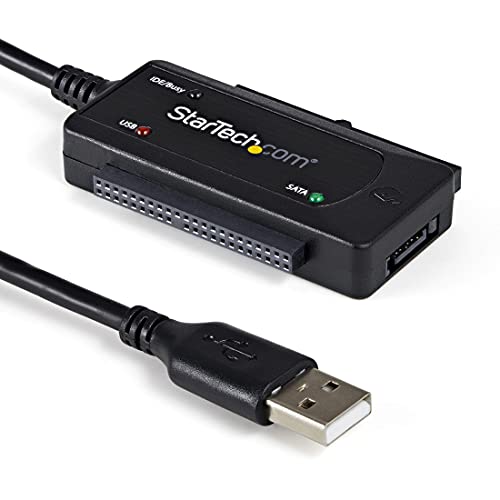
- Connectivity hardware to bridge older or spare drives into the build — a USB-to-SATA/IDE adapter is a common low-cost way to repurpose an existing drive during the transition, and a dock with extra USB and display ports is frequently used to turn a spare mini PC or laptop into a temporary server or management workstation.
Because drive capacity, RAID overhead, new-vs-used drive pricing, and electricity rates all vary by household and region, total build cost is genuinely a "your mileage will vary" number — public cost breakdowns from self-hosters typically fall into a wide range depending on whether drives are bought new, refurbished, or repurposed from an existing PC.
The actual cost comparison
Here's what can be stated with confidence, sourced from the providers' own published pricing pages rather than a specific build's numbers:
| Service | Entry storage tier | Mid tier | Large tier | Source |
|---|---|---|---|---|
| iCloud+ | 50GB | 2TB | 6TB / 12TB | Apple's iCloud plans |
| Google One | 100GB | 2TB | 5TB–30TB | Google One plans |
Both are recurring monthly subscriptions with no hardware to buy, maintain, or replace — the provider handles redundancy, drive failures, and data center power entirely behind the scenes. A self-hosted build flips that structure: a larger one-time (or occasional) hardware cost, plus ongoing electricity draw, in exchange for no recurring per-gigabyte subscription fee once the hardware is paid for.
Whether that trade pays off depends on variables that don't have a universal answer: how much storage is actually needed, local electricity rates, whether drives are bought new or refurbished, and how many devices/family members were on the subscription being replaced. Community cost breakdowns generally agree on the shape of the trade (higher upfront cost, lower long-run marginal cost) without a single "break-even month" that applies broadly — treat any specific break-even timeline as build-specific rather than universal.
Reliability and access trade-offs people run into
The parts of this migration that get talked about least in advance, but come up repeatedly once people are living with a self-hosted setup:
- No built-in geographic redundancy. A managed cloud provider replicates data across multiple data centers as part of the product. A home NAS, by default, is one box in one location — which is exactly why the off-site backup pattern above shows up so often in practice.
- Home internet becomes a dependency. Remote access to self-hosted storage rides on residential upload bandwidth and uptime, which is typically far less robust than a cloud provider's infrastructure SLA.
- Mobile access requires extra setup. Native iCloud/Google Photos apps sync in the background with no configuration. Reaching a home server from a phone away from the house means setting up a reverse proxy, a VPN (WireGuard and Tailscale are the two most frequently referenced in self-hosting discussions), or a vendor remote-access feature — each with its own security and convenience trade-offs.
- You are the IT department. Firmware updates, drive health monitoring (SMART data), and RAID rebuilds after a drive failure all become the owner's responsibility instead of a provider's.
None of these are reasons to avoid self-hosting — they're the standard operating cost of trading a managed service for a DIY one, and they're consistent with how storage reliability engineering works in general: redundancy and off-site copies matter more than any single piece of hardware.
So — has anyone completely replaced iCloud or Google One?
Based on how this gets discussed publicly, the honest answer is nuanced: plenty of people have replaced the bulk of their day-to-day file and photo storage with a self-hosted NAS running Nextcloud, TrueNAS, or a vendor's own suite. Far fewer describe going to zero cloud spend, because most keep a minimal off-site backup tier specifically to avoid a single point of failure — which technically isn't "fully" replacing the subscription, just shrinking it dramatically while covering the gap self-hosting can't close on its own.
For anyone weighing the move, more home-server and maker-focused hardware coverage is available in SpecPicks' makers section.
Citations and sources
- Apple iCloud plans and pricing
- Google One plans and pricing
- Synology NAS product line
- TrueNAS
- r/selfhosted community
- r/DataHoarder community
- Backblaze cloud storage pricing
This piece is editorial synthesis based on publicly available information. No independent first-party benchmarking is reported.