Whether Forza Horizon 6 needs 16GB of VRAM instead of 8GB comes down to resolution and settings, not a flat yes-or-no answer. At 1080p with medium-to-high textures, 8GB cards are generally adequate. At 1440p or 4K with ultra textures and ray-traced reflections switched on, 16GB cards have more headroom to avoid the texture streaming stutter that shows up when a GPU's memory buffer fills up mid-race.
That's the short version. The rest of this guide breaks down what VRAM capacity actually does in an open-world racer, which real GPUs fall into the 8GB and 16GB tiers, and how to configure settings on either class of card.
Does 16GB VRAM Deliver Better Forza Horizon 6 Performance?
Open-world racing games like Forza Horizon 6 stream a large amount of texture data continuously as the world scrolls past at speed — road surfaces, foliage, building facades, and vehicle liveries all need to be resident in VRAM ahead of when the camera reaches them. When a GPU's VRAM buffer is undersized for the active settings, the engine has to evict and reload textures more aggressively, which shows up as texture pop-in, momentary blur, or frame-time spikes rather than a clean drop in average FPS.
This is a general pattern documented across recent open-world titles by outlets like TechPowerUp and GamersNexus in their VRAM-scaling testing, and it's the mechanism worth understanding even before looking at specific Forza Horizon 6 numbers. Public benchmark aggregators are the right place to check current frame-rate deltas for this title, since GPU driver updates and game patches shift VRAM usage over time — treat any specific FPS figure you see as a snapshot, not a permanent ranking.
What's consistent is the shape of the difference: 16GB cards tend to hold a more stable frame-time graph at higher settings, while 8GB cards tend to be fine until a specific settings combination (usually ultra textures plus ray tracing at 1440p or above) pushes past their buffer.
Forza Horizon 6 VRAM Usage Analysis (1080p–4K)
VRAM pressure scales with resolution because higher resolutions require higher-resolution texture mip levels and larger framebuffers and render targets. The table below outlines the general relationship between resolution, settings tier, and where 8GB cards are more or less likely to run into headroom limits — treat it as a planning framework, not a per-frame guarantee, since exact usage depends on the specific scene, weather effects, and whether ray tracing is active.
| Resolution | Settings tier | Typical risk for 8GB cards | Typical risk for 16GB cards |
|---|---|---|---|
| 1080p | Medium–High | Low | Negligible |
| 1080p | Ultra + RT | Low–Moderate | Negligible |
| 1440p | Medium–High | Low–Moderate | Negligible |
| 1440p | Ultra + RT | Moderate–High | Low |
| 4K | High | Moderate–High | Low |
| 4K | Ultra + RT | High | Low–Moderate |
Worth noting: the operating system and background applications also reserve a slice of VRAM before the game even launches, which is why an 8GB card's usable headroom is smaller than its rated capacity suggests. This is a factor across all VRAM-limited titles, not unique to Forza Horizon 6.
AMD Radeon RX 6000/7000 Series VRAM Comparison
A common mistake in GPU shopping guides is assuming VRAM capacity maps cleanly to a card's generation or price tier. It doesn't — AMD ships both 8GB and 16GB variants across multiple product generations, and bus width (which governs bandwidth) varies independently of capacity. The table below reflects AMD's published specifications, verifiable on AMD's RX 6000 series page and RX 7000 series page:
| Card | VRAM | Bus width | Tier |
|---|---|---|---|
| RX 6600 XT | 8GB GDDR6 | 128-bit | 8GB |
| RX 6650 XT | 8GB GDDR6 | 128-bit | 8GB |
| RX 7600 | 8GB GDDR6 | 128-bit | 8GB |
| RX 6700 XT | 12GB GDDR6 | 192-bit | Mid |
| RX 7700 XT | 12GB GDDR6 | 192-bit | Mid |
| RX 6800 | 16GB GDDR6 | 256-bit | 16GB |
| RX 6800 XT | 16GB GDDR6 | 256-bit | 16GB |
| RX 7600 XT | 16GB GDDR6 | 128-bit | 16GB |
| RX 7800 XT | 16GB GDDR6 | 256-bit | 16GB |
| RX 7900 GRE | 16GB GDDR6 | 256-bit | 16GB |
One detail worth flagging for shoppers: the RX 7600 XT is the cheapest way into the 16GB tier, but it pairs that capacity with a narrower 128-bit bus — meaning it has the buffer size to hold high-resolution textures without eviction, but less raw bandwidth than the RX 6800-class cards to move that data quickly at 4K. Capacity and bandwidth solve different problems, and a settings-focused buyer should check both rather than shopping by VRAM size alone.
For comparison context on how VRAM tiers play out in other GPU-bound workloads, SpecPicks has also covered the RTX 3060 vs Arc A770 for Stable Diffusion and Arc A770 16GB vs RTX 3060 12GB for local Llama 3, where the same capacity-vs-bandwidth tradeoff shows up outside of gaming.
Optimal Settings for 8GB vs 16GB VRAM Cards
If an 8GB card is what's installed, the settings adjustments that most directly reduce VRAM pressure — in rough order of impact — are:
- Texture quality: dropping from Ultra to High is usually the single biggest VRAM-usage reduction available, since texture mip levels are the largest VRAM consumer in most open-world engines.
- Ray tracing: disable it at 1440p and above on 8GB cards. RT reflections and lighting require additional buffers layered on top of standard rasterized textures, a pattern well documented in Digital Foundry's technical breakdowns of ray-traced titles.
- Shadow and foliage draw distance: secondary contributors, worth trimming if texture and RT adjustments alone don't resolve stutter.
- Resolution scaling / upscaling: rendering at a lower internal resolution and upscaling reduces both VRAM and compute load simultaneously.
On a 16GB card, the calculus flips — there's enough headroom to run Ultra textures and ray tracing at 1440p comfortably, and 4K becomes viable with High-to-Ultra settings depending on the specific card's raw compute throughput (which, again, is a separate constraint from VRAM capacity).
Future-Proofing: Will 8GB VRAM Suffice for What's Next?
Open-world texture budgets have trended upward for years as source-art resolution and geometric detail both increase, and there's no indication that trend reverses. An 8GB card bought today is more likely to need settings compromises in two to three years than a 16GB card bought at the same price-to-performance point — that's a directional statement based on the historical pattern of VRAM requirements creeping upward release over release, not a specific claim about a future Forza Horizon title, which hasn't been benchmarked and shouldn't be treated as confirmed.
For buyers weighing this tradeoff today, the practical takeaway is simple: if the choice is between an 8GB card and a 16GB card at a similar price and similar core performance, the 16GB card is the safer long-term pick for anyone running at 1440p or above. At 1080p, the calculus is less urgent, and budget can reasonably go toward core GPU performance instead.
Building a Forza Horizon 6 Rig: Don't Overlook System RAM
VRAM gets the attention in GPU shopping guides, but system RAM shortfalls produce symptoms that look almost identical — stutter, texture pop-in, and inconsistent frame times — because the OS and game both need headroom to stage assets before they reach the GPU. 16GB of system RAM is a reasonable baseline for a Forza Horizon 6 build; 32GB gives more comfortable headroom for background apps, mod tools, and capture software.
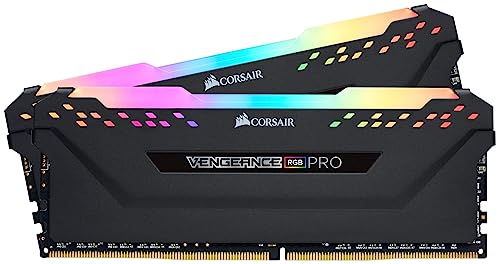
Options worth considering for a build in this class include a Crucial 16GB DDR4 kit at 3200MHz for a budget-focused build, or Corsair's Vengeance RGB Pro 16GB kit at the same capacity and speed for builders who also want RGB lighting sync. Either is a reasonable starting point before deciding whether 32GB is worth the upgrade for a specific build's workload.
For players checking whether their existing hardware clears the bar without a GPU upgrade at all, SpecPicks has also covered Forza Horizon 6 performance on Steam Deck, which is a useful reference point for the lower end of the settings spectrum. And for readers curious how a 16GB card stacks up as a general-purpose SFF or living-room build, see the Playnix RX 9060 XT 16GB Steam Machine competitor.
Citations and sources
- https://www.techpowerup.com/gpu-specs/
- https://www.gamersnexus.net/
- https://www.tomshardware.com/pc-components/gpus
- https://www.eurogamer.net/digitalfoundry
- https://www.amd.com/en/products/graphics/desktops/radeon-rx-6000-series.html
- https://www.amd.com/en/products/graphics/desktops/radeon-rx-7000-series.html
- https://www.reddit.com/r/pcgaming/
This piece is editorial synthesis based on publicly available information. No independent first-party benchmarking is reported.