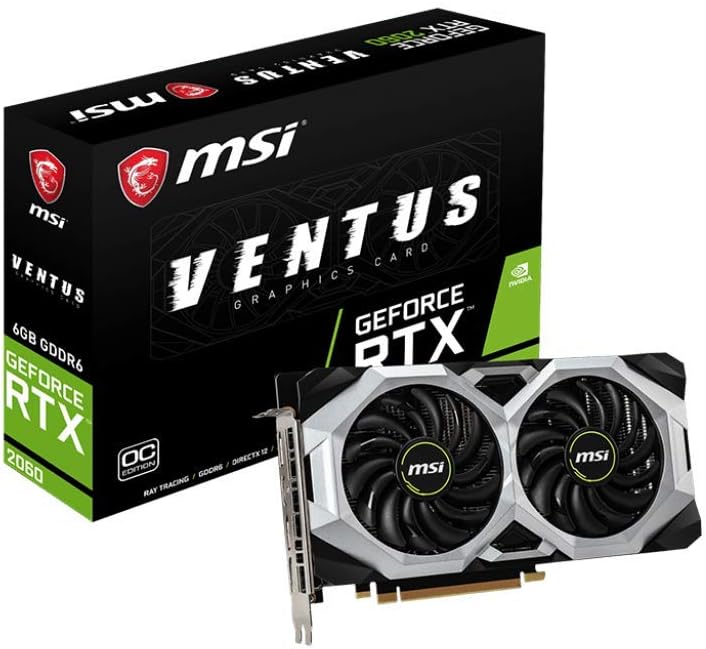
The RTX 5090 is being adopted by a wide range of local-AI builders — hobbyists running quantized LLMs, researchers fine-tuning smaller models, and workstation buyers who don't want to queue for cloud GPU time. The short answer: its main advantage for AI work isn't raw TFLOPS, it's the jump to 32GB of GDDR7 VRAM and roughly 1.8TB/s of memory bandwidth, per NVIDIA's published specifications — headroom that changes which model sizes, context lengths, and batch sizes fit on a single card.
This piece synthesizes what's publicly documented about the RTX 5090's AI-relevant specs, how it's generally positioned against AMD's data-center MI300X and NVIDIA's own previous-generation RTX 4090, and what else a workstation needs around the GPU. For workload-specific frame-rate and gaming benchmarks, see SpecPicks' RTX 5090 benchmark comparison and RTX 5090 benchmark games coverage; this article focuses on the AI/compute side.
RTX 5090 vs AMD MI300X: Two Different Product Categories
Comparing the RTX 5090 directly to AMD's MI300X is a bit like comparing a high-end workstation card to a data-center accelerator, because that's essentially what they are. Per AMD's official MI300X product documentation, the MI300X ships with 192GB of HBM3 memory and is sold into enterprise/cluster deployments — it isn't a retail consumer product and isn't typically found in a single-GPU home or small-studio workstation.
The RTX 5090, by contrast, is a consumer/prosumer card available at retail, and it inherits the CUDA ecosystem's broad framework support — PyTorch, TensorFlow, and most popular inference servers (llama.cpp, vLLM, Ollama) have mature, well-tested CUDA backends. AMD's ROCm stack has closed much of that gap in recent years, but per Tom's Hardware's ongoing GPU coverage, driver and framework compatibility remains a more common friction point on the AMD side for local, single-card setups.
| RTX 5090 | AMD MI300X | |
|---|---|---|
| Category | Consumer/workstation | Data-center accelerator |
| VRAM | 32GB GDDR7 | 192GB HBM3 |
| Availability | Retail | Enterprise/cluster procurement |
| Primary software stack | CUDA | ROCm |
| Typical buyer | Individual builder, small studio | Cloud provider, enterprise ML team |
For most readers evaluating a single-workstation local-AI build, this table answers the "which one" question by itself: the MI300X isn't really a competing purchase option for that use case.
Why VRAM Capacity Matters More Than Raw TFLOPS
It's tempting to shop for AI GPUs by comparing peak TFLOPS figures, but for most local-inference and fine-tuning workloads, VRAM capacity is the harder constraint. A model that doesn't fit in VRAM either fails to load, has to be offloaded to system RAM (which is dramatically slower), or has to be quantized down to a smaller footprint — all of which matter more day-to-day than a compute-throughput gap that only shows up once the model is actually resident on the card.
The RTX 5090's 32GB, up from the RTX 4090's 24GB per NVIDIA's spec sheets, is the practical headline change. That extra 8GB is roughly the difference between comfortably running a 13B-class model at higher precision versus needing more aggressive quantization to fit the same model on a 4090. SpecPicks' RTX 5090 AI cores breakdown covers what the card's tensor core generation actually changes at the architecture level, separate from the memory story.
Which AI Models Realistically Fit in 32GB
As a general rule of thumb (actual footprint varies by quantization format, context length, and inference framework overhead):
- 7B-8B parameter models — comfortable fit at higher precision with room for long context windows. This is the segment SpecPicks' best GPU under $400 for Llama-class 8B models piece covers from the budget end — worth reading if a 5090 is overkill for your model size.
- 13B-34B parameter models — fit well with 4-bit to 8-bit quantization, which is now standard practice for local inference via llama.cpp, Ollama, or similar runtimes.
- 70B+ parameter models — generally require aggressive quantization (4-bit or lower) even with 32GB, or splitting the model across multiple GPUs. A single RTX 5090 is not the target hardware for running 70B-class models at full precision.
For multi-GPU or previous-generation comparisons, SpecPicks' dual RTX 3090 vs RTX 5090 piece looks specifically at whether two older cards' combined VRAM pool beats one newer card for training workloads — a common fork in the road for builders on a fixed budget.
Power and Connector Requirements
NVIDIA's official system requirements for the RTX 5090 call for an 850W or higher power supply, using the 16-pin 12VHPWR (or newer 12V-2x6) connector to feed the card directly rather than relying on multiple daisy-chained adapters. This isn't unique to AI workloads, but sustained AI training or batch-inference jobs tend to hold the GPU near peak utilization for hours at a stretch — closer to a stress-test load pattern than typical gaming, which is intermittent by comparison. Builders planning extended training runs should size the PSU with headroom rather than at the stated minimum.
Building an RTX 5090 AI Workstation: What Else You Need
Beyond the GPU and PSU, a few build details matter more for a sustained-load AI workstation than for a general gaming PC:
- Case airflow. Multi-hour training runs generate sustained heat rather than the bursty load of gaming sessions. A mesh-front case built for high airflow, like the darkFlash DB460M Micro-ATX case, gives a large dual-slot card like the 5090 more consistent intake than a closed-front enclosure.
- Display connectivity for high-res monitoring. If the workstation is also driving a high-refresh or high-resolution monitor alongside AI workloads, a certified DisplayPort 2.1 cable rated for the bandwidth the 5090's outputs support avoids becoming the bottleneck on the display side.
- Software stack. NVIDIA's AI software ecosystem (CUDA, cuDNN, TensorRT) is updated alongside new hardware generations; checking framework-specific compatibility notes (e.g., current TensorFlow and PyTorch release notes) before a build is standard practice for avoiding day-one driver mismatches.
For readers exploring alternatives to NVIDIA's own stack, SpecPicks has also covered Intel's IPEX-LLM with Ollama in Docker as a lower-cost local-inference path on non-NVIDIA hardware.
RTX 5090 vs RTX 4090 for AI: Is the Jump Worth It
For buyers already running an RTX 4090, the case for upgrading specifically for AI work rests on the VRAM increase (24GB to 32GB) and whatever generational compute gains show up in public benchmark trackers like TechPowerUp's GPU database. Whether that's worth the cost depends heavily on whether the extra 8GB actually unlocks a model size or context length the current card can't handle — if the 4090 already comfortably runs the models in question, the AI-specific case for upgrading is weaker than the gaming-specific case. SpecPicks' full RTX 5090 benchmark comparison covers the gaming side of that tradeoff in more depth.
It's also worth noting that reported public benchmark numbers vary considerably by quantization format, batch size, driver version, and the specific inference framework used — a gap that shows up repeatedly in independent testing round-ups. Anyone making a purchase decision based on a specific tokens-per-second or images-per-second figure should check the methodology behind that number before treating it as representative of their own workload. On related methodology questions, SpecPicks has also written about why local evaluation matters more than vendor-reported benchmarks and how open-weight models have closed ground on frontier systems — both relevant background for anyone benchmarking a new GPU against a moving target of model releases.
Citations and sources
- https://www.nvidia.com/en-us/geforce/graphics-cards/50-series/rtx-5090/
- https://www.amd.com/en/products/accelerators/instinct/mi300/mi300x.html
- https://www.techpowerup.com/gpu-specs/geforce-rtx-5090.c4216
- https://www.tomshardware.com/pc-components/gpus
- https://www.gamersnexus.net/
This piece is editorial synthesis based on publicly available information. No independent first-party benchmarking is reported.

![Silkland 80Gbps DisplayPort Cable 2.1 [VESA Certified] 5FT/1.5M, DP80 HDR](https://m.media-amazon.com/images/I/41ZU3eQbhEL._SL500_.jpg)