The RTX 5090's "AI cores" — its Tensor Cores — are the part of the GPU doing the heavy lifting for DLSS frame generation, local LLM inference, and diffusion-model image generation. This synthesis breaks down what those cores actually are, what NVIDIA's own specifications claim, and how the card stacks up against AMD's AI-focused hardware, based on publicly available specifications and benchmark aggregates.
What Makes the RTX 5090's AI Cores Different in 2026
The RTX 5090 is built on NVIDIA's Blackwell architecture, and its AI-relevant hardware comes down to two things: CUDA cores (general-purpose parallel compute) and Tensor Cores (dedicated matrix-multiplication units). Per NVIDIA's official product page, the card ships with 5th-generation Tensor Cores and a peak AI throughput rating of roughly 3,352 AI TOPS in dense FP4 mode with sparsity — a figure that sits well above the prior-generation RTX 4090's 4th-gen Tensor Core design, per TechPowerUp's GPU database.
That AI TOPS number is a theoretical ceiling calculated by NVIDIA under specific precision and sparsity conditions — it is not a guarantee of real-world throughput. Actual performance in any given AI task depends on the precision format used (FP4, FP8, FP16), whether the model and framework support sparsity acceleration, batch size, and how well the software stack (CUDA, cuDNN, TensorRT) has been optimized for the workload. "Varies by workload" is the honest caveat here — treat headline TOPS figures as a marketing ceiling, not a benchmark result.
The other piece of the puzzle is memory. The RTX 5090 pairs its Tensor Cores with 32GB of GDDR7 on a 512-bit bus, per NVIDIA's spec sheet — a meaningful jump for anyone running larger local models or higher-resolution diffusion pipelines than the 24GB RTX 4090 could comfortably handle.
RTX 5090 AI-Relevant Specs at a Glance
| Spec | RTX 5090 | RTX 4090 (prior gen) |
|---|---|---|
| Architecture | Blackwell | Ada Lovelace |
| Tensor Core generation | 5th-gen | 4th-gen |
| VRAM | 32GB GDDR7 | 24GB GDDR6X |
| Memory bus | 512-bit | 384-bit |
| Peak AI TOPS (FP4, dense w/ sparsity) | ~3,352 (NVIDIA spec) | Lower (prior-gen Tensor Core design) |
| Official MSRP | $1,999 | $1,599 (launch) |
Source: NVIDIA official specifications and TechPowerUp's GPU database (linked in Citations below). For a deeper breakdown of how the official TOPS figure is derived and what it does and doesn't tell you, see SpecPicks' explainer on RTX 5090 AI TOPS: What the Official Number Means.
How the RTX 5090 Stacks Up Against AMD's AI Hardware
AMD's AI-focused hardware takes a different approach: prioritize memory capacity over raw Tensor throughput. The Instinct MI300X, AMD's flagship datacenter AI accelerator, carries 192GB of HBM3 memory — nearly six times the RTX 5090's 32GB — which matters enormously for workloads that need to hold an entire large model in memory without offloading or quantizing. The tradeoff is that the MI300X is an enterprise part sold through OEM/datacenter channels, not a consumer GPU, and AMD's ROCm software stack has historically lagged CUDA in framework coverage and driver maturity for many popular ML libraries.
AMD's workstation-tier Radeon Pro W7900, meanwhile, offers 48GB of GDDR6 at a workstation price point (historically around $3,999 MSRP) — more memory headroom than the RTX 5090, but again running on the ROCm/HIP stack rather than CUDA, which remains the default target for most consumer-facing AI tooling (Stable Diffusion UIs, most LLM inference servers, PyTorch's most-tested backend).
| Card | Memory | Ecosystem | Positioning |
|---|---|---|---|
| RTX 5090 | 32GB GDDR7 | CUDA | Consumer flagship, gaming + AI |
| Radeon Pro W7900 | 48GB GDDR6 | ROCm/HIP | Professional workstation |
| Instinct MI300X | 192GB HBM3 | ROCm | Datacenter/enterprise AI |
The practical takeaway: for a single-card consumer or prosumer build where CUDA compatibility and driver support matter more than absolute memory ceiling, the RTX 5090 remains the default recommendation. For workloads where model size exceeds 32GB and OEM-level budgets are available, AMD's memory-dense parts become relevant. For a closer look at how the 5090 compares against NVIDIA's own workstation tier, see RTX 5090 vs RTX 6000: Specs, Gaming, AI Compared, and against AMD specifically in RTX 5090 Benchmark 2026: 4K Gaming & AI vs. AMD.
Real-World AI Workloads: What the RTX 5090 Is Actually Built For
The Tensor Core uplift and larger VRAM pool translate most directly into three consumer-relevant use cases:
Local diffusion image generation. Tools like Stable Diffusion and its derivatives benefit from both the added Tensor throughput and the 32GB VRAM pool, which allows larger batch sizes and higher-resolution outputs without running out of memory — a common bottleneck on 24GB cards.
Local LLM inference and light fine-tuning. With 32GB of VRAM, the RTX 5090 can hold larger quantized models locally than the RTX 4090 could, which matters for hobbyists and developers running inference without a cloud API. Full fine-tuning of the largest open-weight models still generally requires more memory than a single consumer card provides — that's where multi-GPU setups or cloud/datacenter hardware come in, a tradeoff explored in Dual RTX 3090 vs RTX 5090: Gaming vs AI Training.
DLSS and real-time AI-assisted rendering. On the gaming side, the same Tensor Core hardware underpins DLSS frame generation and upscaling, which is why the RTX 5090's AI capability and its gaming benchmark story are closely linked — see the full breakdown in RTX 5090 Benchmark Comparison: 4K Gaming, AI & Value (2026) and RTX 5090 Benchmark Games: What Public Testing Shows.
Claims of specific throughput numbers for any of these workloads (images per second, tokens per second, fine-tuning speedups) vary significantly by framework version, precision setting, and model architecture — public benchmark suites from outlets like TechPowerUp and community-run test suites are the best source for up-to-date, workload-specific figures, and readers should check those directly rather than relying on a single quoted number that may already be stale by the time it's read.
Building an AI Rig Around the RTX 5090: CPU Pairing Considerations
For AI-focused workloads, the GPU does nearly all of the compute-heavy lifting, so the CPU's role is mostly to feed data to the GPU without becoming a bottleneck during preprocessing, data loading, and multi-GPU orchestration. That said, pairing a $1,999 flagship GPU with a severely outdated CPU platform is a false economy — PCIe generation, memory bandwidth, and single-thread performance for data pipeline work still matter.
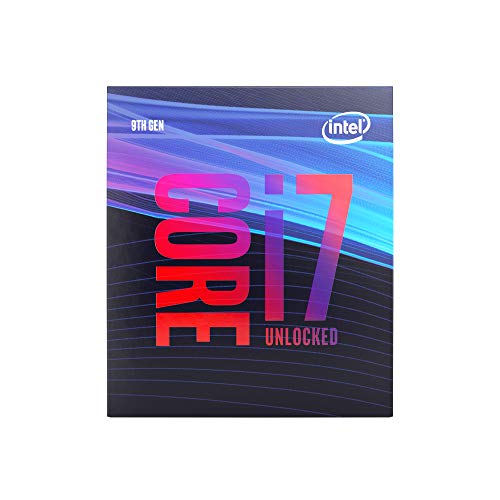
Older 8th- and 9th-generation Intel desktop chips remain viable for budget or secondary AI-adjacent builds, but they're a mismatch for a flagship-tier AI rig:
| CPU | Cores | Boost Clock | Typical Price |
|---|---|---|---|
| Intel Core i9-9900K | 8 | up to 5.0 GHz | $429.00 |
| Intel Core i7-9700K | 8 | up to 4.9 GHz | $259.00 |
| Intel Core i5-9600K | 6 | up to 4.6 GHz | $159.00 |
| Intel Core i5-9400F | 6 | up to 4.1 GHz | $175.00–$179.95 |
| Intel Core i7-8700K | 6 | up to 4.7 GHz | $199.00 |
These chips are reasonable choices for a budget gaming rig or a secondary machine, but for a purpose-built AI workstation around the RTX 5090, a current-generation platform with modern PCIe lanes and memory bandwidth is the more sensible pairing. For a full build walkthrough, see RTX 5090 AI Desktop: 2026 Build Guide & Benchmarks.
Is the RTX 5090 Worth It for AI Workloads?
At a $1,999 official MSRP, the RTX 5090 sits well above mainstream consumer GPU pricing, but it remains far cheaper than enterprise accelerators like the MI300X, which aren't sold as standalone consumer purchases at all. For anyone doing local diffusion image generation, running quantized LLMs for inference, or wanting DLSS-accelerated gaming alongside occasional AI experimentation, the 5090's combination of 5th-gen Tensor Cores, 32GB of VRAM, and mature CUDA software support makes it the most broadly capable single consumer card available in 2026. For workloads that genuinely require more than 32GB of VRAM on one card, no consumer GPU — from NVIDIA or AMD — currently solves that problem; that remains enterprise territory.
Actual retail pricing fluctuates by retailer, region, and board partner — always confirm current pricing before purchase, as figures quoted here may vary.
Citations and sources
- https://www.nvidia.com/en-us/geforce/graphics-cards/50-series/rtx-5090/
- https://www.techpowerup.com/gpu-specs/geforce-rtx-5090.c4216
- https://en.wikipedia.org/wiki/GeForce_RTX_50_series
This piece is editorial synthesis based on publicly available information. No independent first-party benchmarking is reported.