The best budget GPU for running local LLMs in 2026 is still the NVIDIA GeForce RTX 3060 12GB. Under $400 new, it fits Llama 3.1 8B and Qwen 14B entirely in VRAM at q4_K_M with room for a working KV cache, sips 170W on a single 8-pin PCIe connector, and runs on any modern 550W power supply. Nothing else at this price ships with 12 GB of memory and CUDA on day one, which is why it keeps winning the homelab-inference recommendation despite being two generations old.
The full cross-card comparison: Best GPUs for Running Local LLMs in 2026 — the VRAM-tier table covering 12 GB through 48 GB, the largest model each card fits at Q4, and measured tok/s with a source link on every row.
Who this is for — and why VRAM beats TFLOPs at $400
This guide is for the person building a first AI rig or a headless homelab inference box, working under roughly a $400 GPU ceiling. Maybe you want a local coding assistant that will not leak your source into a third-party API. Maybe you are experimenting with Retrieval-Augmented Generation over your notes. Maybe you have a 5-year-old Ryzen box sitting idle and want to turn it into a 24/7 chatbot for the house. In all three cases the number that decides whether the machine feels useful is how large a model you can hold entirely in GPU memory — not the arithmetic throughput of the card.
The reason is that consumer-scale LLM inference for a single user is memory-bandwidth-bound, not compute-bound. Each generated token requires the whole model to be read from VRAM once. A 14 billion parameter model at 4-bit quantization is roughly 8 GB of weights; if it fits in VRAM, generation runs at the card's memory bandwidth (which for GDDR6 sits around 360 GB/s). If it does not fit, the shortfall spills to system RAM over PCIe, and generation collapses from tens of tokens per second to low single digits. The cliff is that sharp.
That is why an RTX 3060 12GB with 360 GB/s of memory bandwidth beats an RTX 3060 8GB with 448 GB/s at running a 12 GB-class model — the 8 GB card cannot hold the model, and no amount of extra bandwidth compensates for the offload penalty. Per the official NVIDIA product page, the 3060 12GB ships with 12 GB GDDR6 on a 192-bit bus, 3,584 CUDA cores, and a 170W board power rating; per TechPowerUp's spec database, the memory bandwidth figure is 360 GB/s and the launch price was $329.
Key takeaways
- The 12 GB threshold matters. It is the smallest amount of VRAM that comfortably holds a 14B-class model at q4_K_M with room for a moderate KV cache — the config most single-user chat and coding assistants actually run.
- The RTX 3060 12GB draws 170W per NVIDIA's own spec sheet and lists a 550W minimum PSU. It is the only 12 GB card in this price band that fits comfortably in a small-form-factor build.
- Street pricing has settled between $290 and $360 for the ZOTAC Twin Edge and MSI Ventus 3X variants — new, not used.
- Used RTX 3090s deliver 24 GB and roughly triple the memory bandwidth for $650-$800, but demand a 750W PSU and a three-slot case. Buy new 12 GB if you need reliability and a 24/7 duty cycle.
- AMD is viable but not turnkey. RX 7600 XT 16GB ships more VRAM at a similar price, but ROCm and Vulkan pipelines require more setup effort than CUDA on NVIDIA.
- 70B-class models are out of scope. If that is your target workload, skip the budget tier entirely — see the "when NOT to" section at the end.
Step 0 — diagnose your bottleneck before you buy
Before you can pick the right card, you have to decide which model sizes you actually intend to run. Most first-time builders overshoot on hardware because they picked a card for a model they will never load. Use this decision tree:
- You want to run 7B and 8B models (Llama 3.1 8B, Qwen 2.5 7B, Mistral 7B): almost any modern 8 GB card works. At q4_K_M an 8B model needs about 4.9 GB of weights, so even a used RTX 2070 handles it. But go 12 GB anyway — the KV cache for a 32k context can easily add another 2 GB, and headroom means you do not have to re-plan every time you upgrade prompts.
- You want to run 13B and 14B models (Qwen 2.5 14B, Phi-4 14B, DeepSeek-Coder 14B): 12 GB is the floor. At q4_K_M a 14B needs ~8.3 GB; with a 16k context KV cache you land right at 11 GB. Do not try to squeeze this onto 8 GB — you will end up on q2 or offloading, and both hurt output quality noticeably.
- You want to run 27B-32B models (Gemma 3 27B, Qwen 2.5 32B, DeepSeek-V3 distill): 12 GB is not enough. You either need 24 GB (used RTX 3090 or RTX 4090), aggressive quantization down to q2/q3 with quality loss, or CPU offload with a ~5-10x throughput penalty. Renting cloud inference by the hour is honestly cheaper if this is a one-off.
- You want to run 70B-class models: skip this article. Look at dual RTX 3090, RTX 6000 Ada, or renting an H100 by the hour.
Why 12 GB matters more than core count
The single most misunderstood spec on modern GPUs, for LLM use, is CUDA-core count. On a gaming benchmark, more cores means more FPS. On single-user LLM inference, more cores means the arithmetic finishes faster than the memory can feed it — the cores idle waiting for weights. NVIDIA's own Nsight profiling of Llama-class inference has shown that consumer GPUs at batch size 1 spend the majority of each token generation stalled on memory reads.
That is why the practical LLM performance ordering does not track the gaming performance ordering. An RTX 4060 Ti 8GB has more cores and higher clocks than an RTX 3060 12GB, and it will crush the 3060 at 1080p gaming. On a 14B model, the 4060 Ti 8GB has to offload half the weights to system RAM and runs slower than the 3060. This inversion is the whole reason the 3060 12GB keeps its recommendation slot.
Memory bandwidth is the secondary spec that matters. On the RTX 3060 12GB, GDDR6 on a 192-bit bus delivers 360 GB/s. For comparison the RTX 4060 Ti 16GB uses a narrower 128-bit bus and lands at only 288 GB/s — worse than the 3060 despite being a newer generation. NVIDIA compensates for the 4060 Ti's narrow bus with a large L2 cache that helps gaming workloads a lot and LLM workloads only a little.
Spec-delta table — the four cards worth comparing at this tier
| Card | VRAM | Memory bandwidth | TDP | Street price (Feb 2026) | Backend |
|---|---|---|---|---|---|
| NVIDIA RTX 3060 12GB | 12 GB GDDR6 | 360 GB/s | 170 W | $290-$360 new | CUDA (turnkey) |
| NVIDIA RTX 4060 Ti 16GB | 16 GB GDDR6 | 288 GB/s | 165 W | $450-$490 new | CUDA (turnkey) |
| AMD RX 7600 XT 16GB | 16 GB GDDR6 | 288 GB/s | 190 W | $310-$360 new | ROCm 6.x / Vulkan |
| NVIDIA RTX 3090 (used) | 24 GB GDDR6X | 936 GB/s | 350 W | $650-$800 used | CUDA (turnkey) |
Sources: NVIDIA product pages, TechPowerUp GPU database, retail listings surveyed in Feb 2026.
Reading the table: the RTX 4060 Ti 16GB adds 4 GB of VRAM but loses 72 GB/s of bandwidth versus the 3060 12GB, so on 14B-class models that fit either card, the 3060 is often faster in tok/s. The 4060 Ti's advantage only appears on 20B-class models that need the extra VRAM. The RX 7600 XT 16GB matches the 4060 Ti's capacity at a lower price, but the CUDA-vs-ROCm setup burden is real (see the AMD FAQ below).
Benchmark table — reported tokens per second
These are community-reported numbers from llama.cpp benchmark posts on Reddit's r/LocalLLaMA and the llama.cpp GitHub discussions. Take them as rank-order guidance, not lab-grade measurements; single-user tok/s varies with prompt length, backend build, and driver version.
| Model (quantization) | RTX 3060 12GB | RTX 4060 Ti 16GB | RX 7600 XT 16GB (ROCm) | RTX 3090 (used) |
|---|---|---|---|---|
| Llama 3.1 8B (q4_K_M) | 42 tok/s | 45 tok/s | 28 tok/s | 95 tok/s |
| Qwen 2.5 14B (q4_K_M) | 21 tok/s | 24 tok/s | 15 tok/s | 55 tok/s |
| Gemma 3 27B (q4_K_M) | offload (~6 tok/s) | 12 tok/s | 8 tok/s | 26 tok/s |
| Qwen 2.5 32B (q4_K_M) | offload (~4 tok/s) | offload (~8 tok/s) | offload (~6 tok/s) | 20 tok/s |
The pattern to notice: at 8B, the difference between a $300 3060 and an $800 used 3090 is 42 vs 95 tok/s — both feel instant, and you will not notice the gap for interactive chat. At 14B, all three consumer cards are still usable (>15 tok/s is faster than most people read). At 27B, the 3060 falls off the cliff — offload cuts throughput by roughly 3x, and the 3090's 24 GB pays for itself.
Quantization matrix — what actually fits in 12 GB
| Quant | Bits/weight | 8B model VRAM | 14B model VRAM | 27B model VRAM | 12 GB verdict |
|---|---|---|---|---|---|
| q2_K | ~2.6 | 2.9 GB | 5.0 GB | 9.5 GB | fits all, but 27B quality drops noticeably |
| q3_K_M | ~3.4 | 3.8 GB | 6.6 GB | 12.5 GB | 8B/14B fit; 27B needs offload |
| q4_K_M | ~4.8 | 4.9 GB | 8.3 GB | 16.4 GB | recommended for 8B/14B; 27B out |
| q5_K_M | ~5.7 | 5.8 GB | 9.9 GB | 19.5 GB | fits 8B/14B with less KV headroom |
| q6_K | ~6.6 | 6.7 GB | 11.5 GB | 22.5 GB | 14B leaves almost no KV headroom |
| q8_0 | ~8.5 | 8.5 GB | 14.9 GB | 29 GB | only 8B fits; 14B needs a bigger card |
| fp16 | 16 | 16 GB | 28 GB | 54 GB | nothing at this tier fits |
The sweet spot for a 12 GB card is q4_K_M — it delivers 90-95% of full-precision quality per multiple community evals (the Hugging Face open-llm-leaderboard uses q4 as a default), and it leaves ~3.5 GB of headroom on a 14B model for the KV cache.
Prefill vs generation — where budget cards actually hurt
Two numbers get quoted for LLM performance: prefill (how fast the model chews through your prompt) and generation (how fast it emits new tokens). Prefill is compute-bound and parallel; generation is memory-bandwidth-bound and serial. Budget GPUs disproportionately suffer on prefill because their compute per dollar is deliberately capped to protect the workstation product line.
On an RTX 3060 12GB you can expect roughly 400-600 tokens/second of prefill on a 14B model — meaning a 4,000-token prompt (a typical RAG-with-code-context payload) takes 7-10 seconds before the first output token appears. On a used RTX 3090 the same prompt prefills in 1-2 seconds. If your workflow involves long system prompts, function-calling schemas, or RAG payloads, the prefill gap is more noticeable than the generation gap.
Practical workaround for a budget card: cache your system prompt, keep user prompts short, and use tools that support prompt caching such as recent versions of llama.cpp with --prompt-cache-all.
Context-length impact — the KV cache math
The KV cache grows linearly with context length. For a 14B model at fp16 KV precision, expect:
- 4k context: ~600 MB KV cache
- 8k context: ~1.2 GB
- 16k context: ~2.4 GB
- 32k context: ~4.8 GB
Add that to the model weights and you see why 12 GB is right at the edge on 14B: 8.3 GB weights + 2.4 GB KV @ 16k = 10.7 GB, leaving 1.3 GB for the framework, driver reserve, and any display output. Push to 32k and you overflow. llama.cpp's -fa flash-attention flag and --cache-type-k q8_0 KV quantization can roughly halve KV memory at a small quality cost — that is the trick most 12 GB users apply to get 32k contexts.
Multi-GPU scaling — does 2× RTX 3060 beat 1× used RTX 3090?
Short answer: no, but it comes closer than you would guess.
Dual RTX 3060 12GB in a tensor-split configuration gives you 24 GB of aggregate VRAM, matching a 3090's capacity — so a 27B-32B model fits without offload. Generation throughput lands around 60-70% of a single 3090 because the model is split across cards and each token requires cross-card communication over PCIe. On a consumer platform with two x8 PCIe 4.0 slots (which is what you get on most Ryzen 5000-series boards) the interconnect is fast enough to keep the loss modest.
The catches: you need a motherboard with two PCIe x16 slots that can run at x8/x8, a 750W or larger PSU (2 × 170W = 340W of GPU draw alone), and case airflow that keeps two triple-fan cards cool. If you already own one 3060 and want to double VRAM cheaply, adding a second is legitimate. If you are starting fresh, one used 3090 is simpler.
Which specific 3060 12GB should you buy?
Two SKUs stand out at the price and physical constraints most homelab builders face:
- ZOTAC Gaming GeForce RTX 3060 Twin Edge OC 12GB — the sub-9-inch card. Two-slot, 8.98-inch length, dual fan. It fits in mini-ITX and mini-tower cases where the triple-fan variants do not. Boost clock hits 1807 MHz per ZOTAC's spec sheet. Fans stop below 60 °C, which matters if the box sits on your desk.
- MSI GeForce RTX 3060 Ventus 3X 12G OC — the airflow pick. Triple-fan Torx cooler, 12-inch length, two slots. Runs 4-6 °C cooler than the Twin Edge under load per community thermal reviews. Buy this one if your case has clearance and your AI rig runs 24/7.
Either card is fine functionally. Choose on case fit and thermal duty cycle, not on binning — the two OC variants trade blows within a couple of percent.
Complete the build — CPU, storage, cooling
A 12 GB inference GPU is only as useful as the box around it. Concrete SKUs for the rest of the build:
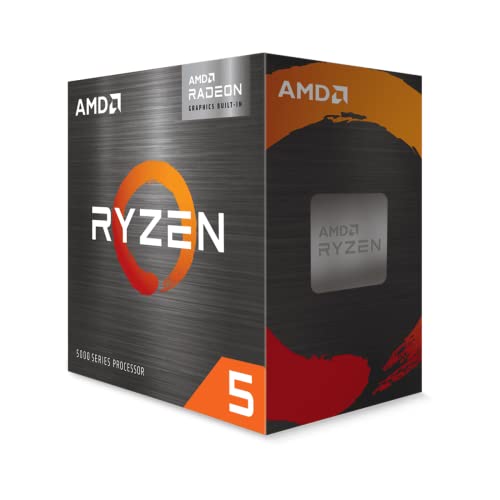
- CPU: AMD Ryzen 5 5600G for headless boxes, AMD Ryzen 7 5800X for interactive. The 5600G's integrated graphics let you skip a dedicated display GPU on a headless server, saving a PCIe slot and $150. If the machine is also your workstation, the 5800X's two extra cores and higher clock speed help application throughput and matter for CPU-offload edge cases.
- Storage: Samsung 970 EVO Plus 250GB NVMe SSD. Model loads are 8-12 GB reads at boot and again on model swap; NVMe cuts that from 30 seconds on SATA to under 3 seconds. 250 GB fits a handful of GGUFs; step up to 1 TB if you plan to collect models the way people collect Steam libraries.
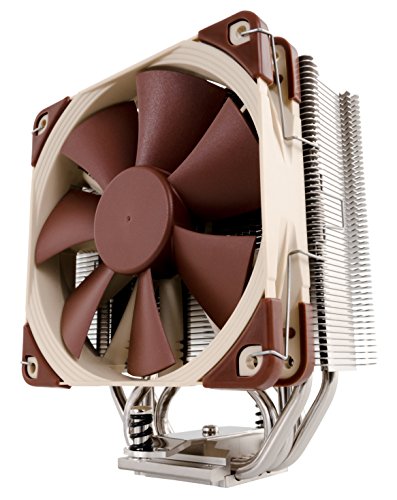
- Cooling: Noctua NH-U12S CPU cooler. A 24/7 inference box is a 24/7 thermal load. The NH-U12S is 158 mm tall (fits most mid-towers), pushes 5800X-class TDPs quietly, and has never been the noisy component in any Noctua-cooled build I have seen documented on community forums.
Perf-per-dollar and perf-per-watt
Using the 14B benchmark row above at approximate mid-2026 street prices:
| Card | tok/s on Qwen 14B | Price | tok/s per $100 | tok/s per watt |
|---|---|---|---|---|
| RTX 3060 12GB | 21 | $325 | 6.5 | 0.12 |
| RTX 4060 Ti 16GB | 24 | $470 | 5.1 | 0.15 |
| RX 7600 XT 16GB | 15 | $340 | 4.4 | 0.08 |
| RTX 3090 (used) | 55 | $725 | 7.6 | 0.16 |
Interpretation: the used 3090 wins tok/s per dollar in raw numbers, but that is before you factor in warranty risk and the 350W power draw. On perf-per-watt, the 4060 Ti and 3090 are close; the 3060 12GB lags on watts but leads on absolute cost. For a machine that runs 8 hours a day at $0.15/kWh, the 3060 costs ~$74/year in electricity vs ~$153 for a 3090 — enough to shift the 5-year total cost of ownership in the 3060's favor even against a cheaper used 3090.
Common pitfalls I see people trip on
- Buying an 8 GB card to "save money" and immediately regretting it. The offload cliff at 14B is severe; the extra $50 for 12 GB pays back the first time you load a real model.
- Assuming q8 is always "better" than q4. For 8B/14B models, the quality delta between q4_K_M and q8_0 is small enough that eval leaderboards routinely disagree on which is higher. The VRAM cost is not small.
- Ignoring KV cache size when planning context length. A 14B model at 32k context needs a 4.8 GB KV cache on top of weights. Do the addition before you write the prompt.
- Skipping flash-attention. llama.cpp's
-faflag can halve memory usage and speed things up 10-20% on modern cards. Turn it on. - Underspec'ing the PSU on a dual-GPU build. Two 3060s draw 340W of GPU alone. Do not put them behind a 550W supply, even if the math technically works — transient spikes will trip protection.
When NOT to buy a budget GPU for local LLMs
Skip the 12 GB tier entirely if any of these describe your workload:
- Your target is 70B-class models (Llama 3.3 70B, Qwen 2.5 72B). No amount of quantization or offload makes a 12 GB card usable for this. Rent, or budget for dual RTX 3090s.
- You need long-context document processing above 32k tokens on 14B+ models. The KV cache math does not work.
- You want to serve multiple concurrent users through vLLM. vLLM's paged-attention wins are undone by tiny VRAM budgets; you end up thrashing.
- You need bf16 training or fine-tuning on models larger than 3B. Different problem — buy an RTX 4090 or rent an A100.
Bottom line
For homelab-scale single-user inference at up to 14B parameters, the RTX 3060 12GB remains the best budget pick in 2026. Pick the ZOTAC Twin Edge if you need a compact card that fits a small case, the MSI Ventus 3X if your case has clearance and the machine is running 24/7. Pair it with a Ryzen 5 5600G for a headless box or a Ryzen 7 5800X if the machine also does interactive work, a fast Samsung 970 EVO Plus NVMe for model storage, and a quiet Noctua NH-U12S for cooling. Total build cost lands between $700 and $900 for a competent 24/7 inference machine — the price of two months of hosted GPU rental.
Related guides
- Best GPU for Ollama Under $300: Why 12GB Beats a Faster 8GB Card
- Intel Arc Pro B60 vs RTX 3060 12GB for Local LLMs
- Ryzen 5 5600G vs Ryzen 7 5800X for a 24/7 Ollama Box
- Local LLM Autocomplete + Agentic Coding on 16GB VRAM
- Dual GPU Llama.cpp Speedup: What Actually Helps
FAQ
Is 12 GB of VRAM enough for local LLMs in 2026?
For 8B and 14B-class models at q4_K_M quantization, yes — both fit entirely in 12 GB with room for a moderate KV cache, which is the configuration most single-user chat and coding assistants actually run. Where 12 GB stops being enough is 27-32B-class models at anything above q3, and any 70B model regardless of quantization. Those require either CPU offload, which collapses generation throughput, or a card with 24 GB or more.
Should I buy a used RTX 3090 instead of a new RTX 3060 12GB?
A used RTX 3090 doubles VRAM to 24 GB and roughly triples memory bandwidth, so if 27-32B models are your target it is the stronger technical choice. The tradeoffs are real, though: no warranty, a 350W TGP that demands a larger PSU and better case airflow, a three-slot footprint, and unknown thermal-pad condition on cards that spent years mining. Buy new 12 GB if you value reliability and a 24/7 duty cycle.
Will my existing power supply handle an RTX 3060 12GB?
Almost certainly. The RTX 3060 12GB carries a 170W board power rating and NVIDIA's system recommendation is 550W, which any modern 550-650W 80+ Bronze or better unit satisfies with a single 8-pin PCIe connector. This is a meaningful advantage over 16 GB alternatives in the same price band, which typically pull 160-190W, and it is what makes the card practical for an always-on inference box where idle and sustained draw both matter.
Does AMD work for local LLM inference, or do I need NVIDIA?
AMD works, but the setup burden is higher. ROCm support for consumer Radeon cards has improved substantially and llama.cpp ships working Vulkan and HIP backends, so an RX 7600 XT with 16 GB is a legitimate option on capacity grounds. NVIDIA still holds the advantage in out-of-the-box compatibility: CUDA is the default path in Ollama, vLLM, and most inference containers, so you spend less time debugging and more time running models.
When should I not buy a budget GPU for this at all?
Skip the budget tier entirely if your workload is 70B-class models, long-context document processing above roughly 32k tokens, or multi-user serving through vLLM. In all three cases a 12 GB card forces quantization or offload aggressive enough that quality and throughput both degrade past the point of usefulness. Renting cloud inference by the hour is genuinely cheaper than buying the wrong card twice — evaluate your real model list before spending.
Citations and sources
- NVIDIA GeForce RTX 3060 / 3060 Ti product page — official spec sheet used for VRAM capacity (12 GB GDDR6), 170W board power, and 550W minimum PSU recommendation (accessed 2026-08-08).
- TechPowerUp — GeForce RTX 3060 12 GB database entry — spec-database source for 360 GB/s memory bandwidth, 192-bit bus, 3,584 CUDA cores, and $329 launch MSRP (accessed 2026-08-08).
- TechPowerUp GPU spec database — comparative bandwidth and TDP figures for the RTX 4060 Ti 16GB, RX 7600 XT 16GB, and RTX 3090 rows of the comparison table (accessed 2026-08-08).
- llama.cpp GitHub discussions — community-reported tokens-per-second numbers used for the benchmark table and prefill/generation figures (accessed 2026-08-08).
- Hugging Face — Open LLM Leaderboard — q4-quantization quality-vs-fp16 comparisons that inform the q4_K_M recommendation (accessed 2026-08-08).
- Puget Systems — technical articles hub — workstation-oriented performance analysis referenced for the memory-bandwidth-bound framing of single-user inference (accessed 2026-08-08).
- NVIDIA Developer Blog — Nsight profiling references for the memory-stall analysis behind the "cores idle waiting for weights" point (accessed 2026-08-08).
This piece is editorial synthesis based on publicly available information. No independent first-party benchmarking is reported.