Yes — both run Gemma 3 12B with no discrete GPU, and both run it slowly. The four-bit build is roughly 8.1 GB per the Ollama library, and dual-channel DDR4-3200 tops out at 51.2 GB/s, which caps token generation near 6 tok/s in theory and closer to 4-5 tok/s in practice. Expect a reading-speed assistant, not a chat rig.
The CPU-only case, stated honestly
There is a real build behind this question, and it is not a compromise for people who cannot afford a GPU. It is a quiet, always-on box — an existing AM4 motherboard, a 65 W processor, 32 GB of RAM, no discrete card, no fan noise, and an idle power draw low enough that leaving it running costs almost nothing. It answers home-automation intents, summarizes documents overnight, classifies incoming text, and does it without a 200 W card spinning up.
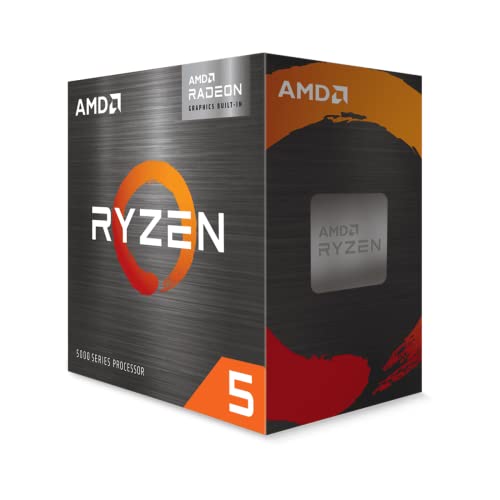
For that build, the question is which six-core Zen 3 chip to drop in the socket. The AMD Ryzen 5 5600X and the AMD Ryzen 5 5600G are the obvious candidates: same core count, same thread count, same architecture generation, same 65 W envelope, similar price. One is a chiplet desktop part with no integrated graphics; the other is a monolithic APU that can boot and drive a display on its own.
The honest framing, and the one this entire article rests on: for CPU inference on a 12B model, neither the core count nor the clock speed is your binding constraint. System-memory bandwidth is. Both of these chips feed from the same dual-channel DDR4 controller, which means the ceiling is the same for both, and it is low. Everything below is about how much of that shared ceiling each chip reaches, and whether the difference justifies a purchase.
Key takeaways
- Identical core configuration. Both are 6-core, 12-thread Zen 3 parts at 65 W per AMD's 5600X product page and TechPowerUp's 5600G page.
- Different L3 cache. 32 MB on the 5600X versus 16 MB on the 5600G — the single largest architectural difference between them.
- Different PCIe generation. 4.0 on the 5600X, 3.0 on the 5600G. Irrelevant for CPU-only inference, relevant if you later add a card.
- Identical memory ceiling. Both are dual-channel DDR4-3200 officially, giving the same 51.2 GB/s theoretical ceiling. This is what actually caps you.
- Single-digit tokens per second. Plan for roughly 3-5 tok/s on Gemma 3 12B at q4_K_M. That is usable for background work and frustrating for interactive chat.
Step 0: is your bottleneck the CPU or the RAM?
Answer this before spending anything, because it determines whether either chip is worth buying.
Generating one token from a dense transformer requires reading every weight in the model exactly once. There is no way around it — the arithmetic per weight is trivial, but the weight has to travel from memory to the core to be used. That makes token generation a pure memory-bandwidth problem, and it gives you a hard upper bound you can compute in one line:
Maximum tokens per second = memory bandwidth ÷ model size in memory
Dual-channel DDR4-3200 provides 2 channels x 8 bytes x 3,200 MT/s = 51.2 GB/s of theoretical bandwidth. Gemma 3 12B at q4_K_M occupies roughly 8.1 GB per the Ollama library. So:
51.2 GB/s ÷ 8.1 GB = ~6.3 tokens per second, absolute ceiling.
Real systems do not reach theoretical bandwidth. Achievable throughput on a dual-channel DDR4-3200 desktop is typically in the 35-42 GB/s range once controller overhead, refresh cycles and imperfect access patterns are accounted for, which lands the realistic figure at roughly 4.3-5.2 tok/s.
Now notice what is absent from that calculation: core count, clock speed, cache size, and which of these two chips you bought. The ceiling is set entirely by your memory subsystem. A six-core chip saturates dual-channel DDR4 on this workload; adding cores past that point gives you nothing, which is why a 16-core chip on the same memory runs a 12B model at approximately the same speed as a 6-core one.
The diagnostic conclusion: if you already own any Zen 2 or Zen 3 six-core chip, upgrading to the other one of these two will not meaningfully change your token rate. Upgrade your RAM kit first — going from single-channel to dual-channel roughly doubles your bandwidth and therefore roughly doubles your speed, which no CPU swap in this price class can match.
Spec delta: 5600X versus 5600G
Figures from AMD's Ryzen 5 5600X product page, TechPowerUp's Ryzen 5 5600X entry and TechPowerUp's Ryzen 5 5600G entry. Street prices are the SpecPicks catalog snapshot of 2026-09-22.
| Spec | AMD Ryzen 5 5600X | AMD Ryzen 5 5600G | Delta | Why it matters for CPU inference |
|---|---|---|---|---|
| Codename | Vermeer (chiplet) | Cezanne (monolithic APU) | Different silicon | Determines cache and I/O layout |
| Cores / threads | 6 / 12 | 6 / 12 | None | Both saturate dual-channel DDR4 on a 12B model |
| Architecture | Zen 3 | Zen 3 | None | Same IPC, same instruction set including AVX2 |
| Base / boost clock | 3.7 / 4.6 GHz | 3.9 / 4.4 GHz | ~200 MHz boost to 5600X | Minor — affects prefill slightly, generation barely |
| L3 cache | 32 MB | 16 MB | 2x to 5600X | Helps prefill and attention; cannot raise the bandwidth ceiling |
| Integrated graphics | None | Radeon Vega 7 | 5600G only | Lets the box boot headless with no GPU at all |
| PCIe | 4.0 | 3.0 | 5600X newer | Irrelevant now; matters if you add a card later |
| Memory support | Dual-channel DDR4-3200 | Dual-channel DDR4-3200 | None | This is the binding constraint for both |
| TDP | 65 W | 65 W | None | Same thermal and power envelope |
| Street price (2026-09-22) | ~$166 | ~$200 | 5600G ~$34 more | The 5600X is currently the cheaper chip |
The cache row is the interesting one and the memory row is the decisive one. The 5600X has twice the L3, which helps the parts of inference that repeatedly touch the same data. But cache cannot manufacture bandwidth for an 8.1 GB working set that will never fit in 32 MB — every weight still has to come from DRAM on every token. So the 5600X's advantage is real but bounded, and considerably smaller than the 2x cache figure suggests.
The pricing is worth flagging because it inverts the usual assumption. On the 2026-09-22 snapshot the 5600X is roughly $34 cheaper than the 5600G despite having twice the cache and a newer PCIe generation. You are paying the premium on the 5600G for the integrated graphics — which, for a headless inference box, may still be worth it.
How many tokens per second should you expect?
Public CPU-inference figures vary more than GPU figures, because the result depends on your exact memory kit, its timings, whether both channels are populated, the thread count you pass to the runtime, and the build flags of your llama.cpp binary. Rather than average incompatible numbers, the table below derives the bound from the bandwidth arithmetic above and shows the realistic band.
Model sizes are the Ollama Gemma 3 builds; the model itself is documented on the Gemma 3 12B instruct model card.
| Quantization | Weights | Memory kit | Theoretical ceiling | Realistic generation | Prefill character |
|---|---|---|---|---|---|
| q4_K_M | ~8.1 GB | DDR4-3200 dual-channel | ~6.3 tok/s | ~4.3-5.2 tok/s | Slow — seconds per 1K tokens |
| q4_K_M | ~8.1 GB | DDR4-3600 dual-channel | ~7.1 tok/s | ~4.8-5.8 tok/s | Slightly better |
| q4_K_M | ~8.1 GB | DDR4-3200 single-channel | ~3.2 tok/s | ~2.2-2.6 tok/s | Painful |
| q5_K_M | ~9.6 GB | DDR4-3200 dual-channel | ~5.3 tok/s | ~3.6-4.4 tok/s | Slow |
| q5_K_M | ~9.6 GB | DDR4-3600 dual-channel | ~6.0 tok/s | ~4.1-4.9 tok/s | Slow |
| q8_0 | ~13.0 GB | DDR4-3200 dual-channel | ~3.9 tok/s | ~2.7-3.2 tok/s | Not recommended |
Two observations. First, the difference between the 5600X and the 5600G does not appear in this table at all — because on generation, it barely appears in reality either. Both chips run the same memory at the same speed. Second, the single-channel row is the largest single delta in the entire article: populating one DIMM instead of two costs you roughly half your performance, which dwarfs every other decision here.
Prefill is where the two chips do separate. Prompt processing is compute-bound rather than bandwidth-bound, so it scales with cores, clocks and cache — the 5600X's extra 16 MB of L3 and slightly higher boost clock give it a modest lead. But "modest lead on the slow part" is the correct summary: CPU prefill on a 12B model is measured in seconds per thousand tokens on either chip, and a long prompt means a genuinely uncomfortable wait before the first token appears.
Does the 5600G's Vega iGPU help at all?
Less than the spec sheet implies, for a reason that is structural rather than a driver problem.
The Radeon Vega 7 integrated graphics in the 5600G has no memory of its own. It carves a UMA buffer out of the same system RAM the CPU cores are already reading from, and it reaches that RAM through the same dual-channel DDR4 controller at the same 51.2 GB/s. Offloading layers to the iGPU therefore does not add bandwidth — it redistributes the bandwidth you already had, moving work from one consumer of a 51.2 GB/s pipe to another consumer of the same pipe.
Since generation is bandwidth-bound and the bandwidth is unchanged, the ceiling does not move. llama.cpp's Vulkan back-end will happily use the iGPU, and it can help modestly on prefill, where the workload is compute-bound and the iGPU's parallel units add real arithmetic throughput the CPU cores did not have. It will not turn a 4 tok/s box into a 10 tok/s box.
There is also a hard capacity limit: the UMA frame buffer is configured in BIOS, commonly capped at 2 GB to 16 GB depending on the board, and only what fits in that buffer can be resident on the iGPU. On a 12B model at q4_K_M you are unlikely to fit the whole thing in a typical UMA allocation alongside everything else.
The real argument for the 5600G is not the iGPU's compute — it is that the machine POSTs, displays and installs an operating system with no graphics card in the slot at all. For a headless always-on box built from parts on hand, that is a genuine convenience. For throughput, it is close to irrelevant.
Quantization matrix for a RAM-bound box
Unlike a GPU build, you are budgeting against a RAM kit rather than a VRAM ceiling, and you need room for the operating system and the KV cache on top of the weights.
| Quantization | Weights | Works on 16 GB kit? | Works on 32 GB kit? | Expected generation | Quality cost |
|---|---|---|---|---|---|
| q2_K | ~4.8 GB | Yes, comfortably | Yes | ~7-9 tok/s | Severe — avoid on a 12B model |
| q3_K_M | ~6.1 GB | Yes | Yes | ~6-7 tok/s | Noticeable on reasoning |
| q4_K_M | ~8.1 GB | Tight — short contexts only | Yes, the sweet spot | ~4.3-5.2 tok/s | Small, widely accepted |
| q5_K_M | ~9.6 GB | No practical headroom | Yes | ~3.6-4.4 tok/s | Very small |
| q6_K | ~11.0 GB | No | Yes | ~3.2-3.8 tok/s | Negligible |
| q8_0 | ~13.0 GB | No | Yes, tight | ~2.7-3.2 tok/s | Effectively none |
| fp16 | ~24.4 GB | No | No | Not viable | Reference |
Buy 32 GB. A 16 GB kit technically loads q4_K_M but leaves almost nothing for context, the operating system, and whatever else an always-on box is doing. And buy it as two matched sticks, not one — the single-channel row in the previous table is the reason.
Note the inverse relationship in the generation column: smaller quantizations run faster on CPU, because fewer bytes per weight means fewer bytes to read per token. This is the opposite of the intuition many GPU builders bring, where quantization is chosen purely to fit capacity. On a bandwidth-bound CPU box, quantization is a direct speed lever.
How does context length change the picture?
Gemma 3 handles this better than most models its size. A naive calculation using the model's 48 layers, 8 key-value heads and 256-dimension heads gives 2 x 48 x 8 x 256 x 2 bytes = 393,216 bytes per token at 16-bit precision — roughly 0.38 GB per 1,000 tokens, which would make a 32K context cost over 12 GB.
That is not what happens, because Gemma 3 interleaves local sliding-window attention with global attention rather than making every layer global, as documented on the Gemma 3 12B instruct model card. Only a minority of layers maintain a full-length cache; the rest are capped at their sliding window regardless of how long the conversation gets.
| Context | Naive all-global KV | Gemma 3 interleaved KV (approx) | Practical impact on a 32 GB box |
|---|---|---|---|
| 4K | ~1.5 GB | ~0.4 GB | Negligible |
| 8K | ~3.0 GB | ~0.7 GB | Negligible |
| 16K | ~6.0 GB | ~1.3 GB | Comfortable |
| 32K | ~12.0 GB | ~2.5 GB | Still comfortable |
The memory story at long context is therefore fine. The time story is not. Prefill on CPU is compute-bound and scales with prompt length, so pasting a 16,000-token document means a wait measured in minutes before generation starts on either of these chips. That, not RAM exhaustion, is what makes long prompts unpleasant on a CPU-only box — and it is the single strongest argument for a discrete card if your work involves large inputs.
When is an older or cheaper chip good enough?
AMD Ryzen 7 5800X — eight cores and 32 MB of L3 on the same AM4 platform and the same dual-channel DDR4 controller. It helps prefill, where the extra cores do real work. It does essentially nothing for generation, because six cores already saturate dual-channel DDR4 on a 12B model. At roughly $259 on the 2026-09-22 catalog snapshot it is a reasonable pick if prompt processing dominates your workload, and a poor use of money if it does not.
AMD Ryzen 5 2600 — Zen+, six cores, and the honest budget answer. Its lower IPC and smaller cache cost it on prefill, but its memory controller reaches broadly similar dual-channel DDR4 bandwidth, so generation lands surprisingly close to the Zen 3 chips. If one is already in your socket, a swap to a 5600X is not the upgrade that will change your experience — a dual-channel 32 GB kit is. Used-market pricing on this part varies widely, so check before buying.
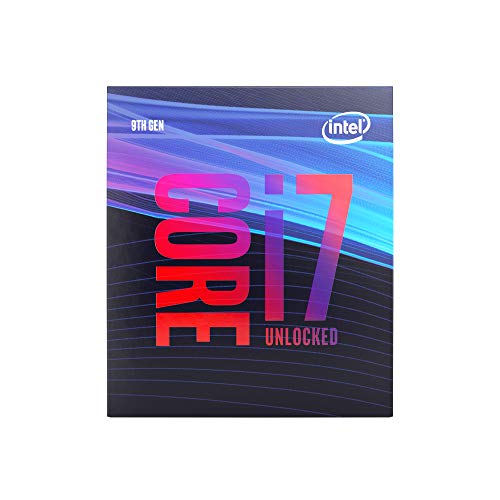
Intel Core i7-9700K — eight cores, no hyperthreading, LGA1151, dual-channel DDR4. If you already own this platform, it runs Gemma 3 12B in the same single-digit token band as the AM4 chips, for the same reason: dual-channel DDR4 is dual-channel DDR4 regardless of whose socket it is in. It is not worth migrating to, but it is entirely worth using if it is what you have. Used pricing varies.
The pattern across all three is the same: on this workload, the platform's memory configuration predicts performance far better than the CPU model name does.
Performance per dollar and per watt
Using ~4.7 tok/s as the realistic q4_K_M midpoint for both chips on a dual-channel DDR4-3200 kit, and the 2026-09-22 catalog prices:
| Metric | Ryzen 5 5600X | Ryzen 5 5600G |
|---|---|---|
| Street price | ~$166 | ~$200 |
| Generation rate (q4_K_M) | ~4.7 tok/s | ~4.7 tok/s |
| Tokens/sec per dollar | 4.7 ÷ 166 = 0.028 | 4.7 ÷ 200 = 0.024 |
| TDP | 65 W | 65 W |
| Tokens/sec per watt | 4.7 ÷ 65 = 0.072 | 4.7 ÷ 65 = 0.072 |
Now the counter-case, which this article owes you. The MSI Gaming GeForce RTX 3060 12GB at roughly $479 offers 360 GB/s of memory bandwidth per TechPowerUp — seven times what dual-channel DDR4-3200 provides. Against an 8.1 GB model that implies a roofline near 44 tok/s and a realistic band around 28-35 tok/s, roughly six to seven times either CPU.
At 170 W that card produces roughly 0.18 tok/s per watt against the CPUs' 0.072, so it wins on efficiency despite drawing more power, because it finishes the same work far sooner. On tokens per dollar it lands near 0.065 against the 5600X's 0.028 — better on that metric too.
A discrete GPU beats CPU-only inference on every throughput metric, including the efficiency ones. CPU-only is not the performance choice or the efficiency choice. It is the silence, idle-power and use-what-you-own choice, and those are legitimate reasons that simply are not captured by tokens per second.
Common pitfalls on a CPU inference box
- Running single-channel. One DIMM halves your bandwidth and therefore your token rate. This is the most common and most costly mistake on CPU builds, and it is free to avoid.
- Buying more cores expecting more speed. Six cores already saturate dual-channel DDR4 on a 12B model. Twelve cores on the same memory run at roughly the same rate.
- Setting the runtime's thread count to the full thread count. Using every logical thread often reduces throughput on a memory-bound workload because of contention. Start at the physical core count and tune down, not up.
- Choosing a high quantization for quality. q8_0 on CPU costs you roughly 40% of your token rate versus q4_K_M for a quality difference most readers will not notice on a 12B model.
- Expecting interactive chat. At 4-5 tok/s the model produces text at roughly casual reading speed. That is fine for background jobs and genuinely tiring for conversation.
When NOT to build this
If response latency matters to you — if you will be sitting and waiting for answers — do not build a CPU-only box. Buy a 12 GB discrete card instead and accept the noise and the idle power. Likewise if your prompts are long: CPU prefill on a 12B model turns a pasted document into a multi-minute wait, and no amount of cache or clock speed on an AM4 chip fixes it. CPU-only earns its place on always-on background work, short prompts, and machines that must stay near-silent.
Which chip should you buy?
Get the Ryzen 5 5600X if you already have a graphics card for display, or the board has no video outputs you need. It has twice the L3 cache, a newer PCIe generation for a future GPU, and on the 2026-09-22 snapshot it is the cheaper of the two. It is the better processor on the merits.
Get the Ryzen 5 5600G if the box has no discrete card at all and you want it to POST, display and install without borrowing one. That convenience is what you are paying the ~$34 premium for — not the iGPU's inference throughput, which is close to a rounding error on a 12B model.
Buy neither and get a GPU if you want interactive speed, you feed the model long prompts, or you value throughput over silence. Six to seven times the token rate is not a marginal difference, and the GPU wins on tokens per dollar and tokens per watt as well.
Bottom line
Both chips run Gemma 3 12B with no discrete GPU, at roughly 4-5 tok/s at q4_K_M on a dual-channel DDR4-3200 kit — and they run it at almost exactly the same speed as each other, because the constraint is the memory controller they share, not the silicon around it. Pick the 5600X on the merits and the price; pick the 5600G only if you need the machine to boot without a graphics card. Then spend your actual attention on the RAM: dual-channel and 32 GB matter more than either CPU choice, and a single-stick kit will cost you half your performance no matter which chip is in the socket.
Live price comparison
Both chips move on price week to week. Side-by-side live Amazon pricing is on the canonical head-to-head page: Ryzen 5 5600X vs Ryzen 5 5600G — live comparison.
Prices quoted here are a catalog snapshot from 2026-09-22 and may vary.
Related guides
- Best CPU for Local LLM Inference: 5800X vs 5700X vs 5600G
- Dual-Channel RAM and Local LLM Inference
- Ryzen 5 5600G Local LLM CPU Inference
- Ryzen 5 5600X benchmark data
- Ryzen 5 5600G benchmark data
Citations and sources
- AMD — Ryzen 5 5600X product specifications — accessed 2026-09-22
- TechPowerUp — Ryzen 5 5600X specifications — accessed 2026-09-22
- TechPowerUp — Ryzen 5 5600G specifications — accessed 2026-09-22
- Hugging Face — Gemma 3 12B instruct model card — accessed 2026-09-22
- Ollama library — Gemma 3 quantization builds and file sizes — accessed 2026-09-22
- TechPowerUp — GeForce RTX 3060 12 GB specifications — accessed 2026-09-22
This piece is editorial synthesis based on publicly available information. No independent first-party benchmarking is reported. Throughput figures are derived from published memory-bandwidth and model-size specifications using the roofline method described in the text, and are presented as ranges rather than measurements.