As an Amazon Associate, SpecPicks earns from qualifying purchases. See our review methodology.
Why one AM4 socket covers two very different CPUs for local inference
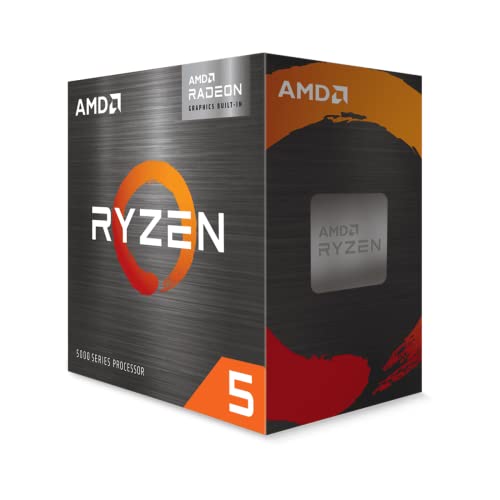
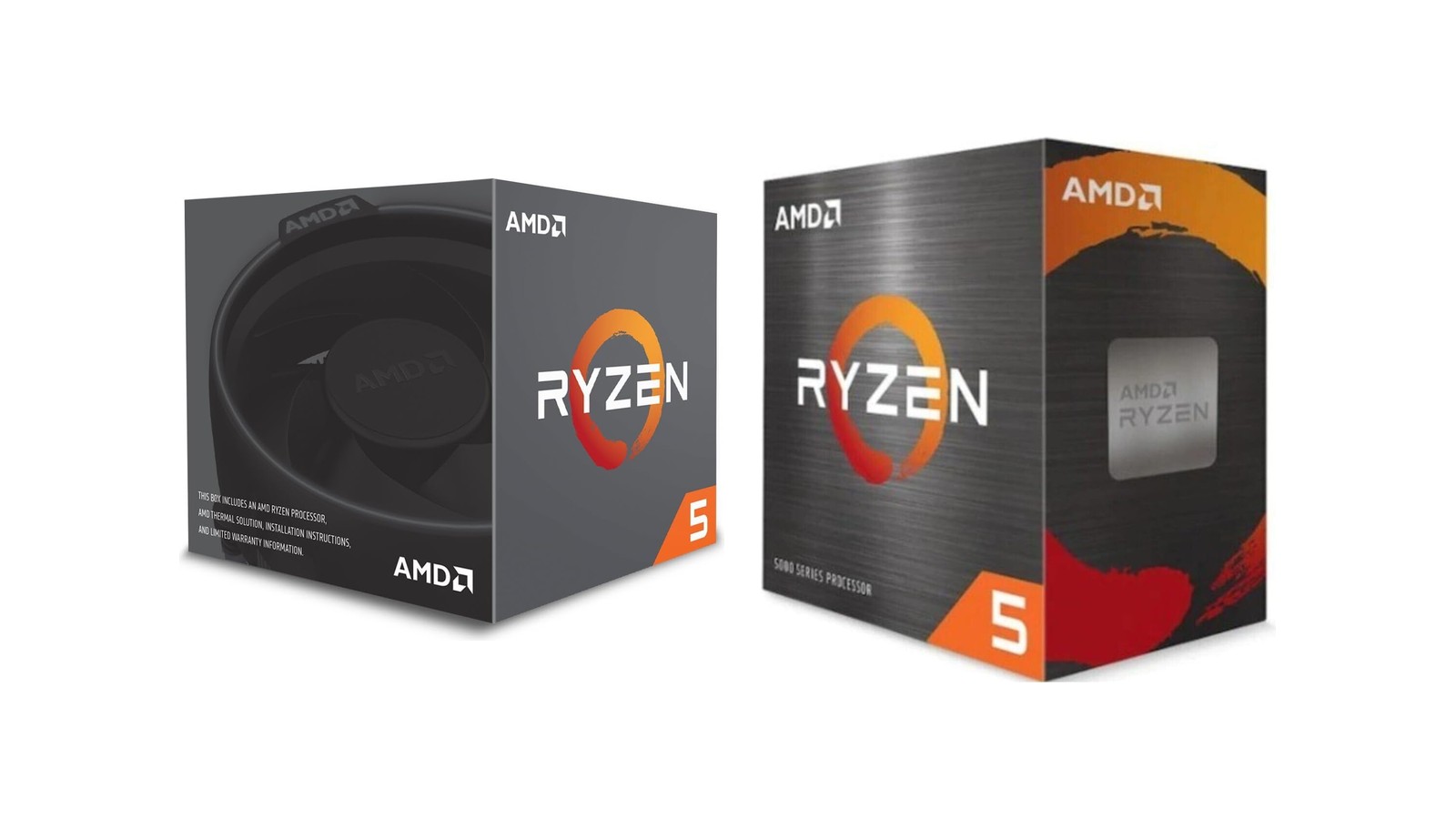
If you built a Ryzen 5 2600 system in 2018 or 2019, you're sitting on one of the most upgradeable desktop platforms ever sold. The same AM4 board that took a 12 nm Zen+ chip will, after a BIOS update, take a 7 nm Zen 3 AMD Ryzen 5 5600X. That swap takes an afternoon and doesn't touch the rest of the build. And if you want to run a local LLM without buying a graphics card, it's the obvious first question: does the drop-in CPU upgrade do enough, or is the money better spent on a GPU?
The question got fresh attention this week from a Hacker News front-page thread asking "How did AMD Ryzen get 50% faster in two years?" The Zen+ to Zen 3 jump in that discussion is exactly the one an AMD Ryzen 5 2600 owner faces. For games, the answer is well documented. For local inference it's more nuanced, because LLM inference on a CPU does two very different jobs, and Zen 3 only transforms one of them.
gpt-oss 20B is the right model to test that on. It's OpenAI's open-weight mixture-of-experts model: 21B parameters in total, but only 3.6B active per token, spread across 32 experts with 4 selected per token (gpt-oss-20b model card). The small active path is what makes CPU-only use practical at all. A dense 14B model reads every one of its weights for every token. gpt-oss 20B reads about a sixth of its file. That puts both chips within reach of usable speeds, so the difference between them actually matters.
Key Takeaways
- gpt-oss 20B needs about 16 GB of memory by OpenAI's own figure (OpenAI). The native MXFP4 GGUF is 12.11 GB (ggml-org/gpt-oss-20b-GGUF), so 32 GB of system RAM is the practical floor for a CPU-only build.
- Generation speed is capped by memory bandwidth, and the two ceilings are only ~9% apart: 46.9 GB/s theoretical for the 2600's official DDR4-2933, and 51.2 GB/s for the 5600X's DDR4-3200. Bandwidth alone therefore predicts about a 9% generation gap. Our ~30% estimate adds an assumption that Zen 3 turns more of its bus into real throughput than Zen+, whose memory controller and Infinity Fabric are less efficient (we model 45–60% bus efficiency, with the 2600 at the low end). That extra ~20% is modeled, not measured.
- Prompt processing is compute-bound. Zen 3 runs AVX2 at full 256-bit width, where Zen+ splits each 256-bit operation into two 128-bit halves (Zen+ on Wikipedia, Zen 3 on Wikipedia). That's where the 5600X pulls about 2.5× ahead.
- A 16-core Zen 4 Ryzen 9 7950X, CPU-only, generates 21.70 tok/s on this model in mainline llama.cpp (ik_llama.cpp discussion #758). That's roughly the ceiling for desktop CPUs, and both AM4 chips land below it.
Step 0: Is your CPU or your memory the bottleneck?
Running an LLM involves two phases, and they stress different parts of your system.
Prefill (prompt processing) reads your entire prompt at once. It's a large batch of matrix multiplications, so it scales with cores, clock speed and vector-unit width. On a CPU this is the slow, painful phase. A 2,000-token document can take over a minute before the first word appears.
Decode (generation) produces one token at a time. For each token the CPU has to stream every active weight from RAM. The arithmetic is trivial; the memory reads are not. Decode speed is therefore roughly your effective memory bandwidth divided by the bytes read per token.
Here's the quick diagnostic. If your complaint is "it takes forever to start answering," you're prefill-bound and a faster CPU helps a lot. If your complaint is "it types slowly once it starts," you're decode-bound, and RAM speed and channel count matter more than the CPU.
For gpt-oss 20B, the bytes per token are low. With a 12.11 GB file for 20.9B parameters, the 3.6B active parameters come to about 2.1 GB per token. That's why a six-core CPU can generate double-digit tokens per second on a 21B model. It would manage under 5 tok/s on a dense 14B at Q4.
Spec delta: Ryzen 5 2600 vs Ryzen 5 5600X
| Spec | Ryzen 5 2600 | Ryzen 5 5600X | Why it matters for LLMs | Source |
|---|---|---|---|---|
| Architecture | Zen+ (12 nm) | Zen 3 (7 nm) | Zen 3 has ~19% higher IPC than Zen 2, which itself beat Zen+ | Wikipedia |
| Cores / threads | 6 / 12 | 6 / 12 | Same count, so per-core speed decides prefill | AMD |
| Boost clock | 3.9 GHz | 4.6 GHz | ~18% higher peak clock | AMD |
| L3 cache layout | 16 MB, split 2 × 8 MB CCX | 32 MB, unified 6-core CCX | Unified cache reduces cross-CCX traffic in threaded matmul | Wikipedia |
| Official DDR4 speed | DDR4-2933 | DDR4-3200 | 46.9 vs 51.2 GB/s theoretical dual-channel | AMD |
| AVX2 datapath | 128-bit (256-bit ops split) | Full 256-bit | Roughly doubles vector throughput per clock | Wikipedia |
| TDP | 65 W | 65 W | Same cooler class | AMD |
| Launch price | $199 (Apr 2018) | $299 (Nov 2020) | — | AMD |
| Amazon listing (Sep 24, 2026) | $265.00 | $174.45 | The 5600X is now the cheaper chip new | Amazon |
5600X specifications are from AMD's Ryzen 5 5600X product page. One oddity in the last row is worth calling out: a new-in-box Ryzen 5 2600 now lists for more than a new 5600X. If you don't already own a 2600, there's no reason to buy one.
How much RAM does gpt-oss 20B need on a CPU-only build?
gpt-oss 20B ships with its expert weights already quantized to MXFP4. Re-quantizing barely shrinks it, which is why the "Q4" and "Q8" builds are nearly the same size as the native file.
| Build | File size | System RAM needed (8K context) | Fits in 16 GB? | Fits in 32 GB? |
|---|---|---|---|---|
| MXFP4 native (ggml-org) | 12.11 GB | ~13 GB + OS | Barely; close every other app | Yes, comfortably |
| Q4_K_M (unsloth) | 11.62 GB | ~12.5 GB + OS | Barely | Yes |
| Q8_0 (unsloth) | 12.11 GB | ~13 GB + OS | Barely | Yes |
Sizes are from ggml-org/gpt-oss-20b-GGUF and unsloth/gpt-oss-20b-GGUF. Use the native MXFP4 file. The Q4 build saves under half a gigabyte and gives up the precision OpenAI shipped. Windows plus a browser typically holds 4–6 GB, so a 16 GB system will page to disk. Buy 32 GB as two matched 16 GB sticks, so you keep dual-channel bandwidth.
How many tokens per second does each CPU produce on gpt-oss 20B?
No public benchmark runs gpt-oss 20B CPU-only on either chip, so the numbers below are SpecPicks estimates anchored to two published measurements on the same model:
- A Ryzen 9 7950X (16 Zen 4 cores, DDR5), CPU-only in mainline llama.cpp: 143.07 tok/s prefill, 21.70 tok/s generation at a 1,024-token batch (ik_llama.cpp discussion #758).
- A Ryzen 5 5600H laptop chip (six Zen 3 cores, dual-channel DDR4-3200, 35 W cap) running the Vega 7 iGPU through Vulkan: 114.91 tok/s pp512, 14.05 tok/s tg128 (llama.cpp gpt-oss guide thread). This is the closest published analog to a 5600X on DDR4-3200.
| CPU | RAM | Est. prefill, 2K prompt (tok/s) | Est. generation, 2K context (tok/s) | Est. generation, 8K context (tok/s) | Est. wait for first token (2,000-token prompt) |
|---|---|---|---|---|---|
| Ryzen 5 2600 | DDR4-2933 | ~18–28 | ~8–12 | ~7–11 | ~70–110 s |
| Ryzen 5 5600X | DDR4-3200 | ~45–70 | ~11–15 | ~10–14 | ~29–44 s |
| Ryzen 5 5600X | DDR4-3600 | ~45–70 | ~12–16 | ~11–15 | ~29–44 s |
How we got there: generation is effective bandwidth ÷ ~2.1 GB per token. We used 45–60% bus efficiency, since the 7950X result implies about 47% of its DDR5 bandwidth. The 2600 sits at the low end because Zen+'s memory controller and Infinity Fabric are less efficient. Prefill scales the 7950X's 143 tok/s by cores × all-core clock, then halves it for Zen+'s split AVX2 units. Real results vary by workload, llama.cpp build and thread count.
Why is Zen 3 faster per clock for inference?
Three architectural changes do most of the work:
- Full-width AVX2. llama.cpp's CPU matmul kernels are built around 256-bit AVX2 instructions. Zen+ has two 128-bit FMA pipes and cracks every 256-bit instruction in half. Zen 2 widened those pipes to 256 bits, and Zen 3 kept them, so each clock does about twice the vector math. That alone roughly doubles prefill throughput at equal clocks.
- Unified 32 MB L3. The 2600's six cores are split across two CCXs of three cores, each with its own 8 MB of L3. Threads on different CCXs share data through the Infinity Fabric, which adds latency. Zen 3 puts all six cores on one CCX with 32 MB of shared L3, so tiles of a weight matrix stay close to every core working on them.
- Faster memory and a better controller. DDR4-3200 is the 5600X's official speed and DDR4-3600 is the widely used sweet spot, against the 2600's official DDR4-2933. That's 9–23% more theoretical bandwidth, and Zen 3 gets more of it in practice.
Add the 3.9 → 4.6 GHz boost and Zen 3's roughly 19% IPC gain over Zen 2, and the prefill gap of about 2.5× makes sense.
Prefill vs generation: which CPU weakness shows up where?
On the Ryzen 5 2600, the weakness you'll notice is the wait before the first token. Paste a 2,000-token document and ask for a summary, and you wait somewhere around a minute and a half. The answer then streams at 8–12 tok/s, which is comfortable reading speed.
On the Ryzen 5 5600X, that wait drops to about half a minute. Generation improves too, but only by about a third, because both chips hit the same kind of wall: dual-channel DDR4.
So if you mostly chat in short turns, the upgrade feels modest. If you feed the model documents, code files or long system prompts, it feels transformative. A faster prefill option also exists on both chips: the ik_llama.cpp fork reports about 3.6× faster CPU prompt processing than mainline llama.cpp on this exact model.
How does context length change the gap?
gpt-oss 20B keeps its KV cache small. Half of its 24 layers use a 128-token sliding window, and the other 12 use full attention with 8 KV heads of dimension 64. That works out to about 24 KB per token of fp16 cache (model config):
| Context | KV cache (fp16) | Total RAM with MXFP4 weights |
|---|---|---|
| 4K | ~0.10 GB | ~12.2 GB |
| 16K | ~0.40 GB | ~12.5 GB |
| 32K | ~0.81 GB | ~12.9 GB |
RAM isn't the problem at long context. Time is. Prefill speed drops as context grows (the 7950X fell from 143 to 116 tok/s by 2K of existing context in the ik_llama.cpp sweep), and a 16K-token prompt on a Ryzen 5 2600 could take 10 minutes or more to process. This is where the 5600X's compute advantage matters most.
Is a Ryzen 7 5800X or Ryzen 5 5600G a better upgrade target?
The AMD Ryzen 7 5800X adds two cores (8 in total), which scales prefill by about a third over the 5600X. Generation stays nearly identical, because it's the same DDR4 bus. It's right when you process long documents daily. It isn't worth the extra $80 or so if you mostly chat, and it runs at 105 W instead of 65 W.
The AMD Ryzen 5 5600G trades half the L3 cache (16 MB) and PCIe 4.0 for a Vega 7 iGPU. Running gpt-oss 20B through Vulkan on that iGPU is what produced the 14.05 tok/s figure above on the laptop 5600H. Be clear about what that means: for gpt-oss 20B specifically, the 5600G's iGPU path matches or beats the 5600X's six cores, especially on prefill. It's the right choice for a dedicated, GPU-less LLM box, or if your 2600 system relies on a basic display card you want to remove. It isn't worth it if you game or plan to add a real GPU later. Its PCIe 3.0 lanes and smaller cache make it the weaker gaming CPU and the weaker GPU host.
We compare those two head-to-head for CPU inference in Ryzen 9 3900X vs Ryzen 5 5600G, CPU-only and Ryzen 5 5600X vs Ryzen 7 5800X for Qwen2.5 14B.
Performance per dollar and per watt math
Using the Amazon listings on September 24, 2026, and the midpoint of our generation estimates:
| Chip | Est. generation (tok/s) | Est. prefill (tok/s) | Listing | Gen tok/s per $100 | TDP | Gen tok/s per 10 W |
|---|---|---|---|---|---|---|
| Ryzen 5 2600 | ~10 | ~23 | $265.00 | ~3.8 | 65 W | ~1.5 |
| Ryzen 5 5600X | ~13 | ~57 | $174.45 | ~7.5 | 65 W | ~2.0 |
| Ryzen 7 5800X | ~13 | ~75 | $254.90 | ~5.1 | 105 W | ~1.2 |
| Ryzen 5 5600G (iGPU, Vulkan) | ~14 | ~115 | $199.99 | ~7.0 | 65 W | ~2.2 |
If you already own the 2600, it's a sunk cost. The real question is whether the $174 upgrade is worth about 3 tok/s more generation and 2.5× faster prompts. For document work it clearly is.
What you'll need for a drop-in AM4 upgrade
- BIOS first. Flash your board vendor's Ryzen 5000–capable BIOS while the Ryzen 5 2600 is still installed. A board on an old BIOS won't POST with the new chip. Check the vendor's CPU support list for the exact version. Most B450 and X470 boards received support, while support on older A320 boards is spotty.
- RAM. Two matched DDR4-3200 or DDR4-3600 sticks, 32 GB in total. Enable the XMP/DOCP profile in the BIOS. Out of the box, many boards run DDR4 at 2133 MT/s, which would throw away about a third of your bandwidth.
- Cooler. The 5600X has the same 65 W TDP. It ships with a Wraith Stealth cooler, and your 2600's cooler also fits the AM4 mounting. Long CPU-inference runs keep every core loaded, so a quieter tower cooler is a sensible $30 extra.
- Software. A current llama.cpp or Ollama build, run with
-t 6(one thread per physical core). Using all 12 threads usually slows generation.
Verdict matrix
Keep (or get) the Ryzen 5 2600 if…
- You already own it and only chat in short turns, where generation at ~8–12 tok/s is the main thing you feel
- You plan to spend the money on a GPU instead, which will do far more for LLM speed than any AM4 CPU
Get the Ryzen 5 5600X if…
- You feed the model documents, code or long prompts, and want the wait before the first token cut by more than half
- You also game. The same upgrade lifts CPU-bound frame rates substantially.
- You want the best tok/s per dollar among the drop-in AM4 CPUs
Recommended pick for CPU-only gpt-oss 20B
For most Ryzen 5 2600 owners, buy the Ryzen 5 5600X and pair it with 32 GB of dual-channel DDR4-3600. At $174 it's cheaper than a new 2600, uses the same socket, cooler class and power budget, and cuts prompt-processing time by about 60% while adding about a third to generation speed. It's also the better gaming chip and the better host for a future GPU. The exception is a machine that will only ever run LLMs and will never get a graphics card. There, the Ryzen 5 5600G's iGPU route is the stronger buy. If your budget reaches $300 or more, compare it with a used 12 GB GPU first; our gpt-oss 20B RTX 3060 12GB vs Ryzen 5 5600G test shows what that path buys.
Bottom line
The Ryzen 5 5600X is faster than the Ryzen 5 2600 for gpt-oss 20B on every measure, but not evenly. Generation improves by an estimated 30%: about 9% from the faster rated memory, the rest from our assumption that Zen 3 uses that bandwidth more efficiently. Either way it stays small, because both chips share the same dual-channel DDR4 ceiling. Prompt processing improves about 2.5×, thanks to full-width AVX2, the unified L3 and higher clocks. If you work with long prompts, upgrade. If you want double the generation speed, buy a GPU.
Related guides
- gpt-oss 20B: RTX 3060 12GB vs Ryzen 5 5600G CPU-Only
- Ryzen 5 2600 vs Ryzen 7 5800X for CPU-Only Qwen3 30B-A3B
- Ryzen 9 3900X vs Ryzen 5 5600G, CPU-Only Local LLM
- Best GPU for Qwen3 8B in 2026
Live price comparison
See current prices side by side: Ryzen 5 2600 vs Ryzen 5 5600X live comparison.
Citations and sources
- OpenAI, Introducing gpt-oss — parameter counts, 16 GB memory target. Accessed September 24, 2026.
- openai/gpt-oss-20b on Hugging Face — model card and architecture config (experts, layers, sliding window). Accessed September 24, 2026.
- ggml-org/gpt-oss-20b-GGUF and unsloth/gpt-oss-20b-GGUF — GGUF file sizes. Accessed September 24, 2026.
- AMD, Ryzen 5 5600X product page — clocks, cache, memory support, TDP. Accessed September 24, 2026.
- Wikipedia, Zen+ and Zen 3 — microarchitecture details. Accessed September 24, 2026.
- ikawrakow, GPT-OSS performance, ik_llama.cpp discussion #758 — Ryzen 9 7950X CPU-only prefill and generation. Accessed September 24, 2026.
- ggml-org, guide: running gpt-oss with llama.cpp, discussion #15396 — Ryzen 5 5600H Vulkan measurements. Accessed September 24, 2026.
This article is an editorial synthesis of the published measurements and manufacturer specifications cited above; per-chip tok/s figures are SpecPicks estimates and are labeled as such.