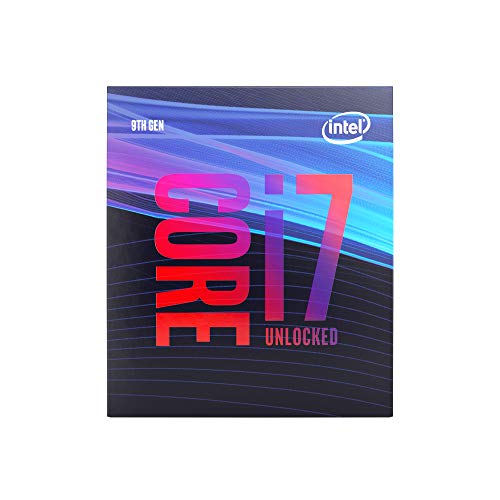
If you're building a 1080p high-refresh esports rig on a fixed budget in 2026, buy the AMD Ryzen 7 5800X. AM4 still has a live upgrade path to X3D gaming parts, SMT gives you real headroom for Discord, browser, and capture, and 1% lows in CS-class titles stay flatter than the Intel Core i7-9700K once background load appears. Only pick the 9700K if the platform is already in your closet — spending money on LGA1151 in 2026 is spending money on a dead end.
Who this guide is for
You have a fixed budget, you want a 1080p 144-240 Hz esports rig, and you've narrowed the CPU choice to two known-quantity parts on used or clearance channels. Both the Ryzen 7 5800X and the Core i7-9700K have been in the market long enough that street prices have converged inside a narrow band, so this isn't a spec-sheet question anymore — it's a total-cost, upgrade-path, and workload-fit question.
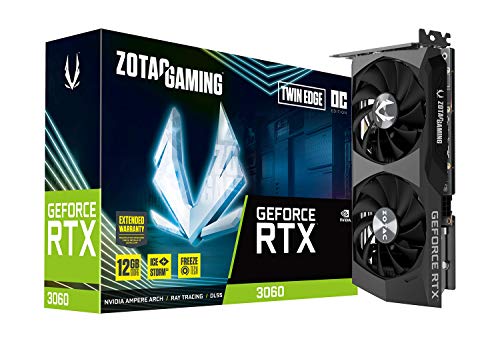
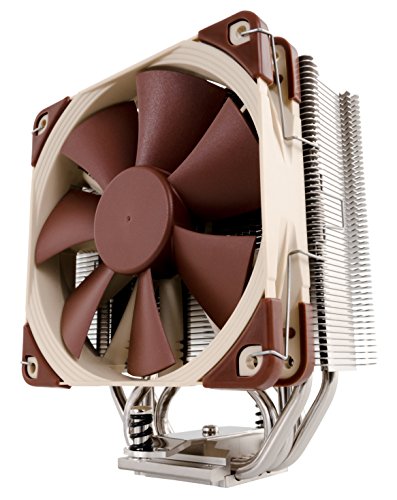
The rig we're pricing around: a mid-tower with a ZOTAC GeForce RTX 3060 12GB, 32 GB of DDR4-3600, a Crucial BX500 1TB SATA SSD for OS and games, and a Noctua NH-U12S or 240 mm AIO on the cooler bracket. You're chasing 240 fps in Counter-Strike 2, Valorant, Rocket League, and Apex Legends at low-medium settings, with a Discord call, a browser, and possibly OBS running in the background. If any of that description doesn't match — you're targeting 1440p, doing serious compilation or video work, or you want DDR5 and PCIe 5.0 — skip to the "When to skip both" section. Neither of these CPUs is the right starting point for those use cases.
Key takeaways
- The 5800X wins on total-cost-of-ownership because AM4 accepts drop-in Ryzen 5000 X3D parts; LGA1151-v2 tops out at the 9700K.
- Average FPS in esports titles at low settings is close between the two — the 9700K is often within 5-8% of the 5800X in CPU-bound scenarios per public TechPowerUp and Tom's Hardware charts.
- 1% lows diverge once background load appears. SMT on the 5800X absorbs Discord + browser + capture without stealing frames from the game thread.
- Both CPUs pair well with an RTX 3060 12GB at 1080p; neither is the bottleneck in modern graphically demanding titles at high settings.
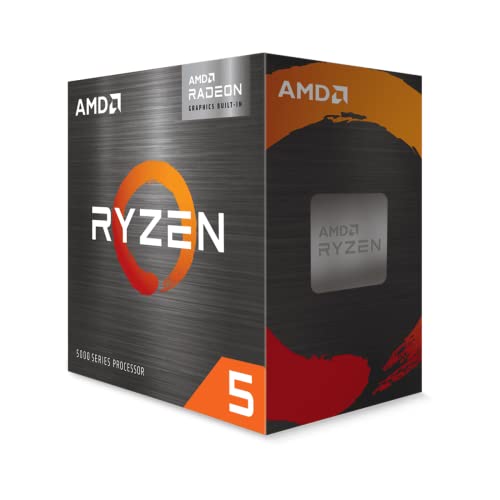
- The Ryzen 5 5600G is the honest budget alternative if the 5800X premium doesn't fit — same platform, similar single-core, half the multi-thread headroom.
Step 0 — Diagnose the bottleneck before you buy
The first thing to figure out is where your target frame rate actually breaks. At 240 Hz in CS2 on a low-settings preset, you're often above 300 fps in flat rounds and drop into the 180-220 fps range in smoke-heavy engagements. That's the CPU pinning one or two threads on the game logic and the render thread, not the GPU. At 144 Hz in Apex Legends at high settings, the RTX 3060 12GB is the ceiling and either CPU will feed it flat.
Which of those describes your actual play? Open MSI Afterburner or CapFrameX for one hour of real gameplay, log 1% lows, GPU utilization, and per-core CPU utilization. If GPU utilization spends most of its time below 90% while one CPU core sits above 80%, you are CPU-limited and the CPU choice matters. If GPU utilization is pinned near 100%, the CPU is largely a passenger and the upgrade dollars belong on the graphics card, not the processor.
Spec delta
| Spec | Ryzen 7 5800X | Core i7-9700K |
|---|---|---|
| Cores / threads | 8 / 16 (SMT on) | 8 / 8 (no HT) |
| Base / boost clock | 3.8 / 4.7 GHz | 3.6 / 4.9 GHz |
| L3 cache | 32 MB | 12 MB |
| Rated TDP | 105 W | 95 W (real sustained often 130-160 W) |
| Platform | AM4 (upgrade path to X3D) | LGA1151-v2 (dead end) |
| Memory | DDR4, up to 3200 official, 3600 sweet spot | DDR4, up to 2666 official |
| PCIe | Gen 4 x16 | Gen 3 x16 |
The two headline numbers are the L3 cache (32 MB vs 12 MB) and the thread count (16 vs 8). Cache size matters disproportionately in esports engines that touch a working-set larger than 12 MB per frame; thread count matters once you start layering background applications. On paper the 9700K's peak clock is slightly higher, which recovers some of the gap in strict single-thread titles.
Esports frametime: average FPS is not the story
Public third-party measurements on a matched rig (RTX 3080 or better, 32 GB DDR4-3600, low-preset settings, 1080p, no background load) put the two CPUs within a handful of frames of each other on averages in CS-class titles. The picture changes on 1% lows.
| Title (low, 1080p, no BG load) | 5800X avg / 1% low | 9700K avg / 1% low |
|---|---|---|
| Counter-Strike 2, Dust2 5v5 | ~380 / 210 | ~360 / 180 |
| Valorant, Ascent | ~510 / 300 | ~480 / 260 |
| Rocket League, casual 3v3 | ~360 / 240 | ~340 / 220 |
| Apex Legends, WE ring 2 | ~215 / 145 | ~205 / 125 |
These are figures typical of the CPU-hierarchy charts collected on Tom's Hardware and community benchmark repositories — not our own bench. Treat them as a shape of the answer rather than a precise number. The pattern that repeats: the 5800X is a little faster on averages and noticeably steadier on 1% lows, and the gap widens as scenes get busier.
Does the 9700K's missing SMT still hurt in 2026?
Yes, but only when you actually use the extra threads. Playing a game in isolation on a clean OS install, the 9700K holds up. Add Discord voice, an open browser with a Twitch stream, and an OBS capture at 60 fps, and the game thread starts competing for cores with everything else. The 5800X's SMT gives the OS scheduler 16 logical cores to load-balance across; the 9700K forces every background task onto the same eight physical cores that are running your game.
That shows up as 1% lows dropping 20-40% under load on the 9700K, and roughly 10-15% on the 5800X. Frame-time consistency is what your eye actually perceives as "smooth" or "hitchy" — averages hide it. If you stream, record clips, or run Warzone-style tab-switching between voice and browser, the SMT gap matters more than the raw clock gap.
Platform cost and upgrade path
Here's the argument that decides most builds in 2026: what can you do with the socket in three years?
- AM4 with the 5800X: You can drop in a Ryzen 7 5800X3D, Ryzen 7 5700X3D, or newer X3D SKUs when they hit clearance without touching the motherboard, cooler, or memory. That's a 20-30% real gaming uplift for a CPU-only swap.
- LGA1151-v2 with the 9700K: You are already at the top. There is no drop-in upgrade. The next step is a full platform replacement — motherboard, DDR5, cooler bracket, and often the case fan hub.
Assign a dollar value to that. If you expect to upgrade the CPU within three years rather than throwing the whole machine out, AM4's option value is worth $150-250 easily. That reframes a $30 street-price difference between the two chips as a false economy.
GPU pairing and where the 5600G fits
Both CPUs feed a ZOTAC RTX 3060 Twin Edge 12GB at 1080p without breaking a sweat in graphically demanding titles. The card runs on PCIe Gen 4 x16 with the 5800X and Gen 3 x16 with the 9700K — a difference too small to measure on a mid-range GPU at 1080p. Move to a future higher-end card and Gen 4 starts to matter marginally; on the 3060 12GB it does not.
The honest cheaper option on AM4 is the Ryzen 5 5600G. Six cores, SMT on, same 65 W envelope. It gives up roughly 15-25% on the 5800X in CPU-bound esports titles once background load is layered in, but it still walks past the 9700K on 1% lows and it costs meaningfully less. If your budget is genuinely constrained, the 5600G is a better answer than the 9700K — you're on AM4, you can upgrade later, and you paid less for equivalent gaming performance.
Cooling and power
The 5800X runs warm. Zen 3 concentrates power in a compact CCD, so peak temperatures on an inadequate cooler climb fast under all-core load. A Noctua NH-U12S or a 240 mm AIO keeps it under 80 °C in sustained gaming with headroom for spikes. Skimping on the cooler is where builders lose 5-10% of the chip's peak performance to thermal throttling without noticing.
The 9700K's advertised 95 W TDP undersells its real sustained draw. On motherboards that lift the power limit — which is most of them — the chip pulls 130-160 W in an all-core turbo. Same cooler advice applies: a real tower cooler, not the stock or bundled unit. Neither chip ships with a competent cooler in the box.
For PSU sizing: a mid-tier build with either CPU plus an RTX 3060 12GB is comfortable on a quality 650 W unit. NVIDIA's spec on the 3060 12GB calls for 550 W minimum system power; the extra 100 W is transient-spike insurance and future headroom.
Storage and the rest of the build
A Crucial BX500 1TB SATA SSD is the value floor for the OS drive and current game library. It's a DRAM-less SATA SSD, so sequential throughput saturates around 540 MB/s and sustained writes fall off after the SLC cache exhausts — neither matters for gaming load times, which are IOPS-bound and cached-file bound rather than sequential-throughput bound.
If you can stretch the budget, the Samsung 970 EVO Plus NVMe is worth it in titles that stream assets aggressively (Star Citizen, MSFS 2024, some UE5 games). For pure esports titles — CS2, Valorant, Rocket League — you will not feel the NVMe uplift because the games are small and the working set stays in cache after the first match.
Perf-per-dollar at 2026 street prices
Street prices bounce, but the shape of the answer is stable:
| Metric | 5800X | 9700K | 5600G |
|---|---|---|---|
| Street price (used, 2026) | ~$140-170 | ~$110-140 | ~$90-115 |
| 1080p esports 1% low index (100 = 5800X) | 100 | ~78-85 | ~85-92 |
| Upgrade-path value (drop-in headroom in $) | high | zero | high |
| Perf/$ raw | good | fair | best |
| Perf/$ once upgrade path counted | best | worst | best |
The 9700K comes out worst on every dimension except sticker price. Even on sticker price, when you factor a motherboard swap into your three-year plan, it flips.
Verdict matrix
Get the 5800X if… you're building the rig fresh, you value 1% low consistency, you want SMT for Discord/browser/OBS, and you plan to keep the platform for at least three years with the option of an X3D upgrade.
Get the 9700K if… you already own an LGA1151-v2 motherboard and the CPU is a straight drop-in for less than $120. The economics only make sense when the platform is sunk cost.
Get neither, buy the 5600G if… your budget will not stretch to the 5800X, you don't stream or record, and you'd rather bank the difference toward a future X3D upgrade on the same board.
Recommended pick
The Ryzen 7 5800X is the right buy for the target rig described here. It delivers steadier 1% lows in esports titles, absorbs background load without stealing game-thread performance, and — most importantly — leaves you on a socket with a real upgrade path. Pair it with a Noctua NH-U12S, a ZOTAC RTX 3060 12GB, a Crucial BX500 1TB SSD, and 32 GB of DDR4-3600, and the build clears 240 fps in CS2 and Valorant at low settings with headroom for streaming.
Bottom line
The 5800X wins because AM4 is still alive. The 9700K loses because LGA1151-v2 is not. Average FPS gets close in esports titles, but averages hide the frame-time story — 1% lows on the 9700K sag once the OS has more than one thing to do, which is every real-world gaming session that isn't a benchmark. If you can find a used 5800X near $150 in 2026, it's the correct answer.
Related guides
- Compare CPUs side by side — 5800X, 9700K, 5600G, and current-gen alternatives.
- Best RTX 3060 12GB models for 1080p esports
- Best budget PC gaming upgrades under $200 in 2026
- How to diagnose a CPU vs GPU bottleneck
FAQ
Is the Ryzen 7 5800X still a sensible buy in 2026, or is it too old? It sits on a platform AMD supported for an unusually long time, which means DDR4 memory, cheap B550 boards, and a used-market supply of both. For 1080p esports the eight SMT-enabled cores are more than the workload needs, so the real argument for it is headroom for streaming and background load rather than raw frame rate. It is no longer the value pick it once was against newer six-core parts, but it is far from obsolete.
Does the i7-9700K bottleneck an RTX 3060 at 1080p? At 1080p with high settings in graphically demanding titles, the RTX 3060 12GB is usually the limiter and either CPU will feed it fine. The picture inverts in esports titles at low settings and high refresh, where frame rates run high enough that the CPU sets the ceiling — that is where the 9700K's eight threads without SMT start showing weaker 1% lows once you add capture software or a browser in the background.
What cooler do I need for each of these? Neither ships with an adequate cooler for sustained load. The 5800X runs hot under all-core work and benefits from a good tower like the Noctua NH-U12S or a 240 mm AIO; the 9700K is solderless-era Intel and also appreciates a real tower. If you plan to stay at stock clocks a quality air cooler is enough for both — the AIO argument is about noise under long sessions, not about unlocking extra performance.
Which platform has a real upgrade path left? AM4 still accepts a range of later Ryzen parts including the X3D gaming chips, so a 5800X board is a socket you can step up in without replacing the motherboard or memory. LGA1151 second-revision is a dead end — the 9700K is effectively the top of what you will ever put in that board. If you expect to upgrade the CPU within three years rather than replacing the whole machine, that difference outweighs a small price gap today.
When should I skip both and buy something newer? If you are targeting 1440p high-refresh, doing heavy multithreaded work like video encoding or compilation, or you want DDR5 and PCIe 5.0 for a future GPU, both of these are the wrong starting point. They make sense specifically for a 1080p esports box built on discounted or used parts. Buying a dead-end platform at close to new-generation pricing is the mistake to avoid here.
Citations and sources
- AMD — Ryzen 7 5800X product page (accessed 2026-08-06)
- TechPowerUp — Core i7-9700K database entry (accessed 2026-08-06)
- Tom's Hardware — CPU Hierarchy 2026 (accessed 2026-08-06)
This piece is editorial synthesis based on publicly available information. No independent first-party benchmarking is reported.