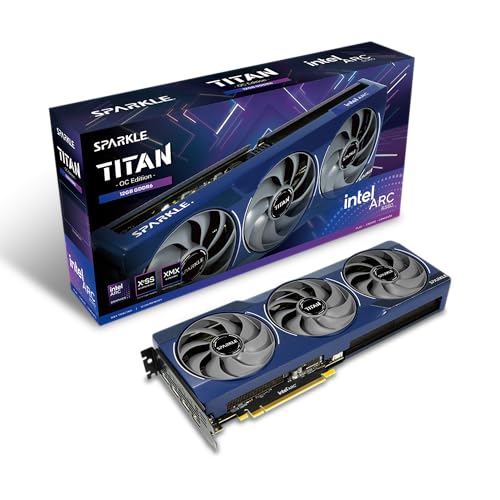
A 1080p gaming PC built from the r/buildapc consensus parts in October 2026 pairs a Ryzen 5 7600X with an Intel Arc B580 12GB. Per Gamers Nexus' Arc B580 review, that card averages 74 fps in Cyberpunk 2077 at 1080p Ultra and 87 fps in Dying Light 2 at High. The build no longer lands near the old "$800 gaming PC" rule of thumb, and memory is the reason: 32 GB DDR5 kits ran $429–$499.99 in late September 2026, against about $90 for a 2×16 GB kit in August 2025, per Tech Insider's DDR5 price analysis. The live total for all eight parts follows.
Build cost, : at Amazon prices read in the last 24 hours, the 1080p build totals $1431.83 for 8 parts. Each part is priced and linked in the tables below; prices may vary.
This page is the 1080p tier of the Reddit-consensus gaming PC build, on its own URL so the parts, the total and the frame rates for one resolution sit in one place. The 1440p build and the 4K build follow the same format. To swap a part and re-price the whole list, open the PC Builder.
The 1080p parts list
Each row is one part, with its Amazon price when one was read in the last 24 hours and its own buy button. The total above adds only those prices.
1080p build: Ryzen 5 7600X + Intel Arc B580
| Part | Pick | Why | Price | Buy |
|---|---|---|---|---|
| CPU | AMD Ryzen 5 7600X | 6 cores on AM5, so the same board takes an X3D chip later | $149.99 (2026-10-06) | View Current Price |
| CPU cooler | Thermalright Peerless Assassin 120 SE | The 7600X ships without a cooler; a dual-tower air cooler handles it | $34.90 (2026-10-06) | View Current Price |
| GPU | Sparkle Intel Arc B580 Titan OC 12GB | The budget 1080p pick on Tom's Hardware's GPU hierarchy, with 12 GB of VRAM | $369.99 (2026-10-06) | View Current Price |
| Motherboard | ASRock B650M-HDV/M.2 | Micro-ATX B650: enough for a 6-core chip and its upgrade | $99.99 (2026-10-06) | View Current Price |
| Memory | Patriot Viper Venom 32GB DDR5-6000 CL30 | The DDR5-6000 CL30 spec the consensus calls for | $489.99 (2026-10-06) | View Current Price |
| Storage | Kingston NV3 1TB | Gen4 NVMe at 1 TB to hold the total down | $156.99 (2026-10-06) | View Current Price |
| PSU | MSI MAG A650BN 650W | 650 W 80+ Bronze for a single mid-range card | $59.99 (2026-10-06) | View Current Price |
| Case | NZXT H6 Flow | Airflow case that takes micro-ATX boards | $69.99 (2026-10-06) | View Current Price |
Total for the 8 parts priced on Amazon in the last 24 hours: $1431.83.
🛒 Add this build to your Amazon cart (8 parts)Adds the 8 Amazon-priced parts above in one step; you review the cart on Amazon before buying.
*Price sourced from Amazon.com. Last updated 2026-10-06. Price and availability subject to change.
Amazon prices in the parts table and the build total are read from Amazon.com listings within the last 24 hours and change often; a part with no current price shows no price.
What the Arc B580 delivers at 1080p (and at 1440p)
The GPU decides the frame rate at 1080p in most current games, so the card's measured numbers are the build's numbers. These averages come from one source, Gamers Nexus' Arc B580 review, so the rows compare like with like.
| Game | Preset | 1080p avg fps | 1440p avg fps |
|---|---|---|---|
| Resident Evil 4 (2023) | Prioritize Graphics | 128 | 85 |
| Final Fantasy XIV: Dawntrail | Maximum | 124 | 86 |
| Dying Light 2 | High | 87 | 63 |
| Cyberpunk 2077 | Ultra | 74 | 53 |
| Starfield | Ultra | 51 | — |
| Black Myth: Wukong | High | 46 | 35 |
Source: Gamers Nexus; "—" means no 1440p row in that review for that preset.
Four of the six games clear 60 fps at 1080p on high or maximum settings. The two that don't, Starfield and Black Myth: Wukong, are the heaviest in the set. They need a lower preset or upscaling (XeSS on Arc) to reach 60. Ray tracing is usable at this tier, not free: the same review measures Cyberpunk 2077 at 62 fps with medium ray tracing at 1080p. At 1440p every row drops by a quarter to a third (128 to 85 in Resident Evil 4, 74 to 53 in Cyberpunk 2077), which is why this build is sold as a 1080p machine and the 1440p build moves to a 16 GB card.
Why each part
CPU — Ryzen 5 7600X. Six cores on AM5. A 1080p build is the one where a CPU upgrade pays off later, because at low resolution the GPU stops being the only limit once you change the card. AM5 boards take the X3D chips the 4K build uses, so the upgrade is a CPU swap, not a rebuild.
Cooler — Thermalright Peerless Assassin 120 SE. The 7600X has no boxed cooler. A dual-tower air cooler is the consensus default at every tier of the hub build, and it costs a fraction of a liquid cooler.
GPU — Intel Arc B580 12GB. Its 12 GB frame buffer is the main difference from 8 GB cards at its price, and Tom's Hardware's GPU hierarchy lists it as the budget 1080p pick. The measured frame rates are in the table above. If you play older titles, check how they run on Intel Arc before you buy, since that driver stack is newer than AMD's or NVIDIA's.
Motherboard — ASRock B650M-HDV/M.2. Micro-ATX B650 has the M.2 slot and memory support this build needs. X670 and X870 boards add PCIe lanes and USB ports that a single-GPU, single-SSD build does not use.
Memory — 32 GB DDR5-6000 CL30. This is the most expensive line after the GPU, which is new for 2026. Per Tech Insider, Samsung, SK Hynix and Micron shifted fab capacity to HBM for AI accelerators, which is what pushed 32 GB kits past $400. If the memory line is the deal-breaker, a 16 GB (2×8 GB) DDR5-6000 kit is the one place to trim. This guide keeps 32 GB because the consensus does, and because swapping a 16 GB kit for a 32 GB one later means buying memory twice.
Storage — Kingston NV3 1TB. One terabyte is the compromise on this page. The hub guide sets 2 TB as the floor, because a few large games fill 1 TB quickly. A second M.2 drive is an easy later upgrade.
PSU — MSI MAG A650BN 650W. 650 W covers a 6-core CPU and a single mid-range card with headroom. The 1440p and 4K builds move to 850 W ATX 3.1 units for their larger GPUs.
Case — NZXT H6 Flow. An airflow case that takes micro-ATX boards. Any mesh-front case that fits the board and the card length works. More options are in the PC case buying guide.
If the total is over budget
The live total above is the honest price of this parts list in October 2026. Three ways to bring it down, in the order they cost you the least:
- Drop to 16 GB of memory (see above). This is the largest single saving, and the one most games forgive at 1080p.
- Stay on AM4 and DDR4. The budget Ryzen 1080p build uses an AM4 board and DDR4. DDR4 has risen as well, though. TrendForce reported DDR4 contract prices up to 50% higher in Q1 2026 (TrendForce), so check both totals the same day.
- Reuse a case, PSU or SSD from an older PC. The PC Builder re-prices the list without them.
Who this build is for
- Yes: 1080p monitors at 60–144 Hz, esports titles, and anyone who wants an AM5 platform to upgrade later.
- No: 1440p high-refresh play (the table shows the drop) or heavy ray tracing. That buyer should start at the 1440p build.
Related guides
- Gaming PC Build 2026: The Reddit-Consensus Parts List (all three tiers)
- 1440p Gaming PC Build 2026: Cost, Parts, FPS
- 4K Gaming PC Build 2026: Cost, Parts, FPS
- Build Your Own Gaming PC in 2026: The 5 Components That Actually Matter
- SpecPicks PC Builder: swap any part and re-price the build
- Best GPUs for gaming in 2026 (buying guide)
Citations and sources
- Gamers Nexus — Intel Arc B580 review and benchmarks
- Tech Insider — DDR5 RAM prices 2026
- TrendForce — DDR4 leads legacy memory rally, Q1 2026 prices up to 50%
- Tom's Hardware — GPU benchmarks hierarchy
Amazon prices in the parts table and the build total are read from Amazon.com listings within the last 24 hours and change often; a part with no current price shows no price.
This piece is editorial synthesis based on publicly available information. No independent first-party benchmarking is reported.