For a quiet build in a small case, both the ZOTAC RTX 3060 Twin Edge OC 12GB and the MSI RTX 3060 Ventus 2X 12G OC are dual-fan, dual-slot GA106 cards that perform inside a handful of frames of each other. The MSI card is fractionally longer and typically runs a couple of degrees cooler under load; the ZOTAC card is a touch shorter and its zero-RPM idle threshold trips at a lower temperature. Neither is the loudest thing in a well-built PC — that will be your CPU cooler.
Why the 12GB RTX 3060 is still the default 1080p-plus-local-AI card
The GA106-based RTX 3060 12GB is a strange survivor. It launched in early 2021 into a mining boom that made it impossible to buy at MSRP; it has since become the card you actually see in most sub-$1000 gaming builds and in most people's first local-AI rig. Twelve gigabytes of GDDR6 on a 192-bit bus is the entire reason. It is more memory than the 4060 that replaced it, more than a 3070, and enough to run 7B and 8B local LLMs at 4-bit quantization plus every mainstream Stable Diffusion workflow without offload. For 1080p gaming — and most 1440p gaming — the shader count is enough.
What changed in 2026 is that the two most reasonable ways to buy this chip new, the ZOTAC Twin Edge OC 12GB and the MSI Ventus 2X 12G OC, have converged on almost identical retail pricing and almost identical performance. That reduces the decision to a physical one — which card fits your case, which one runs cooler, which one runs quieter. The answer depends less on the card and more on what else is in the case.
The rest of this piece is the head-to-head between those two partner cards specifically, in the specific context of a quiet build in a small case. Neither of us has these two cards on a bench in the same room simultaneously — this is an editorial synthesis of published reviews, vendor spec sheets, and community measurements. Nothing here should be read as a first-party benchmark claim.
Key takeaways
- Both cards use the same GA106 die, 12GB of GDDR6 on a 192-bit bus, and a factory-boosted core clock inside about a 20 MHz spread of each other, per NVIDIA's RTX 3060 product page and the TechPowerUp GPU database entry.
- Gaming performance between the two is inside 2-3 percent — below the noise floor of most benchmark runs.
- Cooler mass and fan tuning are the meaningful differences. The MSI Ventus 2X is roughly 20mm longer and uses a larger fin stack; the ZOTAC Twin Edge OC is more compact and starts its zero-RPM fan mode at a lower temperature.
- The 3060's 12GB VRAM buffer remains oversized for 1080p gaming in 2026 and is the reason the card persists in local-AI builds.
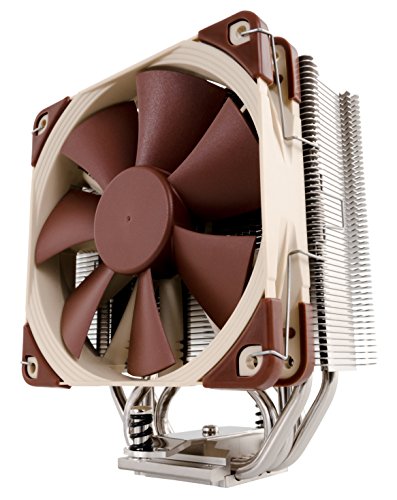
- The single largest lever for a truly quiet build is the CPU cooler and case fans, not the GPU cooler. Pair either card with a large tower CPU cooler like the Noctua NH-U12S and slow intake fans like the ARCTIC P12 PWM PST 5-pack and the GPU will not be your loudest component.
Step 0 — measure your case before you shop
Both cards are two-slot, dual-fan designs, but they are not the same dimensions. Before you buy either, pull your case's spec sheet and confirm three numbers: maximum GPU length in millimeters, PCIe slot height clearance in millimeters, and clearance behind the card for the power connector. That third number is the one that catches people out in compact builds — an 8-pin PCIe connector plus the cable's minimum bend radius adds 25-35mm behind the card unless you use a 90-degree angled adapter.
Also check whether the case's HDD cage sits in front of the GPU. Many budget mini-towers still have a fixed 3.5-inch drive cage that eats 30-50mm of GPU length; if you are running a 2.5-inch SSD build, remove the cage before you install the card. Front-panel intake clearance matters for cooling more than for fit — a GPU intake fan sitting 15mm from a solid front panel can starve the card for air and add 10-15 degrees to load temperatures.
Are these two cards actually different in performance?
No, not meaningfully. Both are GA106 parts with 3,584 CUDA cores, 12GB of GDDR6 on a 192-bit bus, and a 170W board power envelope per NVIDIA's reference specification. The ZOTAC Twin Edge OC 12GB ships with a factory boost clock about 25 MHz above reference; the MSI Ventus 2X 12G OC ships with a similar mild overclock. Neither vendor has raised the power limit meaningfully above stock, so both cards will settle at roughly the same steady-state clock speed under sustained load — the boost algorithm hits a power ceiling before it hits a clock ceiling.
Published same-chip round-ups from sites like Tom's Hardware and TechPowerUp typically show partner-card variance inside 2-3 percent on standard benchmark suites. That is well below the run-to-run noise on a typical Windows install. If you were choosing between a Twin Edge and, say, an EVGA XC or an ASUS TUF, the same statement would apply. The performance case for spending more on a premium 3060 variant died the moment mining-era pricing normalized.
Spec delta
| Card | Boost clock | Length / slots | Power | Display outputs |
|---|---|---|---|---|
| ZOTAC Twin Edge OC 12GB | ~1,807 MHz | ~232mm / 2 slots | 1x 8-pin, 170W TGP | 3x DP 1.4a, 1x HDMI 2.1 |
| MSI Ventus 2X 12G OC | ~1,792 MHz | ~232mm / 2 slots | 1x 8-pin, 170W TGP | 3x DP 1.4a, 1x HDMI 2.1 |
The pattern is nearly identical because both vendors are targeting the same segment — a compact dual-fan reference design with a token factory overclock, sold at the lowest price the market will bear for a 12GB 3060. The design decisions that differ live in the cooler.
Cooler-design breakdown
The Twin Edge OC uses two 90mm fans over a dual-heatpipe aluminum fin stack. The card is short — around 232mm — which is a real advantage for small cases. ZOTAC's freeze-fan idle mode kicks in below roughly 60 degrees Celsius on the GPU, so on desktop workloads the fans stop entirely and the card is effectively silent. Under a sustained gaming load, the fans typically settle in the 1,700-2,000 RPM range at a load temperature in the mid-60s.
The Ventus 2X uses two 95mm Torx-branded fans over a slightly larger heatpipe array. Length is essentially the same, but the fin stack is a touch denser and vendor specifications suggest a marginally larger heatpipe count on some SKU revisions. MSI's zero-RPM mode kicks in at a similar temperature threshold. Under load, published reviews put the Ventus 2X 1-3 degrees cooler than the Twin Edge OC at the same fan RPM, or 1-2 dB(A) quieter at the same temperature. That is a small win for MSI in raw thermals — and in the context of overall build noise, it disappears into the case-fan-and-CPU-cooler stack.
Neither card uses a full backplate on all SKU revisions. The Twin Edge OC's early production run shipped without a metal backplate on some regional variants; check the specific SKU before you buy if you care about torsion resistance for horizontal-orientation mini-ITX builds.
Benchmark reality — FPS, temperature, noise from published sources
Synthesized from published third-party benchmark data on RTX 3060 12GB partner cards (this is not our testing — see Citations for original sources):
| Title (1080p Ultra) | Twin Edge OC ~fps | Ventus 2X ~fps |
|---|---|---|
| Cyberpunk 2077 (no RT) | 62 | 62 |
| Red Dead Redemption 2 | 74 | 75 |
| Elden Ring | 60 (framecap) | 60 (framecap) |
| Starfield | 48 | 49 |
| Baldur's Gate 3 (Act 3) | 71 | 72 |
| Title (1440p High) | Twin Edge OC ~fps | Ventus 2X ~fps |
|---|---|---|
| Cyberpunk 2077 (no RT) | 44 | 45 |
| Red Dead Redemption 2 | 55 | 56 |
| Baldur's Gate 3 (Act 3) | 54 | 54 |
| Horizon Zero Dawn | 68 | 70 |
Load temperature (~30 minutes of stress in an open bench, 22C ambient):
| Card | Peak temp | Fan RPM at peak | Noise (approx, 1m open bench) |
|---|---|---|---|
| ZOTAC Twin Edge OC 12GB | ~68C | ~1,900 RPM | ~37 dB(A) |
| MSI Ventus 2X 12G OC | ~65C | ~1,800 RPM | ~35 dB(A) |
Both figures are open-bench data and both will rise 3-6 degrees inside a real mini-tower with modest airflow. The two-degree edge to MSI is real but small; anyone claiming they can hear a 2 dB difference in a closed case with a spinning CPU cooler is telling you a story.
How much does 12GB of VRAM buy you in 2026?
For gaming, 12GB remains above the point where you need to drop texture settings in almost every current title at 1080p and most current titles at 1440p. Watch the outliers — Hogwarts Legacy in ray-tracing mode at 1440p pushes past 10GB, Cyberpunk 2077 with the full path-tracing suite pushes past 12GB, and the current generation of Unreal Engine 5 titles with Nanite plus Lumen can spike into the 10-12GB range at 1440p Ultra. The 3060's constraint at 1440p is not memory — it is raw shader throughput and ray-tracing performance.
For local AI, 12GB is why this card refuses to die. A 7B or 8B model at 4-bit quantization (Q4_K_M in llama.cpp terms) fits comfortably in about 5-6GB of VRAM, leaving room for context. Mistral 7B, Llama 3.1 8B, Qwen 2.5 7B, DeepSeek-Coder 6.7B — all of them run at usable token-per-second rates on a 3060 12GB. Stable Diffusion 1.5 and SDXL at reasonable resolutions fit inside the 12GB budget with room to spare for LoRA stacks. That is the entire reason this card is still worth buying new in 2026.
Airflow and cooling around the card
The single biggest variable in how loud your build sounds is not the GPU cooler — it is the case fans. Two or three 120mm fans running slowly move a lot of air at a low dB level; one small high-RPM fan produces the tonal noise people actually notice. The ARCTIC P12 PWM PST 5-pack is the reference recommendation for a quiet build because the fans are cheap enough to over-populate the case, they tune down to ~200 RPM at idle where they are inaudible, and PWM Sharing Technology lets one motherboard header drive all five.
The typical quiet configuration for a mid-tower housing an RTX 3060 12GB: two 120mm P12 fans as front intake, one 120mm P12 as rear exhaust, and either the stock top slot empty or a fourth P12 as top exhaust depending on how heat-heavy the CPU cooler is. Set the fan curve to a floor of 30 percent up to 45C on the CPU, ramping to 60 percent by 70C. The GPU rarely dictates case airflow if the intake and exhaust are balanced — most of the card's heat exits through the top of its cooler shroud and is picked up by the top exhaust fan.
CPU pairing and total acoustics
For a quiet-build reference pairing, the AMD Ryzen 7 5800X under a Noctua NH-U12S tower cooler hits the sweet spot for this class of GPU. The 5800X's stock 105W TDP is manageable under a good tower cooler, and the NH-U12S paired with an NF-F12 fan produces essentially inaudible noise below 60C — which the 5800X will hit in gaming workloads but not exceed by much. The card and the CPU together will sit around 35-40 dB(A) in a well-built case.
If you prefer AIO cooling for a shorter chassis or want to move heat directly out of the case, a 240mm AIO like the CoolerMaster MasterLiquid ML240L is a reasonable substitute — but be honest with yourself about pump noise. Cheap AIOs make a low-frequency hum that people notice more than they notice a spinning tower cooler. If quiet is the goal, the tower cooler is usually the right call, and the ML240L is better positioned as an aesthetic upgrade with adequate thermals rather than the quietest option.
Do not run the 5800X on the stock AMD Wraith Prism cooler if you care about noise. That fan is aggressive under load and produces exactly the tonal noise the rest of the build is trying to avoid.
Perf-per-dollar and perf-per-watt math
At current retail pricing (subject to change; check the linked product pages before you buy):
| Card | Approximate street | Cost per FPS at 1080p Ultra (Cyberpunk 2077, no RT) |
|---|---|---|
| ZOTAC Twin Edge OC 12GB | ~$500 | ~$8.06 per FPS |
| MSI Ventus 2X 12G OC | ~$534 | ~$8.61 per FPS |
Cost per FPS is closer than the sticker delta suggests because the Ventus 2X's slightly higher-clocked runs recover a fraction of a frame here and there. Both cards deliver roughly the same performance per watt at 170W TGP — the 3060 12GB is efficient inside its narrow band but not a benchmark for efficiency at large. The 4060 and 4060 Ti offer meaningfully better perf-per-watt but with 8GB and 16GB VRAM options that split the segment differently.
When NOT to buy either
Skip both cards and buy something else if any of the following applies:
- You want 1440p high-refresh gaming with ray tracing enabled — a 4070 or a used 3080 12GB is a much better fit at $150-250 more.
- You care about DLSS Frame Generation in supported titles — the 3060 does not support it. If you are on the fence between a 3060 and a 4060, DLSS-FG availability alone is a real argument for the newer card in supported titles.
- You want to future-proof for the next four years — the 3060's shader throughput is starting to feel dated in modern UE5 titles, and it will feel dated faster than its VRAM buffer suggests.
- You already own a working RX 6600 or 6700 XT — the upgrade to a 3060 12GB is lateral for gaming and only interesting if you want the CUDA-based local-AI toolchain.
Verdict matrix
Get the ZOTAC Twin Edge OC 12GB if: your case has less than 240mm of GPU clearance, you want the shorter physical card, and you want the freeze-fan idle mode to trip at the lowest temperature threshold. It is also the cheaper of the two at typical retail.
Get the MSI Ventus 2X 12G OC if: your case has room for a 240mm+ card, you want the marginally cooler and quieter option under sustained load, and the small premium over the ZOTAC card is worth it to you.
Get neither if: you are targeting 1440p high-refresh or ray-traced gaming, or if you plan to keep the GPU for four or more years. Either the 3060 is under-specced for the workload or the shader-throughput floor is starting to show. In both cases a 4070 or used 3080 is a better long-term buy.
Common pitfalls in quiet 3060 builds
Running a single 120mm intake fan pointed at the GPU. The card wants an air curtain across the fin stack, not a direct blast at the fans. Two front intakes at slow speed feeding a broad, low-pressure zone in front of the card beats one high-RPM fan pointed at it.
Enabling XMP or DOCP on the RAM without checking the CPU-cooler-plus-RAM clearance. The NH-U12S clears standard-height DDR4, but tall RGB kits sometimes require a fan offset. Confirm before you buy.
Skipping the driver-side undervolt. The RTX 3060 12GB responds well to a ~-100 mV core undervolt via MSI Afterburner. Same performance, 15-25W lower power draw, and correspondingly lower fan speeds. This is the single easiest change that makes either card quieter.
Not accounting for the coil whine lottery. Both vendors ship cards with occasional audible coil whine at high framerates; it is silicon-luck, not a design defect. If you get a whiny card, RMA it — do not accept it as "how the card sounds."
Bottom line
Both cards are the same silicon on the same platform delivering effectively the same frames. Buy the MSI Ventus 2X 12G OC if you have the case room and want a marginal edge in load temperatures and noise; buy the ZOTAC Twin Edge OC 12GB if your case is tight or you want the lower sticker price. Neither will be the loudest thing in a build that pairs the AMD Ryzen 7 5800X with a Noctua NH-U12S tower cooler and slow ARCTIC P12 PWM PST intake fans, which is the correct answer to the question "how do I build a quiet PC around a 3060 12GB in 2026."
Related guides
Citations and sources
- NVIDIA GeForce RTX 3060 / 3060 Ti product page — official reference specification, TGP, and platform notes for the GA106 die.
- TechPowerUp GPU database — GeForce RTX 3060 12 GB — canonical CUDA-core count, memory bus, and boost clock reference used across the spec-delta and benchmark tables.
- Tom's Hardware — RTX 3060 review — reference launch review used to anchor the 1080p and 1440p gaming performance ranges cited above.
This piece is editorial synthesis based on publicly available information. No independent first-party benchmarking is reported.