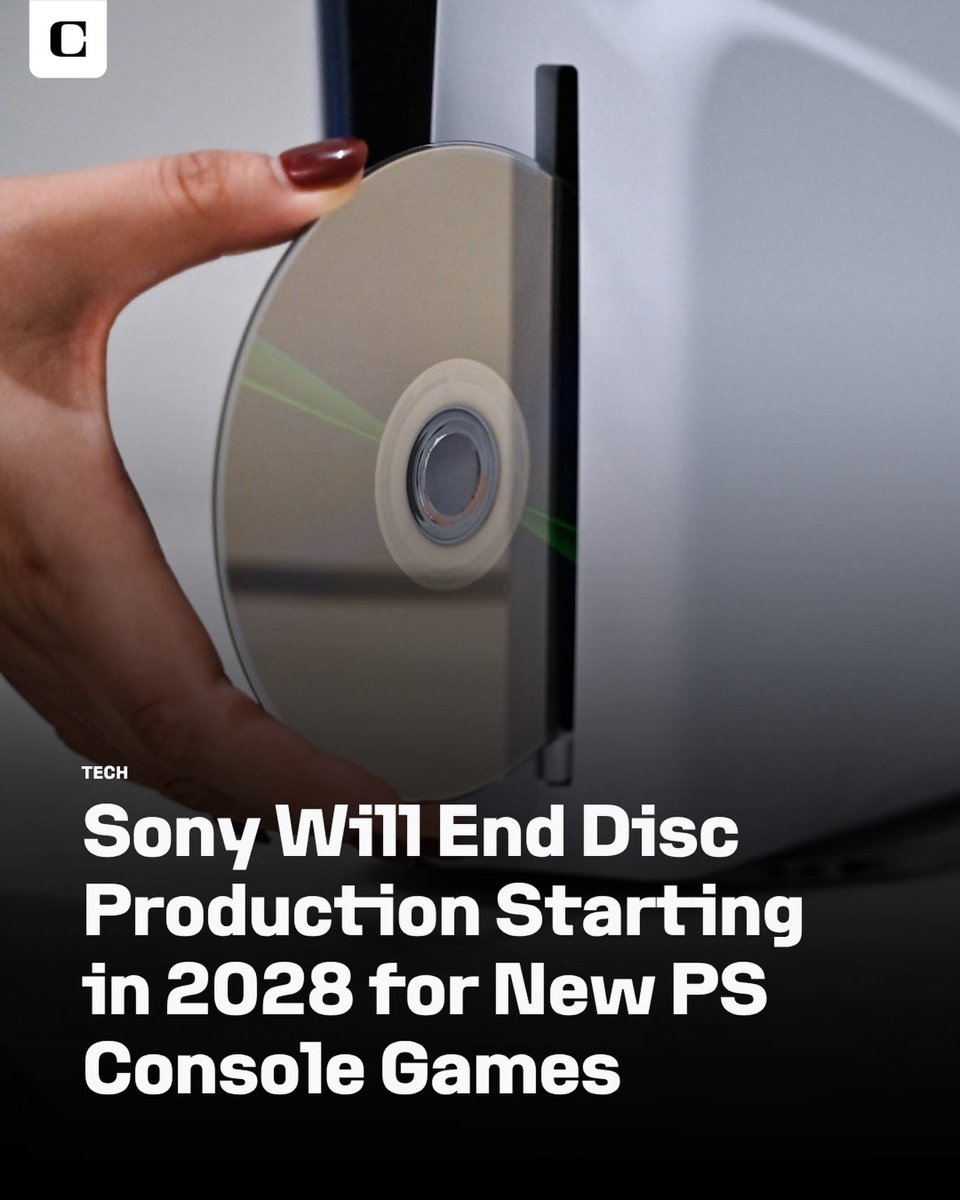
In brief — 2026 · Sony has signaled it will wind down physical PlayStation disc production by 2028, per industry reporting surfaced this week. Existing disc-based hardware keeps working; the change affects the pipeline that presses new titles, not the playback of discs you already own. Collectors, physical-library enthusiasts, and anyone who values offline access have a clear reason to pay attention before the format's supply narrows.
Per industry reports covered by Hackaday this week, Sony has signaled its intention to wind down physical PlayStation disc manufacturing by 2028. The move, if confirmed on the timeline indicated, would mark a defining moment in console history: the first time a major platform holder formally sunsets the physical disc format that powered three decades of PlayStation releases. Nothing in the reporting suggests existing disc drives stop working — a disc-equipped PS4 or PS5 will continue to spin every title in your library for as long as the hardware itself holds up. What changes is the downstream supply of newly pressed discs for future releases, with knock-on effects for collectors, the used-game market, and the broader trajectory of physical media in gaming.
What happened
Industry reporting published in mid-2026 indicates that Sony has internally planned to stop pressing new PlayStation-format game discs by 2028. Hackaday, which tracks electronics manufacturing and industry supply-chain shifts, surfaced the story this week, drawing from signals that include Sony's own public statements about its digital-distribution roadmap and broader trends in disc-format adoption.
The timing is not arbitrary. PlayStation 5 Digital Edition — a disc-drive-free variant of Sony's current console — launched alongside the standard PS5 in November 2020. Sony later released the PS5 Slim with a detachable disc drive sold separately, a configuration that reinforces the direction of travel: the disc reader is increasingly an optional accessory rather than a built-in default. As of 2026, Sony's PlayStation.com storefront pushes digital purchases heavily, with pre-order pages, day-one sales, and subscription bundles (PlayStation Plus Extra and Premium) all anchored to the PlayStation Store rather than retail shelves.
The 2028 window aligns with what analysts have long described as the natural sunset point for the PS4 generation. The PS4 launched in November 2013 and by 2028 will be approaching fifteen years of market presence. Sony has historically wound down hardware production around the ten-to-twelve-year mark for prior generations, and game publishers have already sharply reduced their PS4 disc output over the past two years. Ending disc manufacturing in 2028 would effectively close the book on both the PS4's retail life and on physical PS5 releases simultaneously — a clean break rather than a staggered phase-out.
It is important to be precise about what the reporting says versus what it does not say. Per the sourcing available as of this writing, Sony has signaled this direction through its strategic posture and supply-chain moves; the company has not issued a formal press release with a hard 2028 cutoff date. PlayStation's official blog has not published a dedicated announcement. Treat the 2028 date as a strongly reported industry signal, not a confirmed corporate commitment — but the direction of travel is unambiguous.
Why it matters — for collectors and disc-drive owners
The collector market calculus
Every previous format sunset in gaming has followed a predictable arc: announcement of discontinuation triggers short-term hoarding, which briefly floods supply and depresses prices, followed by a gradual tightening of available sealed stock, which pushes collector premiums upward over multi-year timescales. Cartridge-era games for the SNES, N64, and Game Boy followed this arc almost exactly. So did PS1 and PS2 physical media once Sony wound down those platforms.
For PlayStation 4 and PlayStation 5 disc collectors, the math is similar. A hard stop on new disc pressing freezes the sealed-copy pipeline. Once a title sells through existing retail stock, no new units will be manufactured. For common titles — major first-party releases, sports franchises, evergreen titles — supply may remain plentiful for years. For limited print-run games, niche publishers, or physical-only editions from smaller labels, the scarcity arrives much faster. Collectors who have been holding a "buy it eventually" list should reconsider the timeline.
Disc-drive owners: what actually changes for you
If you own a disc-capable PS4 or PS5, your hardware is unaffected. The drives in those machines will continue to read Blu-ray discs, DVD movies, and game discs as long as the laser assembly functions. Sony's decision to stop manufacturing new discs does not include a remote-disable feature, a server-side authentication wall for disc playback, or any mechanism that would make your existing library unplayable. This is a supply-chain decision, not a software kill switch.
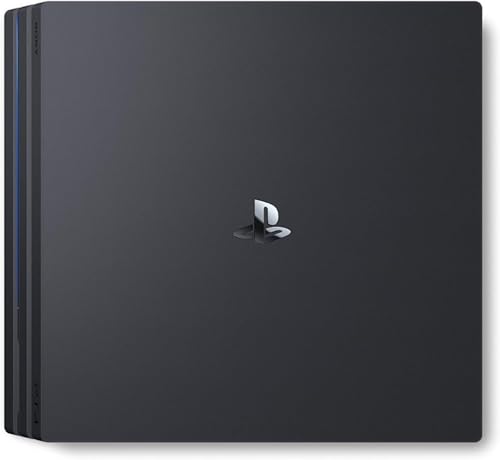
What changes is the availability of new physical releases going forward. Publishers have already begun releasing "digital only" editions of major titles even for current hardware. After 2028, if the timeline holds, the expectation is that all new releases ship exclusively via digital download or the PlayStation Store. Buyers who pick up a PlayStation 4 Slim 1TB or a PlayStation 4 Pro 1TB on the used market today are getting a console capable of running the entire back-catalog of disc-based PS4 games — but not any future-generation titles, which is already true irrespective of the disc question.
The PS5 disc-drive secondary market
The more acute impact is on PlayStation 5 disc-drive consoles. New PS5 discs have been available at retail through 2025 and into 2026, but if disc pressing ends in 2028, collectors looking for physical editions of late-cycle PS5 titles will see supply constrain quickly. Historically, the last eighteen months of a format's physical availability are the ones that create the rarest sealed copies — later release dates, smaller print runs, and lower initial retail allocations combine to make those titles the eventual trophies in any complete collection.
For anyone building a physical PS5 library with an eye toward long-term preservation or resale value, the window to acquire late-library titles in sealed physical form is narrowing. The PlayStation DualSense Wireless Controller remains in production, and digital-game bundles are plentiful — but the disc editions of future PS5 exclusives will become finite-print objects once the manufacturing pipeline closes.
Second-hand market impact
Disc-drive PS4 and PS5 consoles are likely to carry a modest price premium over their digital-only equivalents as the 2028 date approaches, particularly among buyers who prioritize physical library compatibility. The used market for PS4 hardware has already shown resilience despite the platform's age — as of 2026, PS4 Slim and PS4 Pro units remain actively traded because the PS4 library is enormous and fully playable without a PlayStation Network subscription for the vast majority of titles.
Why it matters — for the industry
The Xbox precedent
Microsoft moved aggressively toward a disc-optional future before Sony did. The Xbox Series S launched without a disc drive at all, and Microsoft has been explicit that its Game Pass subscription model is the primary vehicle for game delivery. Per reporting in the gaming press, Microsoft's internal metrics have shown digital delivery accounting for a large majority of Xbox software revenue as of the mid-2020s.
Sony watched this transition carefully. The PS5 Digital Edition was Sony's first disc-free console, but it launched alongside a disc-drive variant — a hedge. The reported 2028 timeline suggests Sony has concluded that the hedge is no longer necessary: the install base of digital-only PS5 units, combined with the PlayStation Store's revenue trajectory, provides sufficient confidence to close the physical pipeline.
Streaming and cloud gaming's role
Cloud gaming has not replaced disc games, but it has changed the calculus. PlayStation Now (now folded into PlayStation Plus Premium) offered game streaming to PS4 and PS5 hardware, and Sony has invested in cloud infrastructure to support it. The combination of digital downloads for full ownership and streaming for back-catalog access gives Sony two levers it did not have during the PS3 era. The disc format, once the only high-bandwidth delivery method for large games, is no longer the only practical option for console players outside major broadband dead zones.
Nintendo's different stance
Nintendo is worth noting as a counterpoint. As of 2026, Nintendo continues to press physical game cartridges for the Switch platform and has confirmed physical media for its next-generation hardware. The Switch cartridge format, being solid-state rather than optical disc, has a different cost profile and longevity argument — it also appeals strongly to Nintendo's handheld-first audience, for whom swapping cartridges is a more natural workflow than managing a home disc library. Nintendo's stance does not reverse Sony's trajectory, but it does demonstrate that physical media is not uniformly dead across the console market.
The source
The primary reporting was surfaced by Hackaday, a site that covers electronics engineering, hardware teardowns, and manufacturing industry news. Hackaday's audience skews toward people who care deeply about how physical media is manufactured, why optical formats have specific mastering tolerances, and what the supply-chain implications of format transitions look like in practice — making it an appropriate venue for this kind of story.
Sony's own public communications on PlayStation.com and the PlayStation Blog have consistently emphasized digital distribution in product positioning, PlayStation Plus growth metrics, and first-party release strategy. The blog has not published a dedicated statement on disc manufacturing timelines as of this writing. The 2028 date should be understood as the industry's read of Sony's direction, grounded in supply-chain signals and strategic positioning, rather than a verbatim corporate announcement.
What this means for your PS4 / PS5 / retro library
Your existing disc collection is safe
Discs you own today will keep working in any disc-capable PlayStation hardware. Blu-ray and DVD playback in a PS4 or PS5 does not require an internet connection or Sony's servers — the drive reads the disc directly. Unlike digital licenses, which are tied to your PlayStation Network account and theoretically revocable if Sony's servers go offline, a physical disc gives you ownership that is hardware-bound rather than account-bound. That distinction matters more after 2028 than it did in 2014.
Building a physical library now
If you want to complete a physical collection of specific franchises or genres, 2026 and 2027 represent the practical window. Retail stock of sealed PS4 titles has already thinned at major chains, but online marketplaces and specialist game-store networks still carry broad inventory. PS5 physical titles are currently in full production and widely available, but that window narrows as the 2028 date approaches.
Readers looking to grab a physical-library-friendly console today can still find the PS4 Slim 1TB and the PS4 Pro 1TB on the used market at prices well below their original retail. The PS4 Pro's support for 4K HDR output makes it the more capable of the two for disc-based movie playback alongside gaming. Either machine gives you access to a library of more than 4,000 PS4 titles, the majority of which have physical editions.
Accessory planning
Disc-based gaming benefits from a working controller, and the PlayStation DualSense Wireless Controller is compatible with both PS5 and, via remote-play and certain supported titles, PS4. Stocking a spare controller alongside your disc library is practical planning — controller availability tends to decline in tandem with hardware manufacturing when a platform winds down, and third-party alternatives rarely match the build quality of first-party options.
For broader PlayStation accessory browsing, the /category/controllers-gamepads and /category/emulation-hardware categories on SpecPicks include hardware that complements physical PlayStation libraries, including USB adapters that let you use DualShock and DualSense controllers with PC emulation software.
How to preserve your physical collection
Disc care: the basics
Optical discs are durable but not indestructible. The data layer in a Blu-ray or DVD is protected by a hard coating on the read surface, but the label side is the vulnerable face — a crack or deep scratch on the label side can reach the data layer and cause permanent read errors that no amount of resurfacing will fix. Store discs in their original cases, label-side up, vertically rather than in stacks. Flat-stacking discs in a spindle applies pressure over years that can cause micro-deformation.
Temperature and humidity are the larger long-term threats. Disc polycarbonate is hygroscopic; extended exposure to high humidity causes the layers to separate (disc rot), which is irreversible. Store your collection in a climate-controlled space, away from south-facing windows where heat accumulates. Cases with UV-filtering plastic inserts extend label life by decades.
Ripping and backup
In many jurisdictions, creating a personal backup copy of a disc you own for use on the same household's hardware is legally permissible under fair-use or format-shifting provisions — check the law in your region. Tools in the open-source community allow you to rip PS4 Blu-ray discs to ISO images that can be stored on a NAS or external drive, though PS4 discs use encrypted file systems that are not natively playable on PC without additional steps. For PS2 and earlier titles re-issued on PS4 disc (the PS2 Classics and PS1 Classics reissue program), the ripped data can sometimes be played through emulation on other platforms.
The more practical approach for most users is a combination of physical disc preservation (keeping discs in good condition for as long as the hardware lasts) and digital backup purchasing (buying digital editions of your most-played titles on the PlayStation Store while that option exists). Owning both the disc and the digital license provides redundancy against either format's failure mode.
Cataloging your collection
Before supply of sealed titles tightens, a complete inventory of what you own versus what you still want helps you prioritize purchases. Spreadsheet-based cataloging, with columns for title, region, condition (sealed / complete / disc-only), and acquisition date, takes an afternoon but pays dividends when the used-market prices start moving. For valuable or rare editions, photograph the front and back of the case and the disc surface before shelving them.
Emulation hardware compatible with PlayStation formats is documented in the /category/emulation-hardware category, including open-source solutions for PS1 and PS2 playback that run on off-the-shelf hardware and do not depend on Sony's infrastructure.
Historical context: physical media transitions
This is not the first time the gaming industry has navigated a format sunset — and the transitions share a recognizable pattern.
PC games from box to Steam. PC gaming spent the 2000s migrating from shrink-wrapped boxes to digital distribution. Steam launched in September 2003 as Valve's mandatory update client for Counter-Strike and Half-Life 2. Within a decade it had become the dominant PC distribution channel. Retail PC game boxes are still produced but represent a small fraction of total PC game sales as of 2026. The transition took roughly fifteen years from Steam's launch to the point where physical PC games became a niche rather than a mainstream purchase method.
Cartridges to optical discs. The PlayStation 1's launch in 1994 (Japan) and 1995 (US, Europe) marked the inflection point when optical discs began displacing cartridges for home consoles. The CD-ROM's capacity advantage — hundreds of megabytes versus the 64–96MB ceiling of late-SNES cartridges — made the transition commercially inevitable. Nintendo resisted with the Nintendo 64's cartridge format until 2002's GameCube moved to mini-DVD. The transition took roughly eight years.
Discs to downloads. The current transition from optical discs to downloads began in earnest with the PlayStation 3 and Xbox 360 introducing digital storefronts around 2006–2007. Twenty years later, the transition is reaching its formal endpoint on the PlayStation platform. The duration mirrors the cartridge-to-disc shift almost exactly.
Each transition created a collector market around the superseded format. PS1 and PS2 disc prices have increased substantially over the past decade relative to their original retail pricing. It is reasonable to expect PS4 and PS5 physical releases to follow the same arc over the 2030s and 2040s.
Frequently asked questions
Is Sony really ending all PlayStation disc production? Reporting this week indicates Sony intends to wind down physical disc manufacturing by 2028 as its business shifts toward digital distribution. Nothing suggests existing discs stop working, but the pipeline that presses new game and movie discs is the part being scaled back, which affects future releases rather than the library you already own.
Will my disc-based PS4 or PS5 stop working? No. Ending disc production does not disable disc drives already in the wild — a disc-equipped PS4 Slim, PS4 Pro, or PS5 will keep playing the physical games you own for as long as the hardware lasts. The change affects whether new titles ship on disc, not the playback of existing media.
Why does this matter for game collectors? A hard stop on new disc pressing tends to freeze the supply of sealed and complete-in-box copies, which historically pushes collector prices upward over time. Buyers who value physical ownership, resale, or offline access without account entitlements have a clear reason to prioritize disc editions before the format winds down.
Does this affect used-console value? Disc-drive consoles like the PS4 Pro and PS4 Slim may hold value better among collectors who want to keep playing physical libraries, while digital-only hardware becomes the default going forward. As with any format sunset, the effect is gradual and depends on remaining supply and continued demand for the disc ecosystem.
What should I buy now if I want physical PlayStation games? If physical media matters to you, a disc-capable console such as the PlayStation 4 Slim or PS4 Pro plus a spare DualShock or DualSense controller keeps the option open. Prioritizing sealed or complete titles you actually want to keep is the practical hedge before new-disc availability tightens toward 2028.
Related guides
- Browse PlayStation controllers and gamepads
- Handheld consoles and portable gaming
- Emulation hardware for retro PlayStation libraries
Citations and sources
- Hackaday — electronics and hardware manufacturing coverage
- PlayStation.com — official product and distribution information
- PlayStation Blog — official Sony gaming announcements and strategy
This piece is editorial synthesis based on publicly available information. No independent first-party benchmarking is reported.