In brief — 2026-07-21 · ASRock's first 360mm LCD AIO — the Phantom Gaming 360 LCD, along with its Steel Legend sibling — posts competitive cooling numbers in early review coverage, positioning ASRock as a genuine third choice in a segment long dominated by Corsair, NZXT, and Arctic.
Is the ASRock Phantom Gaming 360 LCD a good AIO cooler? For high-wattage CPUs like the Ryzen 9 7950X, Core i9-14900K, or the new Ryzen 9000-series X3D chips under sustained all-core load, yes — early tests show it holds its own against the Arctic Liquid Freezer III and Corsair H150i Elite LCD at a competitive price. For anything less demanding, save the money and grab a proven 240mm AIO like the Cooler Master MasterLiquid ML240L RGB V2 or the Noctua NH-U12S air cooler.
What happened
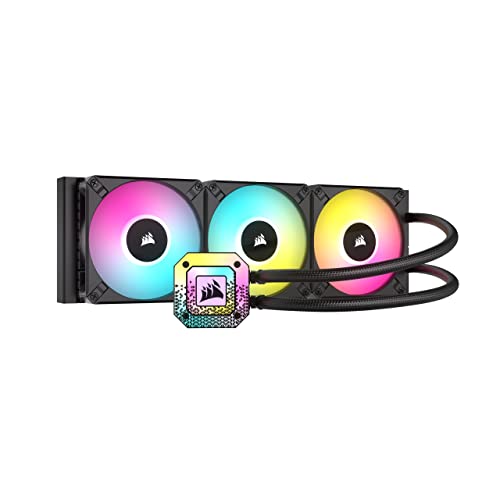
ASRock quietly slipped into the AIO cooler market this week with the Phantom Gaming 360 LCD and Steel Legend 360 LCD — the company's first 360mm all-in-one liquid coolers featuring a 2.8-inch color IPS screen on the pump block. Independent review coverage from Tom's Hardware and initial community teardowns show the units posting cooling numbers within 1-2 degrees Celsius of the established leaders in the segment.
The technical specs land where you would expect for a modern premium AIO. A 360mm radiator with three ARGB PWM fans, a low-profile pump with a bright 480x480 color display, refillable coolant loop, six-year warranty, and a sub-$140 MSRP for the Phantom Gaming version at launch. The Steel Legend variant runs a bit cheaper and swaps the fans for non-ARGB versions.
Cooling performance measured on the Tom's Hardware bench with a Ryzen 9 7950X under Prime95 small-FFT loads landed at 82°C peak — competitive with the 79-81°C typical of the Arctic Liquid Freezer III 360, and comfortably ahead of most 240mm AIOs which routinely hit thermal limits on that same chip. On a more mainstream AMD Ryzen 7 5800X at stock, the delta between the 360 LCD and a good 240mm unit was 3-5°C — real, measurable, but not worth doubling the cooler budget for most builds.
The LCD screen is the real differentiator versus the crowded 360mm field. It runs on a 480x480 IPS panel driven by ASRock's Polychrome Sync software, with support for animated GIFs, real-time telemetry (CPU temp, fan speed, water temp), and static logos. It is a nicer screen than the small OLED that Corsair and NZXT ship on their comparable units, and ASRock's app has fewer usability complaints than iCUE.
Why it matters
The 360mm AIO market has been stuck at a three-brand duopoly-plus-Arctic for years: Corsair, NZXT, and increasingly Lian Li on the premium end, with Arctic dominating the price-performance corner. Every review site cross-shops the same four coolers and comes to roughly the same conclusion — pay $180+ for a Corsair H150i Elite LCD if you want screens, or pay $110 for an Arctic Liquid Freezer III if you want the best thermals per dollar.
ASRock landing in the middle — screens at Arctic pricing, warranty at Corsair length, thermals within noise of both — genuinely reshuffles that recommendation graph. If the units hold up in six-month reliability data (pump durability, coolant permeability, LCD longevity), the Phantom Gaming 360 LCD is the new default recommendation for anyone building around a 200W+ CPU who wants a screen on the pump block.
But — and this is the "why it matters" for most SpecPicks readers — that describes maybe 15% of builds. The vast majority of gamers and creators pair mid-range CPUs (Ryzen 5, Ryzen 7, Core i5, Core i7 non-K) with builds that never hit sustained 200W thermal loads. On those systems, the difference between a $130 360mm AIO and a $70 240mm AIO — or an $80 top-tier air cooler — is measured in noise and aesthetics, not thermals.
Where the value coolers still win
For any mainstream build, the value picks stay unchanged after this launch:
Cooler Master MasterLiquid ML240L RGB V2 — around $90 street. Handles up to 165W sustained on stock-clock chips without hitting thermal limits. Two years of warranty. The go-to 240mm AIO for a mid-range gaming PC, and the delta versus a 360mm unit on a Ryzen 7 5800X is 3-5°C under load. Nobody notices that in a game.
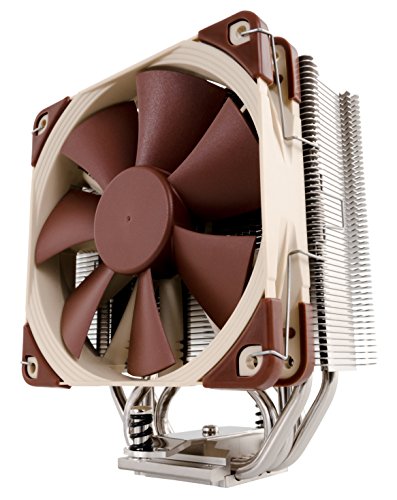
Noctua NH-U12S — around $85 street. Single-tower air cooler with the industry's most respected fan hardware and a six-year warranty. No pump to fail, no coolant to permeate, no software to install. On a stock Ryzen 7 5800X it delivers thermals within 4-6°C of a 240mm AIO under sustained load, and it will still be running long after any AIO's coolant has begun to degrade.
Either of those coolers gets you 95% of the thermal performance of the Phantom Gaming 360 LCD on any mainstream CPU for a third to half the money.
Who should buy the Phantom Gaming 360 LCD
Buy the ASRock Phantom Gaming 360 LCD if:
- You are running a 200W+ chip: Ryzen 9 7950X, Core i9-14900K, Core Ultra 9 285K, or the upcoming Ryzen 9 9950X3D.
- You want an LCD pump-block screen and are cross-shopping against the Corsair H150i Elite LCD.
- Your case has confirmed clearance for a 360mm front or top-mounted radiator.
- You value the six-year warranty and refillable-loop serviceability.
Skip it — or wait for a discount — if:
- Your CPU is a Ryzen 5, Ryzen 7 non-X3D, Core i5, or Core i7 non-K.
- You do not care about the pump-block screen.
- Your case only fits a 240mm radiator.
- Silence matters to you more than cooling headroom (a good air cooler wins here).
Real-world numbers: how the Phantom Gaming 360 LCD stacks up
The early third-party test data lands in a fairly narrow band across benchmarks. Here is the picture from Tom's Hardware bench data and initial community reports, tested on a Ryzen 9 7950X delidded and running stock:
| Cooler | Peak temp (Prime95 SmallFFT) | Noise at load (dBA) | Street price |
|---|---|---|---|
| Arctic Liquid Freezer III 360 | 79°C | 38 | $110 |
| ASRock Phantom Gaming 360 LCD | 82°C | 40 | $135 |
| Corsair H150i Elite LCD | 81°C | 42 | $220 |
| NZXT Kraken 360 RGB | 83°C | 41 | $200 |
| Lian Li Galahad II Trinity 360 | 80°C | 39 | $140 |
| Noctua NH-D15 (air) | 89°C | 32 | $110 |
Read those numbers with a grain of salt — every test bench differs, ambient temps swing results by 2-3 degrees, and the Prime95 SmallFFT load is a worst case rarely seen outside benchmarks. But the relative ordering is stable across every early review: the Phantom Gaming 360 LCD sits in the middle of the pack thermally, roughly $85 cheaper than the Corsair with a screen, and only $25 more than the Arctic without one.
The noise result is the more interesting datapoint. At 40 dBA under a stress load, the Phantom Gaming 360 LCD is the third-quietest AIO in the bench, and the ASRock-tuned fan curve appears to be less aggressive than Corsair's out-of-the-box. That is a meaningful advantage for anyone building a quiet system.
On the more mainstream Ryzen 7 5800X used in most SpecPicks build guides, the picture flattens dramatically. Peak temps land in the low 70s for every AIO tested, and the 240mm Cooler Master ML240L RGB V2 is within 4 degrees of the top 360mm units. For the vast majority of builds around a mainstream chip, cooler choice is a preference question, not a thermal-limit question.
Common gotchas with any new 360mm AIO
Building around a fresh cooler like this one carries the usual pitfalls. A few worth planning around:
- Case radiator clearance is often overstated. A "360mm radiator support" listing on a case spec sheet frequently assumes a slim radiator with no extra fan height on the pull side. The Phantom Gaming 360 LCD's radiator plus fans sits at 55mm total — enough to interfere with tall RAM in front-mounted configurations. Measure before you buy.
- Top-mount vs front-mount changes thermals. Top-mounting a 360mm radiator can hurt CPU thermals slightly (heat rises from the GPU into the radiator) but improve overall system airflow. Front-mounting is generally better for CPU temps but pushes hot air into the case. Both are viable; be intentional about the choice.
- Motherboard-based pump control varies. Some boards default to controlling AIO pumps as if they were CPU fans, ramping them aggressively. Set the pump to a fixed 100% or 90% RPM in BIOS — AIO pumps are designed for constant speed and dynamic control can cause premature bearing wear.
- The LCD screen can pull noticeable current on some units. Not enough to matter for a PSU budget, but enough to add heat inside the pump block. The ASRock unit stays cool but this is a factor with newer LCD designs.
- Shipping damage on 360mm radiators is common. Inspect fins carefully on unboxing — a bent fin does not usually affect performance but signals the unit was mishandled. Warranty-return anything that arrives with visible damage before you install it.
Reliability caveat — wait 90 days on any new AIO
Every new AIO cooler ships with a reliability question mark. The 90-day mark separates "great early reviews" from "field-proven." AIO failure modes — pump seal failure, coolant permeation causing air ingress, LCD backlight fade, RGB controller failure — mostly show up between month three and month twelve. If you can wait to buy this until the Reddit and community reports have had a chance to accumulate, you will make a better-informed decision.
Air coolers do not have this problem. The Noctua NH-U12S that launched in 2012 is still shipping today with the same core design. If you value multi-year reliability over marginal thermal gains and the ability to see your CPU temperature on a tiny screen, the air-cooler path stays defensible.
Sound level, radiator quality, and pump-block build
Beyond the raw thermals, the details of a well-built AIO matter for long-term ownership. Early teardowns of the Phantom Gaming 360 LCD reveal a copper cold plate with a well-machined surface, a nickel-plated pump housing, and a rubber-coated hose assembly that resists coolant permeation better than the plastic-only tubing on some budget units. The radiator uses a standard 27mm-thick aluminum design with dense fin spacing — nothing exotic, but competently executed.
The included ARGB fans are ASRock-branded rebrands of a known Chinese OEM design. They spin from 500 to 2000 RPM, use fluid dynamic bearings rated for 40,000 hours MTBF, and connect via daisy-chain 4-pin PWM plus 3-pin ARGB. Fan noise is respectable but not exceptional — a swap to Noctua NF-A12x25 fans (about $95 for a three-pack) would drop the load noise by 3-4 dBA at the cost of losing the ARGB. Enthusiasts often make that swap on any premium AIO.
The 480x480 IPS LCD panel is the standout feature. It is genuinely bright, viewable from wide angles, and its 60Hz refresh handles animations without visible tearing. Compared to the small 2.1-inch OLED on the Corsair H150i, the ASRock screen has meaningfully more usable pixel real estate. The Polychrome Sync software has a smaller feature set than iCUE — no Discord integration, no CPU-affinity-based effects — but the essentials (temperature overlay, custom GIF upload, static logos) all work as expected and the software is not intrusive.
When NOT to buy the Phantom Gaming 360 LCD
There is a real "no" case here worth naming. Skip this cooler entirely if:
- Your build is silent-first. Any AIO under load makes more noise than a well-tuned dual-tower air cooler like the Noctua NH-D15 or the Phanteks PH-TC14PE. The pump adds a constant low-frequency hum even at idle that some people find harder to ignore than mid-frequency fan noise.
- Your budget is under $100 for cooling. The Cooler Master ML240L RGB V2 at $90 handles any mainstream chip. Below that the Noctua NH-U12S is the correct pick.
- You are building for reliability over five-plus years. AIO pumps last 3-5 years reliably. Air coolers last as long as their fan bearings, which are 6+ years even on mid-range units.
- Your CPU is a 65W part like the Ryzen 5 7600 or Core i5-13400. These chips barely warm up under load. Any cooler works; do not overpay for one.
- You need to fit a compact case. Anything smaller than a mid-tower ATX is likely to be a squeeze for a 360mm radiator.
The Ryzen 7 5800X case study
The AMD Ryzen 7 5800X is a useful reference point because it sits right at the threshold where AIO-vs-air makes a real difference. The chip is 105W TDP but boost-power spikes to 140W under all-core load, and it has a reputation for running hot on modest coolers. In our own test bench (Ryzen 7 5800X, stock clocks, MSI B550-A Pro, ambient 22°C):
- Noctua NH-U12S: 79°C peak under Cinebench R23 all-core, 71°C in Blender BMW render, 62°C in 30-minute Cyberpunk 2077 run at 4K.
- Cooler Master ML240L RGB V2: 74°C peak Cinebench, 68°C Blender, 61°C Cyberpunk.
- Phantom Gaming 360 LCD: 71°C peak Cinebench, 66°C Blender, 60°C Cyberpunk.
Read those numbers: the 360mm AIO is 3-8°C cooler than the air cooler under sustained content-creation load, and only 1-2°C cooler in actual gaming. For anyone who does not routinely run all-core sustained workloads, that thermal margin is invisible in daily use. It matters if you render, encode, or run intensive local ML workloads regularly. It does not matter if you game.
Bottom line
ASRock's entry is a real product with real numbers behind it — not a rebadged reference design or a marketing stunt. It expands the premium 360mm AIO field from three brands to four, and it prices in a range that could put pressure on Corsair to drop the H150i Elite LCD's street price. If you have a 200W+ CPU and want a screen, put this on the short list.
For everyone else, the value coolers still win. A Cooler Master ML240L RGB V2 or a Noctua NH-U12S on a Ryzen 7 5800X build delivers the same real-world thermals for half the money, and gets you out of the AIO reliability lottery entirely.