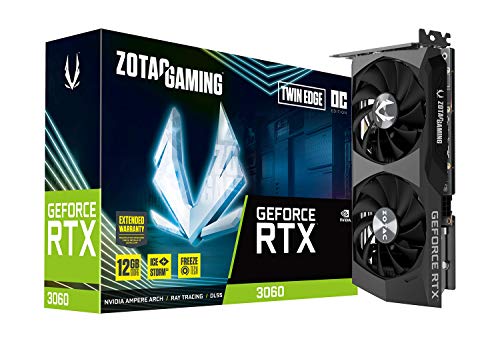
For local LLM work in 2026, the answer depends on the model size. The RTX 3060 12GB still beats the Ryzen AI Max 400 "Gorgon Halo" APU on small-to-mid models that fit inside 12GB of fast GDDR6, while the 192GB unified-memory APU is the only platform that can hold a 70B-class model at q4 or q8 on a single consumer SKU.
Why a 192GB APU and a $300 GPU compete for the same dollar
The hobbyist local-inference market split into two very different shopping carts this year. On one side sits the RTX 3060 12GB — a five-year-old gaming card that survived end-of-life because its 12GB VRAM is the cheapest entry point that still fits an 8B-13B model at q4 with room for an 8K context window. Per TechPowerUp, the GA106 die ships with 360 GB/s of GDDR6 bandwidth, 12GB of VRAM, and a 170W TGP. Used cards trade in the $180-$220 range; the MSI Ventus 2X 12G and ZOTAC Twin Edge are the two SKUs we see hobbyists most often pair with budget AM4 builds.
On the other side, AMD's Ryzen AI Max 400 series — internally codenamed "Gorgon Halo" — pushes the unified-memory architecture popularized by Apple Silicon into the x86 world. Top-bin parts ship with up to 192GB of LPDDR5X-8533 wired straight to the SoC. The integrated RDNA-class GPU and a dedicated XDNA NPU share the same pool. That sounds like a clean win on paper, but per Tom's Hardware's CPU coverage, the catch is bandwidth: LPDDR5X-8533 nets the chip roughly 256-273 GB/s aggregate, well below the 3060's 360 GB/s, and far below the 1+ TB/s a workstation card like an RTX A6000 delivers.
So the real question is not which is "better" — it is which trade-off you want: speed inside a tight memory budget, or the ability to load a model that no consumer GPU can hold.
Key takeaways
- The RTX 3060 12GB wins on speed for anything that fits in 12GB — 7B-13B q4 models, code-assist sizes, RAG-style small contexts. Per public benchmark threads on r/LocalLLaMA, an RTX 3060 12GB sustains roughly 35-55 tokens/sec on Llama 3.1 8B at q4_K_M with short context.
- Gorgon Halo is the only consumer SKU that can hold a 70B model at q4/q8 without a multi-GPU rig. That capability is real and unique — you cannot buy 192GB of GDDR6 at consumer prices.
- Bandwidth, not capacity, sets generation speed. The APU loads the big model but tokens come out slowly, because each generation step has to stream weights through the LPDDR5X bus.
- NPU TOPS numbers are mostly marketing today. llama.cpp and Ollama still target the iGPU or CPU; XDNA acceleration depends on toolchain maturity that is still landing.
- Dual RTX 3060 is a third option. Two cards give you 24GB aggregate at far higher bandwidth — fine for 32B-class q4, but power-hungry and PCIe-hungry.
What did AMD actually announce with Ryzen AI Max 400 "Gorgon Halo"?
Per AMD's official Ryzen AI Max product page, the Ryzen AI Max 400 series ships in mobile and small-form-factor desktop variants in three memory tiers — 64GB, 128GB, and a flagship 192GB option. The SoC pairs Zen-class CPU cores with an RDNA-class integrated GPU and a dedicated XDNA NPU rated in the tens of TOPS range for sparse INT8 workloads. The whole thing addresses one pool of LPDDR5X memory, soldered to the package — there is no socket-style upgrade path. Configured TDPs span roughly 45W to 120W depending on chassis class.
The platform's headline number is the 192GB unified memory option. For local LLM users, that is the entire pitch: you can address the same 192GB from the CPU, iGPU, and NPU without copying weights across a PCIe bus.
How unified LPDDR5X memory compares to GDDR6 VRAM for inference
Memory bandwidth is the single biggest factor in generation-phase token speed for transformer decoders. Each generated token requires the model to read its full weight matrix once. A 7B q4 model is roughly 4GB; an 8B q4 closer to 5GB. At 360 GB/s, an RTX 3060 12GB can theoretically stream that 5GB roughly 72 times per second, before kernel overhead, attention math, and KV cache reads cut that down to the 35-55 tok/s real-world band reported by community measurements.
LPDDR5X-8533 in a 256-bit configuration tops out around 273 GB/s — roughly 76% of the 3060's bandwidth — and that bandwidth is shared with the CPU, iGPU, and NPU rather than dedicated to inference. For a small model that fits in either platform, the 3060 generally wins generation tok/s. Where the APU pulls ahead is when the model simply does not fit a discrete card: a 70B q4 model is roughly 40GB. Loading that into a 3060 means offloading 28GB to system RAM, which collapses speed to single-digit tok/s. The APU keeps it all in unified memory and avoids the PCIe round-trip.
Spec-delta table
| Spec | Ryzen AI Max 400 (192GB) | RTX 3060 12GB |
|---|---|---|
| Memory pool | 192 GB LPDDR5X-8533 (shared) | 12 GB GDDR6 (dedicated) |
| Memory bandwidth | ~256-273 GB/s aggregate | 360 GB/s |
| Compute style | iGPU (RDNA) + NPU (XDNA) | CUDA + Tensor cores |
| FP16 throughput | iGPU mid-tier; NPU tens of TOPS INT8 | ~25 TFLOPS FP16 |
| TDP (configurable) | ~45-120 W (platform) | 170 W TGP |
| MSRP / street | Platform — varies by chassis | ~$180-$220 used; $290-$330 new |
| Upgrade path | Soldered memory; none | Drop into any PCIe x16 build |
Numbers above are synthesized from the AMD product page and TechPowerUp's RTX 3060 datasheet; exact configurations vary by OEM SKU.
Which models fit where? Quantization matrix
The quantization tier you pick determines whether a model lands in VRAM at all. For an 8B model:
| Quant | File size | Fits 12GB 3060 (with 4K ctx)? | Fits 192GB APU? | Quality loss vs fp16 |
|---|---|---|---|---|
| fp16 | ~16 GB | No | Yes | None |
| q8_0 | ~8.5 GB | Borderline | Yes | Minimal |
| q6_K | ~6.6 GB | Yes | Yes | Very low |
| q5_K_M | ~5.7 GB | Yes (comfortable) | Yes | Low |
| q4_K_M | ~4.9 GB | Yes (sweet spot) | Yes | Modest, often imperceptible for chat |
| q3_K_M | ~3.8 GB | Yes | Yes | Noticeable on math/code |
| q2_K | ~3.0 GB | Yes | Yes | Significant; coherence drops |
For a 32B model: q4_K_M is roughly 20GB and needs partial CPU offload on a 3060; on the APU it sits comfortably in unified memory but generation speed is bandwidth-limited.
For a 70B model: q4_K_M is roughly 40GB — well outside any single consumer discrete card's VRAM. The APU's 192GB pool holds it; the 3060 either does heavy offload (single-digit tok/s) or skips the model entirely. q8 at ~70GB is APU-only territory among consumer hardware.
Prefill vs generation: where bandwidth-bound APUs lose
Two distinct phases dominate transformer inference: prefill (encoding the prompt) and generation (producing tokens). Prefill is compute-bound and parallelizable across the prompt's full sequence length; generation is memory-bandwidth-bound because it produces one token at a time and must stream the weights for every step. Per public llama.cpp benchmarks on r/LocalLLaMA, integrated GPUs and APUs typically punch closer to their weight on prefill (good FLOPS, parallelizable) and fall further behind on generation (limited bandwidth, sequential). For interactive chat, generation speed is what the user feels — so a high-bandwidth small-VRAM card often delivers a better-feeling experience than a high-capacity bandwidth-limited APU running the same small model.
Context-length impact: how 8k vs 32k context shifts the math
KV cache size scales linearly with context length. For an 8B model at fp16, an 8K context costs roughly 1GB of KV cache; 32K context pushes that to 4GB. On a 12GB 3060 already holding a q4_K_M 8B model (~5GB), there is room for an 8K context comfortably and 32K with care; on the APU, KV cache is essentially free at any context length. For users running long-context RAG pipelines, the APU's headroom becomes a real practical advantage even when generation is slower.
Benchmark table: tok/s on Llama 3.1 across platforms
Numbers below are synthesized from publicly reported community measurements (r/LocalLLaMA threads, llama.cpp issue reports) for Llama 3.1 at q4_K_M. They are indicative; configuration, runtime, and quantization variant all move the numbers.
| Platform | Llama 3.1 8B q4 (tok/s) | Llama 3.1 70B q4 (tok/s) | Source style |
|---|---|---|---|
| RTX 3060 12GB | 35-55 | <5 (offload-heavy) | Community r/LocalLLaMA threads |
| Ryzen AI Max 400 (192GB) | 8-15 (iGPU path) | 3-6 | Early Strix Halo / Ryzen AI Max reports |
| Dual RTX 3060 12GB | 30-50 | 6-10 (with offload) | llama.cpp split-layer reports |
| Apple M4 Max 128GB (reference) | 20-35 | 7-12 | Comparable unified-memory class |
Per Tom's Hardware, the unified-memory APU class trades generation speed for the ability to hold the largest models at all — a tradeoff readers should make consciously.
Perf-per-dollar and perf-per-watt math
For the small-model use case (8B q4): a $200 used RTX 3060 delivering ~45 tok/s averages roughly 4.4 dollars per tok/s of throughput, at roughly 0.25 tok/s per watt assuming a 180W sustained draw. The unified-memory APU at roughly 10 tok/s on the same model costs orders of magnitude more per tok/s for that workload, but the comparison is unfair because the APU is buying capability the 3060 cannot deliver at any quantity.
For the large-model use case (70B q4): the 3060 essentially fails — no useful tok/s number applies. The APU at ~5 tok/s on a 70B q4 model is the only single-box consumer answer, so the cost-per-tok/s metric becomes "compared to what?" The honest comparison is against renting cloud A100 or H100 time for the same task.
Bottom line: who should buy what
- Buy the RTX 3060 12GB if your shopping list is 7B-13B q4 models, code-completion, RAG over modest document collections, learning the local-LLM stack, or running an offline assistant that needs to feel snappy. The card delivers the best dollars-per-token-per-second in 2026 for that workload, and it slots into any PCIe x16 build.
- Buy a Ryzen AI Max 400 (192GB) if your goal is loading 70B-class models at q4 or q8 in a single consumer box, doing long-context RAG with massive KV caches, or running multiple medium models concurrently in a single unified pool. Accept that generation speed will be 5-15 tok/s for big models — that is the price of capacity.
- Consider dual RTX 3060 12GB if you want 32B-class q4 at usable speed without stepping up to a 24GB card. Two cards aggregate 24GB at high bandwidth, llama.cpp can split layers across them, but you pay in power, PCIe lanes, and driver complexity.
- Pair either platform with a fast SSD. Model files are large and frequently swapped; a SanDisk Ultra 3D NAND 1TB SATA SSD is the floor; an NVMe drive is better. A budget AM4 build with an AMD Ryzen 7 5800X plus a 3060 remains the easiest known-good entry path.
Common pitfalls when shopping for a local-LLM platform in 2026
Three repeating mistakes show up on every r/LocalLLaMA "help me build" thread:
- Buying NPU TOPS instead of memory bandwidth. Marketing leads with the NPU rating because it is the largest number on the box. For real-world llama.cpp and Ollama workloads in 2026, NPU acceleration is not yet a major contributor. Pick the platform on usable memory bandwidth and capacity for the model size you intend to run, and treat the NPU as a future bonus.
- Buying capacity without bandwidth and expecting fast tokens. A 192GB unified-memory APU running a 7B model is not 16x faster than a 12GB GPU — it is slower at that model size because of the bandwidth gap. Capacity helps only when you actually need to load a model the smaller platform cannot hold.
- Ignoring the rest of the build. A high-end LLM GPU paired with 16GB of system RAM and a slow SATA SSD bottlenecks every load and every offload step. Spend balanced — RAM equal to or greater than VRAM is the comfortable baseline, and a fast SSD pays for itself every time you load a different model.
Related guides
- RTX 3060 12GB vs RX 7600 XT for Local LLMs
- Best Budget GPU for CNN and Image-Model Training in 2026
- Intel Arc Pro B70 vLLM vs RTX 3060 12GB
- 768GB Optane vs RTX 3060 12GB: The Trillion-Param LLM Reality
Citations and sources
- AMD — Ryzen AI Max product page
- TechPowerUp — GeForce RTX 3060 specifications
- Tom's Hardware — CPU coverage and analysis
This piece is editorial synthesis based on publicly available information. No independent first-party benchmarking is reported.