For a 2026 home-lab build, the honest answer is a 12GB-class GPU plus 32GB of system RAM and a fast SSD. The RTX 3060 12GB handles 8B-13B open-weight models at q4 — the practical local stand-in for a Gemini-class assistant — at 35-55 tokens/sec. Full 70B-class models still need either 24GB-plus VRAM, a unified-memory APU, or aggressive offload.
What "Gemini-class" realistically means for self-hosters
Google's Gemini is a closed, multi-trillion-parameter, mixture-of-experts model running on TPU pods. No consumer hardware comes close to running it at full size. What self-hosters actually run is the open-weight equivalent: Llama 3.1, Mistral 3.5, Qwen 3, DeepSeek v3 — frontier-tier models with weights published, sized 7B, 13B, 32B, or 70B parameters. At q4 quantization, the 7B-13B class delivers most of Gemini Pro's chat, code-assist, summarization, and RAG quality for the average user. The 70B class approaches Gemini Ultra quality on many benchmarks per public eval leaderboards, but it needs hardware that until recently did not exist outside the datacenter.
Cost-wise, the same lesson keeps repeating. A first local-AI box for "Gemini-class" inference need not be expensive. A used RTX 3060 12GB plus an AMD Ryzen 7 5800X, 32GB DDR4, and a 1TB SSD will run you under $700 in 2026 — and it runs the open-weight assistants the average user actually needs. The myth that local AI requires a $5000 build is exactly that: a myth, propagated by the loudest enthusiasts who happen to run 70B models all day.
Key takeaways
- A 12GB GPU is the practical entry point — fits 8B-13B q4 models with comfortable headroom for an 8K context window.
- System RAM matters as soon as you offload. 32GB is the comfortable baseline; 16GB is workable only for VRAM-only inference.
- SSD speed determines load time, not generation speed. A 1TB SATA SSD is the cheapest practical capacity; NVMe is nicer but optional.
- q4_K_M is the universal sweet spot for quantization — preserves quality while halving the memory footprint.
- The RTX 3060 12GB is the budget Gemini-class card — boring, well-supported, plentiful on the used market.
What VRAM do you actually need for 8B, 32B, and 70B open-weight models?
A model's parameter count translates to memory roughly as follows: at fp16 each parameter costs 2 bytes; at q8 it costs 1 byte; at q4_K_M it averages 0.6 bytes; at q2_K roughly 0.4 bytes. The model weights are only part of the bill — runtime overhead and KV cache for context add a real but usually modest amount on top. For a working budget:
- 8B model at q4_K_M — roughly 5GB on disk and in VRAM. Add 1-2GB for runtime and context. Fits comfortably in 12GB with room for 8K context.
- 13B model at q4_K_M — roughly 8GB. Tight on 12GB at long contexts; fine on 16GB+.
- 32B model at q4_K_M — roughly 20GB. Needs a 24GB card or split across two cards.
- 70B model at q4_K_M — roughly 40GB. Requires multi-GPU, a high-VRAM workstation card, or a unified-memory APU.
For the median user running an open-weight assistant for chat, code, or RAG, the 8B-13B class at q4_K_M is the sweet spot. That puts a 12GB GPU squarely at the entry point.
Quantization matrix: VRAM required + tok/s + quality loss per tier
Per the llama.cpp project's quantization documentation on GitHub, the trade-off between memory and quality is well understood:
| Quant | Bits/param | 8B file size | Quality loss vs fp16 | Notes |
|---|---|---|---|---|
| fp16 | 16 | ~16 GB | None (reference) | Out of reach for 12GB cards |
| q8_0 | 8 | ~8.5 GB | Minimal | Fits on 12GB but tight with context |
| q6_K | 6 | ~6.6 GB | Very low | Comfortable on 12GB |
| q5_K_M | 5 | ~5.7 GB | Low | Comfortable on 12GB |
| q4_K_M | ~4.6 | ~4.9 GB | Modest, often imperceptible | Universal default |
| q3_K_M | ~3.5 | ~3.8 GB | Noticeable on math/code | Use only if RAM-constrained |
| q2_K | ~2.6 | ~3.0 GB | Significant; coherence drops | Avoid for production use |
Generation tok/s does not change with quantization tier on the same GPU — it is bound by memory bandwidth divided by model size. A smaller quantized model produces tokens proportionally faster on the same hardware because there is simply less to read per step.
Why the RTX 3060 12GB is still the entry point for self-hosted inference
Per TechPowerUp, the RTX 3060 12GB ships with 360 GB/s of GDDR6 bandwidth, 12GB of VRAM, and a 170W TGP. None of those are flagship numbers, but they are the cheapest combination that fits an 8B-13B q4 model with room for context. Used prices in 2026 sit around $180-$220 on eBay; new units are still available in the $290-$330 range from the MSI Ventus 2X 12G and ZOTAC Twin Edge OC ranges. The card draws power from a single 8-pin connector, fits a small case, and runs hot but not punishing.
The 3060 12GB's competitive advantage in 2026 is not its raw compute — newer cards beat it on every spec — but its VRAM-per-dollar. The RTX 4060 ships with 8GB and is therefore disqualified for any 8B-13B model at q4. The RTX 5060 also has 8GB. The 4070 jumps to 12GB at roughly $550. The 4080 / 5080 have 16GB but cost over $1000. For users whose budget is "as little as possible," the 3060 12GB is uncontested.
Spec table: VRAM, memory bandwidth, MSRP, power for entry/mid/high tiers
| Tier | Card | VRAM | Bandwidth | TDP | Street price (2026) |
|---|---|---|---|---|---|
| Entry | RTX 3060 12GB | 12 GB | 360 GB/s | 170 W | $180-$220 used |
| Entry+ | RTX 4060 Ti 16GB | 16 GB | 288 GB/s | 165 W | $400-$450 |
| Mid | RTX 4070 Super 12GB | 12 GB | 504 GB/s | 220 W | $550-$620 |
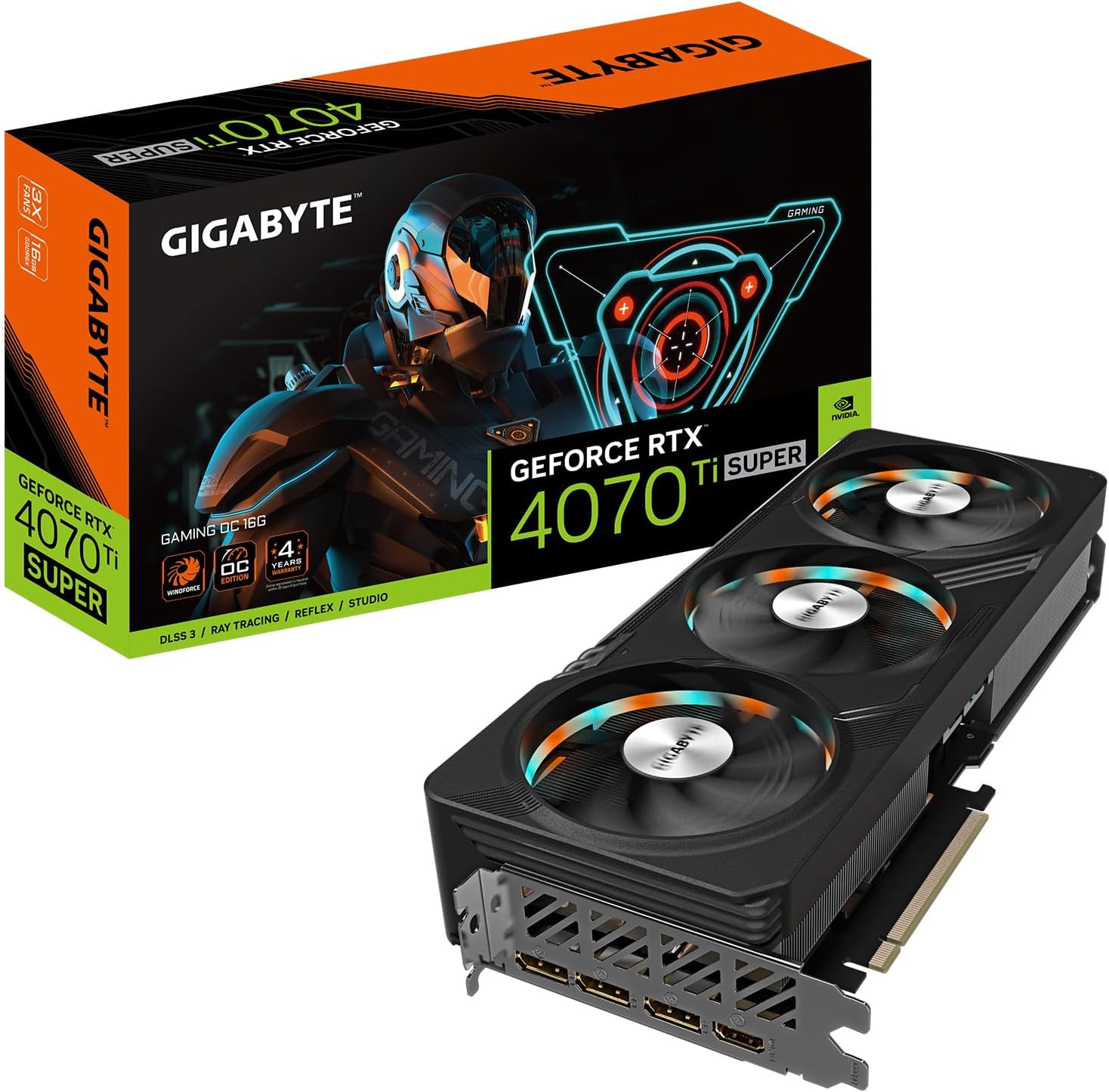
| Mid+ | RTX 4070 Ti Super 16GB | 16 GB | 672 GB/s | 285 W | $750-$830 |
| Workstation | RTX A6000 48GB | 48 GB | 768 GB/s | 300 W | ~$3500 used |
| Datacenter | H100 80GB SXM | 80 GB | 3.35 TB/s | 700 W | rental only for most |
Numbers compiled from TechPowerUp datasheets and current marketplace observation; prices fluctuate. For the budget-conscious self-hoster, the entry row is the right row.
Prefill vs generation, and how context length changes the RAM math
Two phases dominate transformer inference. Prefill encodes the prompt and is compute-heavy but parallelizable across the whole prompt — long prompts take time but scale reasonably with FLOPS. Generation produces tokens one at a time and is memory-bandwidth-bound, because each token needs the full model weights streamed once.
For a self-hoster, this means prompt-heavy workloads (RAG over long documents) are friendlier to mid-range GPUs than chat-style short-prompt-long-completion workloads, which beg for bandwidth.
KV cache scales with context length. For an 8B model at fp16 KV cache, an 8K context costs roughly 1GB; 32K context costs roughly 4GB. On a 12GB card already holding a q4_K_M 8B model (~5GB), there is room for 8K context comfortably; for 32K, you may need to drop to a q3 quantization or reduce other overhead. System RAM determines how aggressively you can offload — 16GB is fine for VRAM-only inference but feels tight once you offload a few layers; 32GB is the comfortable baseline; 64GB lets you do meaningful 32B-class offload.
Benchmark table: tok/s on Llama 3.1 across hardware tiers
Numbers below are synthesized from community measurements posted on r/LocalLLaMA, llama.cpp issue threads, and public Ollama benchmark scripts. They are indicative; runtime, quantization variant, and configuration all move the numbers.
| Platform | Llama 3.1 8B q4 (tok/s) | Llama 3.1 70B q4 (tok/s) | Notes |
|---|---|---|---|
| RTX 3060 12GB | 35-55 | <5 (offload-heavy) | Community measurements |
| RTX 4060 Ti 16GB | 40-65 | <5 (offload-heavy) | 16GB helps with context, not 70B |
| RTX 4070 Super | 70-100 | <5 (offload-heavy) | Higher bandwidth wins |
| RTX 3090 24GB (used) | 90-120 | 10-15 | 24GB unlocks 32B comfortably |
| Apple M4 Max 128GB | 20-35 | 7-12 | Unified memory; bandwidth-limited |
| Ryzen AI Max 400 (192GB) | 8-15 | 3-6 | Unified memory; capacity king |
System RAM, SSD scratch, and offload: the parts people forget
A first local-AI build often overspends on the GPU and underspends on everything else. The defaults that actually matter:
- System RAM: 32GB DDR4-3200 is the comfortable baseline. 16GB works for VRAM-only inference; 64GB is useful only if you plan to offload 32B-class models.
- Storage: model files are 4-40GB each, and most users end up keeping several quantizations on hand for different tasks. A SanDisk Ultra 3D NAND 1TB SATA SSD or the comparable Crucial BX500 1TB holds a working library; NVMe is preferable for load times but not required.
- CPU: an 8-core like the AMD Ryzen 7 5800X is more than enough — generation runs on the GPU and the CPU's job is keeping the model loaded, handling prefill kernels, and not bottlenecking the runtime.
- PSU: size for the GPU's transient peaks, not its TDP. A 650W gold-rated PSU handles a 170W 3060 plus a 5800X with no headroom worry.
Perf-per-dollar table for a first local-AI build
| Build | Approx. cost | Llama 3.1 8B tok/s | Llama 3.1 70B tok/s | Notes |
|---|---|---|---|---|
| 5800X + 3060 12GB + 32GB RAM + 1TB SSD | ~$650 | 35-55 | <5 | The budget winner |
| 5800X + 4060 Ti 16GB + 32GB | ~$900 | 40-65 | <5 | More VRAM headroom |
| 5800X + 4070 Super + 32GB | ~$1100 | 70-100 | <5 | Best speed in budget tier |
| 5800X + RTX 3090 24GB used + 32GB | ~$1300 | 90-120 | 10-15 | 32B and small 70B reach |
| Ryzen AI Max 400 (128/192GB) | ~$2500-$4000+ | 8-15 | 3-6 | 70B capacity, low speed |
Bottom line: the cheapest honest path to a Gemini-class local model
If your goal is a local assistant that handles chat, code review, RAG, and summarization at quality close to Gemini Pro, the cheapest honest path is the RTX 3060 12GB paired with a Ryzen 7 5800X, 32GB DDR4, and a 1TB SSD. Run Ollama or llama.cpp on top, pick an 8B-13B model at q4_K_M, and you have an offline assistant that produces useful work at 35-55 tok/s. That is a sub-$700 build that delivers most of what most local-AI users actually want.
If you have a hard requirement for 70B-class quality, you are looking at a 24GB-plus discrete card, a multi-GPU rig, or a unified-memory APU. Those are all valid options, but be honest about whether the workload actually needs 70B quality — for most chat, code, and RAG tasks, an 8B-13B model has caught up to 2024-era 70B quality.
Common pitfalls when building a first local-AI box
Three repeating mistakes from r/LocalLLaMA "help me build" threads worth flagging up front:
- Overspending on the GPU and underspending on RAM. A $700 GPU paired with 16GB of system RAM bottlenecks every load and every layer offload. Match RAM at least to VRAM as a comfortable baseline; double it if you plan to offload 32B-class models.
- Buying 8GB VRAM cards and being surprised. A 4060 8GB or a 3070 8GB cannot hold an 8B model at q4 with a comfortable context window. The 12GB tier is the entry minimum for current open-weight assistants; do not let a "current-gen" tag distract you from the spec sheet.
- Skimping on storage. Each quantization of a 7B-13B model is 4-8GB. Most users end up keeping 3-5 models on disk for different tasks. A 256GB SSD fills uncomfortably fast; a 1TB SSD is the practical floor.
Related guides
- Ryzen AI Max 400 Gorgon Halo vs RTX 3060 for Local LLMs
- RTX 3060 12GB vs RX 7600 XT for Local LLMs
- Best Budget GPU for CNN and Image-Model Training in 2026
- Intel Arc Pro B70 vLLM vs RTX 3060 12GB
Citations and sources
- TechPowerUp — GeForce RTX 3060 specifications
- llama.cpp on GitHub — quantization and runtime
- Ollama on GitHub — model runner and quantization tags
This piece is editorial synthesis based on publicly available information. No independent first-party benchmarking is reported.




