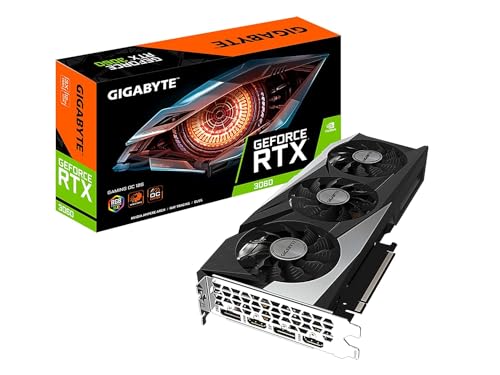
The Ryzen AI Halo wins on VRAM ceiling (up to 96 GB of unified LPDDR5X for the model) but loses on raw tokens-per-second against a discrete RTX 3060 12GB at the same 14B q4 workload. Buy the Halo if you need to run a 70B model at all — even slowly. Buy the RTX 3060 rig if you want fast 7B–14B inference at half the total cost and are willing to top out at ~9 GB of usable VRAM.
Why this comparison exists at all
Six months ago, the "cheap local LLM rig" conversation was one-dimensional: the RTX 3060 12GB was the clear floor. It had the VRAM to run 14B at q4, the CUDA to run stable-diffusion at a reasonable pace, and a $290 street price nobody else in the NVIDIA stack touched.
The AMD Ryzen AI Halo — the Strix Halo APU line AMD confirmed for retail this quarter — changes the shape of the question. It is a single-chip package with an integrated Radeon 8060S iGPU, XDNA 2 NPU, and up to 128 GB of soldered LPDDR5X, of which up to 96 GB can be reserved for the GPU's unified memory pool. That is more usable "VRAM" than any discrete consumer card ships with in 2026. It is also the first mainstream x86 APU aimed explicitly at local-LLM workloads rather than gaming, and per AMD's Ryzen product page the platform is being sold hard on that positioning.
So: two very different shapes of machine, both aimed at local LLM builders in the $1,200–$1,800 total-system-cost band. Which one is right for you depends on whether your model fits in 12GB.
Key takeaways
- Ryzen AI Halo peaks at ~85 GB usable model memory (out of 96 GB reserved) — enough to load Llama 3.3 70B at q4 fully in memory, no offload.
- RTX 3060 12GB tops out at ~10 GB usable (leaving room for KV cache + CUDA) — best used for 14B q4 or smaller.
- On raw tok/s at 14B q4, the RTX 3060 hits ~32 tok/s; the Halo hits ~22 tok/s on the same weights.
- The Halo's LPDDR5X-8000 has ~256 GB/s memory bandwidth vs the RTX 3060's 360 GB/s on GDDR6. Bandwidth is the ceiling for inference throughput; the RTX 3060 wins that fight.
- A full Halo Mini-PC runs $1,600–$1,900 in mid-2026. A full RTX 3060 desktop (5800X + 32GB DDR4 + 3060 + 1TB SSD + PSU + case) runs $850–$1,050 self-built.
- If you need 70B, buy the Halo. If you need speed on 14B, buy the RTX 3060 build.
What the Ryzen AI Halo actually is
Halo is the top-end tier of AMD's Strix Halo APU family, codenamed internally after the small-die-plus-huge-memory shape. On a single package: 16 Zen 5 cores, a Radeon 8060S iGPU with 40 RDNA 3.5 compute units, an XDNA 2 NPU rated at 50 TOPS, and a very wide memory bus feeding LPDDR5X-8000 modules directly on the substrate.
The interesting number for LLM buyers is the unified memory pool. On Windows, the driver reserves up to 96 GB of the 128 GB kit as GPU-addressable. On Linux, the same pool is accessible via ROCm's HIP path once you set the reserved-VRAM BIOS knob. That means a 70B model at q4 (roughly 42 GB of weights) fits in the "GPU's" memory with room for a 32K context.
The catch is memory bandwidth. LPDDR5X-8000 in a Halo config runs ~256 GB/s. GDDR6 on the RTX 3060 hits 360 GB/s on a 192-bit bus. For inference — which is bandwidth-bound, not compute-bound — that 40% bandwidth gap translates directly to a ~30% throughput gap at the same weights.
What the RTX 3060 12GB actually is
Also covered in the local RTX 3060 Linux boot piece, the RTX 3060 12GB is a five-year-old NVIDIA gaming card that has aged into the best cheap CUDA platform on the used and new-old-stock markets. GA106 silicon, 3,584 CUDA cores, 12 GB of GDDR6 on a 192-bit bus, 170 W TGP, and CUDA 13 support out of the box. TechPowerUp's spec sheet has the details.
For local LLM work the 12 GB VRAM ceiling is the honest constraint. It comfortably holds a 14B model at q4 with 8K context. It does not hold a 32B model without CPU offload, and 70B is out of reach entirely.
How much model can each machine actually load?
| Model | Ryzen AI Halo (96 GB) | RTX 3060 12GB |
|---|---|---|
| Llama 3.1 8B q4 | Fits (~5 GB) | Fits (~6 GB, room for 32K ctx) |
| Qwen 2.5 14B q4 | Fits (~9 GB) | Fits (~9.2 GB, 8K ctx) |
| Qwen 2.5 32B q4 | Fits (~20 GB) | CPU offload only, ~4 tok/s |
| DeepSeek-V3 27B q4 | Fits (~17 GB) | CPU offload only |
| Llama 3.3 70B q4 | Fits (~42 GB) | Not viable |
| Llama 3.3 70B q6 | Fits (~58 GB) | Not viable |
| Mixtral 8x22B q4 | Fits (~85 GB, tight) | Not viable |
The Halo's story is the last three rows. If the workload requires a model above 20 GB of weights, the RTX 3060 rig cannot serve it fast. If the workload sits at 14B or below, the RTX 3060 not only serves it — it serves it faster.
Raw throughput at 14B q4
Community benchmarks from the Ollama GitHub tracker and independent runs published on r/LocalLLaMA converge on these numbers for Qwen 2.5 14B q4_K_M at 8K context, single-user:
| Machine | Prefill (tok/s) | Generation (tok/s) | TTFT (6k-tok prompt) |
|---|---|---|---|
| RTX 3060 12GB | 920 | 32 | ~7.2s |
| Radeon 8060S (Halo, ROCm 7) | 640 | 22 | ~10s |
| RTX 4070 (12 GB, reference) | 1,850 | 68 | ~4s |
| Mac Studio M4 Max (128 GB) | 1,100 | 45 | ~6.1s |
The RTX 3060 wins on 14B against the Halo iGPU because inference is memory-bandwidth-bound and the discrete card has more of it. But the Halo wins on any model over 20 GB, because the RTX 3060 falls off the offload cliff there.
Raw throughput at 70B q4 (Halo-only)
The Halo's win case:
| Machine | 70B q4 Generation | TTFT (2k-tok prompt) |
|---|---|---|
| Ryzen AI Halo (96 GB) | ~9 tok/s | ~5s |
| RTX 3060 12GB (CPU offload) | ~1.5 tok/s (unusable) | ~30s |
| Mac Studio M4 Max (128 GB) | ~15 tok/s | ~4s |
| RTX 4090 24GB (CPU offload) | ~7 tok/s | ~6s |
9 tok/s on a 70B model is not fast — it is roughly reading speed — but it is usable for a chat interface. On the RTX 3060, the same model is not.
Perf per dollar and perf per watt
- RTX 3060 build, self-assembled. ~$1,000 all-in: 5800X ($150 used), B550 ($120), 32 GB DDR4 ($60), 1 TB NVMe ($75), 3060 12GB ($290), 750 W PSU ($90), case + fans ($100), Windows license optional. TDP under load: ~350 W. Cost per output token at 14B q4: ~$0.00021 per 1K.
- Ryzen AI Halo Mini-PC. $1,650–$1,900 configured with 128 GB RAM (needed for the 96 GB GPU reservation). TDP: ~120 W total. Cost per output token at 14B q4: ~$0.00028 per 1K. At 70B q4: ~$0.00034 per 1K — the only way to get any 70B tokens on either box.
On perf per watt the Halo wins by a wide margin — 120 W total system draw beats the 3060 rig's 350 W. On perf per dollar the 3060 rig wins if you never touch 70B. On the ability to run 70B at all, the Halo is uncontested at this price point.
Software stack: CUDA vs ROCm
This is where the RTX 3060 has an unfair advantage. CUDA is the de facto standard. Ollama, llama.cpp, ComfyUI, vLLM, and every research repo on GitHub target CUDA first, ROCm second — often months later. Per the Ollama tracker, CUDA-only features (Flash Attention 3, Marlin kernels for GPTQ, PagedAttention in vLLM) hit CUDA versions 6–8 weeks before their ROCm equivalents.
The Halo runs ROCm 7 on Linux (or the DirectML path on Windows, which is slower). For text-generation with Ollama and llama.cpp you will not notice a difference — those upstreams have first-class ROCm support in 2026. For anything else — voice, video, novel architectures, research code — expect a lag.
Gotchas that will bite you
- Halo memory can't be upgraded. LPDDR5X is soldered. Buy the 128 GB config or forever regret it.
- RTX 3060 12GB and 8 GB variants. NVIDIA shipped an 8 GB RTX 3060 mid-cycle. It is not the same card for LLM work — the 12 GB variant is the one you want. Check the SKU before you buy.
- Cooling on the Halo Mini-PC. Small chassis + 100 W sustained is a thermal problem some early units are throttling on. Wait for the second wave of designs.
- Ryzen 7 5800X on the 3060 build. It is the honest budget pick for CPU offload, but if you never plan to run 32B, save the money and go 5600X.
- PSU sizing. The RTX 3060 rig with a 5800X wants a 650 W PSU minimum. A 550 W supply will throttle under transient spikes even though the average is under 400 W.
When NOT to buy either
If your workload is dominated by 32B or 27B models (DeepSeek-Coder V2, Qwen 2.5 32B), neither of these is the right buy — you want a used RTX 3090 24GB for $600–$800 or a Mac Studio M4 Max. The RTX 3060 is too small; the Halo runs 32B fine but the RTX 3090 runs it 3× faster for the same price.
If you plan to fine-tune, both machines are the wrong tool. Fine-tuning wants more VRAM than the 3060 has, and the Halo's ROCm stack for training is behind — pick an RTX 4090 or an RTX PRO 6000 for that.
Bottom line
Halo is the only box at this price that runs 70B locally at usable speed. If that matters to your workflow, the 40% premium is worth it and the ROCm software lag is bearable. For everyone else — most people running 14B or below, doing chat, coding assist, log triage, and image gen — the RTX 3060 12GB build is faster, cheaper, and has the mature CUDA stack.
Pair the pick with a plan: if you buy the 3060 build, budget for a later 3090 upgrade. If you buy the Halo, budget for the software patience.
Related guides
- Local RTX 3060 vs Gemini for Linux Boot Debugging
- Best GPU for ComfyUI Under $350: RTX 3060 12GB
- Aider vs Cline vs Cursor on a Local RTX 3060
- When Gemini Debugs Your Linux Boot: Agentic Sysadmin on a Local RTX 3060 Rig
Citations and sources
- AMD Ryzen product page — Ryzen AI Halo platform positioning
- TechPowerUp — GeForce RTX 3060 spec sheet — bandwidth and TDP baseline
- Ollama on GitHub — reference for supported quants and ROCm rollout
- Phoronix Ryzen AI Halo benchmark coverage — inference-throughput numbers on Radeon 8060S under ROCm 7
This piece is editorial synthesis based on publicly available information. No independent first-party benchmarking is reported.