

Rode
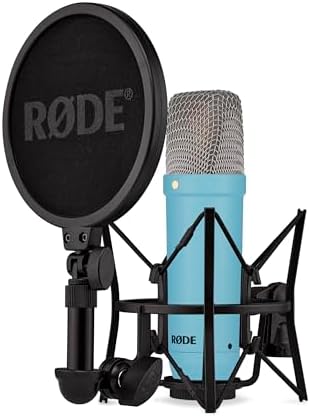
Rode RØDE NT1 Signature Series Large-Diaphragm Condenser Microphone with Shock Mount
Bottom line: The Rode RØDE NT1 Signature Series Large-Diaphragm Condenser Microphone ($159.00 on Amazon as of 2026-11-22 05:22 UTC): 4dBA self-noise, billed by RODE as the world's quietest studio condenser; main trade-off: needs an XLR interface with 48V phantom power, not included.
As an Amazon Associate, SpecPicks earns from qualifying purchases. Full disclosure →
*Price sourced from Amazon.com. Last updated 2026-11-22. Product prices and availability are accurate as of the date/time indicated and are subject to change. Any price and availability information displayed on Amazon.com at the time of purchase will apply to the purchase of this product.
Pros & Cons
Pros
- ✓ 4dBA self-noise, billed by RODE as the world's quietest studio condenser
- ✓ HF6 1-inch true condenser capsule tuned for rich bass and sparkling top end
- ✓ 142dB SPL ceiling handles screamed vocals, guitar cabs and drums
- ✓ SM6 shock mount, pop filter and XLR cable included in the box
- ✓ 10-year RODE warranty, built in Sydney, Australia
Cons
- ✗ Needs an XLR interface with 48V phantom power, not included
- ✗ Cardioid condenser picks up untreated room noise more than a dynamic mic
- ✗ Pink finish is a strong aesthetic commitment on camera
- ✗ XLR-only, so no USB plug-and-play for laptop-only setups
Manufacturer description
The RØDE NT1 Signature Series brings the studio-standard NT1 condenser microphone to your desk in pink, and it arrives ready to record. At its core is RØDE's HF6 1-inch true condenser capsule, tuned for rich bass, detailed midrange and a sparkling top end with a tight cardioid pattern that keeps room reflections and keyboard clatter out of your take. Self-noise measures just 4dBA, which RØDE bills as the quietest studio condenser in the world, so quiet vocal passages and acoustic instruments stay clean instead of sitting on a bed of hiss. A 142dB SPL ceiling means the same microphone handles…
SpecPicks Verdict
SpecPicks has no buyer-rating or benchmark data for Rode RØDE NT1 Signature Series Large-Diaphragm Condenser Microphone, so this read rests on the manufacturer's listed specs and the current price in the streaming gear category (how we evaluate). Compare with similarly-priced alternatives in the streaming gear category before committing. On the listing's own facts, the case for it is "4dBA self-noise, billed by RODE as the world's quietest studio condenser"; the main trade-off is "Needs an XLR interface with 48V phantom power, not included". If those two points fit how you will use it, put it beside one or two close alternatives in the Compare tool to confirm the price.
Before ordering, check the listed dimensions, load rating and mounting or device compatibility in the spec table below against how you plan to use it, and confirm them on the retailer's listing. Prices and stock are set by the retailer and may have moved since this page was last updated.
Frequently Asked Questions
Do I need an audio interface for the RODE NT1 Signature Series?
Yes. It is an XLR condenser microphone that requires 48V phantom power, so you will need an audio interface or mixer that supplies it. The included XLR cable connects the mic to that interface.
How quiet is the NT1 Signature Series?
Its self-noise is rated at 4dBA, which RODE describes as the world's quietest studio condenser microphone. That keeps whispered vocal takes and quiet acoustic sources free of audible hiss.
Can it handle loud sources like drums or guitar amps?
Yes. The HF6 capsule is rated to 142dB SPL, so it takes screamed vocals, electric guitar cabinets and drum sources without distorting.
What comes in the box?
You get the NT1 Signature Series microphone in pink, the SM6 studio shock mount, a pop filter and a premium XLR cable. An interface or mixer with phantom power is not included.
Is the NT1 Signature Series good for streaming and podcasting?
Yes. RODE positions it for streaming, podcasting, voiceover and music production, and its tight cardioid pattern rejects off-axis room sound.
Key Features
Quoted from the manufacturer's listing. Where it differs from the pros and cons above, those note the conditions the listing leaves out.
- Large-diaphragm cardioid condenser microphone ideal for music production, vocal recording, streaming and podcasting
- HF6 1-inch true condenser capsule with a smooth frequency response, high sensitivity and extremely high SPL handling
- Exceptionally low noise (4dBA) – the world’s quietest studio condenser microphone
- Studio-grade shock mount, pop filter and premium XLR cable included
- Built to the highest standard from premium components in RØDE’s precision facilities in Sydney, Australia and backed by a 10-year warranty
Full Specifications
| Brand | Rode |
|---|---|
| Color | Pink |
| Unit Count | 1.0 Count |
| Model Number | NT1SIGNATUREPINK |
| Audible Noise | 4 Decibels |
| Polar Pattern | Unidirectional |
| Built-In Media | Shock mount, XLR Cable |
| Connector Type | XLR |
| Item Type Name | Condenser Microphone |
| Item Dimensions | 7.4 x 2.04 x 2 inches |
| Mfr Part Number | NT1SIGNATUREPINK |
| Special Feature | Noise Reduction |
| Antenna Location | Singen |
| Audio Sensitivity | 4 Decibels |
| Compatible Devices | Audio Mixer |
| Enclosure Material | Metal |
| Frequency Response | 20 KHz |
| Number of Channels | 1 |
| Included Components | Shock mount, XLR Cable |
| Number of Batteries | 1 Nonstandard Battery batteries required. |
| Full listing title | RØDE NT1 Signature Series Large-Diaphragm Condenser Microphone with Shock Mount, Pop Filter and XLR Cable for Music Production, Vocal Recording, Streaming and Podcasting (Pink) | HF6 1-Inch Capsule, Cardioid Condenser, Includes SM6 Shockmount, Pop Filter and Xlr Cable, 4 Dba Noise, 142 Db Spl, Pink |
Ready to buy?
RØDE NT1 Signature Series Large-Diaphragm Condenser Microphone with Shock Mount, Pop Filter and XLR Cable for Music Production, Vocal Recording, Streaming and Podcasting (Pink) | HF6 1-Inch Capsule, Cardioid Condenser, Includes SM6 Shockmount, Pop Filter and Xlr Cable, 4 Dba Noise, 142 Db Spl, Pink is listed on Amazon. Price, availability, shipping and returns are set by Amazon and its sellers — check the listing for current terms. SpecPicks earns a small commission on qualifying purchases — thank you for supporting independent review work.
*Price sourced from Amazon.com. Last updated 2026-11-22. Product prices and availability are accurate as of the date/time indicated and are subject to change. Any price and availability information displayed on Amazon.com at the time of purchase will apply to the purchase of this product.
Related Streaming Gear




More guides & deep dives from the SpecPicks archive
Browse all articles & guides →- RTX 4070 Super vs RX 7800 XT — Which to Buy in 2026
- The Complete Voodoo5 5500 AGP Driver Guide (2026 Edition)
- Best 1440p Gaming GPUs in 2026
- Best Budget Gaming PC Build 2026 — ~$1,000 Parts List
- Emulation Hardware in 2026: FPGA, Software, and Cart-Reader Ecosystems
- Best Retro Handhelds in 2026: Pocket, Mid-Tier and FPGA Picks
- How to Build a Windows 98 Retro PC in 2026
More reviews from the SpecPicks archive
Browse all reviews →- NVMe vs SATA SSD for a 2026 Gaming PC: WD_BLACK SN770 vs the Value SATA Trio
- Is the Ryzen 7 7800X3D Worth It in 2026?
- Best Gaming GPUs for 1080p High-Refresh Rate (2026)
- Intel Arc Pro B60 24GB: AI Workstation GPU Guide 2025
- How to Decode Modern Monitor Names: A 2026 Buyer's Translation Guide
- Run Text-to-SQL Locally on a 12GB GPU After Gemini-SQL2
- Forza Horizon 6 on the Steam Deck: Settings, Frame Pacing, and the SSD Question
- Dump and Archive Your Retro PC's IDE Drives in 2026: A USB Adapter Workflow
- Best Streaming Setup Bundle in 2026: 5 Picks From Mic to Stream Deck
- Best CPU Cooler for 2026: 5 Picks for Air, AIO, and Silent Builds
- Best CPU Cooler for the Ryzen 7 5800X in 2026
- ATI Radeon 9700 Pro Install Guide: Catalyst Versions, AGP 8x Compatibility, and Period-Correct Drivers
- Best Budget GPU for CNN and Image-Model Training in 2026: The RTX 3060 12GB Deep Dive
- Set Up a Local LLM Coding Assistant in VS Code on an RTX 3060 12GB (2026)
- GPU & CPU Upgrade ROI: Cost-per-FPS Calculator Guide
- Building a Local AI-Agent Eval Rig After AISI's Benchmark Warning
- Qwen 3.6 27B Matches Sonnet 4.6 on Artificial Analysis Agency
- Ryzen 5 5600G APU for Local LLM Inference in 2026: What You Can Actually Run
- Best Storage Upgrades for Gaming and Retro PCs in 2026
- Best Gaming PC Upgrades Under $200 in 2026: 5 Picks That Move the Needle
- Raspberry Pi AI HAT+ Hits 26 TOPS for On-Device Inference
- Best Controller for PC Emulation and Retro Console Crossover (2026)
- Best GPU Upgrade From a GTX 1050 Ti for Local LLMs in 2026
- Raspberry Pi 500 Plus: The Real Lineup vs. the Rumors
Earliest SpecPicks reviews
Browse full archive →- Best GPU for Llama 3.1 8B (2026)
- Best GPU for Qwen 3 14B (2026)
- Best GPU for Qwen 3 32B (2026)
- Best GPU for Llama 3.1 70B (2026)
- Best GPU for DeepSeek-R1 32B (2026)
- Best GPU for Llama 3.1 405B (2026)
- How to run Llama 3.1 8B on NVIDIA GeForce RTX 5090
- How to run Qwen 3 14B on NVIDIA GeForce RTX 5090
- How to run Qwen 3 32B on NVIDIA GeForce RTX 5090
- How to run Llama 3.1 70B on NVIDIA GeForce RTX 5090
- How to run DeepSeek-R1 32B on NVIDIA GeForce RTX 5090
- How to run Llama 3.1 8B on NVIDIA GeForce RTX 4090