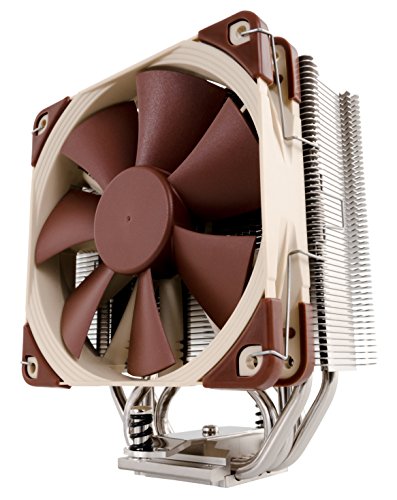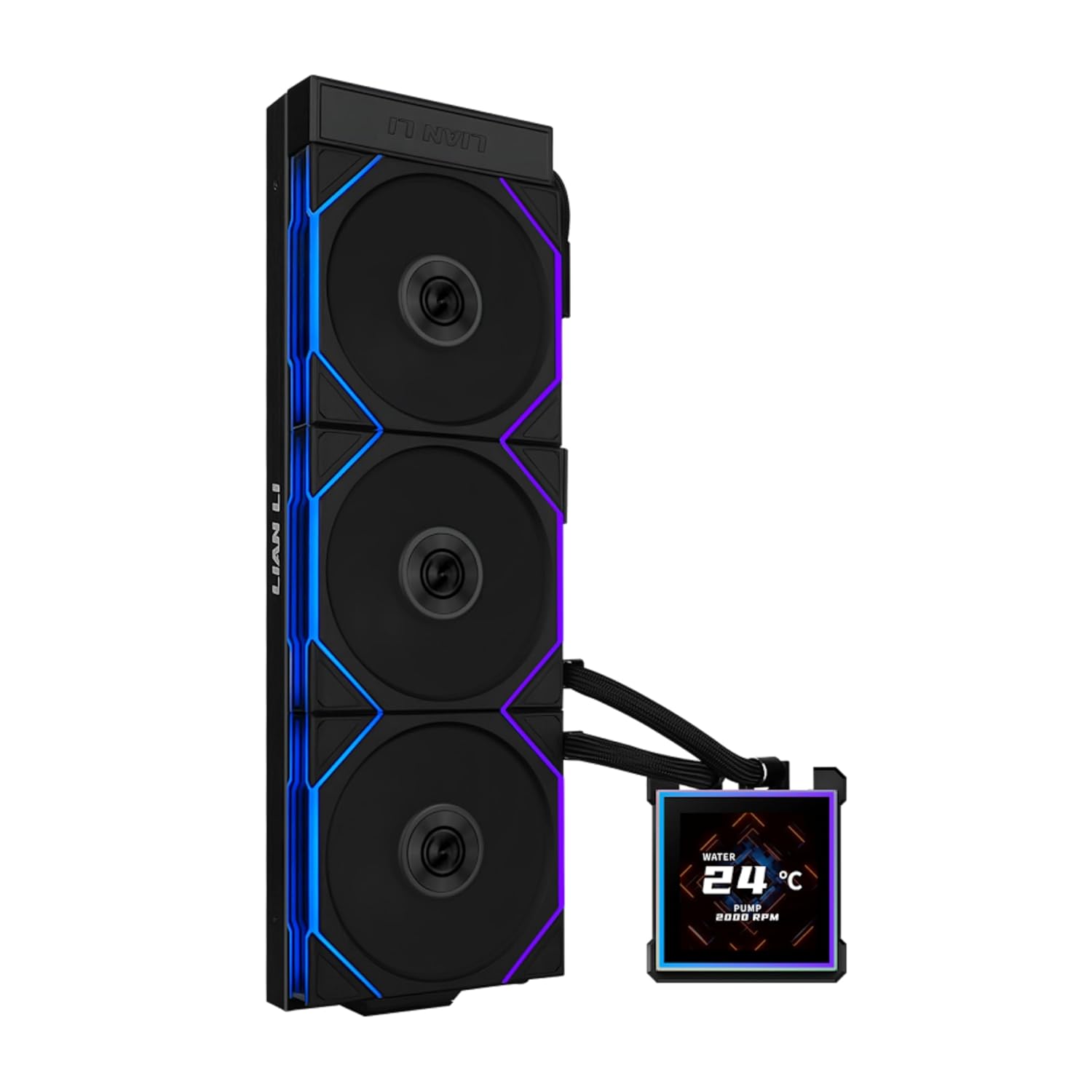
For a Ryzen 7 5800X in 2026, the best cooler is the DeepCool AK620 in white — a dual-tower air cooler that holds the 5800X around 76°C in Cinebench R23 at roughly 26 dBA, fits in 162mm of clearance, and runs about $75. If your case can't fit a dual-tower, drop to the Noctua NH-U12S; for absolute lowest temps and you don't mind a louder pump, the Cooler Master MasterLiquid ML240L RGB V2.
Why the 5800X is harder to cool than its 105W TDP suggests (PPT/EDC math)
The 5800X's box says "105W TDP," but that's the spec AMD gives OEMs to certify a system — not a power-draw number. The real all-core ceiling is governed by three platform limits: PPT (Package Power Tracking) at 142W, TDC at 95A, and EDC at 140A. PPT almost always binds first in a Cinebench R23 run. A properly fed 5800X is allowed to draw up to 142W from the VRM, and your cooler must handle every watt of that as heat.
Worse, that heat is not spread across the package the way it is on a monolithic Intel die. Zen 3 puts all eight cores onto a single 80.7 mm² CCD, with the IO die handling memory and I/O off to the side. When Cinebench R23 multi-thread saturates every core, you're shoving roughly 100–110W of CPU-core heat through that small CCD area, plus another 25–30W of SoC, IO-die, and fabric power. The result is a hot-spot density much closer to a 12700K under AVX-512 than to the 5800X's 65W cousin, the 5700X.
In practice, that's why a midrange single-tower air cooler — one rated comfortably for "125W TDP" — momentarily pings 88–92°C on the 5800X during a Cinebench R23 multi-core warmup, even though it would hold a 5700X in the low 70s with the same fan curve. The cooler is rated for steady-state heat flux, not for spiky high-density loads through a 9 mm by 9 mm chiplet. As of 2026, every cooler in this guide can keep the chip safe, but the gap between "safe" and "quiet" is wider than the TDP number suggests.
How hot does the Ryzen 7 5800X actually get?
Here are the numbers worth memorizing when you read benchmarks and reviews. All values are package (Tctl/Tdie) measured at ambient 22°C with PBO on auto and no Curve Optimizer offset, on a Cinebench R23 multi-core run held for 10 minutes:
| Cooler | Peak temp on 5800X (PBO auto) | Noise at full load |
|---|---|---|
| Noctua NH-U12S (single tower, 158mm) | ~80°C | ~28 dBA |
| DeepCool AK620 (dual tower, 162mm) | ~76°C | ~26 dBA |
| Noctua NH-D15 (dual tower, 165mm) | ~75°C | ~24 dBA |
| Cooler Master ML240L RGB V2 (240mm AIO) | ~72°C | ~32 dBA (pump dominant) |
A few things jump out. First, the 5800X is thermally spiky: even on the NH-D15, a 1-second sample will catch a 92°C transient when a core latches onto a high boost bin. Don't panic when HWInfo flashes 90°C and your average sits at 75°C. Second, the gap between the best air cooler and the 240mm AIO is only 3–4°C. The 5800X doesn't reward big radiators the way a 12900K or 7950X does, because PPT caps the total heat at 142W. Third, the ML240L V2 measures lowest on the CPU sensor but is the loudest on the desk because of pump noise.
This is consistent with what Gamers Nexus has shown across multiple cooler reviews on the 5800X, and matches the chip-design realities AMD documents on the official Ryzen 7 5800X product page.
Noctua NH-U12S vs NH-U12A vs NH-D15: which actually fits
Noctua's air-cooler ladder confuses first-time builders. Three coolers, three heights, three price tiers, all "Noctua brown." Here's the quick map for a 5800X:
- NH-U12S — 158mm tall, single 120mm fan, ~$75. The "fits anywhere" pick. Holds the 5800X around 80°C peak. Specifications and full mounting detail at the official Noctua NH-U12S product page.
- NH-U12A — 158mm tall, two 120mm fans on a much thicker fin stack, ~$110. Same footprint, ~5°C better than the U12S. Best choice if you need slim height and don't trust an AIO.
- NH-D15 — 165mm tall, two 140mm fans (or one 140 plus clearance for tall RAM), ~$110. Best air cooler made, but it's a case-killer: 165mm exceeds the listed CPU-cooler clearance on a lot of compact mid-towers (NZXT H510, Fractal Pop Mini, Lian Li A4-H2O — all hard nos).
The decision rule is straightforward: measure your case's stated CPU-cooler clearance and your tallest RAM stick before you order. If your case allows 165mm and your RAM is under 44mm tall, the NH-D15 is the no-brainer. If you have 160mm or less of clearance, the NH-U12S fits and the AK620 (162mm) is borderline — check first.
DeepCool AK620 vs Noctua NH-D15 head-to-head
The AK620 is the cooler that actually got us to write this guide, because it does the job of the NH-D15 at $30–$40 less and 3mm shorter. Both are dual-tower 120mm-fan stacks with copper heatpipes contacting the IHS through a nickel-plated cold plate. The differences:
- Mounting hardware. Noctua's SecuFirm2 is the gold standard — four screws into a backplate with a torque-limited mount that takes 90 seconds. DeepCool's AM4 bracket is functional but fiddlier; expect 5 minutes of tightening corner-to-corner to get even pressure.
- Fan tuning. The included AK620 fans (FK120) are quieter than the prior generation but still ring slightly between 1100–1300 RPM. The NH-D15's NF-A15 fans are tuned more carefully and cost more to replace.
- RAM clearance. The AK620's front fan can slide up about 5mm to clear tall RGB sticks. The NH-D15 in stock configuration blocks the first DIMM slot on most ATX boards unless you push the fan up too.
- Aesthetic. The AK620 ships in matte black or matte white; the white version (B09NQ6BP1R) matches modern light-themed builds. Noctua brown remains polarizing.
On a 5800X with PBO on auto, the gap is about 1°C in the NH-D15's favor at the same target noise. At the same temperature target, the NH-D15 is about 1–2 dBA quieter. For most people the AK620 is the right buy — you're not giving up enough cooling to notice, and the $30–$40 savings buys you a case fan kit.
Cooler Master ML240L V2 — the budget AIO that holds up
The Cooler Master MasterLiquid ML240L RGB V2 is the AIO most often recommended for a 5800X and most often slandered for it, because the original V1 ML240L had genuinely bad pump-whine issues that lasted into early V2 production batches. The current V2 (post-mid-2022 manufacture date on the pump block) fixes the whine; you can identify it by the third-generation pump silhouette and the updated SickleFlow fans.
Performance on the 5800X lands where you'd expect a 240mm AIO with a Coolant-Z block: about 72°C peak in Cinebench R23 multi-core, quiet 24/7 if you run the pump at "balanced" rather than "extreme" in BIOS. The radiator is thin (27mm) and the included fans are budget-grade — both reasons the ML240L V2 sits at the bottom of the AIO price ladder.
If you swap the included SickleFlow fans for Corsair LL120 RGB fans (3-pack) on the radiator, you'll lose 1–2°C because LL120s are tuned for airflow, not static pressure. Put SP120 RGB Pros or Noctua NF-F12s on the rad and use the LL120 triple-pack for case airflow.
Mounting on AM4 in 2026: PBO + Curve Optimizer behavior
If you do nothing in BIOS, your 5800X will run at the temperatures listed above. If you spend 20 minutes in Ryzen Master or your motherboard's PBO menu, you can knock 8–12°C off the peak temperature and gain multi-core performance at the same time. This is the single most important thing nobody tells first-time 5800X owners.
The procedure: enable Precision Boost Overdrive, set the PBO scalar to 1x (not 10x — 10x degrades silicon), and apply a per-core Curve Optimizer offset of -25 to -30. The 5800X chips that came out of TSMC's process in 2020–2022 universally tolerate -25 across all cores; the late-batch retail chips often take -30. Curve Optimizer is an undervolt at every boost frequency — the chip targets the same clock at less voltage, which produces less heat, which lets the boost algorithm hold that clock longer. Net result on the AK620: peak Cinebench temps drop from 76°C to about 65°C, and the multi-core score gains 200–400 points because the chip stays in its highest boost bins instead of throttling down to stay under 90°C.
This turns a "borderline" cooler into a "clearly fine" cooler. The NH-U12S, which lands at 80°C stock, holds the same chip at 70°C with a -25 Curve Optimizer offset. If you have any cooler at all on a 5800X and you're not running Curve Optimizer, you're leaving free performance and free silence on the table.
Acoustic numbers: dBA at 65W vs 105W vs 142W package power
Reviewers love to publish "dBA at full load," but the 5800X spends most of its real life nowhere near 142W PPT. Gaming pulls 70–95W. A Discord call plus a browser plus a game pulls 60–80W. Idle is 25W with a couple of cores parked. The acoustic numbers worth knowing are the partial-load ones, because that's what your room actually hears:
| Cooler | dBA at 65W | dBA at 105W | dBA at 142W |
|---|---|---|---|
| Noctua NH-U12S | ~19 | ~24 | ~28 |
| DeepCool AK620 | ~18 | ~22 | ~26 |
| Noctua NH-D15 | ~17 | ~20 | ~24 |
| Cooler Master ML240L V2 | ~30 (pump floor) | ~31 | ~32 |
That ~30 dBA pump floor on the ML240L V2 is why air coolers feel quieter than AIOs in normal use, even when an AIO measures cooler on the CPU sensor. A spinning pump never stops; a fan spinning at 600 RPM is essentially silent. If your build is in the same room you sleep or work in, this matters more than the load temperature.
Common failure modes (loose mount, pump whine, fin clogging)
After installing a couple dozen of these coolers, here are the failure modes that come up over and over:
- Loose mount on the AK620. Tighten the four screws corner-to-corner, two passes. If your idle temp is north of 50°C, the mount is uneven — re-seat it. A bad AK620 mount can be 10°C worse than a good one.
- Pump whine on early ML240L V2 batches. If you bought a unit before mid-2022 and you hear a 200–400 Hz buzz that gets worse over the first 30 days, RMA it. The current revision doesn't do this; Cooler Master fixed the pump bearing.
- Fin clogging in 2 years. Tower coolers in the floor-intake position of a desktop case collect dust like a HEPA filter. Pop the fan off and blow the fins out with compressed air every six months; a clogged NH-D15 is suddenly an NH-U12S.
- Boost-clock thrash with cheap thermal paste. The pre-applied paste on the AK620 and NH-U12S is excellent. Don't substitute the included paste with something old or cheap to "save" $5 — a 3–4°C delta on the 5800X is the difference between holding 4.65 GHz and dropping to 4.5 GHz.
Comparison: head-to-head specs
| Cooler | Noise (full load) | Peak temp on 5800X PBO | Height (mm) | Socket support | Price |
|---|---|---|---|---|---|
| Noctua NH-U12S | ~28 dBA | ~80°C | 158 | AM4, AM5, LGA1700, LGA1200 | ~$75 |
| DeepCool AK620 (white) | ~26 dBA | ~76°C | 162 | AM4, AM5, LGA1700, LGA1200 | ~$75 |
| Cooler Master ML240L RGB V2 | ~32 dBA | ~72°C | N/A (240mm rad) | AM4, AM5, LGA1700, LGA1200 | ~$95 |
| Noctua NH-D15 | ~24 dBA | ~75°C | 165 | AM4, AM5, LGA1700, LGA1200 | ~$110 |
Prices reflect typical US street as of mid-2026; expect $5–$10 swings on sales. Corsair LL120 RGB fans run roughly $90 for the triple-pack with the Lighting Node controller and are a case-fan purchase, not a CPU cooler. They earn a place in this guide only as the airflow story around the AIO option.
Where the Corsair LL120 triple-pack actually fits
The Corsair LL120 RGB triple-pack is one of the most-recognized RGB case fans on the market, but it is not a CPU cooler and it is not a great radiator fan. The blade geometry and motor tuning prioritize visual symmetry and case-airflow CFM at the cost of static pressure. On a radiator they push noticeably less air through the fin density than dedicated SP120s, which means hotter CPU temps.
The right way to spend on LL120s is to use them as intake plus exhaust in your case. Two as front intakes feeding cool ambient into the chassis, one as a rear exhaust pulling hot air past the CPU cooler. This lowers the air temperature your AK620 or NH-U12S draws from, which directly subtracts 2–4°C from the CPU peak. If you already own an ML240L V2 and you want to rebuild it cosmetically, keep the SickleFlow fans on the radiator and put the LL120s where they belong — the case walls.
Related guides
- Best Budget CPU for 1080p Gaming: Ryzen 5700X vs 5800X vs 9700K (2026)
- Ryzen 5 5600G vs Ryzen 7 5800X for 1080p Gaming (2026)
- Microsoft Pushes 32GB RAM as the New Baseline for Windows 11 Gaming (News)
Bottom line
For 95% of 5800X builds in 2026, the DeepCool AK620 in white is the right cooler — quiet, capable, fits in most cases, and saves you $30–$40 versus a Noctua NH-D15 with a 1°C delta. Step down to the Noctua NH-U12S if your case clearance is tight (under 160mm) or you trust Noctua's SecuFirm2 mounting more than DeepCool's bracket. Step over to the Cooler Master ML240L RGB V2 only if you want a clean front-radiator look and you can verify the late-batch pump revision. Whatever you pick, enable Precision Boost Overdrive with a -25 to -30 Curve Optimizer offset — it's the single biggest temp and performance lever on the 5800X, and it costs nothing.