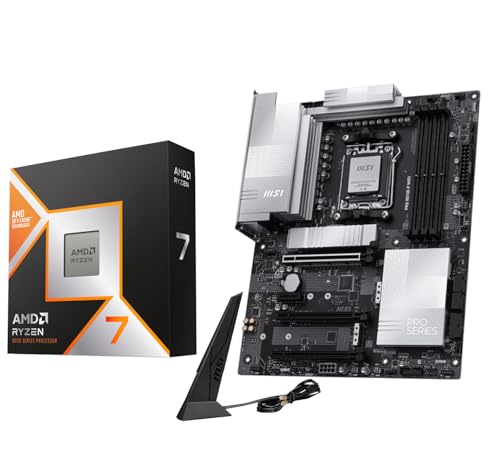
What made the 7800X3D a big deal in the first place
AMD's 3D V-Cache design stacks an extra slab of L3 cache directly on the compute die, which matters disproportionately for gaming because game engines are latency-sensitive and cache-hungry in ways that raw clock speed doesn't fully compensate for. The 7800X3D's official specs are 8 cores / 16 threads, 96MB of L3 cache, a 4.2GHz base clock with boost up to 5.0GHz, a 120W TDP, and AM5/DDR5 platform support. It launched in April 2023 at a $449 MSRP and was reviewed by outlets including TechPowerUp as a single-CCD chip that traded some multithreaded ceiling for a meaningfully better gaming result than its non-X3D sibling, the 7700X, in cache-sensitive titles.
That single-CCD, cache-first design is still exactly what it is in 2026 — nothing about the silicon has changed since launch. What's changed is everything around it.
The 2026 competitive picture
The field the 7800X3D competes in today looks different than it did at launch:
| CPU | Cores/Threads | L3 Cache | AM5/DDR5 | Launch MSRP | Launched |
|---|---|---|---|---|---|
| Ryzen 7 7800X3D | 8C/16T | 96MB | Yes | $449 | Apr 2023 |
| Ryzen 7 9800X3D | 8C/16T | 96MB | Yes | $479 | Nov 2024 |
| Ryzen 9 7950X3D | 16C/32T (dual CCD) | 128MB combined | Yes | $699 | Feb 2023 |
Specs per official AMD product pages. Street pricing by 2026 varies by retailer and is not reflected above — check current listings before buying.
The 9800X3D is the same core architecture and cache size as the 7800X3D, but with a higher clock ceiling, which is the source of its gaming edge — reviewers characterized the improvement as real but incremental rather than a generational leap, concentrated most in CPU-bound scenarios at 1080p and competitive esports frame rates. That gap compresses as resolution climbs and the GPU becomes the limiting factor, which is why the case for either chip weakens at 4K regardless of which one is installed — a dynamic also relevant to comparisons like RTX 3060 12GB vs. a Ryzen 5 5600G iGPU, where the GPU tier matters more than the CPU once you're not chasing max refresh at 1080p.
Outside AMD's own lineup, current-generation Intel desktop chips generally trade blows on single-thread and content-creation tasks depending on workload and cooling, while the 7800X3D's single-CCD, 8-core design keeps it at a disadvantage in heavily multithreaded rendering or encoding work compared to higher core-count parts. If the build is gaming-first with occasional light production work, that tradeoff rarely matters. If it's a dual-purpose gaming-and-content machine, it's worth weighing more carefully — similar to the calculus in SATA vs. NVMe for a Ryzen 5 5600G budget build, where the right call depends on what the rest of the system is actually being asked to do.
Upgrading from an older or lower-tier chip
For anyone still running a Ryzen 5 8600G, an older Zen 3 part, or a pre-AM5 Intel platform, the 7800X3D represents a full platform jump: AM5 socket, DDR5 memory, PCIe 5.0 support on compatible boards, and a cache-heavy architecture built specifically for gaming frame rates rather than balanced all-around throughput. That's a materially bigger upgrade for a 1080p/1440p-focused gamer than for someone whose workload is production-heavy, where a higher core-count chip would matter more than cache size.
It's the same category of decision covered in Ryzen 7 5800X vs. Core i7-9700K for 1080p esports: at competitive frame rates, the CPU generation and cache design can matter more than raw core count, and the 7800X3D sits well ahead of both of those older chips in that specific lane. Anyone weighing this jump alongside a broader budget refresh should also check Best Budget PC Gaming Upgrades Under $200 — a CPU swap on AM5 usually means a new motherboard too, which changes the math versus a GPU or SSD upgrade on an existing platform.
AI and local-inference use
The 7800X3D was never designed as an AI accelerator, and that hasn't changed in 2026: it has no dedicated NPU, and its role in a local AI or LLM setup is limited to feeding the GPU (or a dedicated accelerator) rather than doing meaningful inference or training work itself. For anyone building a machine around local model serving, the GPU and its VRAM capacity is the determining factor, not which 3D V-Cache Ryzen chip sits in the socket — a distinction covered in more depth in Is vLLM Worth It If You're Not Serving Other Users?, where the CPU is consistently a secondary consideration behind GPU memory and throughput.
Who should still buy it in 2026
Buy the 7800X3D if:
- The build is primarily or exclusively for 1080p/1440p gaming.
- It's discounted meaningfully relative to the 9800X3D at the time of purchase.
- The rest of the system (GPU, monitor refresh rate) is tuned for a resolution where cache-driven gaming gains actually show up — the same logic that applies to couch-gaming setups built around a single strong all-rounder part rather than the newest flagship.
Look elsewhere if:
- The machine needs to handle heavy multithreaded production work alongside gaming, where core count matters more than cache.
- The 9800X3D is available at a small enough premium that the incremental performance gap is worth paying for — particularly for a 1080p-focused competitive setup, the kind of scenario also discussed in guides on streaming setups for PC gamers, where CPU headroom for encoding alongside gaming carries real weight.
- The build is being assembled from scratch and isn't AM5-committed yet — starting fresh with the 9800X3D avoids a near-term "should I have waited" upgrade itch, though both chips share the same socket and platform requirements, so neither choice is a dead end.
The bottom line
The 7800X3D hasn't gotten worse since 2023 — the field around it has gotten better. It's still a legitimate, well-supported 1080p/1440p gaming CPU on the current AM5 platform, and by 2026 it's typically the more affordable of the two X3D options rather than the newest. Whether it's "worth it" is really a question of the price gap to the 9800X3D at the moment of purchase, and whether the rest of the build's job description extends past gaming into heavier production work.
Citations and sources
- AMD Ryzen 7 7800X3D official product specifications
- AMD Ryzen 7 9800X3D official product specifications
- TechPowerUp: AMD Ryzen 7 7800X3D Review
- TechPowerUp: AMD Ryzen 7 9800X3D Review
This piece is editorial synthesis based on publicly available information. No independent first-party benchmarking is reported.