Searches for "Raspberry Pi 500 Plus" have spiked, but the name doesn't map cleanly to anything on Raspberry Pi Foundation's official product page. That mismatch is the whole story: shoppers are colliding three separate things — the Raspberry Pi 5 single-board computer, the Raspberry Pi 500 all-in-one keyboard computer, and a scattering of rumor-site "leaks" that borrow the Pi 5's silicon and bolt on invented specs. This guide sorts out what Raspberry Pi Foundation actually sells, what's genuinely unverified, and which board to buy depending on what you're building.
Is the "Raspberry Pi 500 Plus" a Real Product?
There is no product listed on raspberrypi.com's official catalog under the exact name "500 Plus." What is real and documented:
- Raspberry Pi 5 — the standard single-board computer, launched in October 2023.
- Raspberry Pi 500 — a keyboard-integrated computer built around Raspberry Pi 5 internals, in the same case-format tradition as the earlier Raspberry Pi 400.
Most of the "500 Plus" search traffic is a mix of people typing a stylized "500+" naming convention loosely, autocomplete suggestions bundling unrelated Pi 5 accessory keywords, and third-party blogs speculating about a higher-spec keyboard variant before Raspberry Pi Foundation confirms anything through its own news channel. Specific claims that circulate — a different SoC part number, an exact benchmark delta over Pi 5, or a firm launch date — are not corroborated on Raspberry Pi Foundation's own documentation and should be treated as unverified until they show up there.
The practical takeaway: if you're trying to buy hardware right now, shop by the confirmed model names — Raspberry Pi 5 or Raspberry Pi 500 — rather than the ambiguous "500 Plus" search term.
Raspberry Pi 5 vs. "500 Plus": Separating Confirmed Specs From Rumor
Raspberry Pi 5 runs a Broadcom BCM2712 SoC with a quad-core Arm Cortex-A76 CPU, as documented in Raspberry Pi's own technical documentation. Rumor threads about a "500 Plus" sometimes attach a different chip designation to the product; no such part number appears on Raspberry Pi Foundation's site, and boards in this family have consistently shipped on the BCM2712 platform since Pi 5's debut.
Pricing is the other place rumor and confirmed listings diverge. Raspberry Pi Foundation's official launch pricing for Pi 5 started at $60 for the 4GB configuration and $80 for 8GB; a 16GB variant was added roughly a year later. Raspberry Pi 500, as a complete keyboard computer, launched at a premium over the bare board to account for the keyboard, case, and included cabling. Rumor posts occasionally cite prices "up to $200" for an unreleased or unconfirmed higher-tier configuration — a number worth treating skeptically until Raspberry Pi Foundation lists it directly, since keyboard-computer bundles with extra storage or RAM are exactly the kind of SKU that tends to command a premium once officially announced.
| Spec | Raspberry Pi 5 (board only) | Raspberry Pi 500 (keyboard computer) | "500 Plus" rumors |
|---|---|---|---|
| SoC | Broadcom BCM2712 (confirmed) | Broadcom BCM2712 (confirmed) | Alternate chip claims — unconfirmed |
| Form factor | Bare board | Integrated keyboard + board | Integrated keyboard (claimed) |
| RAM at launch | 4GB / 8GB, later 16GB | 8GB | Unconfirmed |
| GPIO | 40-pin header | 40-pin header (exposed) | Unconfirmed |
| Official source | raspberrypi.com/products/raspberry-pi-5 | raspberrypi.com/products/raspberry-pi-500 | None |
What Raspberry Pi Actually Sells: The 500 Family Explained
The "500" naming lineage traces back to Raspberry Pi 400, which packaged an earlier Pi 4 board into a keyboard shell aimed at classrooms and budget desktop setups. Raspberry Pi 500 continues that idea with Pi 5-class performance instead. If you're building a low-footprint Linux desktop, a coding workstation for a kid, or a retro-computing rig, that keyboard form factor is genuinely useful — see our guides on kid-friendly Raspberry Pi projects and beginner no-solder builds for what the platform is good at outside of pure spec chasing.
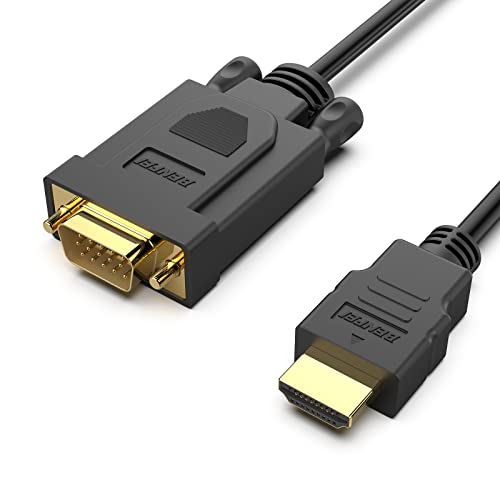
For anyone repurposing an older monitor that only has VGA input — common in retro-computing corners of the hobby — a cable like the BENFEI HDMI to VGA adapter bridges a Pi 500 or Pi 5's HDMI output to a legacy display without needing a new monitor purchase. A multi-pack version is worth it if you're wiring up more than one retro monitor at once.
Real Alternatives in 2026 if You Want More RAM or PCIe
If your project genuinely needs more headroom than a stock Raspberry Pi 5 offers — more RAM, native PCIe lanes, or a different price-to-performance point — a few boards are worth comparing directly rather than waiting on unconfirmed rumors:
| Board | CPU | RAM options | PCIe | Notes |
|---|---|---|---|---|
| Raspberry Pi 5 | Broadcom BCM2712 (Cortex-A76 quad-core) | 4/8/16GB | Via M.2 HAT (single lane) | Largest software/community ecosystem |
| Hardkernel ODROID-C4 | Amlogic S905X3 | 4GB | None | Budget option, Gigabit Ethernet |
| Radxa ROCK 5B | Rockchip RK3588 | Up to 16GB | Native PCIe (on-board M.2 slot) | Higher raw CPU/GPU throughput, smaller community than Pi |
Community coverage of these boards — Hardkernel's own ODROID-C4 listing and Radxa's ROCK 5B product page — is the right place to confirm current pricing, since SBC pricing shifts with component supply more often than mainstream consumer electronics does. Our broader roundup of Raspberry Pi alternatives walks through more of these trade-offs if you're picking a board for a specific workload rather than general tinkering.
Storage is a separate lever worth pulling before assuming you need different hardware entirely: a Pi 5 booting from a fast USB or PCIe-attached SSD — such as a SanDisk SSD Plus 240GB or the 480GB variant — often solves "my Pi feels slow" complaints that have nothing to do with CPU or RAM and everything to do with microSD card speed. For larger media or retro-game libraries, the 2TB SanDisk SSD Plus gives a lot of runway without moving to a different board.
How to Choose the Right SBC for Your Project
Match the board to the constraint that actually matters for your build, not to whichever name is trending in search:
- GPIO-heavy projects (sensors, motor control, home automation): Raspberry Pi's 40-pin header and mature
RPi.GPIO/gpiozeroecosystem still has the deepest tutorial and library support — see our home automation project guides and 2025 home automation starter guide. - Compute-bound workloads (local inference, video transcoding, compiling): a PCIe-equipped board like ROCK 5B, or a Pi 5 with an M.2 HAT and NVMe SSD, will outrun microSD-booted setups by a wide margin — exact throughput depends heavily on the specific SSD and workload, so treat any single benchmark number as workload-specific rather than universal.
- First build / budget-constrained: compare a stripped-down Pi board against a Pi Zero-class device before over-buying — our Pi 4 8GB vs. Pi Zero W comparison walks through exactly this trade-off.
- Full project menu: if you're still deciding what to build at all, the 50+ Raspberry Pi project ideas roundup and advanced projects for adults cover skill levels from first boot to multi-board clusters.
FAQs
Is the Raspberry Pi 500 Plus a confirmed, official product? No official Raspberry Pi Foundation listing uses the exact name "500 Plus" as of this writing. The confirmed lineup is Raspberry Pi 5 (bare board) and Raspberry Pi 500 (keyboard computer built on Pi 5 internals).
What's the actual difference between Raspberry Pi 500 and Raspberry Pi 5? Raspberry Pi 500 is a Raspberry Pi 5 built into a keyboard-and-case form factor, in the same tradition as Raspberry Pi 400 before it. The underlying SoC family (Broadcom BCM2712) is shared with the standard Pi 5 board.
Does Raspberry Pi 500 use a different chip than Pi 5? No — both are documented as running on the Broadcom BCM2712 platform. Rumor posts referencing an alternate chip designation for a "500 Plus" aren't reflected in Raspberry Pi Foundation's technical documentation.
Why do so many "Raspberry Pi 500 Plus" search results look inconsistent? Because the term isn't tied to one confirmed product — it's a mix of misspellings of "Pi 5," references to Pi 500, and third-party speculation, so different sites fill in different unverified details.
What should I buy instead if I want more storage or RAM than a base Raspberry Pi 5? Consider a Pi 5 with an M.2 HAT and an NVMe or SATA SSD, or step up to a board with native PCIe like the Radxa ROCK 5B if raw throughput matters more than ecosystem size.
Where can I verify current, real pricing for Raspberry Pi boards? Raspberry Pi Foundation's own product pages are the authoritative source — third-party retailer listings and rumor blogs can lag or misquote official pricing.
Citations and sources
- Raspberry Pi 5 product page
- Raspberry Pi 500 product page
- Raspberry Pi Foundation products catalog
- Raspberry Pi Foundation news
- Raspberry Pi computer technical documentation
- Hardkernel ODROID-C4 product listing
- Radxa ROCK 5B product page
This piece is editorial synthesis based on publicly available information. No independent first-party benchmarking is reported.