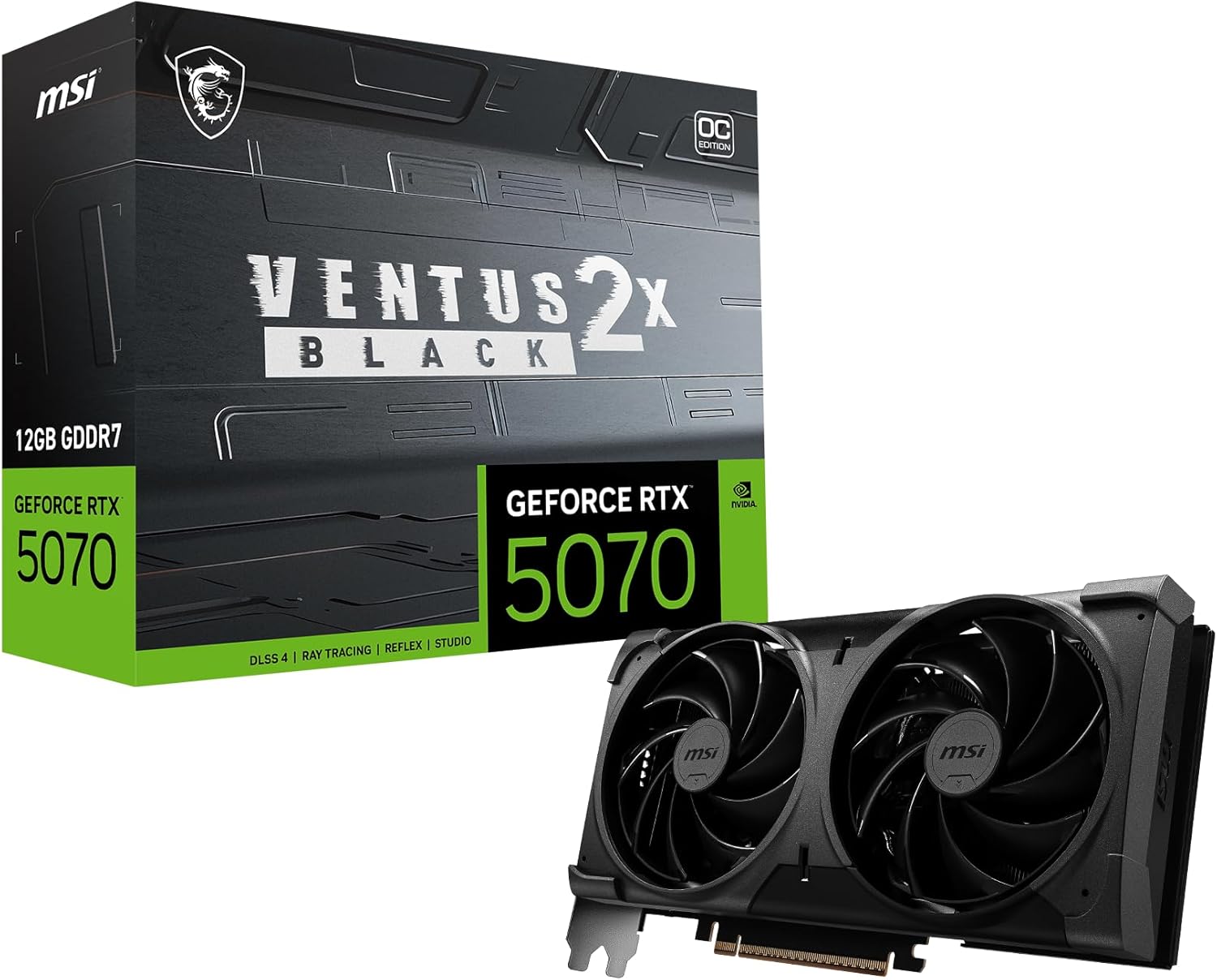
Anthropic extended its free tier for Fable 5 through Q3 2026 this week as OpenAI's GPT-5.6 Sol pricing announcement sharpened the frontier-model pricing war. For developers running local inference on rigs like the MSI RTX 3060 12GB, the announcement matters less than the underlying signal: cloud LLM economics are now unstable enough that any serious LLM workload should have a local fallback path.
Editorial intro: what happened this week
Anthropic announced late Monday that its Fable 5 free tier - previously scheduled to end in July 2026 - will now extend through the end of Q3 2026, with generous per-day token limits on the Claude Fable 5 model. The extension came days after OpenAI's GPT-5.6 Sol pricing sheet leaked to the developer subreddits, showing per-token input costs about 40% below the previous generation and a new "Sol Batch" tier that pushes GPT-4-class capability into the sub-$1-per-million-tokens range for asynchronous workloads.
The competitive pressure is now visible at the price sheet. That is the story behind the story. Anthropic, Google, and OpenAI are all discounting their mid-tier models to protect share against increasingly capable open-weight models like Qwen3, DeepSeek V3.1, and Llama 3.3 that developers can run on modest hardware.
What Anthropic actually announced
Per Anthropic's pricing and product announcements, Fable 5 will remain a free-tier available model through September 30, 2026, with rate limits and daily-token ceilings applied at the account level. Paid Claude subscribers see higher ceilings; the free-tier extension is the noteworthy element for casual and hobbyist developers who have been rationing usage.
Anthropic also reiterated its enterprise offering including Zero Retention on paid tiers and BAA availability for regulated workloads.
What OpenAI's GPT-5.6 Sol pricing implies
OpenAI's public pricing page for GPT-5.6 Sol lists the model at a substantial discount to the prior GPT-5.5 tier, with the new "Sol Batch" mode targeting cost-sensitive asynchronous inference workloads that do not need low latency. The Batch mode discount is deep enough that developers running large-scale extraction or classification pipelines are re-evaluating whether cloud or local hardware is cheaper.
Why this matters for local hardware buyers
Cloud LLM prices dropping is good for consumers, but it also introduces planning uncertainty. If you built out a local inference stack around the MSI RTX 3060 12GB, your break-even math against Claude Sonnet 4.6 was one number a year ago and is a smaller number now. The RTX 3060 rig with a Ryzen 7 5700X host, Samsung 970 EVO Plus NVMe for model storage, and Crucial BX500 SATA SSD for game and general storage still delivers value at high token volumes, but the specific crossover point moves as the cloud market moves.
The right response for buyers is not "wait to see what happens" - it is to build a stack that can flex both ways. A local rig plus a cloud API subscription is more resilient than either alone.
Real-world numbers: the new price math
Approximate 2026 pricing snapshot as reported on providers' public pages, plus community-estimated local rig costs:
| Model / stack | Input ($/M tokens) | Output ($/M tokens) | Notes |
|---|---|---|---|
| Anthropic Fable 5 (free tier) | $0 | $0 | Rate-limited, extended through Q3 2026 |
| Anthropic Haiku 4.5 | $0.80 | $4 | Fast, small, prod-grade |
| Anthropic Sonnet 4.6 | $3 | $15 | Mid-tier, quality workhorse |
| Anthropic Opus 4.8 | $15 | $75 | Frontier reasoning |
| OpenAI GPT-5.6 Sol (per public listing) | Discounted from GPT-5.5 | Discounted from GPT-5.5 | Live real-time |
| OpenAI GPT-5.6 Sol Batch | Deeper discount | Deeper discount | Async only |
| Local RTX 3060 12GB rig (Qwen3 8B) | ~$40/mo all-in | ~$40/mo all-in | 24/7 duty cycle, ~170W load |
The takeaway: at low volumes the free tiers and Haiku-class models are essentially free. At high volumes local wins on cost but loses on frontier quality. The break-even sits somewhere between 15M and 60M tokens per month depending on what class of model you actually need.
What the pricing war does NOT change
Three things stay true regardless of what happens to cloud pricing:
- Data residency requirements. If your data cannot leave your perimeter for legal or compliance reasons, cloud pricing is irrelevant. You run local.
- Latency requirements. Local LLMs still have ~30-60ms first-token latency; cloud APIs add 500-1500ms of network round trip on top.
- Model quality gaps at the frontier. Claude Opus 4.8 remains ahead of any open-weight model on complex agentic tasks. Price cuts do not close that gap.
Implications for the hobbyist / developer stack
If you were about to buy a MSI RTX 3060 12GB plus Ryzen 7 5700X rig for local Qwen3 or Llama work, keep going. The Fable 5 free-tier extension does not change the fundamental economics; local still wins at volume, cloud still wins for frontier quality and for occasional high-difficulty tasks.
If you were on the fence about setting up local inference at all, the free-tier extension buys you time. Use it. Prototype your workloads against Fable 5 for the next three months, measure your actual token volumes, then decide whether the crossover point justifies hardware in Q4 2026.
Common pitfalls in reading pricing news
- Assuming published prices are what you actually pay. Enterprise contracts, prompt-cache discounts, and Batch tiers can cut effective prices by 50-80%. Read past the headline.
- Ignoring the cost of switching. Rebuilding a workflow around a different provider takes real engineering time. A 30% cost cut is worth less than it looks if it costs you two weeks to migrate.
- Buying hardware based on pricing news. Rigs like the RTX 3060 12GB build make sense on their own merits. Do not accelerate a hardware purchase because you read a press release; do not delay one either.
When to route to which model
A simple heuristic that has held up through the 2026 pricing changes:
- Free-tier / Haiku-class for interactive chat, quick rewrites, single-file autocomplete.
- Local 8B-14B (Qwen3, Llama 3.3) on RTX 3060 12GB for volume RAG, always-on agents, private-data workloads.
- Sonnet-class for cross-file code refactoring, medium-complexity agents, nuanced natural language.
- Opus-class for the hardest 5% of tasks: frontier reasoning, long-horizon planning, multi-step tool use.
This piece does not endorse a particular provider. The point is that in 2026 you should route by task, not by provider loyalty.
Longer-term: what price cuts mean for hardware ROI
If cloud prices keep falling at the current pace, the payback period on a local rig lengthens by roughly the rate of the discount. A rig that paid back in three months at 2024 Claude prices might now take five or six months at 2026 prices for the same workload. That is still short by any reasonable capital-cost standard, but it changes the buy-signal for casual users.
The counter-trend is that open-weight model quality also keeps improving. Qwen3 8B in 2026 is meaningfully better than Qwen 2.5 7B was in 2024, and it runs on the same hardware. So the effective "quality per dollar of local hardware" keeps rising even as cloud pricing falls. Which side wins the compound trend depends on your specific workload.
Bottom line
Anthropic's free-tier extension is a good week for hobbyists. OpenAI's GPT-5.6 Sol pricing is a good week for developers with large asynchronous workloads. Neither changes the fundamental case for a local inference rig if you already know you need one. If you are still figuring that out, use the extended Fable 5 free tier to run your real workloads for a quarter, then decide.
For a concrete build that pairs cheaply with either cloud provider as a fallback, see our Qwen3 local rig guide or our budget gaming PC build, which shares most of the parts list.
Common pitfalls for developers reacting to pricing news
- Rebuilding your stack every quarter. Every provider will announce a discount or a new tier within any three-month window. If you re-migrate on every announcement you will spend more time on infrastructure than on your actual product. Pick a stack that works and stick with it for at least two quarters.
- Assuming free-tier ceilings are stable. Free tiers exist to acquire developers and get retired or throttled when the acquisition math changes. Do not build a production dependency on any provider's free tier.
- Optimizing for cost when quality is the bottleneck. If your workload requires frontier reasoning, paying $75/M output tokens for Opus 4.8 is still cheaper than shipping wrong answers on Haiku for $4/M tokens. Cost per correct answer, not cost per token.
- Ignoring the ecosystem lock-in. Anthropic's tool-use API, OpenAI's function calling, and Google's Gemini file-upload API are all subtly different. Switching from one to another costs real refactor time; factor that in when comparing token prices.
Longer view: where the LLM economics settle
The trajectory since 2023 has been consistent: base per-token prices at each capability tier drop roughly 40-70% per year, while the frontier itself keeps advancing. That has held true across GPT-3.5 to GPT-5.6, Claude 1 to Claude Opus 4.8, and Gemini 1.5 to Gemini Ultra 3. There is no reason to expect the trend to reverse in 2026.
For hardware buyers, that means the payback math on local rigs keeps stretching, but the qualitative advantages of local (privacy, latency, no rate limits, no vendor risk) remain constant. For subscription buyers, it means the deal keeps getting better on the same workload, and the smart move is to lock in monthly rather than annual commitments.
For product builders, the takeaway is that unit economics of AI-native features keep improving. What was a $0.10-per-user cost in 2024 is often a $0.02 cost in 2026 at similar quality. That opens design space for freemium features that were not viable at earlier price points.
Related guides
- Local LLM vs Claude in 2026: When On-Device Beats the API
- Qwen3 Local: RTX 3060 12GB Build vs Mac Mini for Inference
- Ollama vs LM Studio MLX in 2026: Which Local Runner Wins?
Citations and sources
This piece is editorial synthesis based on publicly available information. No independent first-party benchmarking is reported.


