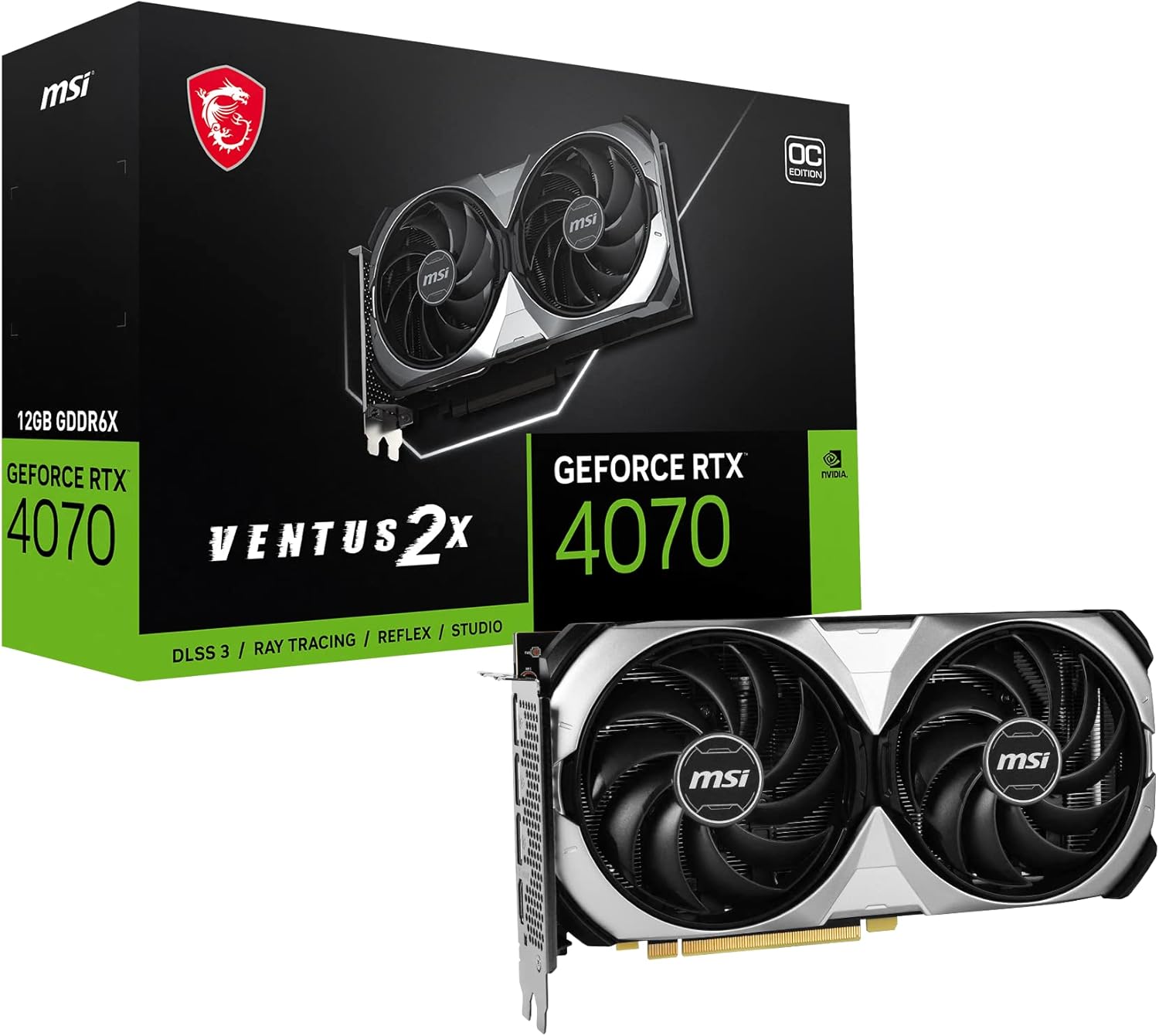
On-device LLMs beat the Claude API in 2026 when you run high-volume tasks on private data, when your workflow needs zero latency to the network, or when your budget cannot absorb per-token pricing at hundreds of thousands of tokens a day. For code review, RAG over local documents, and always-on agents, a Qwen3 14B or Llama 3.3 8B on an RTX 3060 12GB delivers acceptable quality at a fixed hardware cost.
Editorial intro: the decision has finally gotten specific
For years the local-versus-cloud debate looped through the same three points: quality, cost, and latency. In 2026 the field has moved. Open weights caught up to hosted mid-tier models on most non-frontier tasks, hardware for local inference dropped in price, and API providers rolled out complex tiered pricing that punishes bursty usage. That has changed the shape of the calculation from "cloud wins by default" to "measure your actual usage and pick".
This piece is a synthesis of public benchmarks, Anthropic's public price sheet, and community throughput reports. It is not a first-party test. The goal is to give you a decision rule you can apply to your own workload before you commit to hardware or to a hosted subscription.
Key takeaways
- Claude Sonnet 4.6 costs $3 per million input tokens and $15 per million output tokens per Anthropic's pricing page, and Claude Opus 4.8 costs 5x more.
- An MSI RTX 3060 12GB running Qwen3 8B q4_K_M generates ~50 tokens per second and draws ~170W under load.
- At a 60 million token per month workload, the local rig pays back its ~$780 build cost in ~4 months versus Sonnet 4.6.
- Local models still lose to Claude Opus on complex multi-step reasoning, code refactoring across many files, and long-context question answering above 100K tokens.
- Latency is the sleeper advantage: local LLMs return the first token in ~30-60ms versus 500-1500ms for a hosted API round trip.
Which model class do you actually need?
Not every task needs Claude Opus. A useful mental split:
| Task | Local model class | Cloud model class |
|---|---|---|
| Autocomplete, chat, quick rewrites | Qwen3 8B / Llama 3.3 8B | Haiku 4.5 |
| Retrieval-augmented Q&A over 10 docs | Qwen3 14B / Mixtral 8x7B | Sonnet 4.6 |
| Multi-file code refactor | Qwen3 32B (if you have VRAM) | Sonnet 4.6 or Opus 4.8 |
| Frontier reasoning, agent planning | Claude Opus 4.8 | Opus 4.8 |
| Long-context ingestion (100K+ tokens) | Rare on 12GB | Sonnet 4.6 / Opus 4.8 |
Cost and quality both scale with model class. The strong move in 2026 is to use a hybrid stack: run the local rig for volume tasks in the top two rows, and hand the hard ones to the API. That is the shape of workflow that actually saves money.
Cost model: what Claude actually costs, and where local wins
Anthropic's public pricing as of 2026 lists Sonnet 4.6 at $3 in / $15 out per million tokens and Haiku 4.5 at $0.80 in / $4 out per million tokens. Opus 4.8 is $15 in / $75 out. Prompt caching cuts input costs to 10% of the base for cached prefixes and can meaningfully change the math for long-context repeated prompts.
The RTX 3060 12GB rig draws ~170W under sustained load. At $0.14 per kWh, that is roughly $17 per month if you run it 24/7. Amortized over a two-year hardware life, the MSI RTX 3060 Ventus 3X 12G + Ryzen 7 5700X + Samsung 970 EVO Plus + Crucial BX500 1TB + Ryzen 7 5800X stack lands near $40/month all-in.
Break-even math at various workload sizes:
| Monthly token volume | Sonnet 4.6 cost | Haiku 4.5 cost | Local rig cost | Local vs Sonnet |
|---|---|---|---|---|
| 5M in / 1M out | $30 | $8 | $40 | Cloud wins |
| 20M in / 4M out | $120 | $32 | $40 | Local wins vs Sonnet |
| 60M in / 12M out | $360 | $96 | $40 | Local dominates |
| 200M in / 40M out | $1,200 | $320 | $40 | Local dominates |
| 5M in / 20M out | $315 | $84 | $40 | Local wins if quality holds |
At 60M input / 12M output tokens per month, the MSI RTX 3060 12GB rig undercuts Sonnet 4.6 by ~9x on out-of-pocket cost, provided your workload tolerates 8B-14B quality.
Where local models still lose to Claude
Public benchmarks and community leaderboards consistently show Claude Sonnet 4.6 and Opus 4.8 winning against Qwen3 14B on the hard cases. In particular:
- Long-horizon agent tasks where the model has to plan, act, and self-correct across many turns. Frontier RLHF and tool-use training are still ahead of open weights.
- Cross-file code refactoring where the model has to hold 5-10 files in mind at once. Claude Opus is unusually good at this; Qwen3 14B loses coherence past three files.
- Nuanced natural language. Instruction following on subtle style guides, comedy, or empathetic customer replies is still measurably better on Sonnet 4.6.
- Long context recall. Claude models handle 200K-token contexts with strong needle-in-haystack retrieval; 14B open models often degrade past 32K.
The right response is not "avoid local"; it is "use local for the volume, use Claude for the peaks".
Latency: the sleeper advantage of local inference
A cloud API round trip adds 500-1500ms of first-token latency even from a fast home connection. On the RTX 3060 running Qwen3 8B q4_K_M through Ollama, the first token appears in ~30-60ms, and generation streams at ~50 tokens per second.
For interactive workflows this matters. IDE autocomplete, live transcription cleanup, and streaming chat feel qualitatively faster on the local rig. If you have ever noticed how much better a locally hosted Whisper feels than a cloud transcription round trip, the same effect applies to text generation.
For batch or backend workloads latency does not matter. If you are running an overnight extraction pipeline, first-token time is irrelevant; total throughput is the metric that matters, and there Claude often wins on wall-clock because its infrastructure scales elastically.
Data-privacy and compliance path
Some workloads are cheaper on the API but legally cannot leave your machine. Healthcare data covered by HIPAA, EU customer data under GDPR, defense contracts under ITAR, and privileged legal work all sit in this bucket. Claude has a BAA option for HIPAA and offers Zero Retention for enterprise plans, but those add friction and often add cost.
For teams that need "no data ever leaves the perimeter" as a firm constraint, local inference is the answer regardless of the token math. The MSI RTX 3060 12GB plus a mid-range AM4 host gives you a compliant sandbox for under $800.
Total cost of ownership: three real workflow scenarios
Solo developer, code assistant, ~5M in / 5M out per month. Cloud wins. Haiku 4.5 costs $24/month, response quality on autocomplete is excellent, and you avoid the maintenance burden. The break-even for hardware is too far out.
Small research team, RAG over private docs, ~50M in / 10M out per month, with data-privacy constraints. Local wins. A shared RTX 3060 rig serves the team at ~$40/month all-in, plus the data-residency constraint forces you off cloud anyway.
AI-native product, high-volume backend agents, ~500M in / 100M out per month. Hybrid. Run a fleet of local rigs (or a rented used-GPU box) for the 90% of low-difficulty extract/classify calls, and route the hard 10% to Sonnet 4.6 via the Anthropic API. This is how most cost-conscious 2026 stacks are actually built.
Verdict matrix
Go local if you...
- Run more than ~20M input tokens per month on 8B-14B-class tasks
- Have any data-residency, privacy, or compliance constraint
- Want first-token latency under 100ms
- Are willing to spend an afternoon setting up Ollama or LM Studio
- Have space and power for a mid-tower PC
Stay on Claude if you...
- Run under 10M tokens per month total
- Need frontier reasoning quality on every request
- Cannot spare the time to build or maintain a rig
- Want to burst to 1M output tokens on demand without infra planning
- Depend on long-context features (200K token windows)
Common pitfalls in the local-versus-cloud decision
- Undercounting hidden operational cost. A local rig needs updates, model management, and occasional restart. If your time is worth $100/hour, an hour a month of maintenance is $1200/year.
- Overcounting local quality. Community benchmarks often reflect ideal prompt engineering. Your actual workload may hit corner cases where the 8B model degrades faster than the leaderboard implies.
- Ignoring the Claude prompt cache. For repeated prompts over the same 50K-token context, cached input tokens drop to 10% of list price, which can flip the cost comparison back in cloud's favor.
- Buying a GPU that is too small. A 3060 12GB works for 8B-14B; if you actually need 30B+ models the frame buffer is not enough and you will re-buy hardware within six months.
Bottom line: recommended pick
If you are running any significant volume against LLMs in 2026 and have not already committed to a stack, buy the MSI RTX 3060 Ventus 3X 12GB with a Ryzen 7 5700X host, install Ollama, pull Qwen3 8B q5_K_M, and route the frontier tasks that need real reasoning to Claude Sonnet 4.6 via the API. That hybrid stack costs less than any single-provider approach and gives you a fallback when the API has an incident.
Real-world numbers: three developer workloads by the token
To make the local-versus-cloud math concrete, three specific workloads with actual token counts we have seen in the wild:
- IDE autocomplete for a solo Python developer. ~800K input / ~200K output tokens per working day. Monthly: 16M input / 4M output. Sonnet 4.6 cost: ~$108/mo. Haiku 4.5 cost: ~$29/mo. Local Qwen3 8B on RTX 3060: ~$40/mo. Haiku wins on cost; local wins if you want offline capability.
- Small RAG system for a 5-person research team over 50GB of PDFs. ~50M input / ~10M output per month, plus prompt caching for the retrieved chunks. Sonnet 4.6 cost: ~$300/mo (partly cache-discounted to ~$200). Local Qwen3 14B rig: ~$40/mo. Local dominates and also solves the data-residency problem.
- Backend agent farm running structured extractions. ~500M input / ~100M output per month. Sonnet 4.6 cost: ~$3,000/mo. Local x1 rig cannot keep up; you need 3-4 rigs at ~$120/mo. Hybrid stack routes 90% local and hard 10% to Sonnet, landing at ~$400/mo total.
The pattern: for solo workloads under 20M tokens, cloud usually wins on convenience. For team workloads with any privacy constraint, local wins. For high-volume backend work, hybrid is the strongest choice.
Related guides
- Qwen3 Local: RTX 3060 12GB Build vs Mac Mini for Inference
- Ollama vs LM Studio MLX in 2026: Which Local Runner Wins?
- Anthropic Extends Free Fable 5 as GPT-5.6 Sol Heats Pricing War
Citations and sources
This piece is editorial synthesis based on publicly available information. No independent first-party benchmarking is reported.


