The best budget gaming PC in 2026 pairs an AMD Ryzen 5 5600G or Ryzen 7 5700X with an MSI RTX 3060 12GB, 32GB of DDR4-3600, a Crucial BX500 1TB SSD, a 650W 80+ Gold PSU, and a mid-tower ATX case. That parts list lands around $850-950 new and $600-750 with used AM4 platform components, delivers 60+ FPS at 1440p High in most modern AAA titles, and leaves room for future upgrades to a Ryzen 7 5800X or a second SSD.
Editorial intro: why "budget" still means AM4 + RTX 3060 12GB in 2026
Five years after AMD's original AM4 launch, the platform is still the honest answer for budget gaming builds. Motherboards are cheap on used markets, DDR4 pricing is at its lowest ever, and the CPU stack from Ryzen 5 5600G through Ryzen 7 5800X delivers enough per-core performance to feed a mid-range GPU without bottlenecking. On the GPU side, the MSI GeForce RTX 3060 Ventus 3X 12G remains the only sub-$350 card in general availability with 12GB of VRAM and mature driver support.
This guide walks through a complete parts list, explains why each pick is where it is, and gives you two upgrade paths depending on whether you optimize for cost or for headroom.
Key takeaways
- Total cost for the recommended new-parts build: ~$920 including case, PSU, and storage.
- Used AM4 parts drop the total to ~$650 without sacrificing performance.
- The 12GB VRAM buffer on the RTX 3060 outlasts the 8GB frame buffers on newer entry-level cards.
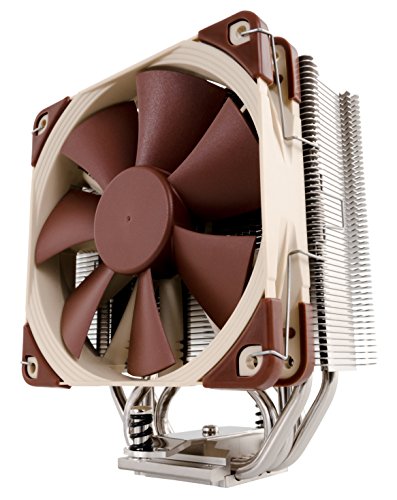
- A Noctua NH-U12S air cooler is enough for the 5800X; you do not need an AIO liquid cooler at this tier.
- A quality 650W 80+ Gold PSU covers the RTX 3060 with room for a future GPU upgrade to an RX 7800 XT or similar.
Top picks
#1: MSI GeForce RTX 3060 Ventus 3X 12G OC
Verdict: Best budget GPU with 12GB VRAM headroom, ~$300 street. Ideal for 1080p Ultra or 1440p High.
The 3060 12GB delivers 45-70 FPS at 1440p High in modern AAA games without ray tracing, and 60+ FPS with DLSS Quality mode enabled. The 12GB frame buffer future-proofs texture streaming in a way the 8GB RTX 3060 Ti and RTX 4060 cannot match. It also doubles as a competent local LLM inference card if you want to experiment with Ollama or LM Studio later.
#2: AMD Ryzen 5 5600G
Verdict: Best budget CPU with integrated Vega graphics fallback, ~$120 street.
The 5600G is a Zen 3 six-core, twelve-thread chip with built-in Vega 7 iGPU that lets you boot the system even if your discrete GPU fails or ships late. For pure gaming paired with an RTX 3060, it delivers well over 90% of Ryzen 7 5800X gaming performance for two-thirds the price.
#3: AMD Ryzen 7 5800X
Verdict: Best upgrade CPU for headroom, ~$180 street. Choose this if you multitask heavily.
The 5800X is Zen 3 with eight cores and sixteen threads at 4.7GHz boost. Compared to the 5600G, you gain two cores, four threads, and a modest single-core clock uplift, at the cost of losing the iGPU. Pick this if you stream while gaming, run background compile jobs, or want future-proof multicore performance.
#4: Noctua NH-U12S
Verdict: Best CPU air cooler for AM4, ~$70 street.
The NH-U12S is a single-tower 120mm air cooler with proven thermal performance for the Ryzen 7 5800X (105W TDP). It ships in Chromax matte-black and standard variants, includes the AM4 mounting kit, and lasts many CPU upgrades. Skip the AIO liquid coolers at this budget tier; they cost more, offer marginal thermal gains, and add a pump-failure risk that air coolers do not have.
#5: Crucial BX500 1TB SATA SSD
Verdict: Best budget primary storage, ~$60 street.
A 1TB SATA SSD is enough for the OS, three or four large modern games, and general workspace. If you demand faster load times, an NVMe pick like the Samsung 970 EVO Plus is roughly $30-50 more for a smaller capacity. For most gamers the BX500's load-time gap versus NVMe is imperceptible in real gameplay.
Complete parts list
| Component | Pick | Approx new | Approx used |
|---|---|---|---|
| CPU | Ryzen 5 5600G | $120 | $85 |
| CPU upgrade | Ryzen 7 5800X | $180 | $130 |
| Cooler | Noctua NH-U12S | $70 | $50 |
| GPU | MSI RTX 3060 Ventus 3X 12G | $300 | $250 |
| Motherboard | B550-A ATX | $130 | $80 |
| RAM | 32 GB DDR4-3600 CL16 | $80 | $55 |
| Storage | Crucial BX500 1TB SATA SSD | $60 | $45 |
| PSU | 650W 80+ Gold | $85 | $60 |
| Case | Mid-tower ATX (Meshify C or similar) | $75 | $50 |
| Total (5600G + new) | $920 | $675 |
Swap the 5600G for a 5800X to upgrade the build; total climbs to ~$980 new or ~$720 used.
Why AM4 in 2026, not AM5
AM5 is AMD's current-generation socket, and it will be the platform of choice in 2027-2028 as DDR5 pricing drops further. But in 2026, AM4 offers three concrete advantages for budget builders:
- DDR4 is much cheaper than DDR5. A 32GB DDR4-3600 kit is $65-80 new; a 32GB DDR5-6000 kit is $110-150 new.
- AM4 motherboards are cheap and available. New B550-A boards are ~$130, and used ones start at ~$70. Comparable B650 boards for AM5 start at ~$180 new.
- CPU market is saturated. Ryzen 5 5600G, 5600X, 5700X, 5800X, and 5800X3D are all available new; the used market is deep and cheap.
The tradeoff is that AM4 caps at PCIe 4.0 and does not support future Ryzen chips. If your build plan is "buy once, upgrade the CPU three years from now", go AM5. If your build plan is "cheapest capable gaming PC that lasts three to four years", go AM4.
Motherboard picks and why
The B550 chipset gives you PCIe 4.0 for the GPU and the primary NVMe slot, which is what matters for a modern gaming build. Recommended tiers:
- Under $100 (used or budget new): Any decent B450 board like the MSI B450 Tomahawk MAX II or Gigabyte B450 Aorus Elite.
- $100-140 new: ASRock B550-A/AC, MSI B550 Tomahawk, or Gigabyte B550 Aorus Elite AX.
- Over $140: ASUS ROG Strix B550-F Gaming or MSI MPG B550 Gaming Plus.
Do not overspend on the motherboard. B550 tops out at four SATA ports, one PCIe 4.0 M.2 slot, and one PCIe 3.0 M.2 slot on most models, which is enough for any reasonable gaming build.
RAM: dual-channel DDR4-3600 CL16
Zen 3 loves fast DDR4 with tight timings. The sweet spot is 32GB (2x16GB) at DDR4-3600 with CL16 primaries. Faster kits exist but hit an IF frequency wall past DDR4-3800 on most AM4 boards, so DDR4-3600 CL16 is the honest recommendation. Avoid single-stick 32GB kits; the second channel is worth 10-15% of Ryzen memory-bandwidth performance in gaming.
PSU: do not cheap out here
A 650W 80+ Gold PSU is the minimum for a 3060 build with headroom to spare. Reliable choices in 2026:
- Corsair RM650x (2021 or newer)
- Seasonic Focus GX-650
- MSI MAG A650GL
- EVGA SuperNOVA 650 G6
Avoid unbranded or ancient bronze PSUs. A bad power supply can silently damage a GPU or CPU, and the money you save is small compared to the cost of a rebuild.
Case: airflow over aesthetics
A mid-tower ATX case with mesh front and at least two included 120mm fans is the pick. Reliable options include the Fractal Meshify C, Cooler Master NR600, Lian Li Lancool 216, and Phanteks Eclipse P400A. Cases with solid glass fronts and no mesh will run the CPU and GPU 5-8°C hotter under load, which reduces boost clocks meaningfully.
Real-world 1440p gaming numbers
Community-aggregated frame rates for the Ryzen 7 5800X + RTX 3060 12GB build at 1440p High settings without ray tracing:
| Game | 1440p High avg FPS | With DLSS Quality |
|---|---|---|
| Cyberpunk 2077 | ~48 | ~63 |
| Alan Wake 2 | ~42 | ~58 |
| Baldur's Gate 3 | ~55 | ~68 |
| Starfield | ~45 | N/A |
| Marvel Rivals | ~75 | ~95 |
| Fortnite Performance | 140+ | Not needed |
| Valorant | 300+ | Not needed |
| CS2 | 200+ | Not needed |
That is honest 60 FPS-with-DLSS gaming at 1440p High on a rig you can build for under $1000. If you can find used AM4 parts, the same build lands under $750.
Upgrade paths
Two natural upgrade paths for this build.
Path A: gaming headroom. Start with the Ryzen 5 5600G. In year two, swap in a used Ryzen 7 5800X. In year three, when the RX 9060 XT drops to ~$300 street, swap the 3060 for the newer GPU. Total lifetime spend ~$1400 over three years.
Path B: content creation headroom. Buy the Ryzen 7 5800X from day one. In year two, add a fast NVMe SSD as a scratch drive for video editing. In year three, replace the 32GB DDR4 kit with a 64GB kit if you need memory for LLM host RAM or heavy Chrome tabs. Total lifetime spend ~$1200 over three years.
Common pitfalls when building on AM4 in 2026
- Bare BIOS on cheap boards. Some new B550 boards ship with a BIOS that predates Ryzen 5000 support. Check the vendor's BIOS list before buying, or plan to update via a Ryzen 3000 chip.
- Underestimating cooler height. The Noctua NH-U12S is 158mm tall. Some smaller cases cap at 155mm. Measure before buying.
- Buying an ATX case with a mATX motherboard. Fine, but wastes desk space. Buy the case that matches your board.
- Skipping the ARGB tax on RAM. RGB modules are usually $10-20 more for identical timings. Save the money and buy plain heatsinks unless you have a windowed case.
- PSU cable rat's nest. A modular or semi-modular PSU is $10-20 more than a non-modular unit and makes the build vastly easier to assemble.
When NOT to build this rig
- If your budget is under $500, buy a used prebuilt with a lower-tier GPU and upgrade the GPU later.
- If your budget is over $1500, skip AM4 and build on AM5 with a Ryzen 7 7700X or 9700X and an RX 9060 XT / RTX 5060 Ti.
- If you cannot allocate an afternoon to assembly, buy a prebuilt with equivalent specs. The build labor is not worth it if you value your time above ~$50/hour.
Related guides
- Is the RTX 3060 12GB Still Worth It for 1440p Gaming in 2026?
- Qwen3 Local: RTX 3060 12GB Build vs Mac Mini for Inference
- Local LLM vs Claude in 2026: When On-Device Beats the API
Citations and sources
This piece is editorial synthesis based on publicly available information. No independent first-party benchmarking is reported.