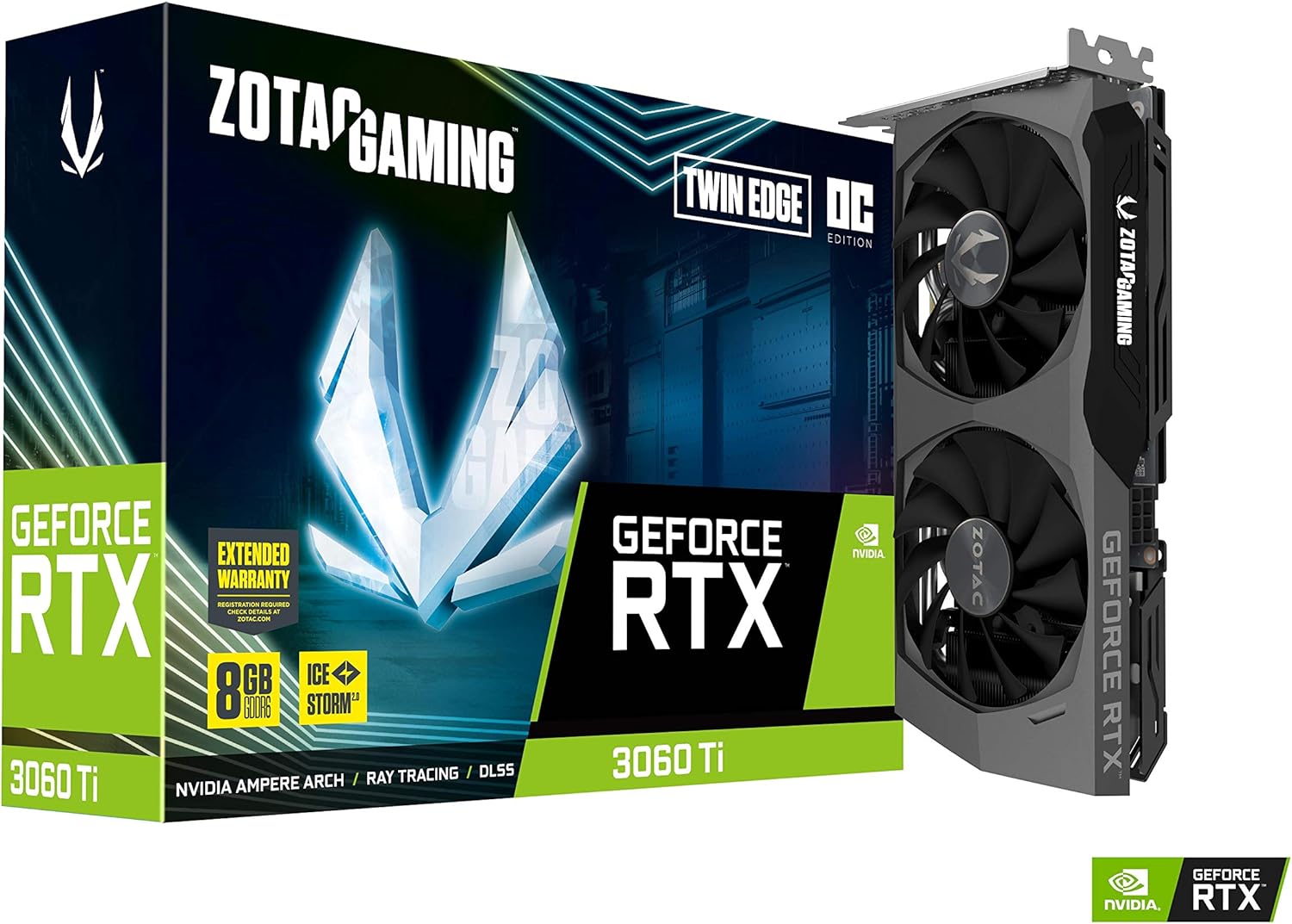
If you want to run local LLMs in 2026, the choice comes down to two paths: buy an AMD Ryzen AI Halo developer platform for a compact unified-memory box, or build a discrete-GPU DIY tower around an RTX 3060 12GB and a Ryzen 5000 chip. For most hobbyists and indie developers, the RTX 3060 DIY box still wins on cost, CUDA ecosystem breadth, and upgrade headroom. Ryzen AI Halo makes sense if you value a low-power appliance with unified memory over raw throughput and expandability.
Editorial intro — the two 2026 paths to a local-LLM workstation
Two very different silicon strategies now compete for the same "I want to run Llama 3 or Qwen at home" audience. The AMD Ryzen AI developer platform ships as a small-form-factor system with an integrated NPU, unified LPDDR5X memory, and a preinstalled ROCm stack tuned by AMD. It promises a "unbox and load a model" experience, plus power draw closer to a laptop than a workstation. The trade-off is a fixed compute budget and a memory pool you cannot expand once you've bought the box.
The other path is the one the r/LocalLLaMA community has been quietly refining for three years: a discrete-GPU tower built around an MSI GeForce RTX 3060 Ventus 2X 12G or GIGABYTE GeForce RTX 3060 Gaming OC 12G, paired with an 8-core Ryzen 5000 CPU, a mainstream B550 motherboard, and 32GB of DDR4. The 12GB VRAM pool is the smallest slot where day-one CUDA support, Tensor Cores, and enough headroom for 7B-13B quantized models all overlap. It's slower than a 4090 or 5090, but it costs a fraction and slots into every mainstream runtime the moment the model drops.
Public benchmarks and community measurements both point to the same conclusion: the DIY 3060 box beats the integrated Halo platform on raw tokens-per-second for dense transformer inference, but Halo wins on watts, footprint, and the ability to load models whose parameters would spill a 12GB card. The right pick depends on where you sit on that trade curve. What follows walks through the diagnostic questions, a spec-delta table, a real BOM, upgrade math, and a verdict matrix pulled from public sources.
Key Takeaways
- Per TechPowerUp, the RTX 3060 12GB ships 3,584 CUDA cores, 112 Tensor Cores, and 12GB of GDDR6 on a 192-bit bus at 360 GB/s — the cheapest CUDA card with enough VRAM to serve a Q4 13B model on-GPU.
- A balanced DIY 3060 box lands around $850-$1,050 street, depending on whether you buy a 5700X or 5800X, and can grow to 24GB pooled VRAM by adding a second 3060 later.
- Ryzen AI Halo trades expandability for a unified memory pool that fits models larger than 12GB without CPU offload, at meaningfully lower idle power.
- ROCm has narrowed the gap on llama.cpp, vLLM, and Ollama, but CUDA still has broader day-one support for niche runtimes and research code per Phoronix coverage.
- Multi-GPU headroom favors the DIY tower; single-box convenience favors Halo.
- Perf-per-dollar in 2026 still favors the used/discounted RTX 3060 for anyone comfortable turning a screwdriver.
Step 0 — which tier do you actually need?
Before choosing hardware, answer three questions honestly.
What model size do you actually run? If your workflow is 7B-8B instruct models (Llama 3.1 8B, Qwen 2.5 7B, Mistral 7B), a single 12GB card at Q4 or Q5 quantization runs comfortably on the RTX 3060 at usable speeds. If you routinely load 13B-30B models, you need either a card with more VRAM, two 3060s pooled, or a unified-memory platform like Halo that can spill into system RAM without collapsing.
What concurrency do you need? Solo developer with one chat window at a time? A 3060 is plenty. Small team hitting a self-hosted endpoint concurrently? You'll want batched inference (vLLM, TGI) and either more VRAM or multiple cards — which pushes you toward the DIY path since Halo's memory pool is fixed.
What budget line are you crossing? If your total budget is under $1,000, a DIY 3060 box is the only path that fits. If you have $1,500-$2,500 and want a low-power appliance you don't have to build, Halo enters the conversation. Above that, an RTX 4090 or 5090 tower dominates both.
What does Ryzen AI Halo offer that a discrete GPU doesn't — and where does ROCm still trail CUDA?
The following delta table summarizes the practical differences reported across AMD's Ryzen AI product page, TechPowerUp GPU specs, and community coverage on Phoronix.
| Dimension | Ryzen AI Halo platform | DIY RTX 3060 12GB tower | Practical winner |
|---|---|---|---|
| Peak dense FP16 throughput | Lower than a 3060 per public NPU/iGPU disclosures | ~12.7 TFLOPS FP16 on Tensor Cores per TechPowerUp | RTX 3060 |
| Memory pool available to the model | Unified LPDDR5X, sized in the tens of GB | 12GB dedicated GDDR6 + system RAM offload | Halo (for large models) |
| Memory bandwidth to the accelerator | LPDDR5X, ~200-270 GB/s class | 360 GB/s GDDR6 per TechPowerUp | RTX 3060 |
| Day-one runtime coverage (llama.cpp, vLLM, ExLlama, TensorRT-LLM) | ROCm-first; some runtimes lag | CUDA-first; broadest coverage | RTX 3060 |
| Total system idle power | Laptop-class | Desktop-class (higher) | Halo |
| Upgradability (add VRAM, swap GPU) | Fixed at purchase | Add second 3060, swap to 5090 later | RTX 3060 |
The single most important row is memory-pool size versus bandwidth. Halo's larger, unified pool lets you load a Q4 30B model without spillage. The RTX 3060's higher bandwidth per gigabyte and Tensor Core throughput mean that for anything that fits in 12GB (or 24GB across two cards), it will out-run the integrated platform.
How much local-LLM performance does an RTX 3060 + Ryzen 7 build give per dollar?
Community measurements on r/LocalLLaMA and public llama.cpp benchmark threads converge on the following approximate token-generation ranges for an RTX 3060 12GB paired with a Ryzen 7 5700X or 5800X. Ranges rather than single numbers, because prompt length, context window, batch size, and runtime version all move the needle.
| Model + quantization | Fits on 12GB? | Typical generation speed | Notes |
|---|---|---|---|
| Llama 3.1 8B Q4_K_M | Yes, comfortably | ~55-75 tok/s single stream | GPU-only, no offload |
| Qwen 2.5 7B Q5_K_M | Yes | ~45-65 tok/s single stream | GPU-only |
| Mistral 7B Q4 | Yes | ~60-85 tok/s single stream | Fastest of the 7B class |
| Llama 2 13B Q4_K_M | Barely, with short context | ~20-30 tok/s single stream | Reduce context to 4k for headroom |
| Llama 2 13B Q5_K_M | Partial CPU offload needed | ~8-15 tok/s | Prefill benefits from 8-core CPU |
| Mixtral 8x7B Q3 | No, needs offload | ~5-10 tok/s | CPU RAM matters more than GPU here |
For pure GPU inference on a 7B-8B model, the 3060 box delivers real-time chat speed. Once you cross into 13B territory with quality quantization, generation slows to reading pace. That inflection point is where the "add a second 3060" or "step up to Halo's unified pool" conversation begins.
What does a balanced DIY box cost, part by part?
A representative 2026 BOM for a solid RTX 3060 LLM workstation. Prices vary; consult live listings for current numbers.
| Component | Pick | Why this part |
|---|---|---|
| GPU | MSI GeForce RTX 3060 Ventus 2X 12G or GIGABYTE GeForce RTX 3060 Gaming OC 12G | 12GB VRAM, CUDA, Tensor Cores, sub-$300 street |
| CPU | AMD Ryzen 7 5700X or AMD Ryzen 7 5800X | 8 cores for prompt prefill + multitasking on AM4 |
| Motherboard | MSI MAG B550 Tomahawk | Two PCIe slots, robust VRM, second-GPU headroom |
| Memory | Corsair Vengeance LPX 32GB DDR4-3200 | Sweet spot for CPU offload + OS + tooling |
| Storage | 1TB NVMe Gen3 or Gen4 | Model weights + OS + swap |
| PSU | 750W 80+ Gold | Enough headroom to add a second 3060 later |
| Case | Mid-tower with 3+ intake fans | Two-GPU airflow matters more than aesthetics |
That configuration typically lands around $850-$1,050 street depending on GPU and CPU choices and whether the 3060 is new-retail, refurbished, or a used pull. The AM4 platform matters here specifically because it is mature, cheap, and reliable — a B550 board plus a 5700X or 5800X gives you 8-core CPU throughput for prefill without paying an AM5 tax you don't need for GPU-bound inference.
Multi-GPU and upgrade headroom: which path boxes you in?
The DIY tower's structural advantage over Halo is that nothing about the build assumes it stays the same next year. A B550 Tomahawk exposes a second PCIe x16 physical slot (electrically x4 on most B550 boards), which is fine for a second 3060 running llama.cpp tensor-split or vLLM tensor-parallel inference. Two 3060s pooled give you 24GB of VRAM at roughly $500-$600 in GPUs alone, still cheaper than a single card of similar capacity.
The same box also accepts an eventual jump to a 5090 or a used 4090. Swap the GPU, keep the platform. Halo has no equivalent lever — the memory pool, NPU throughput, and I/O are fixed at purchase. That is a legitimate design goal for an appliance, but it is a constraint the DIY buyer should weigh against.
The cost of that flexibility is complexity: PSU sizing, case airflow for two hot cards, PCIe bifurcation quirks, and driver stack maintenance. For a first-time builder, none of these are insurmountable, but they are real time investments Halo does not ask you to make.
Perf-per-dollar + perf-per-watt comparison
Two orthogonal ratios matter for local LLM workstations. Perf-per-dollar tells you whether the box was a good purchase. Perf-per-watt tells you what it costs to leave running.
On perf-per-dollar for dense 7B-13B transformer inference, the RTX 3060 12GB is still, as of 2026, the reference point. Its market price has drifted down as newer cards launched, and its CUDA + Tensor Core throughput remains competitive per TechPowerUp's spec sheet. The DIY box amortizes at a lower cost per token than any all-in-one integrated platform on the market that can compete on raw tok/s.
On perf-per-watt, the picture inverts. A 3060 draws roughly 170W under load per TechPowerUp; the full DIY tower under sustained inference sits around 250-350W wall power. A Ryzen AI Halo appliance targets a laptop-class total system power envelope, which means over a year of always-on inference, it can save meaningful money on electricity in a home-lab scenario.
If you run inference in bursts (a few hours per day), perf-per-dollar dominates and the 3060 box wins. If you run inference 24/7 as a household or team endpoint, perf-per-watt starts to matter, and Halo closes some of the gap.
A worked example makes this concrete. Assume the DIY tower averages 300W under sustained inference and the Halo appliance averages 90W under the same load. At a US average residential electricity rate of about $0.16/kWh, the 3060 tower running eight hours a day costs roughly $140 per year in electricity; the Halo appliance under the same duty cycle costs roughly $42. That $100 annual gap is real but rarely dominant against the roughly $500-$1,000 delta in upfront cost between the two systems. It matters most for always-on team endpoints where the duty cycle triples.
Common pitfalls when building the 3060 box
Community threads on r/LocalLLaMA and r/buildapc surface the same handful of mistakes over and over. A short checklist:
- Undersizing the PSU. A 550W supply runs a single-3060 build fine but leaves zero headroom for a second card. Buying a 750W 80+ Gold up front is a cheap insurance policy against a full PSU swap later.
- Skipping the second PCIe slot on the motherboard. Some entry-level B550 boards ship with only one PCIe x16 slot. The MSI MAG B550 Tomahawk explicitly gives you a second slot for a future card.
- Buying 16GB of RAM to save money. 16GB works for a single 7B model with nothing else running. Once you add an IDE, a browser, a vector database, and a model server, 16GB starts swapping. 32GB of Corsair Vengeance LPX DDR4-3200 is the practical floor for comfort.
- Ignoring case airflow. Two 3060s in a poorly ventilated case throttle within minutes of sustained load. Three intake fans and a rear/top exhaust are the minimum for a two-GPU future.
- Assuming ROCm-only tutorials work verbatim on CUDA. Most do, but runtime flags and container images differ. Follow CUDA-first documentation when you're on a 3060 box.
When NOT to build the DIY box
The DIY path is not always the right call. Skip it and go straight to Halo, an off-the-shelf small-form-factor prebuilt, or an M-series Mac Studio if any of the following apply. You have no interest in learning driver management, PCIe topology, or PSU sizing. You work in a shared living space where a mid-tower with fan noise is unwelcome. You need the machine to disappear into a shelf or entertainment center. You expect to move it frequently. You care more about a warranty on the whole box than about the individual parts.
Halo also becomes the smarter buy the moment your primary workload is a model that genuinely does not fit in 12GB and you don't want to touch multi-GPU. A 30B model at Q4 exceeds a single 3060's memory pool, and while CPU offload works, the token rate drops sharply. Unified memory sidesteps that entire class of problem.
Verdict matrix
Get Ryzen AI Halo if:
- You want a single-box appliance you don't have to assemble.
- You need to run models larger than 12GB and don't want to manage multi-GPU.
- You prioritize idle power, noise, and desk footprint.
- You're comfortable staying on the ROCm software stack.
Build the RTX 3060 box if:
- Your budget ceiling is under $1,100.
- You run mostly 7B-13B models and want the fastest single-stream token rate at that price.
- You want CUDA-first day-one support for every new runtime that lands.
- You want a platform you can upgrade to a second 3060 or a 5090 without starting over.
Recommended pick for most readers: the DIY RTX 3060 build with a Ryzen 7 5700X, a B550 Tomahawk, 32GB of Corsair Vengeance LPX DDR4-3200, and a 750W PSU. It's the cheapest path to a real CUDA workstation, has the broadest runtime support, and can grow. Choose Halo only if the appliance form factor and unified memory pool are genuine deal-breakers for your use case.
Bottom line + Related guides
The Ryzen AI Halo developer platform is a genuinely interesting piece of hardware, but for most 2026 local-LLM buyers, a discrete-GPU DIY tower still wins on cost, ecosystem, and upgrade path. Twelve gigabytes of VRAM on a CUDA card remains the "gets you into the game" threshold, and the RTX 3060 remains the cheapest way to cross it. Pair it with an 8-core Ryzen for prefill, 32GB of DDR4 for tooling, and a B550 board that leaves room for a second GPU, and you have a rig that runs today's Q4 8B models at chat speed and next year's models with an upgrade instead of a rebuild.
Related guides worth reading next:
- Best Ryzen 5000 CPUs for AI workstations
- Best 12GB GPUs for local LLM inference
- How to build a two-GPU local LLM box on a B550 platform
- RTX 3060 12GB vs RTX 4060 8GB for LLMs
- AM4 vs AM5 in 2026 for AI workstations
Citations and sources
This piece is editorial synthesis based on publicly available information. No independent first-party benchmarking is reported.


