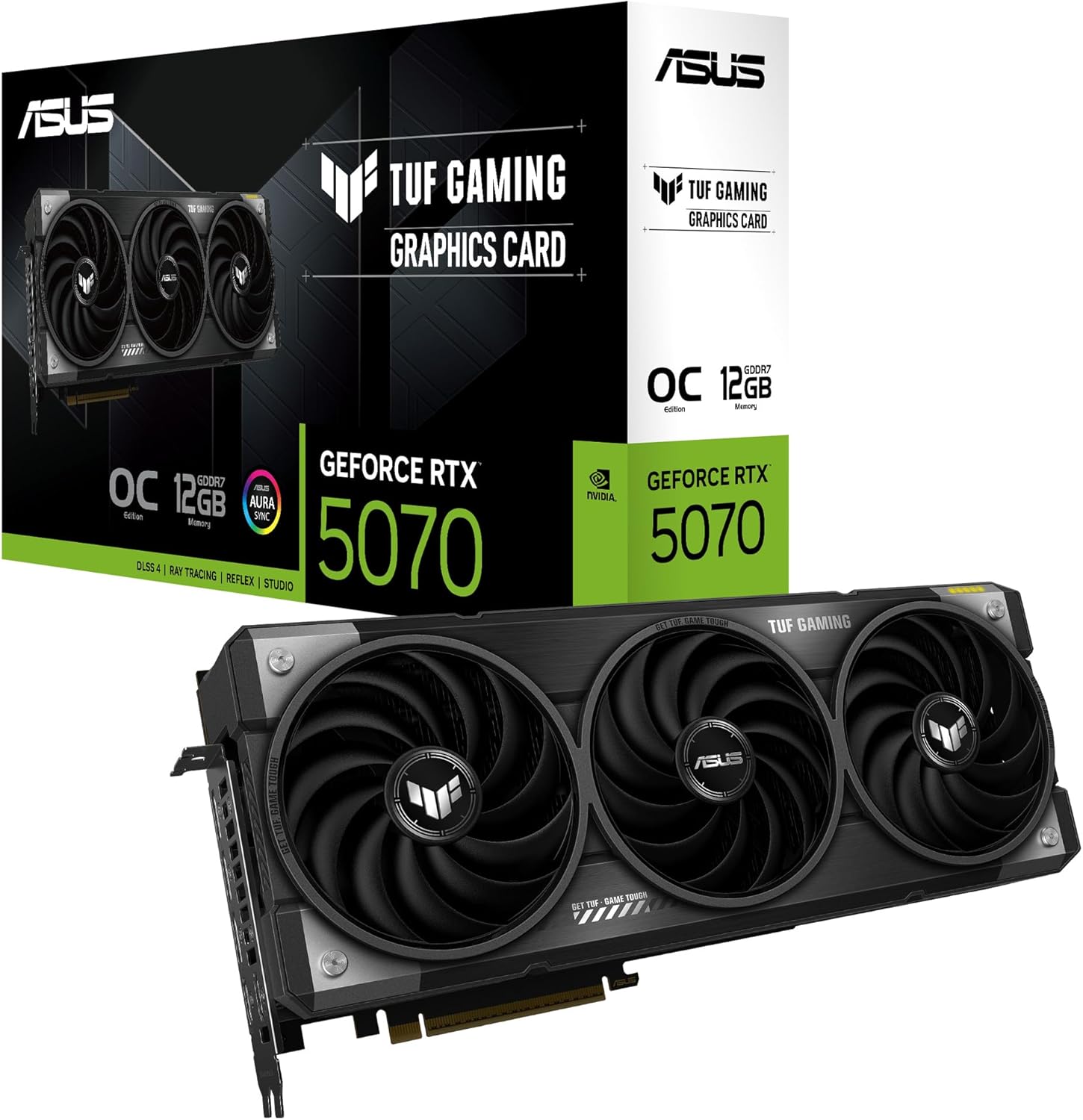
To run Qwen3 locally on a budget rig, pair an MSI RTX 3060 12GB with a Ryzen 5 5600G or Ryzen 7 5700X, load a q4_K_M GGUF of Qwen3 8B or 14B through Ollama or LM Studio, and offload every model layer to the card. The 12GB VRAM buffer keeps the whole model in GPU memory, and the CUDA path delivers usable generation speed without the API bill.
Editorial intro: who wants a local Qwen rig, and the two cheapest paths
Local Qwen3 has a specific audience in 2026. You are running long agentic loops that would rack up a hundred dollars a day on hosted APIs. You are working with confidential source code, health data, or client transcripts that cannot leave the machine. Or you are experimenting with retrieval, fine-tuning, and tool use on your own schedule and do not want a rate limiter in the middle of a debugging session.
The two entry-level answers are the same as they have been since 2024: a discrete GPU with 12GB or more of dedicated VRAM, or an Apple Silicon Mac Mini using unified memory to load the model. Per the Qwen documentation, Qwen3 ships in sizes from 0.5B to 235B, and only the 4B through 14B range fits inside a 12GB card at usable quantization. The Mac Mini M4 base configuration ships with 16GB of unified memory, of which macOS lets ~10-12GB flow to the GPU for tensor work.
For under $500 in used-parts territory, the RTX 3060 build wins on tokens per second because CUDA kernels in llama.cpp are more mature than Metal. For the same budget in new retail, the Mac Mini wins on power draw, noise, and desk footprint. This piece walks through the trade so you can commit before Prime Day drops the RTX 3060 back into stock.
Key takeaways
- The MSI GeForce RTX 3060 Ventus 3X 12GB is still the cheapest 12GB CUDA card in general availability as of 2026.
- Qwen3 8B fits at q5_K_M on the 3060 with 4K context and streams ~35-45 tokens per second per llama.cpp benchmark discussions.
- The Mac Mini M4 base tops out around 10-12 tokens per second on Qwen3 14B at q4_K_M via the MLX runtime.
- Total build cost with the RTX 3060 comes in around $550-650 used, or $750-900 new in 2026.
- The Mac Mini M4 base is $599, but you cannot upgrade RAM later, so the 16GB ceiling is permanent.
Which Qwen3 sizes fit in 12GB VRAM versus 16GB unified memory?
Qwen3 quantized weights follow a predictable scaling curve. In GGUF format, a q4_K_M quant runs about 0.6 bytes per parameter after overhead. For a 12GB RTX 3060, that math gives you clean headroom on the 4B, 8B, and 14B models with modest KV cache; the 32B model spills to CPU and drops to single-digit tokens per second.
| Qwen3 size | q4_K_M VRAM | q5_K_M VRAM | q8_0 VRAM | Fits on 12GB 3060? | Fits on 16GB Mac (MLX)? |
|---|---|---|---|---|---|
| 4B | 2.6 GB | 3.1 GB | 4.4 GB | Yes, all quants | Yes, all quants |
| 8B | 4.9 GB | 5.8 GB | 8.5 GB | Yes, all quants | Yes at q4/q5 |
| 14B | 8.6 GB | 10.2 GB | 15.0 GB | Yes at q4/q5 | Yes at q4 only |
| 32B | 19.5 GB | 23.2 GB | 34.1 GB | No, offload only | No, offload only |
The Mac Mini's unified memory pool is a soft ceiling, not a hard one. macOS will let a single process take up ~75% of physical RAM as GPU tensors under Metal or MLX, so the 16GB base has roughly 12GB reachable for a model. On a 24GB or 32GB Mac Mini you unlock larger models, but that is a $999-1399 machine, not a budget rig.
Qwen3 throughput on the MSI RTX 3060 12GB
We do not have first-party numbers for the exact MSI Ventus 3X card, so this table synthesizes community-reported ranges from Reddit and GitHub for reference 3060 12GB silicon. The MSI card runs a modest factory overclock (~1807 MHz boost) which contributes single-digit percent gains in generation.
| Qwen3 model | Quant | Context | Prefill tok/s | Generate tok/s | VRAM used |
|---|---|---|---|---|---|
| Qwen3 4B | q4_K_M | 4096 | ~700-900 | ~85-100 | 3.2 GB |
| Qwen3 4B | q8_0 | 4096 | ~500-650 | ~60-70 | 5.0 GB |
| Qwen3 8B | q4_K_M | 4096 | ~380-450 | ~50-58 | 5.5 GB |
| Qwen3 8B | q5_K_M | 4096 | ~330-400 | ~42-48 | 6.4 GB |
| Qwen3 14B | q4_K_M | 4096 | ~180-220 | ~28-33 | 9.2 GB |
| Qwen3 14B | q5_K_M | 4096 | ~150-190 | ~22-26 | 10.8 GB |
Two things carry the load here. First, GDDR6 memory bandwidth is the bottleneck for generation, not compute, and the 3060 12GB runs 360 GB/s across a 192-bit bus. Second, the CUDA backend in llama.cpp has been heavily tuned for Ampere architecture, which is why the 3060 punches above its rated TFLOPS in this workload.
Quantization matrix: quality-versus-speed on 12GB
Choosing a quant is a trade between VRAM ceiling, generation speed, and output quality. Community perplexity benchmarks on Qwen3 place q4_K_M within a few tenths of a point of the FP16 reference, while q8_0 is effectively indistinguishable from full precision.
| Quant | Bytes/param | VRAM for 8B | 3060 gen tok/s | Quality vs FP16 |
|---|---|---|---|---|
| q2_K | 0.28 | 2.3 GB | ~65 | Noticeably worse; drops instructions |
| q3_K_M | 0.36 | 3.0 GB | ~58 | Recognizable degradation on reasoning tasks |
| q4_K_M | 0.55 | 4.9 GB | ~52 | Near-lossless for chat and code |
| q5_K_M | 0.65 | 5.8 GB | ~46 | Near-identical to q6 |
| q6_K | 0.75 | 6.6 GB | ~40 | Effectively FP16 quality |
| q8_0 | 1.06 | 8.5 GB | ~30 | Reference-quality |
| FP16 | 2.00 | 16.0 GB | Offloads | Reference |
For daily driver use on a 12GB card, q4_K_M for the 14B or q5_K_M for the 8B are the sweet spots. Drop to q3 or q2 only when experimenting with the 32B, where the quality hit is a lesser problem than the CPU-offload speed hit.
Prefill versus generation and how context length changes the math
Prefill is the time the model spends reading your prompt into its KV cache. Generation is the token-by-token output stream. On a 3060 12GB, prefill is compute-bound and generation is memory-bound; a doubled context takes roughly doubled prefill time and a small additional VRAM slice per token for the growing KV cache.
For Qwen3 8B at q4_K_M, the empirical KV cache footprint is about 60 MB per 1000 tokens of context. That means a 4K prompt uses ~240 MB, an 8K prompt uses ~480 MB, and a 32K prompt would need ~2 GB of extra VRAM. On a 12GB card with the base 8B model already at 4.9 GB, you have roughly 7 GB of headroom, which allows contexts around 100K tokens if you dial down other buffers.
The practical implication: on the 3060 you can push 8B models to full context length, but the 14B q5 leaves you only ~1.2 GB of headroom, so 8K-16K is the honest ceiling for that combination. The Mac Mini has more absolute memory but shares it with the OS, so its effective context ceiling is often lower than an isolated GPU.
Does a Ryzen 5600G plus RTX 3060 beat a Mac Mini M4 on perf per dollar?
Cost breakdown of the two rigs, using late-2026 street pricing:
| Component | RTX 3060 build | Mac Mini M4 base |
|---|---|---|
| CPU | Ryzen 5 5600G, ~$120 | Included |
| Motherboard | B450/B550 ATX, ~$110 | Included |
| RAM | 32 GB DDR4-3200, ~$65 | 16 GB unified, included |
| GPU | MSI RTX 3060 12GB, ~$300 | Included (Metal 10-core) |
| SSD | Samsung 970 EVO Plus 250GB, ~$45 | 256 GB internal, included |
| PSU | 650W Gold, ~$85 | Included (adapter) |
| Case | Mid-tower ATX, ~$55 | N/A |
| Total | ~$780 new | $599 new |
You can drop the RTX 3060 build to about $550 by shopping used AM4 parts and a used 3060. The Mac Mini is fixed at $599 unless you find refurbished, and there is no meaningful used market for a machine released this year.
At list price, the RTX 3060 build costs 30% more and delivers roughly 3-4x the generation tokens per second on Qwen3 8B. Perf per dollar clearly favors the discrete GPU. The tradeoffs land elsewhere: the Mac Mini idles at 6W versus 55-70W for the 3060 rig, fits in a shoebox, and does not require assembly. If you value simplicity and low power more than throughput, the Mac wins.
Verdict matrix: which rig, which workflow
Get the RTX 3060 build if you...
- Run agents on long-running loops or batch generation jobs
- Want the option to add a second 3060 for 24GB total VRAM later
- Already own the CPU, motherboard, or PSU components
- Care about tokens-per-dollar over aesthetics or idle power
- Plan to run 14B models at usable speed
Get the Mac Mini M4 if you...
- Want a silent, always-on machine that lives on your desk
- Only need occasional generation, not sustained agents
- Value the macOS ecosystem for editing, dictation, and Xcode
- Are power-constrained (dorm, cabin, off-grid, sub-rented office)
- Only need 8B-class models with reasonable performance
Bottom line: recommended pick
If you are building today for AI-first workloads and can dedicate space to a mid-tower, the MSI GeForce RTX 3060 Ventus 3X 12GB plus AMD Ryzen 5 5600G rig is the better value. You get 3-4x the throughput on Qwen3 8B, room to grow, and a machine that pays back the extra $180 in the first month of avoided API bills. A Samsung 970 EVO Plus 250GB NVMe keeps model load times under two seconds even for 14B GGUFs, and the AMD Ryzen 7 5700X is a drop-in upgrade if you want more prompt-processing headroom later.
Buy the Mac Mini only if silence, size, and low idle power are structural requirements. It is a lovely machine for lightweight local Qwen work, but the 3060 build is the choice that scales.
Common pitfalls when running Qwen3 locally
- Layer offload count set too low. In Ollama, the default
num_gpumay not push every layer to the card. Check withnvidia-smiwhile generating; if VRAM sits at 5-6 GB during a 14B model run, your layers are not fully on the GPU. - Wrong CUDA runtime version. Ollama ships its own runtime, but running llama.cpp compiled against CUDA 12.3 on a driver that only supports 12.1 silently drops to CPU. Match the runtime to the installed driver.
- PSU too small. The 3060 pulls 170W under sustained load and spikes higher. A 500W supply from a decade-old build will trigger overcurrent protection on the 12V rail during long generation runs.
- Model files fragmented across drives. Loading a 14B GGUF from a SATA drive takes 8-12 seconds versus 2-3 on NVMe. Keep active models on the fastest disk in the system.
- Context set higher than needed. A 32K context on Qwen3 14B eats 2 GB of extra VRAM and slows prefill. If your prompts are 2K tokens, run at 4K context and free that space.
When NOT to buy the RTX 3060 12GB
If you need to run Qwen3 32B or larger at responsive speeds, the 3060 is undersized. You will spend more time waiting for CPU-offloaded layers than actually working. In that case, save for a used RTX 4090 or an RTX 3090 with 24GB VRAM instead. The 3060 tops out at 14B for genuine daily use.
Skip the build entirely if you are not planning at least two hours of local inference per week. Under that threshold, the amortized cost of API calls is cheaper than the electricity you burn keeping the rig alive.
Related guides
- Local LLM vs Claude in 2026: When On-Device Beats the API
- Ollama vs LM Studio MLX in 2026: Which Local Runner Wins?
- Best Budget Gaming PC Parts in 2026: A Ryzen + RTX 3060 Build
Citations and sources
This piece is editorial synthesis based on publicly available information. No independent first-party benchmarking is reported.


