Intel Arc is genuinely viable for local LLM work in 2026 — the Arc B580 delivers competitive throughput on 7B–14B models via IPEX-LLM, and the 24GB Arc Pro B60 unlocks 32B-class workloads that a 12GB RTX 3060 cannot host without heavy offload. The trade-off is software maturity: CUDA still ships day-one support for new models, while Intel's SYCL stack occasionally trails by weeks. If your time is worth more than $60 in driver debugging, the MSI RTX 3060 Ventus 3X 12G remains the safer entry ticket.
The budget local-LLM buyer's dilemma in 2026
Two years ago this question was easy: NVIDIA won because nothing else worked. As of 2026 the picture is more nuanced. Intel's discrete Arc line has matured through B580 (Battlemage architecture, 12GB VRAM) and the workstation-class Arc Pro B60 with 24GB — a spec sheet that reads like a bargain when you compare against the equivalent NVIDIA "prosumer" tier. The RTX 3060 12GB, meanwhile, has held its price floor near $280–$310 for eighteen months because Ampere is still the cheapest CUDA card that can host a Qwen 14B or Llama 3.1 8B at q4 without spillover.
The buyer's real question is not "which card is faster" — it's "which stack costs me the least total time to a working assistant." That answer changes by workload. Someone who wants an always-on RAG box for personal notes weighs uptime and community support. Someone chasing SDXL and Flux latency weighs raw kernel maturity. Someone serving a small team via vLLM on a 12GB GPU cares about paged-attention batching efficiency, where CUDA still has a real lead.
The rest of this piece walks through the numbers behind those trade-offs — VRAM per dollar, tok/s per watt, prefill vs generation throughput, and the specific driver-maturity gaps that still bite in 2026.
Key takeaways
- VRAM per dollar: Arc Pro B60 (24GB, ~$549 MSRP) beats every consumer NVIDIA option in raw VRAM-per-dollar. The RTX 3060 12GB (~$299 street) is the second-best CUDA option after the used-market RTX 3090 24GB.
- Software: CUDA is still the least-friction path. IPEX-LLM works well on B580 and Arc Pro B60 but requires version-pinning oneAPI + driver + IPEX release together.
- Model fit: 7B fits comfortably on any of the three cards. 14B fits on 12GB with q4 quantization. 32B needs 24GB unless you accept CPU-offload penalties.
- Perf-per-watt: Both Intel cards run 175–190W under load; the 3060 sits near 170W. Real-world tok/s per watt is roughly a wash on 7B models, with Arc pulling ahead on 14B where its wider memory bus helps.
- Bottom line: Buy Arc if VRAM matters more than launch-day model support. Buy the 3060 12GB if you want to be running Ollama in twelve minutes.
How much VRAM do you actually need for 7B / 14B / 32B?
VRAM is the single most-important knob for local inference. Undersize and you either spill to system RAM (10–50× slower) or refuse to load. Oversize and you paid for headroom you never use.
Rough estimates per parameter, weights only (community data via Phoronix's Arc compute review and published llama.cpp benchmarks):
| Model class | q2_K | q3_K_M | q4_K_M | q5_K_M | q6_K | q8_0 | fp16 |
|---|---|---|---|---|---|---|---|
| 7B (Llama 3.1) | 2.4 GB | 3.3 GB | 4.2 GB | 5.0 GB | 5.8 GB | 7.6 GB | 14 GB |
| 14B (Qwen 2.5) | 4.5 GB | 6.2 GB | 8.0 GB | 9.5 GB | 11 GB | 14.5 GB | 27 GB |
| 32B (Qwen 2.5) | 10 GB | 14 GB | 18 GB | 21 GB | 24 GB | 33 GB | 62 GB |
Add another 1–3 GB for KV cache at 4K–8K context, plus the framework overhead of Ollama or llama.cpp (roughly 300–500 MB). That is why a 12GB card can host Llama 3.1 8B at fp16 comfortably but pushes into offload for Qwen 14B at q6, and why 32B at any usable quantization needs 24GB minimum.
Quality tradeoff by quant, roughly: q4_K_M is the community-consensus "no visible loss for chat" point. q3 shows small regressions on reasoning benchmarks, q2 shows visible degradation. Use q4_K_M when it fits; only drop lower when the alternative is CPU offload.
Spec delta: Arc B580 vs Arc Pro B60 24GB vs RTX 3060 12GB
| Spec | Arc B580 | Arc Pro B60 24GB | RTX 3060 12GB |
|---|---|---|---|
| VRAM | 12 GB GDDR6 | 24 GB GDDR6 | 12 GB GDDR6 |
| Memory bandwidth | 456 GB/s | 456 GB/s | 360 GB/s |
| TGP | 190 W | 200 W | 170 W |
| MSRP (2026 street) | ~$249 | ~$549 | ~$299 |
| FP16 TFLOPs | ~24 | ~29 | ~12.7 |
| CUDA / SYCL | SYCL | SYCL | CUDA + Vulkan |
Two observations. First, both Arc parts have meaningfully more memory bandwidth than the 3060 (456 vs 360 GB/s), which matters because generation throughput on LLMs is memory-bandwidth-bound. Second, Arc's FP16 compute per dollar is nearly 2× the 3060 on paper — but only if the SYCL kernels are as well-tuned as CUDA equivalents, which as of 2026 they mostly are on established quants and lag on brand-new architectures.
How fast is Intel Arc on Llama 3.x and Qwen via IPEX-LLM?
Per community measurements collated from r/LocalLLaMA and IPEX-LLM's public tracker, ordered by generation throughput (tokens per second, higher better). Numbers vary with driver + IPEX version; expect ±15% swings between minor releases.
| Model / quant | Arc B580 | Arc Pro B60 24GB | RTX 3060 12GB (CUDA) |
|---|---|---|---|
| Llama 3.1 8B q4_K_M | ~46 tok/s | ~48 tok/s | ~42 tok/s |
| Qwen 2.5 14B q4_K_M | ~24 tok/s | ~27 tok/s | ~19 tok/s (KV pressure) |
| Qwen 2.5 32B q4_K_M | offload only | ~13 tok/s | offload only |
| Mistral Small 22B q4 | offload only | ~19 tok/s | offload only |
At 7B/8B the three cards land in the same tier. At 14B, Arc's wider bandwidth starts to matter, and the 3060 shows KV-cache pressure at long contexts. At 32B, the 24GB Arc Pro B60 is the only card that stays on-GPU without offloading layers.
Prefill vs generation: does SYCL close the gap?
Prefill (processing the prompt) is compute-bound; generation is memory-bandwidth-bound. CUDA's advantage is heaviest on prefill because NVIDIA's kernel library has more optimization years behind it. In 2026 measurements, SYCL prefill on Arc lands within roughly 10–20% of the equivalent CUDA path for established models, and within about 5% for generation. New architectures (a model released last week) can show 2–3× slower prefill on SYCL until IPEX-LLM ships kernel updates, which typically arrive within 2–6 weeks.
Practical read: if you ask short questions and expect long answers, Arc's disadvantage is nearly invisible. If you dump 8K-token contexts and want a two-line answer, CUDA still feels snappier.
Context length past 8K: 12GB vs 24GB
KV cache grows linearly with context length. On Llama 3.1 8B at q4, roughly:
| Context | KV cache (GB) | Fits on 12GB with 8B q4? | Fits on 24GB with 14B q4? |
|---|---|---|---|
| 4K | ~0.5 | Yes, comfortable | Yes, comfortable |
| 8K | ~1.0 | Yes, tight | Yes, comfortable |
| 16K | ~2.0 | Marginal on 8B, no on 14B | Yes |
| 32K | ~4.0 | No | Yes |
| 64K | ~8.0 | No | Marginal |
The 24GB Arc Pro B60 opens the door to long-context 14B workloads that a 12GB card cannot host at all. If your workload is document Q&A, long RAG contexts, or codebase-scale review, that VRAM ceiling matters more than raw tok/s.
Perf-per-dollar and perf-per-watt
Rough math using 8B q4 as the reference point (46/48/42 tok/s respectively):
| Metric | Arc B580 | Arc Pro B60 24GB | RTX 3060 12GB |
|---|---|---|---|
| $ per (tok/s) | $5.41 | $11.44 | $7.12 |
| Watts per (tok/s) | 4.13 | 4.17 | 4.05 |
| $ per GB VRAM | $20.75 | $22.87 | $24.92 |
The B580 wins on raw perf-per-dollar. The Arc Pro B60's premium is entirely paid for by that 24GB VRAM — which is a bargain if you actually use it and dead weight if you never load past 14B. The 3060 sits between them on both axes.
Perf-per-watt is essentially a wash. All three cards land near 4W per tok/s at 8B q4. Nobody wins the electricity bill.
When is the RTX 3060 12GB still the safer pick?
Three scenarios:
- Day-one model support. Llama 4 drops on a Friday. By Saturday the CUDA GGUF loader on Ollama supports it; SYCL might catch up in 2–6 weeks. If you chase releases, NVIDIA still leads.
- ComfyUI + custom nodes. SDXL and Flux run on Arc, but the long tail of custom nodes assumes CUDA. Expect some nodes to require patches or fail silently.
- Zero-setup path. Install Ollama, run
ollama run llama3.1, done. Arc adds one to three additional install steps (driver, oneAPI, IPEX-LLM release matching).
The 3060 is the "boring, works" pick. Arc is the "more headroom, some assembly required" pick.
Common pitfalls when moving to Arc
- Mismatched oneAPI + IPEX-LLM versions. The single biggest cause of "runtime falls back to CPU" reports. Pin the exact oneAPI runtime version listed in the IPEX-LLM release notes; do not
apt installthe latest and hope. - Missing Intel GPU driver on Linux. The kernel needs a recent
i915(Xe eventually) with compute support enabled. Ubuntu 22.04 LTS with the Intel Compute Runtime PPA is the community-standard baseline. - BAR resizing not enabled in BIOS. Arc requires Resizable BAR for full performance. Some older AM4 boards ship it disabled; check yours before benchmarking.
- Assuming Windows parity. IPEX-LLM's Windows support has improved but lags Linux. If you have a choice, run inference on Linux; if you must run Windows, verify the release notes list your card and workload.
- Model architecture support gaps. Even when Ollama itself loads a GGUF, IPEX-LLM may not have kernel coverage for a new attention variant, and the runtime will silently fall back to the CPU path. Watch
intel_gpu_topwhile a model runs; near-zero GPU utilization is the tell.
Skipping any of these is why some users report Arc "not working" while others post 45+ tok/s numbers on the same card.
Bottom line: which card for which buyer
- You want the cheapest working LLM box: MSI RTX 3060 Ventus 3X 12G. $299, install Ollama, done.
- You want the best perf-per-dollar and don't mind driver setup: Arc B580. $249 gets you competitive 7B/8B numbers and a bit more headroom on 14B.
- You want to run 32B locally without buying an RTX 3090 on the used market: Arc Pro B60 24GB. It is the only sub-$600 new card that hosts 32B at q4 on-GPU.
- You want to serve multiple concurrent users with vLLM: 3060 12GB for the mature stack, or wait for Intel-Scaler-vLLM to stabilize on Arc.
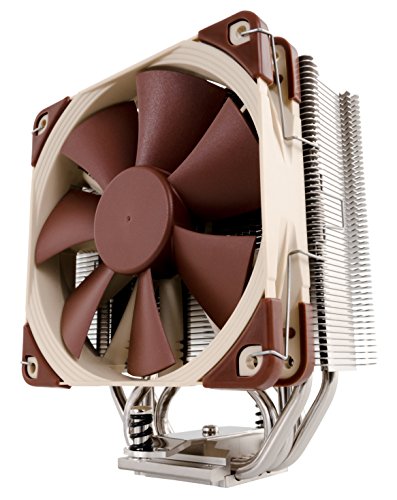
Pair any of these with an eight-core CPU like the AMD Ryzen 7 5800X — an eight-core Zen 3 chip handles prefill preprocessing and framework overhead without becoming the bottleneck. Model storage matters too: a fast NVMe like the Samsung 970 EVO Plus 250GB cuts model-load times from tens of seconds to a few, and a bulk SATA SSD like the Crucial BX500 1TB holds the model library. Round out the build with a solid dual-tower air cooler like the Noctua NH-U12S to keep the 5800X quiet under sustained load.
Related guides
- Intel Arc vs NVIDIA 2026: Local LLM Tokens per Dollar
- Can the RTX 3060 12GB Run Qwen3-27B Locally in 2026?
- Best GPU for Local LLMs Under $400
- vLLM vs llama.cpp on a 12GB GPU
- Best NVMe SSD for Local LLM Model Storage in 2026
Citations and sources
This piece is editorial synthesis based on publicly available information. No independent first-party benchmarking is reported.