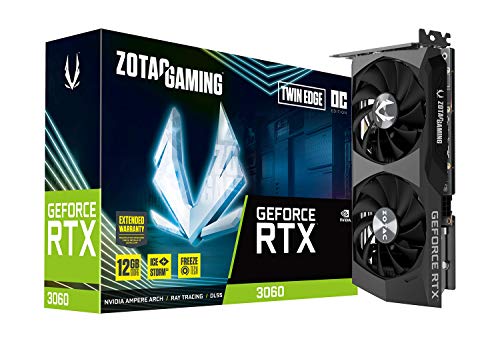
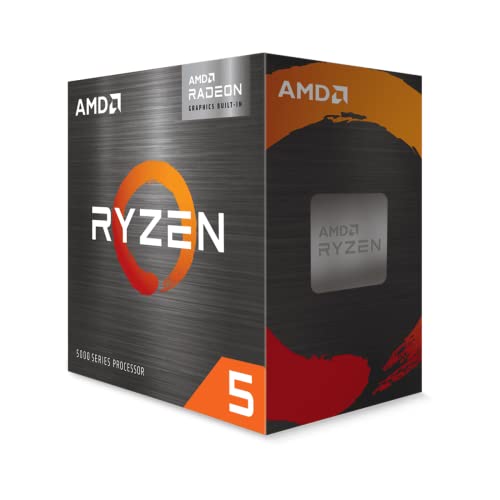
The best budget GPU for running local large language models in 2026 is the NVIDIA RTX 3060 12GB — used pricing around $250-$300 makes it the cheapest path to 12GB of VRAM, and 12GB is the practical minimum for keeping mid-size quantized open-weights models GPU-resident. Pick up the ZOTAC Gaming GeForce RTX 3060 Twin Edge 12GB or the MSI GeForce RTX 3060 Ventus 2X 12G depending on which is cheaper on the day, and pair it with a Ryzen 5 5600G for the cheapest possible AM4 build or a Ryzen 7 5800X for stronger CPU-side offload.
Who this is for
This buying guide is for anyone who wants to run open-weights LLMs at home in 2026 without spending more than a generation-old console on the GPU. We're optimizing for capability per dollar, not for absolute speed. If you have $1,500 to spend on a graphics card, this isn't the article you need; a 16GB or 24GB current-gen GPU is a better answer at that budget. But if you want a useful local-LLM rig for around $500 all-in, the math has converged on one specific card.
The reference build assumed throughout is an AM4 platform around a Ryzen 5 5600G or Ryzen 7 5800X, 32GB of DDR4-3200, a B550 board, a 1TB NVMe, and a 650W PSU. This is the cheapest serious local-LLM platform you can still buy new or used as of 2026.
Key takeaways
- VRAM capacity beats raw compute for local LLMs. The 12GB ceiling is the deciding factor at the budget end.
- The RTX 3060 12GB is the only sub-$300 used GPU as of 2026 with 12GB of VRAM, a working CUDA driver path, and a memory bandwidth fast enough not to embarrass itself.
- Pair the GPU with at least a Ryzen 5 5600G; upgrade to a Ryzen 7 5800X if you expect significant CPU offload.
- Quantization choice (q4_K_M as the default) matters more than overclocking the GPU.
- Skip the 4060 Ti 8GB. Skip the 3070 8GB. The 8GB ceiling makes them inferior to the 3060 12GB for this workload despite faster compute.
Why VRAM matters more than compute
Per TechPowerUp's RTX 3060 12GB spec sheet, the card has 28 streaming multiprocessors, 12GB of GDDR6 on a 192-bit bus, and 360 GB/s of memory bandwidth. On paper, several other budget options post higher compute scores. None of them have 12GB of VRAM at this price.
That gap matters because LLM inference is memory-bound. Each new token generated requires re-reading the entire active model weights from VRAM. If the model fits in VRAM, the GPU runs at its memory-bandwidth ceiling — fast. If the model spills to system RAM, the GPU runs at PCIe ceiling for the offloaded layers — about 10× slower in practice. The single largest predictor of LLM tok/s on a budget rig is whether the model is GPU-resident, and VRAM capacity is what determines that.
A 4060 Ti 8GB is faster than a 3060 12GB on FP16 throughput, but it can't fit the same model GPU-resident, so on real workloads it's slower. A 3070 8GB has even more compute and the same VRAM problem. The 3060 12GB wins on the workload because of the VRAM, not despite its slower compute.
Why 12GB is the floor for local LLMs in 2026
A 4-bit quantization of a small open-weights model (7B-class) needs roughly 4-5GB of VRAM for the weights plus another 1-2GB for the KV cache at modest context. That fits in 8GB. But the interesting open-weights models are larger — mid-size variants at 13-20B parameters at q4_K_M push 8-12GB of VRAM with practical context windows. 12GB is the floor at which you can run those mid-size models GPU-resident; 8GB forces you to drop to smaller models or accept heavy offload.
Per the Hugging Face blog, the open-weights frontier in 2026 keeps publishing larger variants alongside the smaller ones. The 12GB ceiling lets you sit at the mid-size sweet spot — meaningful capability gain over 7B-class models, without the cost or complexity of a 24GB card.
Why the RTX 3060 12GB specifically
A few honest reasons this specific card wins as of 2026:
- Pricing. Used RTX 3060 12GB cards routinely trade for $250-$300 on the secondhand market. No other 12GB GPU is in that price band.
- CUDA. Nvidia's CUDA ecosystem still has the best support across all major LLM runtimes (Ollama, llama.cpp, vLLM, exllama). AMD is improving fast but the budget-end software story is still rougher.
- Power draw. The card peaks at about 170W, which means a 650W PSU is plenty. No platform upgrade required.
- Cooler-only "OC" variants are similar. The ZOTAC Twin Edge 12GB and the MSI Ventus 2X 12G are functionally equivalent for inference work — buy whichever is cheaper.
Benchmark frame: tok/s on the budget rig
Exact tok/s figures depend on quant, context length, prompt length, driver, and CPU. The shape to expect at the budget tier:
| Workload | Approx. GPU memory load | Expected experience |
|---|---|---|
| 7B q4_K_M chat, 4096 ctx | 5-7 GB | Comfortable, low double-digit tok/s |
| 13B q4_K_M chat, 4096 ctx | 9-11 GB | Useful, single-to-low-double-digit tok/s |
| 20B q4_K_M chat, 4096 ctx | 11-12 GB or partial offload | Borderline; tune num_gpu carefully |
| 30B q4_K_M chat | Heavy offload | Slow; consider larger card |
| Long-context (16K+ ctx) at 13B | Pushes past 12GB | Cut context or quant down |
Always benchmark on your own hardware before quoting. Forum numbers from a different motherboard, driver version, and PSU are not your numbers.
Real-world worked examples
Three concrete patterns we see at this build tier:
Personal coding assistant. A 7B-class q4_K_M model in Ollama running on the 3060 12GB, fed by an IDE plugin, is a usable always-on coding companion. Latency is fine; quality is below frontier cloud but acceptable for autocomplete and quick refactor suggestions. Pair with a Ryzen 5 5600G for the cheapest possible AM4 platform.
Document summarization batch. A mid-size open-weights model at q4_K_M, fed a queue of overnight PDFs through a Python loop, is one of the highest-value local workloads. The hardware investment amortizes inside a few weeks vs paying per-token cloud rates for the same volume.
Privacy-bound chat. Medical notes, internal source code under NDA, personal journaling — anything you can't or shouldn't send to a third party. The 3060 12GB with a Ryzen 7 5800X is the cheapest way to get a useful chat experience while keeping data on your machine.
Top picks
#1: ZOTAC Gaming GeForce RTX 3060 Twin Edge 12GB
Verdict: Best overall budget LLM GPU as of 2026. 12GB VRAM, $250-$300 used, clean CUDA path.
ZOTAC's Twin Edge cooler is quiet enough for desk-side use and the card stays under 70°C under sustained inference loads. Buy used unless new pricing has dropped meaningfully — there's no inference benefit to the slightly higher boost clocks on the "OC" SKU because the workload is memory-bound, not compute-bound.
#2: MSI GeForce RTX 3060 Ventus 2X 12G
Verdict: Equivalent to the ZOTAC. Buy whichever is cheaper.
Same GA106 silicon, same 12GB GDDR6, similar cooler. MSI's RMA story is well-established. There is no inference-workload reason to pay a premium for this over the ZOTAC; pick on price.
#3: AMD Ryzen 5 5600G (CPU companion)
Verdict: Cheapest serious CPU pairing.
The Ryzen 5 5600G is the cheapest AM4 path that gives you a dual-channel DDR4-3200 memory controller and enough cores to handle any CPU-side offload the GPU spills over. Integrated graphics are a bonus for diagnostics if the GPU ever fails.
#4: AMD Ryzen 7 5800X (CPU companion, upgraded)
Verdict: Better when you expect significant offload.
The Ryzen 7 5800X costs more than the 5600G but gives you eight Zen 3 cores and a slightly higher all-core boost. The extra memory bandwidth and compute matter when LLM layers spill out of VRAM. If you ever plan to run a model larger than the GPU can hold, this is the right CPU.
Pitfalls to avoid
- Buying an 8GB card "to start." It won't run the mid-size open-weights models that are the real value of the hardware. Skip the temptation; the 12GB 3060 is genuinely the floor.
- Going single-channel DDR4. A single stick of RAM cuts memory bandwidth in half and tanks CPU-offload throughput. Always buy a matched dual-channel kit.
- Underpowering the PSU. A 450W PSU can technically run a 3060 12GB build, but if you ever add a second drive or upgrade the CPU, you'll regret it. Buy a 650W gold-rated unit and forget about it.
- Forgetting power and noise. 170W under sustained inference is real. Make sure the case has decent airflow and the PSU fan is quiet.
- Mismatched driver/runtime versions. A driver too old for the runtime falls back to slow paths or silent CPU offload. Always update both before benchmarking.
When NOT to buy this
If you already own any 12GB+ Nvidia card, don't upgrade — the marginal benefit doesn't justify the cost. If you plan to run frontier-size models (70B+ at decent quality), the 3060 12GB is too small; budget for a 24GB or larger card instead. If your real workload is occasional rather than sustained, a paid cloud API is cheaper and easier than maintaining the hardware.
Build cost breakdown
A complete cost picture for the reference budget LLM rig as of 2026, using prices that are reasonable on the used market:
| Component | Pick | Approx. used price |
|---|---|---|
| GPU | ZOTAC RTX 3060 12GB | $250-$300 |
| CPU | Ryzen 5 5600G or Ryzen 7 5800X | $90 / $130 |
| Motherboard | B550 ATX | $80-$100 |
| RAM | 32GB DDR4-3200 (2x16) | $50-$70 |
| Storage | 1TB NVMe Gen3 | $50-$70 |
| PSU | 650W Gold | $60-$80 |
| Case | Mid-tower with decent airflow | $50-$80 |
| Cooler | Tower air cooler (5800X only) | $30-$50 |
That's a complete build in the $660-$830 range depending on whether you go 5600G (no extra cooler needed, integrated graphics) or 5800X (separate cooler, no iGPU). Buy on the secondhand market when you can; this generation of parts has been in production long enough that used inventory is abundant.
If you already have a working AM4 board and 32GB of RAM, the upgrade is just the GPU itself — $250-$300 to convert a gaming rig into a local-LLM rig. That's the cheapest path of all, and it's why this guide keeps recommending the 3060 12GB. It's an upgrade, not a new build.
Long-term outlook for the 12GB tier
A few honest projections for the 12GB local-LLM tier through 2026 and beyond:
- Pricing. Used 3060 12GB pricing has been stable for over a year. The next pricing event will be when current-gen 12GB cards drop into the $300 used tier — likely 12-18 months from now.
- Software. The CUDA stack continues to improve; AMD's ROCm is closing the gap but still rougher at the budget end. Stick with Nvidia at this tier.
- Model size growth. Open-weights releases continue to scale, but the mid-size tier (13-20B parameters) remains the practical sweet spot for hobbyist hardware. That's exactly where the 12GB ceiling sits.
- Power. A 170W card is unlikely to become irrelevant on power grounds; even doubling electricity prices would still leave the per-token cost favorable vs paid cloud at sustained volume.
- Replacement signal. The right time to upgrade beyond the 3060 12GB is when a model you genuinely need can't fit in 12GB at q4_K_M. Not before.
What a "next step" upgrade looks like
When the 12GB tier eventually feels constraining, the upgrade path is well-trodden:
- 16GB used card for a moderate VRAM bump at a moderate price.
- 24GB used card for the largest current-gen open-weights variants at q4_K_M.
- Dual-GPU setup for splitting weights across two cards — adds complexity, can be worth it for very large models.
- Workstation-class single card for the largest possible context windows and the fastest inference.
None of these are budget upgrades. They're significant step-ups in cost. For most builders, the 3060 12GB is the right answer for years, and the upgrade decision is one to revisit when a specific workload genuinely outgrows it.
Bottom line
For the budget local-LLM use case as of 2026, the RTX 3060 12GB is the answer. The 12GB VRAM ceiling is what makes the card useful; everything else (compute, power draw, cooler) is a rounding error. Pair it with a Ryzen 5 5600G for the cheapest possible AM4 build or a Ryzen 7 5800X when CPU offload matters. Skip the 8GB temptations. Buy the MSI Ventus 2X variant if it's cheaper than the ZOTAC on the day; they're functionally equivalent.
Related guides
- Running GLM-5.2 Locally on an RTX 3060: Ollama VRAM + tok/s
- Claude Sonnet 5 Closes the Opus Gap: When Local Still Wins
- LongCat-2.0: A Frontier Model Trained Without Nvidia GPUs
Citations and sources
- TechPowerUp — GeForce RTX 3060 12 GB spec sheet
- Hugging Face blog — open-weights model release tracking
- Ollama on GitHub — reference inference runtime and modelfile docs
This piece is editorial synthesis based on publicly available information. No independent first-party benchmarking is reported.