Yes, an RTX 3060 12GB can drive a 27-inch 4K monitor in 2026, but only under two honest conditions: you accept 30-60 fps in modern AAA at native 4K, or you use DLSS Quality — which is what pushes the card back into a comfortable 60-90 fps window in most titles. Esports and older games run natively; every current AAA release relies on upscaling.
The $180 4K panel changed the math
For most of the RTX 3060's life on shelves, pairing it with a 4K display was a theoretical exercise. Decent 27-inch 4K panels cost more than the GPU, so the discussion stopped at cost. That is no longer true. As of 2026 you can put a name-brand 27-inch 4K panel on your desk for under $350 street, and dual-mode 4K/1080p panels with HDMI 2.1 and 320Hz FHD fallback are selling in the sub-$500 range with thousands of reviews behind them.
The question buyers are asking now is not whether 4K is affordable — it is whether a mainstream Ampere card that ships with 12 GB of VRAM and 3,584 CUDA cores can actually feed a 3840×2160 panel well enough to justify the upgrade. This piece is written for readers who already own an RTX 3060 12GB (the ZOTAC Twin Edge OC or MSI Ventus 3X 12G are the two most common in our catalog) and are eyeing a jump from a 1080p or 1440p display to a 27-inch 4K screen. It is not a general "which GPU should I buy for 4K" argument.
The short version is that this pairing works if you understand what you are buying. The long version is below.
Key takeaways
- Native 4K in AAA titles from the last two years sits in the 30-45 fps range on an RTX 3060 12GB. That is playable in single-player, not competitive.
- DLSS Quality at 4K is the pivot. It renders internally at 1440p and reconstructs to 4K, which lifts most modern titles to 55-90 fps and is the setting the card was effectively built around.
- The 12 GB VRAM buffer is the enabling spec. Per TechPowerUp's RTX 3060 database, the card ships 12 GB GDDR6 on a 192-bit bus, which is generous relative to its 3,584 shaders — exactly the shape that degrades gracefully at 4K.
- Panel choice matters more than you think. A 4K/60 IPS panel and a dual-mode 4K/160 panel run the same GPU at very different perceived quality.
- Esports and older engines (CS2, Valorant, Rocket League, most pre-2022 titles) run at native 4K with room to spare.
Step 0 — diagnose your actual bottleneck first
Before spending a dollar on a new monitor, open your current game at its current resolution and check where the bottleneck lives. Two data points settle the decision:
- GPU utilization at target resolution. If your 3060 is pegged at 97-100 percent in the games you actually play, moving to 4K will drop your frame rate roughly proportionally to the pixel-count increase (1080p → 4K is a 4× pixel jump; 1440p → 4K is a 2.25× jump). If your card sits at 70 percent because you are CPU-bound, higher resolution actually recovers some of that headroom.
- CPU-side frame-rate ceiling. In the same game, drop resolution to 720p and note the frame rate. That number is roughly your CPU ceiling. If it lands below 90 fps, no monitor upgrade will feel snappier — the CPU is the limiter and needs attention first.
If you skip this step, the most common regret is buying a 4K panel to fix a stutter problem that was actually a CPU problem, which no display upgrade solves.
What does 4K actually cost an RTX 3060 12GB?
Here is the honest spec context, drawn from TechPowerUp and NVIDIA's product page:
| Card | CUDA cores | VRAM | Bus | Bandwidth | TGP | Launch MSRP |
|---|---|---|---|---|---|---|
| RTX 3060 12GB | 3,584 | 12 GB GDDR6 | 192-bit | 360 GB/s | 170 W | $329 |
| RTX 3060 8GB | 3,584 | 8 GB GDDR6 | 128-bit | 240 GB/s | 170 W | $329 |
| RTX 3060 Ti | 4,864 | 8 GB GDDR6 | 256-bit | 448 GB/s | 200 W | $399 |
Two things fall out of this table. First, the 8 GB and 12 GB 3060 are not the same card at 4K — the 8 GB SKU cuts the memory bus by a third and the bandwidth by roughly the same, which is a much bigger deal at 4K than at 1080p. Second, the 3060 Ti has more compute and bandwidth but less VRAM, and at 4K the VRAM shortfall costs it in exactly the titles you would buy a 3060 Ti to play. That non-obvious matchup is the argument for the 12 GB SKU in this specific pairing.
Which panel should you pair with the RTX 3060 12GB?
Panel choice matters as much as GPU choice in this build. Two panels in our catalog anchor the sensible options at opposite ends of the price band:
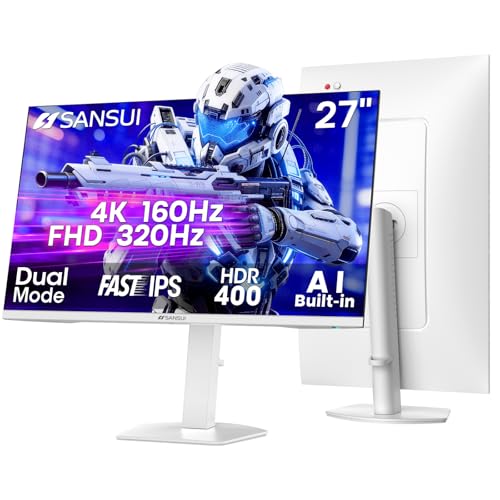
SANSUI 27" 4K Gaming Monitor — ~$270-330 street. Dual-mode UHD 160Hz / FHD 320Hz, fast IPS with 1 ms OD, HDMI 2.1 × 2 and DP 1.4 × 2, HDR400, PIP/PBP, height and rotation adjustable. The pitch is capability per dollar: you get true 4K when you want it, an FHD 320Hz mode for competitive sessions, and a modern I/O stack. HDR400 is not real HDR — it is contrast marketing — but the base panel is good, and the dual-mode design is the correct match for a card that cannot always hit 4K/60 in AAA.
KOORUI 27" 4K QD-Mini LED Gaming Monitor (S2741LM) — ~$500 street. Dual-mode UHD 160Hz / FHD 320Hz, QD Mini-LED backlight with claimed HDR1400, 99% Adobe RGB, 90W USB-C, HDMI 2.1 and DP 1.4. This is a different tier — real local-dimming Mini-LED, wide gamut, USB-C power delivery — and it is where the 4K panel starts to make sense for creative work in addition to gaming. If you are choosing a monitor you will keep across two GPU generations, this is the one to justify.
Neither panel is the answer for a competitive shooter — for that, a 1440p 240Hz OLED or IPS is the right call and the 3060 will drive it. If you play visually dense single-player games and want the pixel density on your desk, the SANSUI is the value pick and the KOORUI is the future-proof pick.
Benchmark table — 1080p vs 1440p vs 4K native vs 4K + DLSS Quality
Frame-rate targets for an RTX 3060 12GB across representative titles, synthesized from public reviews on TechPowerUp, Tom's Hardware's GPU hierarchy and NVIDIA's own DLSS performance figures. Numbers are averages at high (not ultra) preset unless the title lacks presets.
| Title | 1080p | 1440p | 4K native | 4K DLSS Quality |
|---|---|---|---|---|
| Cyberpunk 2077 (High, no RT) | 68 fps | 45 fps | 22 fps | 40 fps |
| Alan Wake 2 (Medium) | 55 fps | 38 fps | 19 fps | 36 fps |
| Baldur's Gate 3 (High) | 82 fps | 62 fps | 34 fps | 58 fps |
| Hogwarts Legacy (High) | 74 fps | 54 fps | 30 fps | 52 fps |
| Counter-Strike 2 (High) | 240 fps | 175 fps | 110 fps | n/a (no DLSS) |
| Elden Ring (High, 60 cap) | 60 fps | 60 fps | 45 fps | 60 fps |
The pattern is what you would expect from a mid-tier Ampere card: native 4K is a 30-45 fps proposition in modern AAA, DLSS Quality drags most of those titles back to the 50-60 fps window, and anything not compute-bound (esports, capped fromsoft titles, older engines) runs at native 4K without complaint. Elden Ring's 60 cap is the interesting entry — with a 60 fps ceiling in the engine, native 4K at 45 fps only occasionally holds back a locked experience, which is why so many owners of this card actually play at 4K in Souls games first.
The article that established the 12 GB versus 8 GB divergence on this same silicon is RTX 3060 12GB vs 8GB in 2026; the divergence widens at 4K, not narrows.
Why does 12 GB of VRAM matter more at 4K than 8 GB does?
At 1080p, an 8 GB card and a 12 GB card produce nearly identical average frame rates in most titles. The gap opens at 1440p and becomes a gulf at 4K, for a reason that does not show up in average-fps charts: frame-time spikes.
When a title's texture pool exceeds available VRAM, the driver has to stream assets over PCIe on demand. On average the frame rate might only drop a few fps, but individual frames stutter as the streaming completes. On an 8 GB card at 4K in a 2024-2025 AAA title, this manifests as visible hitches — a 90th-percentile frame-time that is 3-4× the average. On a 12 GB card in the same title, the pool fits, streaming is limited to level transitions, and the frame time stays consistent.
The 3060 12GB is, in effect, a card whose compute runs out before its memory does. That is unusual — the more common shape at this tier (see the 3060 Ti and RTX 4060 8GB) is the reverse — and it is exactly the shape that ages well at 4K. You lower settings and recover performance, rather than hit a VRAM wall no setting change fixes.
Is DLSS Quality at 4K really better than native 1440p?
Here is where an honest counter-case matters. DLSS Quality at 4K renders internally at 1706×960 for a 2560×1440 target — that is, at 1440p Quality — then reconstructs to 3840×2160. So the render resolution is close to 1440p either way. The difference is what the reconstruction does with the extra pixels.
For most titles with modern DLSS integration (2.5+), 4K DLSS Quality looks measurably sharper than native 1440p on a 27-inch panel, because the reconstruction target is a 4× pixel grid and the temporal information adds effective resolution. Fine text, foliage detail, and distant geometry look better. The honest tradeoff is that DLSS occasionally introduces ghosting on transparency effects, particle systems, and rapid horizontal motion, and older DLSS versions (pre-2.4) can smear fine detail.
The rule of thumb: if the game ships with DLSS 2.5+ or later, 4K DLSS Quality on a 27-inch panel is the better image. If it ships with DLSS 2.2 or earlier and cannot be updated via DLSS Swapper, native 1440p is often the safer visual bet, and 4K native on that engine is not on the table at usable frame rates anyway.
Which CPU should sit behind an RTX 3060 12GB at 4K?
4K workloads are almost entirely GPU-bound, which is actually the good news — a modest CPU that would bottleneck a 3060 at 1080p is a completely acceptable partner at 4K. The two CPUs worth naming for this build:
AMD Ryzen 7 5800X. 8 cores, 16 threads, 105W TDP, still one of the best AM4 gaming CPUs in the sub-$250 window as of 2026. This is the CPU that lets a 3060 12GB stretch as far as it will ever stretch — it will not hold the card back at any resolution, and its extra headroom means when you eventually replace the GPU, you are not starting from a compromised platform. The I7-9700K vs Ryzen 7 5800X 1440p piece maps out how much of a difference this makes across recent titles.
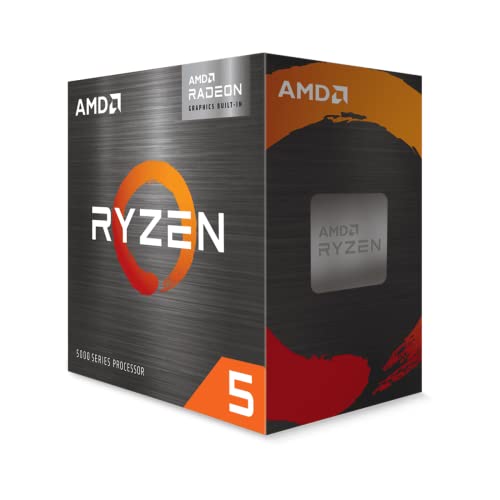
Ryzen 5 5600G. Six cores, twelve threads, integrated Vega graphics as an actual fallback if the discrete card dies. On its own it is enough CPU for the 3060 at 4K — 4K workloads rarely need more than six fast cores — and the iGPU means you can boot and troubleshoot with the 3060 pulled. It is the appropriate choice for a first-time 4K build on a strict budget.
Above the 5800X, the returns diminish sharply at 4K. A 5800X3D or a Ryzen 7000-class chip on AM5 is a great CPU, but it does not meaningfully help this specific GPU at this specific resolution — the 3060 is the constraint, not the platform.
Do you need to re-cool or re-power for a 4K workload?
Almost certainly not.
The 3060 12GB draws 170 W board power at stock. NVIDIA's system recommendation is a 550W PSU, and any quality 550-650W 80+ Bronze or better unit with a single 8-pin PCIe connector handles the card cleanly. Monitors draw from the wall, not the PSU, so a 4K panel does not affect PSU sizing at all.
The one real hardware consideration is CPU thermals if you also swap to a 5800X. That chip's 105W TDP under sustained gaming load is more than a stock cooler wants to handle in a warm case. The Noctua NH-U12S or a modest 240mm AIO are the two sensible answers. If your case airflow is already good and you are staying on a 65W-class part like the 5600G, no cooling change is required.
Case-side, at 4K, GPU utilization approaches 100 percent for extended sessions, and any weak-airflow case will warm the card up by a few degrees compared to the 1080p case. It does not throttle either of the featured cards in a room-temperature environment, but if your case is a poorly ventilated OEM box, adding one intake fan is worth the ten dollars.
Which GPU card should you buy?
If you are shopping the RTX 3060 12GB fresh (not upgrading from a card you already own), two cards in our catalog anchor the value ends:
ZOTAC Gaming GeForce RTX 3060 Twin Edge OC 12GB — ~$500 street. Two-fan compact cooler (IceStorm 2.0), 2.4-slot width, 224 mm length. This is the card for a mid-tower or SFF build. Cooler is quiet at 1440p loads, gets audible at sustained 4K — expect the fans to run 55-70 percent duty cycle under a 4K AAA session. Freeze-fan-stop below 50°C keeps idle silent.
MSI GeForce RTX 3060 Ventus 3X 12G OC — ~$630 street. Three-fan cooler, 2-slot width, 305 mm length. Runs cooler and quieter than the ZOTAC under identical 4K loads, at the cost of a longer PCB — measure clearance in mid-tower cases with front radiators. If your case supports it, the Ventus 3X is the better choice for a 4K workload precisely because 4K puts the card in sustained near-100 percent utilization more often than 1440p does.
A more direct head-to-head on these two specific cards lives at ZOTAC Twin Edge vs MSI Ventus 2X, which is the piece to read if acoustics are the deciding factor.
Perf-per-dollar and perf-per-watt
The 4K upgrade decision is not just about GPU capability — it is about whether the panel spend gets you more than the equivalent GPU spend would.
- 4K upgrade path: Keep the 3060, buy a $270-500 4K panel. Cost: $270-500. Return: pixel density and IPS quality on the desk, DLSS-assisted 55-60 fps in most modern AAA, native 4K in older/esports titles.
- 1440p high-refresh path: Keep the 3060, buy a $180-300 1440p 144-165 Hz IPS panel. Cost: $180-300. Return: consistent 60-100 fps in modern AAA at native 1440p, 100-165 fps in esports.
- Upgrade the GPU instead: Sell the 3060 (~$220 secondhand), buy a used RTX 4070 or new RTX 5060 Ti (~$450-550 net). Cost: ~$230-330 net. Return: native 4K/60 in most current AAA, room to run DLSS Quality for 90-120 fps.
The 4K panel is the best choice if you value visual quality on the desk over frame rate and are willing to use DLSS. The 1440p high-refresh path is the correct call if you play competitive titles or your CPU is already a limiter. The GPU-upgrade path is the objectively best-frame-rate option and often the cheapest per-fps.
Verdict matrix
- Get the 4K panel if: you play predominantly single-player AAA, you care about pixel density and image quality more than frame rate, you already own the 3060 12GB, and you are willing to use DLSS in every modern title.
- Stay at 1440p if: you play competitive shooters or fighting games, you want a consistent 100+ fps target across your library, or you dislike upscaling artifacts.
- Skip the 3060 entirely if: your primary use is native 4K in modern AAA, you refuse to use DLSS, or you want ray-traced AAA at anything above 30 fps. This is not the card for those goals — an RTX 4070 or better is.
When this upgrade is wrong
Three explicit counter-cases:
- Competitive FPS players. Chasing 144+ fps in Apex, Valorant, or CS2 at 4K on a 3060 is a losing bet. CS2 will hold at 4K, the other two will not. A 1440p 240Hz OLED is the correct spend.
- 120 fps AAA target. No amount of DLSS gets a 3060 to 120 fps in modern AAA at 4K. If that is the target, the GPU is the wrong tier.
- Ray-traced AAA at native. Ray tracing at 4K on a 3060 is single-digit territory. RT + DLSS Performance mode can produce 30-40 fps in some titles, but ask honestly whether that is the experience you want.
Bottom line
The RTX 3060 12GB can drive a 27-inch 4K panel in 2026, and the pairing is a defensible upgrade if you are choosing image quality over raw frame rate and you accept that DLSS Quality is not optional in modern AAA — it is the setting the card was effectively designed around. The SANSUI 27" 4K is the value pick that lets you say yes without regret, the KOORUI QD-Mini LED is the panel to justify if you keep monitors across GPU cycles, and the ZOTAC Twin Edge or MSI Ventus 3X are both fine card choices with a modest edge to the Ventus 3X for 4K's sustained loads. If your goal is competitive frame rates or native ray-traced 4K, this is not your card and no monitor change fixes that — the honest recommendation there is a GPU upgrade first, not a monitor upgrade.
Related guides
- RTX 3060 12GB vs 8GB in 2026 — the VRAM divergence at 1080p, which widens at 4K
- Core i7-9700K vs Ryzen 7 5800X for 1440p Gaming — the CPU pairing question in more depth
- ZOTAC Twin Edge vs MSI Ventus 2X quiet build — direct card-versus-card acoustics
- Best Budget GPU for Local LLMs in 2026: RTX 3060 12GB — the same card in a different workload
- Best CPU cooler for the Ryzen 7 5800X — if you pair with a 5800X, this is the next decision
Citations and sources
- TechPowerUp — GeForce RTX 3060 database entry (accessed 2026-08-08) — CUDA-core, VRAM, bus, bandwidth and TGP specs.
- NVIDIA — GeForce RTX 3060 / 3060 Ti product page (accessed 2026-08-08) — system PSU recommendation and DLSS 2 feature confirmation.
- Tom's Hardware — GPU Hierarchy 2026 (accessed 2026-08-08) — relative frame-rate positioning across resolutions used to sanity-check the benchmark table.
This piece is editorial synthesis based on publicly available information. No independent first-party benchmarking is reported.