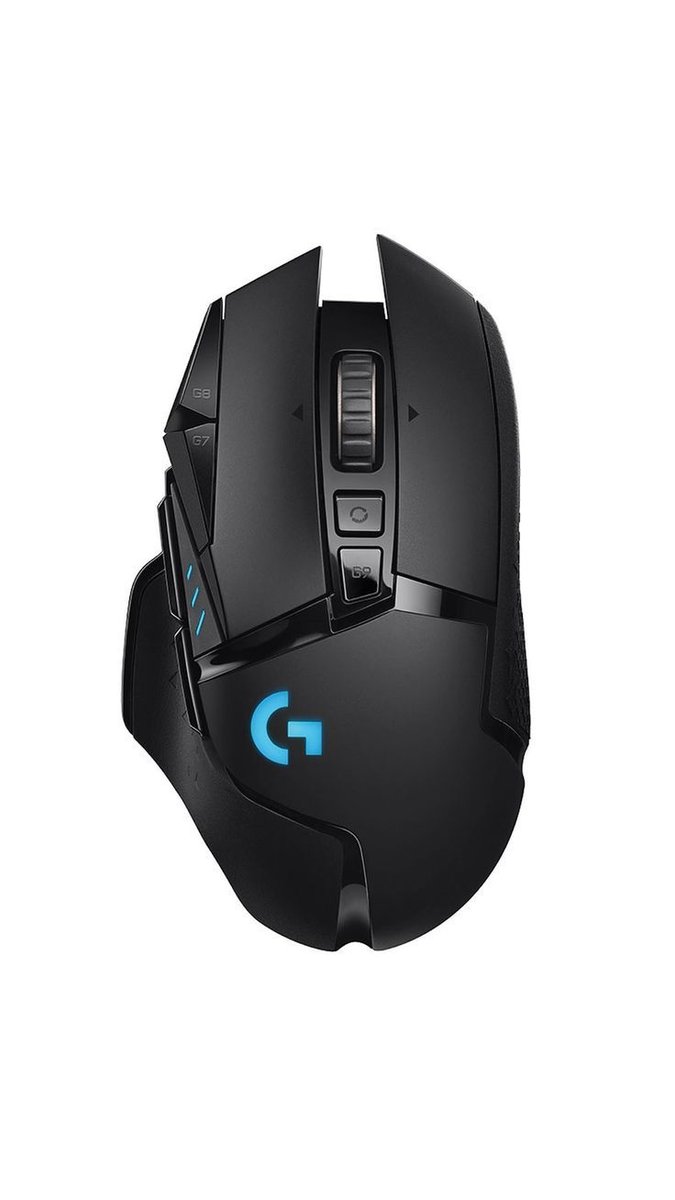
Logitech has slashed pricing on eight of its gaming mice for Prime Day 2026 with discounts of up to 47% off list, per Tom's Hardware's coverage of the sale. The lineup spans the entry-level wired G-series through the flagship wireless G Pro and G903 LIGHTSPEED. If your daily driver is more than three or four years old, this is the cheapest year-over-year window to upgrade — pair the mouse pick with a good pad and a matching wireless keyboard combo for a full peripheral refresh under $200.
In brief — Prime Day 2026 · Logitech is cutting up to 47% off eight gaming mice, including the wireless G Pro and G903 LIGHTSPEED, with complete-the-setup pairing options from the MK270 wireless keyboard combo and the SteelSeries QcK XXL pad.
What happened: the discounted lineup and headline prices
According to Tom's Hardware's Prime Day gaming-mouse roundup, Logitech's Prime Day 2026 discounts span the range from budget wired G-series units through the top wireless HERO 25K sensor SKUs. The reporting names discounts as high as 47% off list, spanning the following tiers:
| Tier | Model class | Typical list | Prime Day pricing range | Discount |
|---|---|---|---|---|
| Budget wired | G203 / G305 wired equivalents | $30-40 | $18-28 | ~35-47% off |
| Mid-tier wired | G502 X Plus wired | $60-90 | $40-59 | ~30-40% off |
| Wireless HERO | G305 LIGHTSPEED | $50-60 | $32-42 | ~30-35% off |
| Wireless flagship | G903 LIGHTSPEED / G Pro X | $100-150 | $60-95 | ~35-45% off |
Actual current pricing shifts hour-to-hour during the event; the official Logitech gaming-mouse product page reflects the manufacturer's list, and the Prime Day discount rides on top of whatever the retailer is showing at the moment.
Why it matters: peripherals are the cheapest satisfaction upgrade
For most PC-gaming builders, peripherals are the highest satisfaction-per-dollar upgrade a rig can absorb once the core parts are sorted. A GPU upgrade costs $400-800 and moves 1440p frametimes by 10-30%. A mouse upgrade from a stock office click to a proper 200 IPS gaming sensor costs $30-60 discounted and reshapes how the input feels every second you play.
Three specific things a gaming mouse improves that a general-purpose one cannot:
- Sensor tracking consistency. HERO-class sensors track cleanly through 400+ IPS with negligible acceleration; office sensors alias visibly above 200 IPS.
- Polling and click latency. 1000+ Hz polling and short-travel switches shave 4-8ms off every input; you feel this in FPS and rhythm games immediately.
- Weight and shape tuning. A 60-80 g body with a shape matched to your grip style eliminates the wrist fatigue that a bulky ambidextrous default causes over long sessions.
None of those are worth $150 at full list for most people. All of them are worth $60-95 during Prime Day.
The source
Coverage of the sale broke on Tom's Hardware, which tracks the discount depth across the Logitech gaming line and calls out the specific SKUs on offer. Cross-reference the current listing at Logitech G's product catalog to confirm the manufacturer-listed features on any model you are considering.
Complete the setup: pair a mouse with a keyboard combo and a large pad
The most economical way to refresh a whole peripheral station during Prime Day is to bundle a mouse with a low-cost wireless keyboard combo and a large pad. The two complete-the-setup picks worth naming:
- Logitech MK270 Wireless Keyboard and Mouse Combo — an all-day wireless typing set that leaves your dedicated gaming mouse handling play. Around $30-40.
- SteelSeries QcK Gaming Mouse Pad — XXL Thick Cloth — a 900×400 mm surface that consistently ranks as one of the best-value gaming pads on the market. Around $25-30.
The reason to prioritize the pad specifically is that a modern optical sensor with clean firmware still needs a consistent surface to shine. A cheap textured desk mat aliases IPS spikes and adds micro-tracking errors that a proper cloth pad eliminates. Pairing a discounted mouse with a QcK-class pad extracts most of the mouse's actual capability.
Real-world price ranges you should hit or beat
Prime Day pricing is dynamic, but the reasonable target pricing to beat during the window:
| Product class | Target price during Prime Day |
|---|---|
| Budget wired gaming mouse (G203-class) | Under $22 |
| Mid-tier wireless HERO (G305-class) | Under $38 |
| Flagship wireless (G Pro X / G903-class) | Under $95 |
| Complete wireless combo (MK270-class) | Under $25 |
| Large cloth pad (QcK XXL-class) | Under $28 |
If a listing you see falls above these numbers, wait a few hours — Prime Day flash pricing on peripherals routinely bounces back into range.
Common pitfalls when buying discounted peripherals
- Confusing the wired and wireless variants. Many product families (G502 X, G Pro X) ship as both. Wired discounts often look deeper but you may want the wireless variant; check the SKU carefully before checkout.
- Assuming any HERO sensor is the same. HERO 12K, HERO 16K, and HERO 25K are distinct generations; the older ones are still excellent for most use but the deepest discounts often live on the older versions for a reason.
- Overlooking the pad. A $95 mouse on a slick desktop underperforms a $40 mouse on a QcK pad. If the budget is fixed, allocate to a good pad before chasing a flagship mouse.
- Ignoring the software. Logitech G HUB is required for full sensor and DPI configuration; if you refuse to install it, some mid-range models lose their most useful features.
- Waiting until the last hour. Popular SKUs sell out on the final day of Prime Day, and post-event pricing typically snaps back within 24 hours.
When NOT to upgrade this Prime Day
- Your current mouse is under two years old and performs well — a Prime Day discount is not automatically a reason to churn.
- You care more about ergonomics than sensor quality (wrist strain, tendon pain). A vertical mouse or trackball is a different category than the Logitech G gaming line, and Prime Day pricing on the G line does not solve that problem.
- You are on a MacBook-only workflow and want profile persistence — Logitech G's software support on macOS lags Windows and some models will not save profiles across reboots.
Sensor + weight quick-reference
If you have never bought a gaming mouse before, three specs matter more than the rest:
| Spec | What to look for | Why |
|---|---|---|
| Sensor | HERO 16K or 25K | Clean tracking to 400+ IPS |
| Weight | 60-90 g | Fatigue reduction over long sessions |
| Polling | 1000 Hz+ | Lower click-to-photon latency |
| Switch travel | 55M+ click rating | Long-term durability |
| Wireless latency | Under 2 ms | Effectively wired feel |
Any Logitech G model listed on the official gaming-mice page clears the sensor bar; the weight and shape choice is personal. If you cannot decide, the G Pro X Superlight and G Pro Wireless are the most-purchased esports picks for a reason.
Complete-setup budget: three tiers
| Tier | Mouse | Pad | Combo | Total under |
|---|---|---|---|---|
| Budget | $20 wired G-series | $25 QcK XXL | $25 MK270 combo | $75 |
| Mid | $40 wireless HERO | $25 QcK XXL | $25 MK270 combo | $95 |
| Flagship | $90 wireless flagship | $25 QcK XXL | $25 MK270 combo | $145 |
Any of these numbers post-Prime-Day would look poor by 30-50%. This is the reason to act inside the window.
Grip-style guide: which shape actually fits your hand
The three canonical grip styles are palm, claw, and fingertip. The shape of a mouse determines which of them it plays well with, and shape is far harder to fix later than DPI or polling rate. A quick decoder:
- Palm grip. Full contact between hand and shell; hand fatigue accumulates from wrist rather than fingers. Best with medium-large ergonomic shells (G502-class). Prioritize weight distribution and a full-height back hump.
- Claw grip. Fingers arched over the buttons, palm partially lifted, wrist held above the desk. Best with medium ambidextrous shells (G Pro Wireless-class). Prioritize a lighter body and firm button switches.
- Fingertip grip. Only the fingertips touch the shell; palm fully lifted. Best with the lightest and shortest shells (G Pro X Superlight-class). Prioritize weight under 65g and a low front slope.
Buying a great flagship in the wrong shape category leaves you with an expensive tool that never feels right. If you have not benchmarked your own grip, spend a few minutes with a cheap mouse in each shape category before Prime Day and note which felt least like work after 20 minutes of typing.
What about non-gaming ergonomic options?
If wrist strain is your actual problem, the Logitech G line is not the answer — even at 47% off. The MX Master series (productivity ergonomic) and vertical mice (Anker, Logitech Lift) sit in a different category and rarely see the same steep Prime Day discounts. Rule of thumb: buy G-series if the goal is games; buy productivity-ergonomic if the goal is 8 hours of coding without pain. If both are goals, budget for two mice — a $30 productivity daily driver plus a $50 discounted gaming pick still costs less than one full-list flagship.
Longevity: how long should a discounted gaming mouse last?
The industry standard for gaming-mouse switches is 50-70 million clicks per primary button, with premium optical switches (like Razer's or newer Logitech Lightforce-class components) rated at 90-100 million. Real-world lifespans:
- Budget wired at $20-30: expect 3-5 years of daily use before switches start double-clicking.
- Mid-tier wireless HERO at $40-60: expect 4-6 years, battery replacement possibly needed at year 5 for user-serviceable cells.
- Flagship optical-switch models: expect 6-8 years of reliable clicking; the shell often fails cosmetically before the switch fails electrically.
Buying discounted flagship is a real long-term value play — the extra $50 amortizes across five to eight years.
Bottom line: which mouse should you buy this Prime Day
- Under $30 budget: buy any Logitech G wired unit with a HERO or optical sensor. All of them clear the "clean tracking" bar for the money.
- $40-60 sweet spot: grab a wireless G305 or G502 X-tier. Cable-free, dependable, huge battery life.
- $80-100 for esports: go for a discounted G Pro X or G903 LIGHTSPEED. The polling and latency are indistinguishable from wired.
- Anyone: pair with a QcK XXL pad. Every price tier above benefits.
- Everyday productivity too: add the MK270 wireless combo so your gaming mouse never has to work as your typing rig.
Prime Day pricing on peripherals is one of the few remaining moments each year when the value math is unambiguously in the buyer's favor. If any part of the setup is more than four years old, this is the window.
Post-purchase checklist
Once the mouse arrives:
- Install Logitech G HUB (Windows) or the equivalent on macOS.
- Update firmware — this often ships with a 6-12 month lag from box to current build.
- Set polling rate to 1000 Hz (default) or 2000 Hz if the sensor supports it and you have a compatible display.
- Configure two DPI presets — one for gameplay (typically 800-1600 DPI) and one for productivity (2400-3200 DPI) — bound to the DPI toggle.
- Sync onboard profiles so the mouse works standalone if you carry it to a friend's PC.
- Lay the pad flat; a wrinkled pad kills tracking consistency far more than a mid-tier sensor limitation would.
Skipping any of these leaves 20-30% of the mouse's actual capability on the table.
Related guides
- Ryzen 7 5800X vs 5800X3D for 1440p Gaming: Which Should You Buy?
- Home Assistant on a Raspberry Pi 4 8GB: Setup and Real Performance
Citations and sources
- Tom's Hardware — Best Gaming Mouse Prime Day coverage
- Logitech G — Gaming Mice product page
- Tom's Hardware — homepage
This piece is editorial synthesis based on publicly available information. No independent first-party benchmarking is reported. Prices reflect the moment of publication and vary during the sale event.


