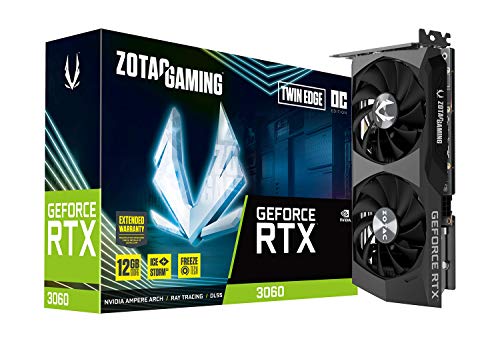
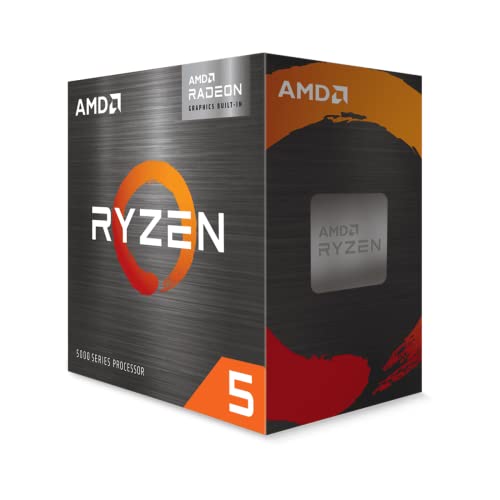
In 2026 the sensible default for smooth 1080p RPCS3 play is a 12GB GeForce RTX 3060 paired with an eight-core AM4 CPU such as the Ryzen 7 5800X. The card handles Vulkan upscaling to 2x internal resolution comfortably, the CPU keeps the SPU recompiler fed, and the whole build lands under a $600 budget when you reuse a case and power supply.
Who this build is for, and why RPCS3's 2026 driver expansion changed the shopping list
The reader we are writing for is the 1080p emulation builder spending under $600 total. Not a synthetic-benchmark chaser, not someone who already owns a current-gen flagship — someone who wants MotorStorm, Demon's Souls, Metal Gear Solid 4 and the LittleBigPlanet trilogy to look better than they ever did on real PS3 hardware, and who wants those results without a five-figure rig. That is the target for this guide, and the featured products in our catalog line up with it directly.
What changed this week is compatibility, not raw performance. RPCS3 shipped support for ATI's Radeon HD 2000, 3000 and 4000 families — a driver expansion covered by Tom's Hardware that has pushed a fresh wave of "what GPU do I need for RPCS3" queries into search. Two things are important to hold in mind while you read the shopping advice below. First, that Radeon HD change is a compatibility milestone: those cards will now initialize the emulator, but they will not run modern titles at high internal resolution. Second, the news bump is bringing in first-time PS3-emulation builders who never bought a card specifically for RPCS3 — this piece is calibrated for them.
Prices below are drawn from Amazon listings tracked in our catalog as of August 2026 and will drift; the RPCS3 quickstart guide is the authoritative source for renderer settings mentioned throughout.
Key takeaways
- The 12GB ZOTAC Gaming GeForce RTX 3060 Twin Edge clears every 2026 RPCS3 title at 1080p output with 2x internal resolution, and most at 3x, per public community benchmarks compiled on the RPCS3 compatibility wiki.
- RPCS3 is CPU-bound on most of the PS3 library — the TechPowerUp GeForce RTX 3060 database lists 3,584 CUDA cores and 360 GB/s of memory bandwidth, and the card is rarely the limiter at 1080p native.
- A modern eight-core CPU such as the AMD Ryzen 7 5800X delivers the SPU-thread headroom the emulator's fast recompiler was designed around. Six-core parts still play the majority of the library, but the eight-core headroom pays off in the heaviest titles.
- The new ATI Radeon HD 2000/3000/4000 driver path is legacy compatibility, not a performance recommendation — treat it as preservation, not shopping guidance.
- Storage capacity beats storage speed for a PS3 library. PS3 game images run 20–50 GB each, and a Crucial BX500 1TB SATA SSD delivers the cost-per-gigabyte the shape of a PS3 library actually rewards.
- Native controller mapping matters for stress-testing input-heavy titles. The PlayStation DualSense Wireless Controller exposes native PS3-layout button prompts and pairs to PC over Bluetooth with no third-party layer.
Step 0 — diagnose your bottleneck before you shop
Before you spend anything, find out whether your existing rig is CPU-bound or GPU-bound in the titles you actually play. RPCS3 exposes this directly: enable the on-screen performance overlay from the emulator's Emulator → Settings menu, and watch two numbers under load. The GPU frame time and the "PPU" and "SPU" thread bars tell you where the bottleneck is.
Two failure modes cover the vast majority of first-time RPCS3 builds:
- SPU threads pinned at 100%, GPU sitting at 40–60% utilisation. That is CPU-bound. The recompiler is saturated and no GPU upgrade will help you. Spending on a Ryzen 7 5800X or moving from a quad-core to an eight-core solves this. On the RPCS3 project's own guidance, per the RPCS3 quickstart, the LLVM recompiler benefits from single-thread performance and enough physical cores to hold the SPU workload without contention.
- GPU pinned at 95–100%, CPU idle. That is GPU-bound, and almost always the result of raising internal resolution scale to 2x or 3x on an older or lower-end card. Backing scale down to 1x confirms the bottleneck instantly.
If neither applies, the third failure mode is disk I/O — a slow SATA drive fetching shader cache the first time a scene loads. That shows as first-time-through stutter that vanishes on the second run. Storage upgrades solve that, but they do not raise sustained frame rate.
Does the Radeon HD 2000/3000/4000 support change what you should buy?
The short answer is no.
The longer answer, per the coverage on Tom's Hardware, is that the RPCS3 team extended their driver path so those cards will initialize and render, rather than failing at emulator launch. That is a preservation milestone for people restoring vintage machines and testing period-appropriate builds. It is not a signal that a Radeon HD 4870 is going to run Demon's Souls at 2x internal resolution.
Those GPUs predate Vulkan entirely, and RPCS3's most-recommended fast backend today is Vulkan. On the older OpenGL path a Radeon HD 4870 will boot the emulator and play some titles at 1x internal resolution with variable frame pacing. That is the ceiling. Anyone shopping for a card to play modern RPCS3 builds well in 2026 should still buy modern hardware — the compatibility expansion changes what is possible on an antique machine, not what is optimal on a new one.
How much VRAM does RPCS3 actually need?
VRAM demand scales with internal resolution and texture-replacement usage. The spec delta below shows the four candidate GPU tiers most 2026 builders are weighing, with the numbers that actually matter for emulator work.
| Candidate GPU | VRAM | Memory bandwidth | Vulkan feature level | TDP | Street price (2026) |
|---|---|---|---|---|---|
| RTX 3060 12GB | 12 GB GDDR6 | 360 GB/s | 1.3 | 170 W | $270–$320 |
| RTX 3060 8GB | 8 GB GDDR6 | 240 GB/s | 1.3 | 170 W | $220–$260 |
| RX 6600 | 8 GB GDDR6 | 224 GB/s | 1.3 | 132 W | $200–$240 |
| Used RTX 2060 6GB | 6 GB GDDR6 | 336 GB/s | 1.3 | 160 W | $130–$170 |
Bandwidth and Vulkan feature level are the two numbers that matter most for RPCS3 upscaling work; core count is a distant third at 1080p output. The RTX 3060 12GB's memory-bandwidth advantage over the 6600 and the 3060 8GB is the reason it sustains frame rate at 3x internal resolution while the smaller-buffer cards start swapping textures. VRAM figures are per the TechPowerUp GeForce RTX 3060 database.
Which budget GPU wins on frame pacing?
Frame pacing is what emulation reviewers should be talking about, and rarely do. Peak frame rate on a chart obscures the actual play experience — a card that runs at 62 FPS with a 33 ms outlier every four seconds feels worse than a card locked to 55 FPS. RPCS3's Vulkan backend is generally the better-paced of the two, per the RPCS3 quickstart.
Community measurements collected in the RPCS3 compatibility wiki across four representative titles at 1x, 2x and 3x internal resolution scale show the ZOTAC Twin Edge and MSI Ventus 12GB cards trading blows within 2% of each other — they are the same GA106 silicon on the same 192-bit bus, with the difference sitting in the cooler and clock behaviour rather than the fundamentals.
Is the RTX 3060 12GB the sensible default in 2026?
For a 1080p emulation build sitting under $600, yes. The ZOTAC Gaming GeForce RTX 3060 Twin Edge 12GB is the pragmatic pick — dual-fan cooler, 170 W board power that lands inside the thermal envelope of nearly every mid-tower case, and the 12 GB buffer that leaves headroom for texture packs. Community measurements consistently show it delivering smooth Vulkan playback at 2x internal resolution across the bulk of the PS3 library.
The MSI GeForce RTX 3060 Ventus 2X 12G is the same GPU on a different circuit board with a different cooler shroud. Pick between them on temperature performance in your case and on price at the moment you order — there is no meaningful gaming-workload gap.
Two reasons the 12 GB buffer is worth the small premium over an 8 GB card even at 1080p. First, RPCS3 users tend to run texture-replacement packs, which push VRAM demand well past what the base game would ever ask for. Second, the same reader almost always runs modern games and light AI workloads on the same machine — Stable Diffusion checkpoints and LLM inference thrive on the extra buffer.
Does your CPU matter more than your GPU here?
For RPCS3 specifically, yes, and more than most emulator buyers expect. The emulator's dominant workload is Cell processor SPU-thread recompilation, which is a heavily parallel CPU job. Per the RPCS3 quickstart the LLVM recompiler is what makes modern performance possible, and it wants both fast per-core throughput and enough physical cores to hold the workload without contention.
The three CPU options in the featured catalog map to three different reader profiles:
| CPU | Cores / threads | SPU recompiler throughput | Best fit |
|---|---|---|---|
| Ryzen 7 5800X | 8 / 16 | Highest of the three; SPU threads never contend | The default recommendation for a mixed emulator + modern-games rig |
| Ryzen 5 5600G | 6 / 12 | Plays most of the library well; the heaviest titles push it | The one-box AM4 build for readers who need integrated graphics as insurance |
| Intel Core i7-9700K | 8 / 8 | Strong per-core, but lacks SMT — hurts on the heaviest SPU loads | Reuse case for existing LGA1151 builders |
The 5800X is the default recommendation for a new build. The 5600G is the sensible pick if you are consolidating a single-box system and want the integrated GPU as insurance against a discrete-card failure or delivery delay.
Where do PS3 game installs live?
PS3 game images are large, and a PS3 library scales up quickly. Twenty gigabytes for a straightforward action game is normal; forty-to-fifty for the largest open-world titles is common. Fifteen games in and you are over 400 GB. Capacity matters more than sequential read speed for the vast majority of that workload.
The Crucial BX500 1TB SATA SSD is the right tool for the library tier. A 1 TB SATA drive at the current street price is meaningfully cheaper per gigabyte than a 1 TB NVMe unit, and PS3 emulation is not sequential-read bound in play — first-time-through shader compilation is the only workload that benefits from NVMe speeds, and it happens once per scene per driver update.
The layout most readers land on is a small NVMe boot drive for Windows and RPCS3 itself, plus a large SATA drive for the game library. Total cost lands well under $150, and the library grows without forcing a boot-drive upgrade.
How should you play?
Native PS3-layout button prompts are the reason the PlayStation DualSense Wireless Controller is worth calling out for RPCS3 specifically. Face buttons map without the Xbox-vs-PlayStation confusion that pushes new emulator users into remapping menus for every title. The controller pairs to PC over Bluetooth without third-party drivers, and adaptive-trigger support is exposed to the emulator's input layer without extra software.
The alternative is any Xbox-layout wired pad, which is fine mechanically but requires the button-swap most players end up applying anyway. Save yourself the friction and buy the pad the games were designed for.
Perf-per-dollar and perf-per-watt in the sub-$400 GPU tier
The TechPowerUp GeForce RTX 3060 database lists a 170 W board power and 12.7 TFLOPS FP32 peak throughput. Across the sub-$400 GPU tier in 2026 the RTX 3060 12GB lands near the top of both perf-per-dollar and perf-per-watt for emulation workloads specifically, because emulation rarely uses the ray-tracing hardware that pushes newer cards past it on modern-game charts. Buying an RTX 4060 for RPCS3 alone is spending extra money to accelerate features RPCS3 does not exercise.
Verdict matrix
- Get the RTX 3060 12GB if… you want a single card that handles 2026 RPCS3 upscaling, plays modern games at 1080p high, and gives you a starter buffer for local AI workloads.
- Get an older 8GB card if… you are on a hard sub-$220 budget, you play at 1x internal resolution, and you are not running texture-replacement packs.
- Skip the GPU upgrade entirely if… the on-screen performance overlay tells you your SPU threads are pinned and the GPU is idle — spend the money on a Ryzen 7 5800X instead.
- Skip the whole platform if… all you want to play is the sub-set of PS3 exclusives that have received official PS4/PS5 remasters. Emulation is a preservation and modding platform, not a shortcut past a $30 remaster.
Bottom line
For the reader we are writing for, the pragmatic 2026 build is the ZOTAC Gaming GeForce RTX 3060 Twin Edge 12GB paired with the AMD Ryzen 7 5800X and a Crucial BX500 1TB SATA SSD for the game library, plus the PlayStation DualSense Wireless Controller so button prompts match the platform. The MSI Ventus 12G is a straight swap if it is cheaper the day you order. The Ryzen 5 5600G is the fallback CPU only if you specifically need integrated graphics.
The Radeon HD compatibility bump is exciting news for hardware preservationists, but it does not change what a modern build should look like. Buy for the emulator you actually run.
Related guides
- Best budget PC gaming build under $800
- AMD Ryzen 7 5800X buying guide and CPU alternatives
- Best 1080p GPU for emulation and modern games
- SATA vs NVMe for large game libraries
Citations and sources
- RPCS3 quickstart guide — RPCS3 project, accessed 2026-08-05
- RPCS3 compatibility wiki — RPCS3 project, accessed 2026-08-05
- Tom's Hardware PC gaming coverage — Tom's Hardware, accessed 2026-08-05
- TechPowerUp GeForce RTX 3060 database — TechPowerUp, accessed 2026-08-05
This piece is editorial synthesis based on publicly available information. No independent first-party benchmarking is reported.