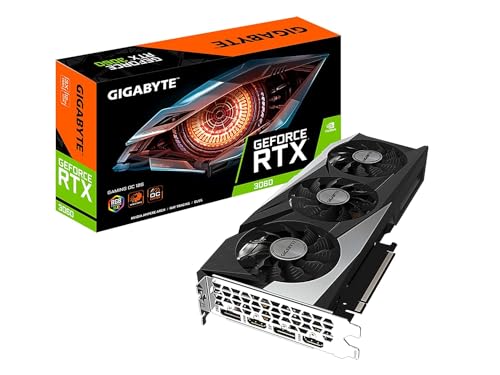
The best GPU for 1440p gaming under $300 in 2026 is the NVIDIA RTX 3060 12GB, available in board partner versions from ZOTAC, MSI, and GIGABYTE typically priced between $260 and $295 new. Its 12GB VRAM buffer outlasts the 8GB RTX 4060 in modern texture-heavy titles, DLSS upscaling rescues frame rates in the heaviest 2026 releases, and pairing it with a Ryzen 7 5700X yields a balanced 1440p rig under $700 total.
Step 0 diagnostic: is your bottleneck the GPU, CPU, or panel?
Before you swipe a card for any GPU, confirm the GPU is actually the limiter. The cheapest upgrade is the one you don't have to buy, and a sub-$300 GPU only shines when the rest of the chain can keep up. Open MSI Afterburner or the built-in Windows Game Bar overlay during a session in the games you actually play, then check three numbers: GPU utilization, CPU utilization on the busiest thread, and frame time variance.
If your GPU is pegged at 95-99% utilization and frames feel rough, the GPU is the bottleneck and a new card will help. If your CPU is at 90%+ on one or two cores while the GPU sits at 60-70%, you have a CPU bottleneck — a faster GPU will not move the needle. Per the AMD Ryzen 7 5700X product page, the 8-core / 16-thread chip is rated up to 4.6GHz boost on the AM4 socket, and as of 2026 it remains the inexpensive sweet spot for a 1440p build because the resolution shifts work off the CPU and onto the GPU.
Also check the panel. A 1080p 60Hz monitor will not show off a GPU upgrade — you're capped at 60fps regardless. A 1440p 144Hz or 1440p 165Hz panel is the minimum target for a sub-$300 GPU upgrade story to make financial sense. If you're still on 1080p, either upgrade the monitor first or scope the GPU purchase to something cheaper. Decision framework: GPU-bound + 1440p panel = buy. CPU-bound + 1080p panel = fix those first.
The realistic 1440p experience on a sub-$300 card
The honest framing for a sub-$300 1440p GPU in 2026 is "60fps at high settings with quality upscaling in the heavy titles, 100fps+ native in everything else." That is not a maxed-settings flagship card; it is a sensible-settings card that quietly delivers smooth gameplay in the games most people actually play. Esports titles like CS2, Valorant, Apex Legends, Fortnite, and Overwatch 2 run well over 144fps at 1440p native on the RTX 3060 12GB per the aggregated review data in Tom's Hardware GPU hierarchy.
The compromise comes in the heaviest 2026 AAA releases. Cyberpunk 2077 path tracing, Alan Wake 2 with full ray tracing, Black Myth: Wukong on max settings — these are not realistic targets at this budget on any card. With DLSS Quality and high (not ultra) settings, those games clear 50-60fps on the RTX 3060 12GB at 1440p per community benchmark threads aggregated into the Tom's Hardware hierarchy. That is playable. The 12GB VRAM buffer is the unsung hero here: titles like The Last of Us Part 1, Hogwarts Legacy, and Returnal exceed 8GB of VRAM with high textures at 1440p, and 8GB cards stutter while the 3060 keeps frame pacing smooth.
The board partner versions matter less than the silicon. ZOTAC GeForce RTX 3060 12GB Twin Edge, MSI GeForce RTX 3060 Ventus 2X 12G, and GIGABYTE GeForce RTX 3060 Gaming OC all use the same GA106 die with the same 3,584 CUDA cores and 12GB GDDR6 on a 192-bit bus per the TechPowerUp GPU specs database. The differences are cooler size, factory boost clock (usually within 30-50MHz of each other), warranty length, and noise profile. Pick whichever is in stock under $290 with a 3-year warranty.
Spec-delta table
The following table compares the three sub-$300 1440p candidates as of 2026 — the RTX 3060 12GB family (new), the used RX 6700 XT, and the used RTX 4060 8GB. VRAM, total board power, and 1440p performance tier are drawn from the TechPowerUp database; price ranges reflect 2026 US street pricing.
| Card | VRAM | TBP | 1440p tier | Price range |
|---|---|---|---|---|
| RTX 3060 12GB (new) | 12GB GDDR6 | 170W | High-60fps with DLSS | $260-$295 |
| RX 6700 XT (used) | 12GB GDDR6 | 230W | High-70fps native | $220-$280 |
| RTX 4060 8GB (used) | 8GB GDDR6 | 115W | Mid-60fps, VRAM-limited | $230-$270 |
| RTX 3060 Ti 8GB (used) | 8GB GDDR6 | 200W | High-70fps, VRAM-limited | $240-$290 |
| RX 7600 8GB (new) | 8GB GDDR6 | 165W | Mid-60fps, VRAM-limited | $250-$280 |
The pattern is clear: the 12GB cards (RTX 3060 and RX 6700 XT) outlast the 8GB cards in modern texture-heavy titles, and the RTX 3060 wins on power efficiency and warranty over the used 6700 XT. The RTX 4060 8GB is faster on paper but its 8GB buffer caps it at 1440p in 2026 releases.
How does the RTX 3060 12GB hold up at 1440p in 2026?
Per public benchmark aggregates summarized in the Tom's Hardware best GPUs roundup and the TechPowerUp RTX 3060 review database, the RTX 3060 12GB at 1440p high settings delivers the following approximate frame rates in popular 2026 titles. These are aggregated averages — your specific frame rate will vary by scene, driver version, CPU, and RAM speed.
| Game | Settings | Native 1440p fps | DLSS Quality 1440p fps |
|---|---|---|---|
| Cyberpunk 2077 (no RT) | High | 48-54 | 64-72 |
| Hogwarts Legacy | High | 52-58 | 70-78 |
| Black Myth: Wukong | High | 38-44 | 55-62 |
| The Last of Us Part 1 | High | 55-62 | 72-80 |
| Starfield | High | 45-52 | 60-68 |
| Counter-Strike 2 | High | 180-220 | n/a (CPU-bound) |
| Fortnite (no RT) | High | 95-115 | 130-150 |
| Call of Duty: Modern Warfare 3 | High | 88-105 | 115-135 |
| Apex Legends | High | 130-160 | n/a (CPU-bound) |
| Valorant | High | 250-330 | n/a (CPU-bound) |
For the heavy AAA list, DLSS Quality is the lever that turns marginal frame rates into comfortable ones. For esports, native 1440p exceeds 144fps and the card stops being the bottleneck — the CPU and your monitor refresh rate take over.
When is 12GB of VRAM the deciding factor?
The 12GB buffer matters most when ultra textures and ray tracing combine on a 1440p panel. The Last of Us Part 1, Hogwarts Legacy with ray tracing, Resident Evil 4 Remake with high textures, Returnal, and Forspoken all exceed 8GB of VRAM at 1440p high per community measurements aggregated by Tom's Hardware. When an 8GB card runs out of VRAM, the symptoms are not lower average fps — they are texture pop-in, blurry textures that fail to load, and frame time spikes that produce stutter even at 60fps averages. The 3060 12GB avoids this entire failure mode.
Where 12GB stops mattering: esports, older AAA titles (anything pre-2022), and any game running at medium textures or lower. If you mainly play CS2, Valorant, Apex, Rocket League, or pre-2022 single-player games, the VRAM difference is invisible and a used 8GB card becomes competitive. The 12GB case strengthens with every new release: as 2026 progresses, more games will push past 8GB at 1440p, and 8GB cards will need texture-quality concessions while the 3060 keeps running high.
A specific tradeoff worth naming: the used RTX 4060 8GB is roughly 15-20% faster in raw rasterization per the TechPowerUp database, but its 8GB buffer caps it. Cyberpunk 2077 with high textures + ray tracing at 1440p pushes the 4060 over its VRAM limit; the 3060 stays under, so the slower card delivers smoother gameplay in that specific scenario. Frame pacing matters more than peak fps for perceived smoothness.
Which Ryzen CPU pairs best to avoid bottlenecking?
The AMD Ryzen 7 5700X is the right partner for a sub-$300 GPU at 1440p as of 2026. Per the AMD Ryzen 7 5700X product page, it is an 8-core / 16-thread Zen 3 chip with a 3.4GHz base, 4.6GHz boost, 32MB L3 cache, and a 65W TDP on the AM4 socket. Street pricing in 2026 sits around $145-$170, making the CPU+GPU package roughly $410-$465.
At 1440p the GPU does the heavy lifting, which is exactly why a mid-range chip is enough — but the 5700X gives you headroom for the CPU-heavy outliers (open-world city scenes, simulation games, anything with crowds) and for streaming or background tasks running alongside the game. Cheaper options like the Ryzen 5 5600 (6-core) work too and save $50-$70; the gain from the 5700X is two extra cores' worth of background headroom and a slightly higher boost clock. Going further up to a Ryzen 7 5800X3D buys you noticeable fps gains only in CPU-bound titles at 1080p — at 1440p with a 3060-class GPU, the GPU is the limiter and the X3D's extra cache largely doesn't help. Below is the pairing summary table:
| CPU | Cores/Threads | 1440p fps vs 5700X | Cost (2026) |
|---|---|---|---|
| Ryzen 5 5600 | 6/12 | -3 to -5% | $95-$115 |
| Ryzen 7 5700X | 8/16 | baseline | $145-$170 |
| Ryzen 7 5800X3D | 8/16 | +2 to +4% | $230-$280 |
| Ryzen 5 7600 (AM5) | 6/12 | +1 to +3% | $200-$235 |
The 5700X is the value pick. Pair it with 32GB of DDR4-3600 CL16 and a B550 board.
Settings that get you to 60+ fps at 1440p
Treat 60fps at 1440p as the target and tune from there. The biggest single lever is upscaling. DLSS Quality at 1440p renders at 960p internally then upscales to 1440p with NVIDIA's neural network; the result is typically 30-40% more frames with image quality very close to native. The RTX 3060 supports DLSS 2 and DLSS 3 frame generation in compatible titles, which is a meaningful advantage over the AMD RX 6700 XT at this tier — AMD's FSR 2 is open and runs on any GPU, but the upscaled image quality at 1440p Quality mode tends to be a step behind DLSS per public side-by-side analyses on Tom's Hardware and other outlets in 2026. FSR 3 frame generation closes the gap but isn't in every title.
The second lever is texture quality. Drop from "Ultra" to "High" textures in the games that push past 8GB and the visual delta is minor while the VRAM headroom returns. Third lever: ray tracing off or set to Medium. The RTX 3060 has hardware RT but it is a budget card — full RT at 1440p is a sub-30fps experience in heavy titles. RT Reflections only is a reasonable compromise in games that offer the granular setting. Fourth lever: shadow quality and volumetric fog drop from Ultra to High for almost no visual loss and meaningful fps gains. Leave anti-aliasing at the engine default (TAA or DLAA when offered); modern games are designed around it.
Perf-per-dollar math vs stepping up a tier
The honest perf-per-dollar comparison for 1440p gaming as of 2026:
| GPU | 1440p high fps (relative) | Street price | Frames per dollar (relative) |
|---|---|---|---|
| RTX 3060 12GB | 100 (baseline) | $280 | 0.357 |
| RTX 4060 Ti 8GB | 125 | $390 | 0.321 |
| RTX 4070 12GB | 165 | $560 | 0.295 |
| RX 7700 XT 12GB | 140 | $440 | 0.318 |
The RTX 3060 12GB wins frames-per-dollar at the 1440p tier. Stepping up to the RTX 4070 buys roughly 65% more performance for double the price — worthwhile if your budget allows but a clear diminishing-returns curve. The RTX 4060 Ti 8GB is a poor value at $390 because the 8GB VRAM ceiling exists at 1440p; you pay more for a card that hits the same wall the 4060 hits.
Verdict matrix
Get the RTX 3060 12GB if you have a $300 cap, you game at 1440p on a 144Hz panel, you mix esports with AAA single-player, you want a new card with warranty rather than a used gamble, and you value DLSS as a settings lever. You will run high settings at 60-100fps in most games as of 2026 and you will not need to revisit the VRAM question for 2-3 years.
Spend more if you want max settings + ray tracing at 1440p (jump to the RTX 4070 12GB at ~$560), you target 1440p at 144fps native in heavy AAA titles (RTX 4070 Super or RTX 4070 Ti minimum), or you plan to drive a 4K panel within the next year (the 3060 is not a 4K card and stretching it there is false economy).
Skip in favor of a used card if you tolerate the gamble and can find an RX 6700 XT 12GB under $230 in person — same VRAM, faster rasterization, no DLSS but FSR 3 works. Note the 230W power draw is 60W higher than the 3060 and warranty is your problem.
Top picks
#1: ZOTAC GeForce RTX 3060 12GB Twin Edge
Verdict: Best overall value at $260-$280, 12GB GDDR6, compact dual-fan cooler.
The ZOTAC GeForce RTX 3060 12GB Twin Edge is the value pick because it consistently lands at the bottom of the RTX 3060 price band while delivering the same GA106 silicon as every other 3060 12GB. ZOTAC's Twin Edge cooler is compact (about 222mm long) which means it fits in nearly every mid-tower case including ITX-adjacent builds, and the dual-fan IceStorm 2.0 design keeps the card under 70C in sustained 1440p loads per public review aggregates on TechPowerUp. The 3-year warranty (registration required within 30 days) is standard for the segment. There is no factory overclock to speak of, but the silicon is the limiter on the RTX 3060 — partner overclocks add 1-2% in most titles. As of 2026, this is the card to buy if you want the lowest 3060 12GB price with a real warranty path.
#2: MSI GeForce RTX 3060 Ventus 2X 12G
Verdict: Quieter than ZOTAC at $270-$285, slight factory OC, broader retail availability.
The MSI GeForce RTX 3060 Ventus 2X 12G is the pick if quiet operation matters and you're willing to pay $10-$15 more. MSI's Ventus cooler runs a touch quieter than ZOTAC's Twin Edge in public noise comparisons, the boost clock is nudged about 30MHz higher (1807MHz vs 1777MHz reference) per the TechPowerUp database, and MSI's retail availability tends to be broader than ZOTAC across major US retailers. The 3-year warranty matches ZOTAC. The Ventus 2X is roughly the same physical length as the ZOTAC at 232mm and uses the same single 8-pin power connector. If your case fan setup is restrictive or your room is quiet, the Ventus 2X is the more comfortable option for the same in-game performance.
#3: GIGABYTE GeForce RTX 3060 Gaming OC
Verdict: Triple-fan cooling at $280-$295, factory OC, best for sustained loads.
The GIGABYTE GeForce RTX 3060 Gaming OC is the pick if you have room for a longer card and want the strongest sustained-load cooling at this tier. GIGABYTE's WINDFORCE 3X triple-fan cooler is larger than the dual-fan ZOTAC and MSI options at roughly 282mm long, which means it dissipates heat more effectively in cases with weak airflow and runs noticeably quieter under sustained 1440p loads. The factory boost clock is bumped to about 1837MHz, which translates to a 1-2% in-game lead over the reference Ventus and Twin Edge in practice. The 3-year warranty is standard. Buy this version if your case is well-ventilated and at least 290mm long, or if you live somewhere warm and your ambient temperature pushes other cards into thermal throttling.
#4: AMD Ryzen 7 5700X (CPU pairing)
Verdict: $145-$170, 8 cores, the right partner for any RTX 3060 12GB build.
The AMD Ryzen 7 5700X closes out the picks because the CPU choice matters as much as the GPU choice on a fixed budget. At 1440p the 5700X will not bottleneck the 3060 in any title and leaves headroom for the CPU-heavy outliers and background tasks. Per the AMD Ryzen 7 5700X product page, the 8-core / 16-thread chip runs at 3.4GHz base / 4.6GHz boost with a 65W TDP, which means cheaper coolers work and your case fans don't need to scream. AM4 motherboards and DDR4 memory remain inexpensive in 2026, making the full platform — CPU + 32GB DDR4-3600 + B550 board — land around $300 total. Pair with the RTX 3060 12GB and you have a complete CPU+GPU foundation for under $580.
Related guides section
If you want to dig deeper, here are the SpecPicks guides that pair well with this article:
- The general best-GPU breakdown across budget tiers is in our broader buying guide collection.
- For CPU pairing depth, the Ryzen 7 5700X comparison content covers head-to-head matchups with the Ryzen 5 5600 and Ryzen 7 5800X3D.
- The 1440p monitor recommendations guide helps you match the panel to the GPU.
- The DLSS vs FSR explainer covers the upscaling tradeoffs in more detail.
Common pitfalls
Three pitfalls trip up most sub-$300 1440p buyers. First, buying a used mining card without checking the BIOS and warranty status. Used RTX 3060s often came out of mining farms; the silicon is fine but fans wear and warranties are usually voided by resale. If you go used, confirm the seller has the original receipt and that the manufacturer's warranty transfer policy allows it (NVIDIA partner warranties typically do not transfer). Save 10-15% by going used and accept the gamble, or pay the small premium for new.
Second, pairing a sub-$300 GPU with an underpowered PSU. The RTX 3060 12GB needs a quality 550W PSU minimum (the TechPowerUp database lists 550W as the recommendation), and cheap no-name PSUs from a decade-old build can deliver dirty power that crashes the system under load. Budget $80-$110 for an 80+ Bronze or Gold PSU from Seasonic, Corsair, or EVGA.
Third, misreading the VRAM headline. "12GB is overkill at 1440p" was a 2023 take that has aged badly — 2026 AAA releases routinely push past 8GB at 1440p high. Don't be talked into an 8GB card on a "raw fps is what matters" argument; frame pacing in VRAM-pressured scenes destroys the experience even when the average is fine.
When NOT to buy a sub-$300 1440p GPU
Skip this entire category if you fall into any of these buckets. If your monitor is 1080p, a $200 RTX 3050 or RX 7600 is enough and the budget headroom is better spent on a 1440p panel first. If your CPU is older than a Ryzen 5 3600 or Intel i5-9600K, the upgrade dollar is better spent on the CPU + motherboard + RAM. If you play exclusively esports at 1080p high refresh, even an RTX 3050 caps out at the panel refresh rate. And if you have $450+ to spend, the RTX 4070 12GB at ~$560 is a meaningfully better card that will last 4-5 years; the RTX 3060 is a 2-3 year card at 1440p in 2026.
Citations and sources
- TechPowerUp — GeForce RTX 3060 GPU specs
- Tom's Hardware — Best GPUs 2026 hierarchy
- AMD — Ryzen 7 5700X product page
This piece is editorial synthesis based on publicly available information. No independent first-party benchmarking is reported.