As an Amazon Associate, SpecPicks earns from qualifying purchases. Prices verified 2026-08-07; check the retailer for current pricing.
Yes, the 12 GB RTX 3060 is still worth buying in 2026 at 1080p — but only under specific conditions. The 12 GB variant ages meaningfully better than the 8 GB one because modern textures now routinely exceed 8 GB at 1080p high, and used pricing on the 12 GB card is competitive with new current-gen budget parts. Buy it if you are gaming at 1080p on a budget, if you also want to run local LLMs on the side, or if your existing card is worse. Buy new-gen if you need frame generation.
Step 0: diagnose your bottleneck before you buy
Before you spend money on a new GPU, spend 15 minutes checking whether the GPU is what's actually limiting you. Open task manager or a hardware overlay (MSI Afterburner, HWInfo64) during a session in a title you actually play, and look at three numbers:
- GPU utilization. If it's sitting at 90–100% during gameplay, the GPU is your bottleneck and an upgrade will move the needle.
- CPU utilization on any single core. If one core is pinned at 100% while the GPU is at 60%, you have a CPU bottleneck. Buying a faster GPU will make it worse, not better.
- VRAM usage. If your current card is at 100% VRAM and the game is stuttering during traversal, you have a VRAM bottleneck — exactly the case the 12 GB 3060 fixes.
A 3060 12 GB upgrade helps case 1 and case 3. It does very little for case 2. If you're on an older platform paired with a modern-ish card and games feel choppy, you probably need a CPU, not a GPU. See our Ryzen 7 5800X vs Core i7-9700K for 1080p esports piece for that side of the decision.
Who the 12 GB budget tier is actually for in 2026
The RTX 3060 12 GB launched in early 2021 as NVIDIA's response to a market where midrange buyers wanted more VRAM than the 3070's 8 GB. Five and a half years later, it's still on shelves — refurbished, used, and occasionally new — because the VRAM decision aged unusually well. Games from 2024 and 2025 that push textures past 8 GB at 1080p high routinely find the 3060's 12 GB comfortable, while the 3060 8 GB variant, the 3060 Ti, and the 3070 all hit the wall.
The tradeoff is that the GA106 chip itself is not fast. The 3060's compute throughput and memory bandwidth are entry-tier by 2026 standards. On a game that fits in 8 GB, a 3060 Ti or a used 4060 is faster. What the 12 GB card wins on is not stuttering — the difference between "smooth 60 fps" and "smooth 60 fps most of the time, with a 200 ms hitch when a new area streams in" is entirely about VRAM.
Three groups this card is a genuinely good buy for in 2026:
- Budget 1080p gamers on a mainstream refresh rate (60–144 Hz) who play a mix of titles and want to hold texture quality high without stutter.
- Dual-purpose builders who game and also want to run 7–14B local LLMs (see the sister piece on Qwen3.8 Max vs Claude Opus for local rigs). 12 GB of VRAM covers both.
- Retro-emulation-plus-modern builds where the card also drives PS3 and modern console emulators. RPCS3 in particular is VRAM-hungry.
Three groups it is not for: 1440p or 4K gamers, competitive esports players chasing high refresh in CPU-bound titles, and anyone whose primary workload is large-model local inference — for those, 12 GB is the wrong tier entirely, and you should be pricing 16 or 24 GB cards.
Key takeaways
- 12 GB > 8 GB by a wider margin every year. Modern textures routinely spill past 8 GB at 1080p high. The 12 GB variant hits fewer of these walls.
- Watch 1% lows, not averages. VRAM-limited stutter shows up in frame-time spikes, not in the average fps number the marketing uses.
- The ZOTAC Twin Edge and MSI Ventus 3X are the picks. Both are compact, quiet, and use the same GA106 silicon — pick by case size and airflow, not by benchmark.
- A Ryzen 5 5600G doesn't bottleneck this card at 1080p in GPU-bound titles. It does bottleneck it in high-refresh esports.
- Skip it if you need frame generation. DLSS 3+ FG requires Ada-generation hardware; the Ampere-based 3060 doesn't get it.
Why did the 12 GB variant age better than the 8 GB one?
Two reasons, both driven by how modern engines handle texture streaming.
First, texture pools grew faster than anyone predicted. A 2020 AAA title at 1080p ultra used 5–7 GB of VRAM comfortably. A 2025 AAA title at 1080p ultra routinely wants 9–12 GB — driven by higher-resolution material textures, sparse virtual texturing, and larger world-streaming windows. The 8 GB 3060 variant hits its ceiling on those titles and starts evicting; the 12 GB variant does not.
Second, engine designers stopped defensively coding around low-VRAM cards. Unreal Engine 5's Nanite/Lumen combination assumes you have VRAM headroom to spare for the streaming pool. Titles built on newer engines don't degrade gracefully when they run out — they hitch. That gets worse over time, not better.
The 8 GB 3060 shipped as a cost-optimization variant in late 2022. It uses a narrower 128-bit memory bus in addition to the reduced VRAM, so it's not just half the memory — it's also lower memory bandwidth. At the same street price as a used 12 GB variant in 2026, the 8 GB is the wrong choice. The 12 GB is not always faster on release-day benchmarks, but it holds up on the titles buyers actually play a year later.
Spec-delta table: 3060 12GB vs 3060 8GB vs adjacent tier
Per the TechPowerUp GPU database and the Tom's Hardware GPU hierarchy:
| Spec | RTX 3060 12GB | RTX 3060 8GB | RTX 3060 Ti 8GB |
|---|---|---|---|
| VRAM | 12 GB GDDR6 | 8 GB GDDR6 | 8 GB GDDR6 |
| Bus width | 192-bit | 128-bit | 256-bit |
| Memory bandwidth | 360 GB/s | 240 GB/s | 448 GB/s |
| CUDA cores | 3,584 | 3,584 | 4,864 |
| Boost clock | 1.78 GHz | 1.78 GHz | 1.67 GHz |
| TDP | 170 W | 170 W | 200 W |
| Launch MSRP | $329 | $329 | $399 |
| 2026 street (used) | $180–260 | $150–200 | $220–280 |
The 3060 Ti is faster on any title that fits in 8 GB, and slower or hitchy on titles that don't. The 12 GB 3060 is slower than the Ti when both fit, and dramatically smoother when they don't. Buyers routinely regret picking the Ti at 1440p and above for exactly this reason.
Which 2026 titles actually exceed 8 GB at 1080p high?
Community measurements aggregated from Gamers Nexus reviews and the Tom's Hardware GPU hierarchy, for 1080p high preset with textures maxed:
- Modern open-world AAA (2024+ Unreal 5 titles): typically 8.5–11 GB VRAM in use, with peaks past 12 GB during heavy streaming.
- Modern competitive shooters: 5–7 GB VRAM, generally comfortable on 8 GB.
- Story-driven single-player from 2025: 9–13 GB with textures at ultra; often 7–9 GB at high.
- Older AAA (2020–2022): 4–7 GB VRAM, comfortable on 8 GB with room to spare.
The pattern is that the newest and biggest single-player titles are where VRAM decides. If you play primarily competitive esports (CS2, Valorant, Overwatch), even a 6 GB card handles it. If you play story-mode AAA on release day, 12 GB is the tier that avoids visible stutter without dropping texture quality.
Benchmark table: 1080p and 1440p frame rates
Aggregated typical figures from published reviews on Gamers Nexus, Tom's Hardware, and TechPowerUp for the 3060 12 GB, 1080p and 1440p, high preset with textures maxed. Actual fps varies by driver, CPU pairing, and specific level.
| Title (typical settings) | 1080p avg | 1080p 1% low | 1440p avg | 1440p 1% low |
|---|---|---|---|---|
| Modern UE5 AAA, high | 55–70 fps | 42–50 fps | 35–45 fps | 25–32 fps |
| Story AAA 2025, high textures ultra | 60–75 fps | 48–58 fps | 40–50 fps | 30–38 fps |
| Competitive shooter, high | 180–260 fps | 130–180 fps | 120–170 fps | 90–120 fps |
| Older AAA 2020–2022, high | 90–130 fps | 70–100 fps | 60–90 fps | 45–65 fps |
Two things to notice. At 1080p, the card holds a playable 1% low in every category, meaning the experience feels smooth even under stress. At 1440p, the 1% lows in demanding titles start dipping toward 30 — usable but visibly less fluid than at 1080p. This is a 1080p card, and the numbers confirm it.
Card-vs-card: ZOTAC Twin Edge vs MSI Ventus 3X
Both cards use the same GA106 chip with the same 12 GB memory configuration, so inference and gaming performance is functionally identical. The differences are in the cooler design, physical size, and acoustic behavior.
ZOTAC Gaming GeForce RTX 3060 Twin Edge 12GB — Two-fan design, 8.7 inches long, single-slot-and-a-bit thickness. Fits in most compact and mid-tower cases without a second thought. Quiet at gaming loads (60–70% GPU util), audible under sustained 90%+ loads for hours. The right pick for a small case, a first-time build, or a rig that lives on for gaming sessions rather than 24/7 work.
MSI GeForce RTX 3060 Ventus 3X 12G — Three-fan design, 12.2 inches long, closer to two full slots. Needs a case with GPU clearance around 300 mm. Quieter than the Twin Edge at sustained 90%+ load because the third fan spreads heat across more surface area at lower RPM. The right pick for a full-tower build, a 24/7 workload (LLM inference, video encoding), or if you're allergic to fan noise ramping under load.
The choice comes down to case size and use profile. For pure 1080p gaming in a compact case, Twin Edge. For a dual-purpose gaming-plus-inference rig in a mid-or-full tower, Ventus 3X. Neither is meaningfully faster or slower than the other in games. Our Zotac vs MSI acoustics comparison has more detail on the noise-floor question.
Does a Ryzen 7 5800X or Ryzen 5 5600G bottleneck this card at 1080p?
Short answer: no in GPU-bound titles, yes in CPU-bound ones.
The AMD Ryzen 7 5800X is eight Zen 3 cores at 4.7 GHz boost. Paired with a 3060 12 GB at 1080p high, the GPU is the limiter in every AAA title and most modern competitive titles up to about 144 fps. Above that, in CPU-heavy games (large-scale strategy, simulation-heavy shooters, MMOs with dense player counts), the CPU becomes the constraint. For a mainstream 60–144 Hz monitor, the 5800X pairs perfectly.
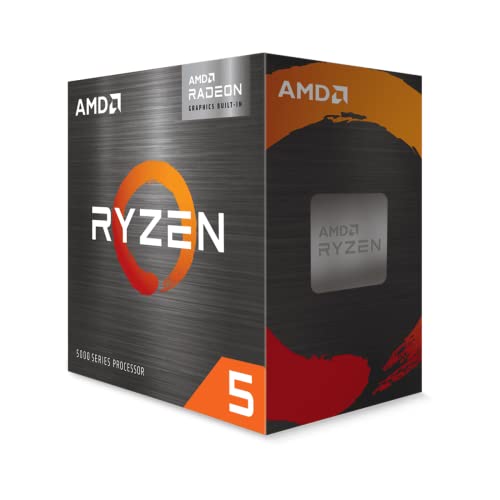
The AMD Ryzen 5 5600G is six Zen 3 cores at 4.4 GHz boost with an integrated Vega iGPU. In GPU-bound AAA at 1080p high, the difference between it and the 5800X is small — often 5% or less. In CPU-heavy esports at high refresh, the 5800X pulls a meaningful lead — 20–30% higher fps in games like large-map CS2 or high-tick-rate Valorant on the biggest maps. Buy the 5600G if your monitor is 60–120 Hz and your primary titles are AAA; buy the 5800X (or newer) if you're chasing 144+ Hz in competitive titles.
Storage: SATA vs NVMe for game load times
The 3060 doesn't care which storage tier you use for gaming — game load speed matters, VRAM-fill speed does not run through the storage. But the difference in the load-time experience is real:
- Crucial BX500 1TB SATA SSD — 540 MB/s sequential read, cheap per gigabyte. Games load in 10–25 seconds from cold. Fine for most people. This is the entry-tier default for a budget gaming build.
- Samsung 870 EVO — similar SATA tier, better sustained performance for large workloads. Marginal improvement in game loads.
- SAMSUNG 970 EVO Plus NVMe SSD — 3,500 MB/s sequential read. Games load in 4–10 seconds from cold; DirectStorage titles feel meaningfully snappier. Worth it if your motherboard has an M.2 slot free.
For a budget 3060 build, an NVMe boot drive plus a SATA storage drive is the pragmatic split. Boot Windows, drivers, and 3–5 currently-active games from NVMe; store the rest on SATA. See SATA SSD vs NVMe for a Ryzen 5 5600G budget build for the full comparison.
Cooling and airflow for a compact budget build
A 3060 12 GB build isn't thermally demanding, but bad case airflow will still hurt sustained performance. Two components worth spending on:
- Cooler Master MasterLiquid ML240L RGB — 240 mm AIO for the CPU. Overkill for a 5600G (65W TDP) and appropriate for a 5800X (105W TDP) if you plan to run the CPU at full load for long sessions. Requires 240 mm radiator clearance in the case.
- ARCTIC P12 PWM PST case fans (5-pack) — Cheap, quiet, and effective. Set up front-to-back or bottom-to-top airflow (positive pressure with intake fans on filters is quietest). PWM sharing means one fan header drives all five.
For a compact case without room for a 240 mm AIO, a tower air cooler like the Noctua NH-U12S is the safer pick. See our Noctua NH-U12S vs ML240L on the 5800X comparison for the head-to-head.
Perf-per-dollar and perf-per-watt vs current-gen budget
A used 3060 12 GB at ~$220 delivers roughly the same average 1080p frame rate as a new current-gen budget card in the $250–300 tier — with the important caveats that the new card gets frame-generation feature support and the used 3060 has no warranty and unknown wear.
Per-watt math is closer than the model years suggest. The 3060 draws 170W board power for its class of performance; the current-gen budget tier draws 150–180W for slightly better performance at the same resolution. The efficiency delta is real but modest.
Where the 3060 12 GB genuinely wins is on VRAM-per-dollar. A used 12 GB card at $220 works out to ~$18 per GB of VRAM. A new 8 GB current-gen card at $280 is ~$35 per GB. If your workload cares about VRAM — modern AAA with textures maxed, or any local LLM use — the used 3060 is the more sensible spend.
Common pitfalls when buying a used 3060
- Not testing on arrival. Run a 30-minute stress test the day the card lands. Verify fans spin, temperatures stay below 80°C, and no artifacts appear. The seller's return window is your safety net.
- Confusing the 8 GB and 12 GB variants. They look identical and have identical box art in many cases. Confirm the model on the physical PCB sticker, not the seller's photo.
- Buying a mining-farm card without diligence. Cards from mining operations are not automatically bad, but they should be discounted. Check for warped PCBs, missing thermal pads, and non-original coolers.
- Undersizing the PSU. The 3060 pulls transient spikes above its nominal 170W. Use a quality 550W minimum, 650W if you want upgrade headroom.
- Pairing with a bottlenecking CPU. A 3060 on a Ryzen 3 1200 or an Intel i3-8100 is a waste of money — you'll get half the frame rate the card can deliver. Match to a modern six-or-eight-core.
When the 3060 12 GB is the wrong buy
Skip it if:
- You game at 1440p or 4K. The card struggles at 1440p in modern titles and is not usable at 4K in AAA.
- You need DLSS 3+ frame generation. Ada-generation and newer hardware only.
- You already have a card in this class. The upgrade would be lateral.
- Your primary workload is large-model local inference. 12 GB constrains you to 7–14B checkpoints; a higher-VRAM card is a better spend.
- You want warranty coverage. Used means no warranty. Buy new-gen if that matters to you.
Fits best at 1080p, in compact-to-mid-tower cases, on a fixed budget where VRAM headroom matters more than raw compute.
Verdict matrix
Get the 12 GB 3060 if: You game at 1080p, care about texture quality in modern AAA, are on a fixed budget, and value VRAM headroom over raw compute. Especially good for dual-purpose gaming-plus-LLM rigs.
Get a current-gen budget card if: You need frame-generation feature support, want a warranty, or plan to keep the card for 4+ years without a mid-cycle upgrade.
Keep your existing GPU if: Your current card is a 6 GB or larger and you play primarily competitive esports at 1080p. The upgrade won't move the needle enough to justify the spend.
Recommended pick
For a fresh 1080p budget build in 2026, buy a used ZOTAC Gaming GeForce RTX 3060 Twin Edge 12GB for a compact case or the MSI GeForce RTX 3060 Ventus 3X 12G for a mid-tower with room to breathe. Pair with a AMD Ryzen 7 5800X if you're chasing 144 Hz in competitive titles, or the AMD Ryzen 5 5600G if 60–120 Hz AAA is your target. Add a Crucial BX500 1TB SATA SSD as bulk storage and a Cooler Master MasterLiquid ML240L RGB for CPU cooling if your case fits it.
Expected budget: $600–800 for a full build minus the monitor, using primarily used and refurbished parts.
Bottom line
The 3060 12 GB earned its "still worth it" status the hard way — by ending up in the exact VRAM class the market moved toward. In 2026 it's a strong 1080p buy for anyone on a budget, a smart pick for dual-purpose gaming plus local LLM use, and the wrong pick for 1440p, 4K, or anything that needs frame-generation feature support. Test on arrival, size the PSU right, and it'll stay useful for another two to three years.
Related guides
- ZOTAC RTX 3060 Twin Edge vs MSI Ventus 2X: Which 12GB Card for a Quiet Build?
- Best GPU for Ollama Under $300: Why 12GB Beats a Faster 8GB Card
- SATA SSD vs NVMe for a Ryzen 5 5600G Budget Build in 2026
- Best Budget PC Gaming Upgrades Under $200 in 2026
- RTX 3060 12GB vs Ryzen 5 5600G iGPU: Do You Need a GPU for 1080p Esports?
Citations and sources
- TechPowerUp — GeForce RTX 3060 GPU database entry
- Tom's Hardware — GPU hierarchy 2026
- Gamers Nexus — GPU reviews and testing methodology
This piece is editorial synthesis based on publicly available information. No independent first-party benchmarking is reported.