Yes — a 2.4 GHz wireless keyboard with its own USB receiver works in BIOS and UEFI boot menus. The receiver presents itself to the host as an ordinary USB HID device supporting the boot protocol, the stripped-down report format that pre-OS firmware requires, as defined in the USB-IF HID class specification. Bluetooth keyboards do not, and cannot.
Step 0 — Diagnose what your crash cart is actually for
"Crash cart" covers three different jobs, and packing for the wrong one is why people end up walking back to the rack twice.
Firmware and boot-menu access. The machine powers on but never reaches the OS — you need to get into UEFI, change a boot order, or watch a POST code. This needs a keyboard that works before any driver loads, and a screen.
OS-level rescue. The machine boots but the network stack, SSH daemon or filesystem is broken. You need a console login, or you need to boot a live image over USB or the network.
Offline drive triage. The machine is genuinely dead, or you suspect the boot disk is. You need to pull the drive and read it somewhere else without touching the failed host at all.
These need different kit, and only the first one depends on the keyboard question above. Pack for all three and the bag stays small enough to carry.
Who this is for
You run three to six headless boxes — a NAS, a Proxmox node, a couple of Pis, maybe an old desktop doing backup duty — and you have no rack KVM because a rack KVM costs more than two of those machines combined. Everything is managed over SSH until the day something stops answering, and then you are standing in front of a machine with a blinking cursor and no input device.
The goal is one bag you can pick up and carry to whichever box went quiet, that handles every failure mode you have actually experienced, and that does not require you to disassemble your desk to borrow a keyboard. That last part matters more than it sounds: the reason homelab outages drag on is rarely diagnostic difficulty, it is the twenty minutes spent hunting for a monitor cable.
The budget frame here is deliberately modest. Everything in this kit is inexpensive and most of it is dual-purpose — the SSD that lives on the cart is also your known-good test drive, and the Pi is also a network boot server when it is not being a console. If you find yourself specifying a $300 IP-KVM instead, that is a legitimate answer and we will get to when it is the right one.
Key takeaways
- 2.4 GHz receiver keyboards work at POST. Bluetooth keyboards do not. The receiver does the HID work in hardware; Bluetooth needs an OS-level stack that does not exist before boot.
- "USB Legacy Support" is the firmware toggle that breaks this. If it is disabled, no USB keyboard works pre-OS, wireless or not.
- A Raspberry Pi is a better cart brain than a laptop — it does serial console, PXE boot host and imaging server on one board.
- Pack a known-good SSD. Swapping in a drive you trust is the fastest way to prove whether a box is dead or just its disk is.
- A USB-to-SATA adapter is the highest-value item in the bag. Reading a suspect drive without booting the failed host avoids making a bad situation worse.
Why some wireless keyboards vanish at POST
Three distinct failure modes hide behind "my wireless keyboard doesn't work in BIOS."
Boot protocol vs report protocol. USB HID devices can describe themselves in two ways. The full report protocol uses a descriptor that the host must parse — that requires a real driver stack. The boot protocol is a fixed, minimal format for keyboards and mice specifically so that firmware with no driver support can still read keystrokes. Pre-OS firmware implements only boot protocol. A 2.4 GHz unifying-style receiver is a self-contained USB device that supports it, which is why the wireless part is invisible to the firmware — as far as the motherboard is concerned, a plain USB keyboard is plugged in.
USB Legacy Support is off. This firmware setting is what enables USB HID handling before the OS loads. When it is disabled — and it sometimes ships disabled on server boards — no USB keyboard works at POST, wired or wireless. If a known-good wired keyboard also fails, this is your answer, and the fix requires getting in some other way first. That is a genuinely annoying chicken-and-egg problem and the main argument for keeping a PS/2-capable board or an IP-KVM around on critical hosts.
Bluetooth, which has no fix. Bluetooth pairing requires a link-layer negotiation and a pairing stack running on a host operating system. Firmware has neither. This is not a configuration problem or a compatibility quirk — there is nothing present at POST to talk to the keyboard, so it will never work. Some laptops and a handful of boards with integrated Bluetooth modules implement a proprietary pre-OS shim, but you cannot rely on it and it will not exist on the random used server board in your closet.
The practical rule: if it has a dongle, it works. If it pairs, it doesn't.
Connection-type comparison
| Connection type | Works pre-OS | Power model | Ports consumed | Works on a Pi |
|---|---|---|---|---|
| 2.4 GHz USB receiver | Yes | AA cells, ~years | 1 (kbd + mouse) | Yes |
| Wired USB | Yes | Bus-powered | 1–2 | Yes |
| Bluetooth | No | Internal rechargeable | 0 | Only after boot |
| PS/2 | Yes | Bus-powered | Dedicated port | No |
| USB-C dock passthrough | Sometimes | Varies | 1 | Varies |
The "power model" column is the one people ignore and then regret. A keyboard with an internal rechargeable battery is a keyboard that is flat on the day you need it, because crash cart gear sits unused for months at a time.
The keyboard: why the MK270 combo
The Logitech MK270 combo is the pragmatic cart keyboard, and the reasons are unglamorous.
One receiver serves both keyboard and mouse. On a server with two accessible USB ports, that matters — you keep a port free for a USB stick. Per Logitech's product page, the pair shares a single 2.4 GHz receiver.
Full-size layout with a real function row and arrow block. Firmware menus are navigated with arrows, F2, F10, F12 and Escape. Compact sixty-percent boards put half of those behind a function layer, which is exactly the wrong property for a device you use once a quarter under stress. You will not remember the layer mapping.
Standard AA cells. This is the decisive one. The batteries last a very long time, and when they do die you fix it from the junk drawer in ten seconds rather than plugging the keyboard in and waiting. A cart keyboard must work immediately on a day you did not plan for.
It is not a nice keyboard to type on for long. That is fine — you will use it for ninety seconds at a time.
The portable console: a Raspberry Pi 4
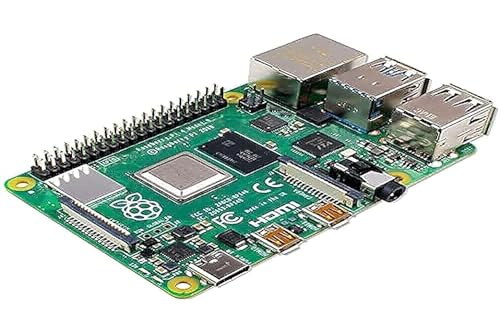
A Raspberry Pi 4 Model B earns its place on the cart by doing three jobs that would otherwise need a laptop.
Serial console. Most server boards, switches and managed PDUs expose a serial console. A USB-serial adapter and the Pi gets you a shell on gear that has no video output at all — and serial works when video does not, which covers a real class of failures.
Network boot host. Per the Raspberry Pi documentation, the Pi 4 supports USB boot and network boot, and it is perfectly capable of running a small TFTP/DHCP setup to PXE-boot a rescue image onto the failed machine. Booting a live environment over the network beats hunting for a USB stick with the right ISO on it.
Imaging and file server. With a drive attached it becomes the place you dump a disk image before you start experimenting on the original.
The Pi also happens to be the cheapest way to leave a permanent console attached to your most critical host, which is a good upgrade path from cart to fixture. If you want the full treatment of that idea, our PiKVM hardware guide covers turning a Pi into a proper IP-KVM with video capture.
Offline drive triage
When a machine will not boot, the highest-value diagnostic is reading its boot disk from a different computer. That tells you within a minute whether you have a dead drive, a corrupt filesystem or a dead motherboard — three problems with completely different responses.
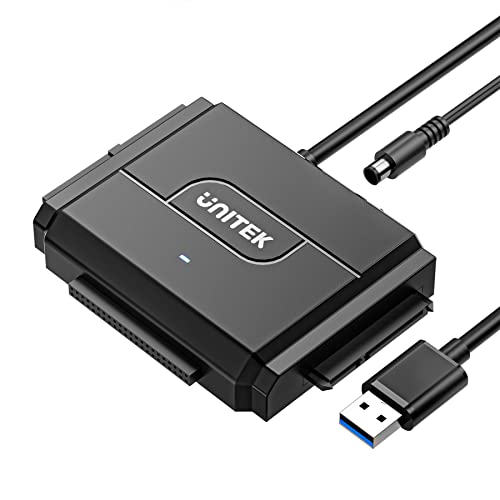
A Unitek SATA/IDE USB 3.0 adapter handles this. Connect the suspect drive, mount it read-only on the Pi or a laptop, and look at SMART data and the filesystem before you touch anything. Critically, this happens without powering the failed host, so you cannot make things worse by letting a dying drive get written to during another failed boot attempt.
The IDE side is not nostalgia. If your lab contains anything pre-2010 — an old NAS, a retired desktop doing backup duty, a retro build — IDE is how you read its disk, and a combined adapter means one item in the bag instead of two. We go deeper on adapter choices in Best SSDs and storage adapters for retro PC builds.
Imaging targets that live on the cart
Keep a known-good SSD on the cart permanently. A Samsung 870 EVO 250 GB is the right shape for this: small, cheap, reliable, and SATA so it fits anything with a 2.5-inch bay.
Its job is a single decisive test. Machine will not boot? Pull the original drive, put in the known-good one, boot a live image. If it boots, the problem is the drive or its contents. If it does not, the problem is the machine. That is a five-minute test that replaces an hour of guessing, and it is worth dedicating a drive to.
Do not use the cart drive for anything else, and do not keep data on it you would miss. It gets wiped constantly. Label it physically — "CART — WIPES" in marker — because the failure mode here is grabbing the wrong drive at 1 a.m. and destroying something.
For sizing and endurance guidance on drives that live in always-on machines rather than in a bag, see Best budget SSDs for homelab and Proxmox boot drives.
Complete the cart
The purchasable core:
| Item | SKU | Job |
|---|---|---|
| Keyboard + mouse | Logitech MK270 combo | Pre-OS input, one receiver, AA cells |
| Cart brain | Raspberry Pi 4 Model B | Serial console, PXE host, imaging |
| Drive reader | Unitek SATA/IDE USB 3.0 adapter | Offline triage of suspect disks |
| Known-good drive | Samsung 870 EVO 250 GB | The is-it-the-disk test |
And the parts you cannot order as a kit, which matter just as much:
- A small portable monitor, or an HDMI capture dongle so the Pi becomes the screen
- A USB-C PD power bank that can run the Pi for an hour
- Short HDMI, DisplayPort and DVI cables plus adapters — server boards have opinions about video output
- A USB-serial adapter and a couple of console cables
- Two USB sticks: one with a live rescue image, one blank
- Labels on everything. Every cable, every drive, every stick.
- A written one-page runbook: the BIOS key for each of your machines, their IPs, and where the backups are
That last item is the one that actually shortens outages, and it costs nothing.
The most-missed step: fix it while you're in there
You are already standing at the machine with a keyboard attached. Before you walk away, change the settings that mean you do not need the cart next time:
Enable IPMI or the board's out-of-band management if it has any, and put it on your network with a static address. Half the servers people carry crash carts to already have a management controller that was never configured.
Set power-on-after-power-loss to "last state" or "on." A surprising share of "the server is dead" incidents are "the server is off after a brief outage."
Fix the boot order permanently, rather than F12-ing past the problem again.
Enable the serial console in both firmware and the OS bootloader. This is the single highest-return change: it turns future firmware-level problems into something you can debug over a $10 cable instead of a trip.
Write down the BIOS entry key for that specific board on your runbook page. They are not consistent and guessing wastes a reboot cycle each time.
Common pitfalls
- Assuming a keyboard that works in Windows works at POST. Bluetooth is the trap; test with the machine you actually need to rescue, not at your desk.
- A cart keyboard with a rechargeable battery. It will be flat. Every time.
- Only packing HDMI. Older server boards are VGA or DVI, and some have no video at all.
- Writing to a suspect drive before imaging it. Mount read-only first, always.
- No labels. In an outage you will grab the wrong USB stick and overwrite the one thing you needed.
Verdict matrix
Bring the wireless combo if… you are working on modern consumer or prosumer boards with USB Legacy Support enabled, and you want one receiver covering keyboard and mouse. This is the common case and the MK270 is a fine default.
Bring a wired keyboard if… you work on server boards you do not control the firmware settings on, or you have ever hit a machine where USB Legacy Support was off. A wired board eliminates one variable when you are already debugging blind. Many people carry both — the wired one weighs nothing.
Skip the cart and buy an IP-KVM if… your machines are in another building, you are doing this more than once a month, or downtime has a dollar cost attached. A Pi-based KVM or a commercial unit gives you remote firmware access and pays for itself in trips avoided. The crash cart is the right answer when the machines are twenty feet away and the outages are rare.
Bottom line
The keyboard question has a clean answer: dongles work at POST, Bluetooth does not, and "USB Legacy Support" is the setting that overrides both. Build the bag around that fact — a receiver keyboard with AA cells, a Pi that does console and imaging duty, an adapter to read drives offline, and one known-good SSD to answer the only diagnostic question that matters quickly. Then, while you are standing there with it working, spend five minutes enabling the out-of-band management that means you will not need the bag next time.
Related guides
- PiKVM hardware guide 2026: boards, kits and storage
- First homelab setup: hardware, security and networking
- Best storage for a Raspberry Pi 4 home server
- Best SSDs and storage adapters for retro PC builds in 2026
- Best budget SSDs for homelab and Proxmox boot drives in 2026
Citations and sources
- USB-IF — Device Class Definition for Human Interface Devices (HID) 1.11 — the boot protocol vs report protocol distinction that determines whether firmware can read a keyboard before an OS loads. Accessed 2026-08-29.
- Raspberry Pi — official documentation, Raspberry Pi computers — USB boot and network boot support used for the cart's PXE and imaging roles. Accessed 2026-08-29.
- Logitech — MK270 wireless combo product page — single-receiver operation for keyboard and mouse, full-size layout and AA battery power. Accessed 2026-08-29.
Firmware behaviour varies by vendor and board generation. The characterisations above are an editorial synthesis of the specifications cited and common homelab operator experience; verify USB Legacy Support behaviour on your own hardware before relying on a wireless keyboard for a recovery you cannot afford to fail.
This piece is editorial synthesis based on publicly available information. No independent first-party benchmarking is reported.