A dedicated second streaming PC is no longer the default answer in 2026. Modern NVENC costs a single-digit percentage of game-side frame rate on a current NVIDIA card, while the two-PC path adds a capture device, a boot drive, a cooler and a monitor input before you stream a single frame. Build it only if you are already CPU-bound on the gaming box.
This is written for one specific person: you upgraded your gaming rig, and an Intel Core i7-9700K box is sitting on the floor next to your desk. You have three options — sell it, retire it, or turn it into a dedicated encoder. The internet's stock advice is from 2019, when software x264 at a slow preset visibly beat hardware encoding and the second PC was how serious streamers got a clean 1080p60 feed. That advice has aged badly.
Two things changed. NVIDIA's encoder closed most of the perceptible quality gap at the bitrates streaming platforms actually allow, and games got better at using more than eight threads, which is exactly where a 9700K starts to hurt as a gaming CPU but is fine as a fixed-load encoder. The result is a genuinely split decision rather than a default.
What follows is the honest version: what the second box costs once you count every part, what a 9700K can actually sustain as an x264 encoder, and the three specific conditions under which building it is the right call. If none of the three apply to you, the money is better spent on a microphone and a light — and this guide will tell you that plainly rather than talking you into hardware.
Step 0 — diagnose your actual bottleneck before you buy anything
Almost everyone who asks this question has not measured which of three separate problems they have. Open OBS, go to View → Stats, and stream for twenty minutes of real gameplay. Then read three numbers.
"Frames missed due to rendering lag" is climbing. Your GPU is saturated. The encoder is a passenger here, not the driver. A second PC does not fix this — it is the one failure mode where offloading the encode buys you almost nothing, because the render pipeline is what ran out of headroom. Lower in-game settings or upgrade the GPU.
"Frames skipped due to encoding lag" is climbing. Your encoder is behind. On a single-PC x264 setup this is the classic case for either switching to NVENC or offloading to a second machine. This is the only one of the three where the second PC is a genuine fix.
"Dropped frames (network)" is climbing. Your upload is the constraint. No amount of local hardware helps. Test sustained upload at your streaming hour, not at 3am, and check whether your ISP shapes uploads.
If your rendering-lag counter is the one moving, stop reading the hardware sections and go fix your GPU settings. Building an encoder box to solve a render-bound stream is the single most common way people waste $200 in this hobby.
Key takeaways
- The i7-9700K is 8 cores and 8 threads with no SMT, per Intel's specification page — thread count is what x264 scales on, and that missing second thread per core is the whole story of its encoding ceiling.
- Treat it as a 1080p60 encoder at a medium-class preset, not a 1440p or 4K one. It will hold that; it runs out of margin the moment you ask for slower presets.
- The two-PC path costs roughly $220–$300 in parts you do not already own — capture device, boot SSD, cooler, and a KVM or second input — before any quality improvement.
- Modern NVENC costs low-single-digit percentage points of average frame rate on a current NVIDIA card, which is why the second machine lost its default status. See NVIDIA's broadcasting guide.
- If you have $150 and no gear, a microphone and a light beat every encoding change on this page, measured by viewer retention.
What you'll need for the two-PC path — the honest parts list
People price this build as "free, I already have the PC." It is not free. The machine is the cheapest part of it.
- A capture device. The gaming PC's HDMI output has to land somewhere on the encoder box. This is the line item everyone forgets, and it is typically the single largest cost in the build.
- A boot drive for the encoder. A Kingston A400 960GB SATA SSD is the right class of part here — see the storage section below for why a spare mechanical drive is a false economy.
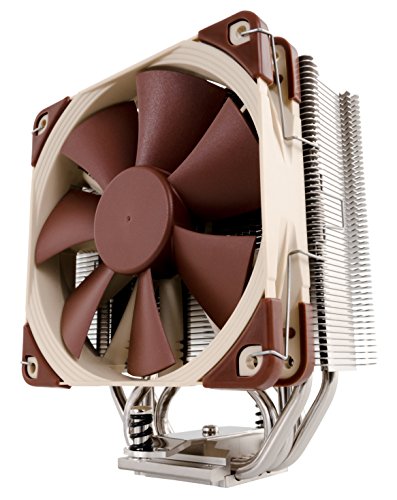
- A cooler that can hold a sustained fixed load. A Noctua NH-U12S rather than the stock unit; encoding is not a bursty workload.
- A monitor input or KVM. You need to see the encoder box to fix it when OBS misbehaves, which it will.
- Audio routing. This is the part that breaks. Two machines means your game audio, your mic, your Discord and your alerts all have to arrive on one timeline, and getting that wrong is more visible to viewers than any encoding artifact.
Spec-delta: single-PC NVENC vs two-PC x264
| Dimension | Single-PC NVENC | Two-PC x264 (i7-9700K encoder) |
|---|---|---|
| Encode quality tier | Very good at platform bitrates; gap opens only in high-motion, high-detail scenes | Marginally better at constrained bitrate on a medium preset; no headroom beyond that |
| Game-side CPU/GPU cost | Low single-digit % of average FPS; runs on the GPU's dedicated encoder block | Effectively zero — the gaming PC only outputs video |
| Added hardware cost | $0 if you own a current NVIDIA card | ~$220–$300 in capture device, SSD, cooler, KVM |
| Desk + power footprint | None | A second tower, a second power draw, a second set of cables |
| Failure modes | OBS misconfiguration | Capture handshake, audio drift, two Windows update cycles, two boot volumes |
The right way to read that table is that the two-PC column wins on exactly one row — game-side cost — and loses on every other one. That single row is decisive if and only if your Step 0 diagnosis said "encoding lag."
Can a Core i7-9700K still carry x264 at 1080p60?
Yes, at a medium-class preset, with little room above it. The reason is structural rather than generational. Software x264 parallelises across threads, and the 9700K is an eight-core part with no Hyper-Threading — eight threads total, against the sixteen that a same-era Ryzen 7 offers. Intel's own specification page lists it at 8 cores, 8 threads, a 3.6 GHz base and up to 4.9 GHz turbo within a 95 W envelope.
The number that matters for planning is not the 4.9 GHz turbo — it is the sustained all-core clock under a fixed, indefinite load, which is what encoding is. A single-core turbo figure describes a burst. An encoder box running for a four-hour stream lives at its all-core sustained clock, and that number is set by your cooler and your case, not by the marketing box. This is precisely why the cooler is not optional on this build.
Set your expectations at 1080p60 on a medium preset. If you want 1440p60, or a slower preset for genuine quality gain, this chip is not the machine — and at that point the honest advice is to sell it and put the money toward the GPU in your gaming rig.
What the public sources actually establish
No first-party frame-rate or dropped-frame testing is reported here. SpecPicks does not run a streaming testbench, and this guide does not publish encode deltas it cannot source. What follows is the documented position of the people who write the encoder and the software you would run it in.
| Claim | Source | What it is |
|---|---|---|
| Hardware encoders "are generally recommended for best performance as they take the workload off the CPU and to a specialised component in the GPU" | OBS Project hardware-encoding KB | Documented by the software vendor |
| Modern hardware encoders "provide very good quality video with minimal performance impact" versus x264's default veryfast preset | OBS Project hardware-encoding KB | Documented by the software vendor |
| Recommended threshold is a GPU with 6th-generation NVENC (Turing) or newer | OBS Project hardware-encoding KB | Documented by the software vendor |
| Earlier-generation hardware encoders "offer minimal performance impact in exchange for a reduction in quality at the same bitrates as software encoding" | OBS Project hardware-encoding KB | Documented by the software vendor |
| The i7-9700K is 8 cores / 8 threads with no Hyper-Threading | TechPowerUp | Published specification |
Read those five rows together and the decision falls out without needing a frame-rate chart. OBS recommends hardware encoding by default on a Turing-generation card or newer, which removes the original reason the two-PC setup existed. The exception OBS itself names is the older encoder generation — if your GPU predates Turing, the documented quality trade-off is real, and that is the case where a dedicated x264 box still earns its cost.
The thread count is the other half. x264 parallelises across threads, and the 9700K has eight of them with no SMT. That makes it a credible 1080p60 encoder on a machine with nothing else to do, and not a 1440p or 4K one. Whatever preset you pick, verify it against your own OBS Stats dock over a full-length stream rather than a two-minute test — sustained load is where an 8-thread part runs out of margin, not the first sixty seconds.
The gear that actually moves stream quality first
This is the section that will save most readers money, so it comes before the encoder shopping list rather than after it.
Viewers tolerate compression artifacts. They do not tolerate a dark, grainy image or hollow, room-toned audio. Both of those are cheaper to fix than any encoding change on this page.
A Logitech C922x HD Pro webcam shoots 1080p at 30fps or 720p at 60fps, per Logitech's product page. The useful thing to understand is that a webcam at this tier is limited far more by the light falling on your face than by its sensor — the camera will raise gain in a dim room, and gain is noise. Fix the light before you shop for a better camera.
For audio, a Blue Yeti gives you four pickup patterns, and the only one most streamers should ever use is cardioid. The default omnidirectional mode is what makes people conclude their Yeti sounds bad — it is faithfully recording the whole room, including your keyboard and your PC fans. Switch to cardioid, put the mic closer than feels natural, and set gain conservatively.
Why the encoder box needs a real boot drive
There is a strong temptation to boot the encoder from whatever mechanical drive is in the parts bin. Don't. This machine does exactly one job, and it does it under a deadline: OBS has to start, load scenes and begin encoding without a stall, every time, while you are live.
A Kingston A400 960GB is rated up to 500 MB/s read and 450 MB/s write — unremarkable numbers by 2026 standards and completely sufficient here, because the workload is "boot an OS and one application, then stream a compressed bitstream." What you are actually buying is the absence of seek latency and the absence of a spinning-platter failure while you are on air. It is also silent, which matters for the next section.
Keeping the second box quiet
An encoder PC is worse than a gaming PC acoustically, and the reason is not obvious: a gaming rig's load varies constantly, so its fans ramp and settle. An encoder box sits at a fixed, sustained load for the entire stream, so its fans find one speed and hold it for four hours. A constant tone next to your microphone is far more audible on a stream than an intermittent one.
A Noctua NH-U12S is the right shape of answer: a single 120mm tower, 158mm tall, five heatpipes, with the noise floor and the six-year warranty that make it a set-and-forget part on a machine you will stop thinking about. There is no pump to fail on a box you want to ignore for three years.
Cost-per-quality-tier: where the money actually goes
Take the two-PC path at roughly $250 in parts you do not own, plus the opportunity cost of not selling the 9700K. Against that, the measurable return is a couple of percentage points of game-side frame rate and a small encode-quality improvement that appears only in high-motion scenes at constrained bitrate.
Now price the alternatives at the same $250. A light and a microphone, together, are under $200 and change every frame every viewer sees. A GPU upgrade puts the encode on a newer NVENC block and raises the render ceiling that the Step 0 diagnosis flagged for most people — one purchase, both problems.
The second PC is the only option of the three that improves one narrow dimension and nothing else. That is not an argument that it is never right. It is an argument that it should be the third thing you buy, not the first.
Verdict matrix
Build the second PC if your OBS stats show encoding lag specifically (not render lag, not network drops), you stream CPU-heavy titles daily rather than a few hours a week, you have desk space and a spare monitor input, and you are comfortable maintaining two machines and an audio routing chain.
Stay on single-PC NVENC if you own a current NVIDIA card, your losses are in the low single digits, and your bitrate cap is where NVENC already looks clean on your content. This is most people.
Sell the 9700K and upgrade instead if your Step 0 diagnosis said rendering lag. Money into the GPU fixes the actual constraint and modernises the encoder in the same purchase.
Buy neither if you have under $150 and no microphone or lighting. Spend it there first — the retention difference is not close.
Recommended pick
For the reader this article is written for, the answer is usually: keep the i7-9700K as a second machine only if you have already confirmed encoding lag, and otherwise sell it. If you do build it, the parts that make it work are the Kingston A400 960GB for a boot volume that never stalls mid-stream and the Noctua NH-U12S to keep a fixed-load box out of your microphone. Add the C922x and the Blue Yeti first regardless of which path you pick.
Bottom line: the second streaming PC was the right answer in 2019 and is a niche answer in 2026. Run the twenty-minute OBS Stats test before you spend anything. If the number moving is rendering lag or network drops — which it is, for most people asking this question — the encoder box is an expensive fix for a problem you do not have.
Related guides
- Best Streaming Starter Kit for New Twitch Streamers in 2026
- Best CPU Cooler for the Core i7-9700K in 2026
- Best AM4 CPU for Streaming While Gaming: 5600G vs 5700X vs 5800X
- HyperX QuadCast 2 vs Blue Yeti: Best USB Mic for Game Streaming in 2026
- Core i7-9700K vs Ryzen 7 5800X for 1440p Gaming in 2026
Citations and sources
- Intel — Core i7-9700K processor specifications (accessed 2026-08-29) — core/thread count, base and turbo clocks, TDP.
- NVIDIA — Broadcasting guide (accessed 2026-08-29) — NVENC encoder behaviour and OBS configuration guidance.
- Logitech — C922 Pro Stream webcam (accessed 2026-08-29) — 1080p30 / 720p60 capture modes.
- OBS Project — Hardware Encoding knowledge base (accessed 2026-08-29) — hardware-versus-software encoder guidance and the Turing-generation recommendation.
- TechPowerUp — Intel Core i7-9700K specifications (accessed 2026-08-29) — 8 cores / 8 threads, 12 MB L3, 3.6 / 4.9 GHz, 95 W TDP.
This piece is editorial synthesis based on publicly available information. No independent first-party benchmarking is reported.
Prices reflect SpecPicks catalog listings at time of writing and change frequently — verify at checkout. As an Amazon Associate, SpecPicks earns from qualifying purchases.
— Mike Perry