As an Amazon Associate, SpecPicks earns from qualifying purchases. See the SpecPicks review methodology.
Best Parts for a Multi-User Local LLM Server in 2026
By Mike Perry · Published 2026-09-17 · Last verified 2026-09-17 · 14 min read
A single-user local LLM rig answers one question: how many tokens per second does one person see? A shared server has to answer a different one: how many people can hit the endpoint at once before everyone's replies slow to a crawl? The household where a partner uses it for writing, a teenager for homework help and you for code, or the four-person team that wants a private assistant, is a concurrency problem first. Single-stream speed comes second.
Concurrency changes the parts list in three ways. First, VRAM stops being just the model's home and also holds a separate KV cache for every active conversation, so memory planning scales with users. Second, the serving software matters as much as the silicon. A runtime with continuous batching reads the weights once per step for many requests together, which is why the vLLM paper reports 2-4× higher throughput than earlier serving systems at the same latency (Kwon et al., arXiv 2309.06180). Third, the host CPU does more work than on a single-user box, because tokenization, sampling and request handling happen on the CPU for every stream.
The winning pick is the same card that anchors most budget local-LLM builds: an RTX 3060 12GB. It holds an 8B-class model and a useful amount of per-user cache, and it scales well under batching. The rest of this guide covers what to put around it, and when a second card is worth buying.
This is editorial synthesis of public benchmarks and manufacturer specifications. No first-party testing is reported.
| Pick | Best For | Key Spec | Price Range | Verdict |
|---|---|---|---|---|
| MSI Gaming GeForce RTX 3060 12GB | Best overall GPU | 12 GB GDDR6, 360 GB/s | ~$295 used to ~$480 new | The concurrency workhorse for 8B models |
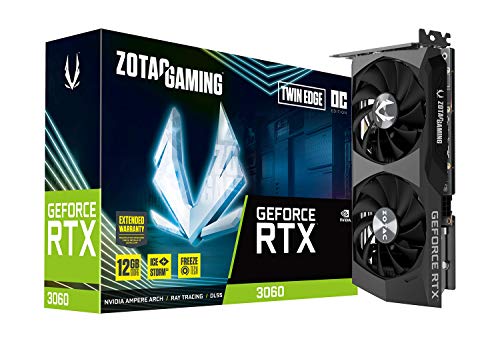
| ZOTAC Gaming GeForce RTX 3060 Twin Edge OC 12GB | Best value second card | 12 GB, compact twin-fan | ~$295 used to ~$500 new | Adds a second served model or a 24 GB split |
| AMD Ryzen 7 5800X | Best host node | 8C/16T, PCIe 4.0, 105 W | ~$255 | Keeps sampling and request handling off the bottleneck |
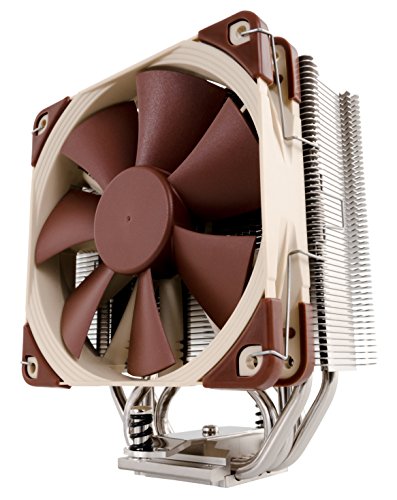
| Noctua NH-U12S | Best for always-on duty | 158 mm tower, 6-year warranty | ~$80 | No pump to fail in a box that never sleeps |
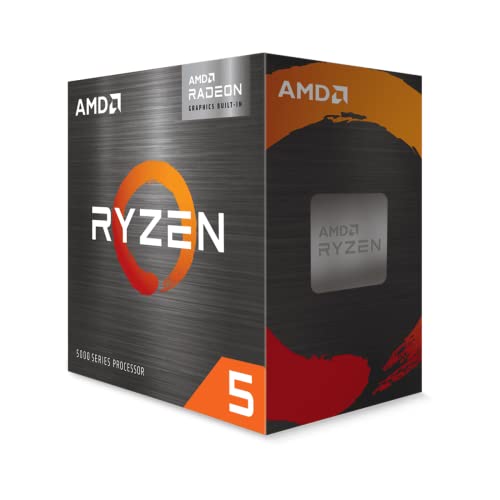
| AMD Ryzen 5 5600G | Budget host | 6C/12T, 65 W, onboard graphics | ~$200 | Low-power host for a two-to-three-person household |
Prices are SpecPicks catalog and used-market figures checked on 2026-09-17. Prices may vary.
🏆 Best Overall: MSI Gaming GeForce RTX 3060 12GB
Spec chips: 12 GB GDDR6 · 192-bit bus · 360 GB/s memory bandwidth · 170 W board power (RTX 30 series spec table)
Pros
- Batching scales well: 108 tok/s for one stream and 275.7 tok/s total at eight streams in the llama.cpp batched benchmark
- 12 GB holds an 8B Q4_K_M model (4.58 GiB, per XiongjieDai's size table) with about 6 GB left for per-user caches
- Fast enough for one user: 57.01 tok/s generation on Llama 3 8B Q4_K_M (RTX 3060 x1 vs x16 gist)
- A large used market keeps a second card affordable later
Cons
- 12 GB caps you at 8-14B-class models for multi-user serving
- 360 GB/s is well under half the RTX 3090's 936 GB/s, and batched totals reflect that
- The Torx twin-fan cooler is a dual-slot design, so spacing matters in a two-card build
Concurrency is where the RTX 3060's price and capacity pay off. In a public llama-batched-bench run with Phi-4-mini Q4_K_M and flash attention on, the card produced 108.00 tok/s for one stream, 173.05 tok/s total for two, 228.86 for four and 275.70 for eight. Each of eight users would still see about 34 tok/s, well above reading speed. Heavier batches kept scaling: 674.48 tok/s total at 16 streams and 906.13 at 32.
Phi-4-mini is a 3.8B model, so an 8B model will run slower in absolute terms. Single-stream 8B speed on the same card is about 57 tok/s per the x1 vs x16 gist, roughly half the Phi-4-mini figure. The scaling shape is what carries over: total throughput rises with concurrency while per-user speed declines gradually rather than collapsing. For a household, that means one card handles everyone's evening questions without anyone noticing a queue.
Buy the 12 GB version specifically. Some listings sell an 8 GB RTX 3060 under nearly the same name.
<strong>View Current Price on Amazon →</strong> Price may vary; checked 2026-09-17. · See Full Details →
💰 Best Value: ZOTAC Gaming GeForce RTX 3060 Twin Edge OC 12GB
Spec chips: 12 GB GDDR6 · 192-bit · 360 GB/s · 170 W · compact twin-fan cooler (RTX 30 series spec table)
Pros
- Same silicon and memory as the MSI pick, in a shorter card that fits more easily next to a first GPU
- Used RTX 3060 cards sold for about $295 as of September 12, 2026 (getpcparts)
- Enables two useful server layouts: one model per card, or one larger model split across 24 GB
Cons
- Splitting one model across two cards adds capacity, not single-stream speed
- A second 170 W card raises peak draw and heat in the case
- Chipset-wired second slots often run at x4, which slows model loading
The second card is where multi-user planning matters. llama.cpp's default multi-GPU mode is layer split. The project's multi-GPU documentation describes it as pipeline parallelism that "maximizes batch throughput" and tolerates slow interconnects. That makes a 24 GB split workable for serving a 27-32B-class model to several people, where the batch keeps both cards busy.
For most households, though, a better layout is one model per card: a fast 8B model on the first GPU for quick questions and a larger 14B model on the second for harder ones, each on its own port. Neither model pays split overhead, and a slow reasoning request can't delay the quick chat queue.
PCIe lanes are less important than people expect for this layout. The same x1 vs x16 comparison measured only a 3.5% generation difference (55.02 versus 57.01 tok/s) once the model was loaded.
<strong>View Current Price on Amazon →</strong> Price may vary; checked 2026-09-17. · See Full Details →
🎯 Best for the Host Node: AMD Ryzen 7 5800X
Spec chips: 8 cores / 16 threads · 105 W TDP · PCIe 4.0 · DDR4-3200 (AMD product page)
Pros
- Eight fast Zen 3 cores for per-stream sampling, tokenization, embeddings and retrieval
- PCIe 4.0 lanes for the primary GPU and a fast NVMe boot drive
- Mature AM4 platform with inexpensive DDR4 for page-caching the model library
Cons
- 105 W TDP needs a real tower cooler; there is no stock cooler in the box
- No integrated graphics, so the first boot and BIOS setup need a GPU
- A step up in idle draw versus the 65 W 5600G
On a single-user rig, the CPU barely matters once the model is on the GPU. Puget Systems found that single-core speed "does affect performance" in llama.cpp GPU inference, but "the impact is relatively small" (Puget Systems). A shared server is different, because every active stream needs CPU-side work on every token.
The llama.cpp maintainers' discussion of parallel serving gives a concrete example. One user running 32 parallel slots saw real llama-server throughput reach only about 56% of the llama-batched-bench figure. A maintainer explained that the benchmark "does not measure the time for the sampling - it's done on the CPU", which "makes a difference, especially for big parallelization cases" (llama.cpp discussion #18308).
Eight fast cores give sampling, request queuing and any retrieval step enough room that the GPU is not left waiting. The 5800X is the sensible AM4 choice for a server that several people use at once.
<strong>View Current Price on Amazon →</strong> Price may vary; checked 2026-09-17. · See Full Details →
⚡ Best Performance per Watt for Always-On Duty: Noctua NH-U12S
Spec chips: 158 mm tall · 120 mm NF-F12 PWM fan, 1,500 rpm max (1,200 rpm with Low-Noise Adaptor) · fan MTTF over 150,000 hours · 6-year warranty (Noctua NH-U12S info sheet)
Pros
- No pump, so the most common AIO failure point is absent from a box that never powers off
- PWM fan idles quietly when the endpoint is waiting, which is most of the day
- 45 mm slim fin stack clears tall DDR4 modules, per Noctua's sheet
- A 6-year warranty covers a server's realistic service life
Cons
- At 158 mm tall, it won't fit slim or small-form-factor cases
- A single tower runs warmer than a 240 mm AIO under sustained full-core load
- Priced at about $80, more than basic towers
A multi-user server has a lopsided duty cycle. It sits idle for hours, then gets bursts of work as people send requests. That pattern rewards a cooler that is silent at idle and reliable over years more than one that posts the best peak temperatures. Noctua's info sheet describes a 120 mm NF-F12 PWM fan that the motherboard slows when the CPU is idle, an MTTF above 150,000 hours, and a 6-year warranty (Noctua).
The case against an AIO in this role is simple: a pump is a moving part that can fail silently, and a server that throttles at 3 a.m. isn't noticed until someone complains. A tower cooler with a PWM fan degrades gradually and audibly instead.
The "performance per watt" label is about the system, not the cooler. A cool CPU at idle keeps fan and package draw low, and at the U.S. residential average of 18.34¢/kWh for June 2026 (EIA), every 10 W of continuous draw costs about $16 a year.
<strong>View Current Price on Amazon →</strong> Price may vary; checked 2026-09-17. · See Full Details →
🧪 Budget Pick: AMD Ryzen 5 5600G
Spec chips: 6 cores / 12 threads · 65 W TDP (45-65 W configurable) · Radeon Graphics, 7 cores · PCIe 3.0 · DDR4-3200 (AMD 5600G specifications)
Pros
- 65 W TDP, and configurable down to 45 W, for a lower-idle always-on host
- Integrated Radeon graphics handle the display, so the GPU's full 12 GB serves models
- Boots headless and installs without a discrete card
- Cheaper than the 5800X, with the money better spent on VRAM
Cons
- PCIe 3.0 only, which slows model loads from NVMe and halves the bandwidth of each slot
- Six cores run out sooner under heavy parallel sampling
- Not the host for more than a few simultaneous users
For a two-to-three-person household, the 5600G is the better value host. Its integrated graphics mean the RTX 3060 doesn't lose memory to a desktop, and its 65 W TDP (AMD) keeps an idling server's draw modest.
The PCIe 3.0 limit matters less than it looks. Once a model is loaded, the gap between an x1 and an x16 link on an RTX 3060 was 55.02 versus 57.01 tok/s (gist), so a Gen3 x16 slot has plenty of headroom. The real limit is core count. Because sampling runs on the CPU per stream (llama.cpp #18308), six cores reach their ceiling sooner as concurrency rises. If the server regularly handles more than three or four people at once, step up to the 5800X.
<strong>View Current Price on Amazon →</strong> Price may vary; checked 2026-09-17. · See Full Details →
What to look for in a multi-user LLM server
VRAM budget versus concurrent KV caches
Every active conversation keeps its own KV cache. For Llama 3.1 8B, the model config lists 32 layers, 8 KV heads and a head dimension of 128. At FP16 that is 32 × 8 × 128 × 2 × 2 bytes = 131,072 bytes per token, or about 0.54 GB per user at 4k context. On a 12 GB card holding a 4.58 GiB Q4_K_M model, about 6 GB of free VRAM covers roughly eleven users at 4k, or three users at 16k. Size the context per slot before adding people.
Continuous batching: aggregate tok/s beats single-stream tok/s
What matters is total throughput at your real concurrency, not the single-user figure on a spec sheet. vLLM's PagedAttention design reports 2-4× throughput gains at equal latency (arXiv 2309.06180). llama.cpp's llama-server --parallel N --cont-batching gives the same benefit on smaller cards.
Model-library storage on the Crucial BX500 1TB
Storage is used at load time and almost never afterwards. The Crucial BX500 1TB is rated up to 540 MB/s, so a 4.58 GiB 8B model loads in about nine seconds. NVMe only pays off if you swap models often enough that users notice load times. A terabyte holds dozens of quantized 7-14B models.
System RAM as the offload backstop
Keep at least as much system RAM as your largest model file. Linux page-caches models so reloads are nearly instant, and it gives you room to partially offload a larger model for occasional use without crashing the server.
Network and power siting for a 24/7 box
Put the server on wired Ethernet. Streaming tokens to several clients is light on bandwidth but sensitive to Wi-Fi latency spikes. Budget power too: one RTX 3060 at 170 W plus a 5800X at 105 W is 275 W of rated component power at full load, and idle draw is what the electricity bill mostly reflects.
Benchmark table: aggregate throughput by concurrency level
Measured llama-batched-bench results (128-token shared prompt, 128 generated tokens, flash attention on) from llama.cpp discussion #18030. The model is Phi-4-mini-instruct Q4_K_M, a 3.8B model. Public multi-stream data for an 8B model on an RTX 3060 isn't available, so treat these as scaling-shape figures. Expect roughly half the absolute throughput with an 8B model, based on the single-stream gap.
| Concurrent requests | RTX 3060 12GB aggregate tok/s | RTX 3060 per-user tok/s | RTX 3090 24GB aggregate tok/s | RTX 3090 per-user tok/s | Source |
|---|---|---|---|---|---|
| 1 | 108.00 | 108.0 | 234.89 | 234.9 | llama.cpp #18030 |
| 2 | 173.05 | 86.5 | 355.02 | 177.5 | llama.cpp #18030 |
| 4 | 228.86 | 57.2 | 522.21 | 130.6 | llama.cpp #18030 |
| 8 | 275.70 | 34.5 | 675.19 | 84.4 | llama.cpp #18030 |
For an 8B model at larger scale, Backprop's vLLM test on a single RTX 3090 served Llama 3.1 8B at FP16 to 100 concurrent requests at 12.88 tok/s each, and at about 11 tok/s each with 50 concurrent long-context requests, as reported by The Register. Real servers land below these benchmark totals because of CPU-side sampling. One 32-slot llama-server setup reached about 56% of its batched-bench figure (llama.cpp #18308).
FAQ
How many people can one 12GB card actually serve? With continuous batching and a 7-8B model at Q4, a single 12 GB card comfortably handles a household's worth of light chat users. In the llama.cpp batched benchmark above, the RTX 3060 still delivered about 34 tok/s per stream at eight concurrent streams on a small model. Latency rises gradually rather than failing outright. Long context and larger models shrink the number quickly, so size the model down before adding people.
Do two GPUs double the number of users you can serve? Not automatically. Splitting one model across two cards buys VRAM, not parallelism, and llama.cpp's layer split processes tokens through the cards in sequence. Running one model per card, a fast small model on one and a larger model on the other, usually serves a mixed household better. Decide which layout you want first, because the runtime configuration differs between the two.
How much does the host CPU matter on a GPU server? More than on a single-user rig. Sampling, tokenization, request queuing and retrieval all run on the CPU for every stream. In one llama.cpp discussion, a 32-slot server reached only about 56% of its benchmark throughput because of CPU-side sampling. An eight-core chip like the Ryzen 7 5800X keeps the GPU fed. A six-core 5600G is fine for two or three people.
What storage does a shared model library need? Capacity matters more than speed, because the drive is only read when a model loads. A 1 TB SATA SSD rated at 540 MB/s loads a 4.58 GiB 8B model in about nine seconds and holds dozens of quantized models. NVMe only pays off with frequent model swapping, where users notice load time. If you serve two or three fixed models, SATA is the better value.
What does an always-on server cost to run? Idle draw dominates, because a shared endpoint spends most of its day waiting. At the U.S. residential average of 18.34¢ per kWh for June 2026, every 10 W of continuous draw costs about $16 a year. Measure your own idle draw with a plug-in meter, undervolt the GPU where you can, and choose a pump-free cooler to cut both power and failure risk.
Related guides
- Best Parts for an Always-On Local LLM Server in 2026
- Best Parts for a Dual RTX 3060 24GB Local-LLM Build in 2026
- vLLM vs llama.cpp on an RTX 3060 12GB for Local Chat
- Is vLLM Worth It If You're Not Serving Other Users?
— Mike Perry · Last verified 2026-09-17
Citations and sources
- llama.cpp — Performance of llama.cpp in batch processing mode, discussion #18030 (accessed 2026-09-17)
- llama.cpp — Optimal parameters for parallel inference using llama-server, discussion #18308 (accessed 2026-09-17)
- Kwon et al. — Efficient Memory Management for LLM Serving with PagedAttention (arXiv 2309.06180) (accessed 2026-09-17)
- The Register — Old RTX 3090 enough to serve thousands of LLM users (Backprop vLLM test) (accessed 2026-09-17)
- llama.cpp — Multi-GPU documentation (accessed 2026-09-17)
- RTX 3060 PCIe x1 vs x16 results gist (accessed 2026-09-17)
- XiongjieDai — GPU Benchmarks on LLM Inference (accessed 2026-09-17)
- Llama 3.1 8B Instruct config.json (accessed 2026-09-17)
- Puget Systems — Effects of CPU speed on GPU inference in llama.cpp (accessed 2026-09-17)
- Wikipedia — GeForce RTX 30 series specifications (accessed 2026-09-17)
- AMD — Ryzen 7 5800X product page (accessed 2026-09-17)
- AMD — Ryzen 5 5600G specifications (accessed 2026-09-17)
- Noctua — NH-U12S information sheet (PDF) (accessed 2026-09-17)
- getpcparts — Used RTX 3060 market prices (accessed 2026-09-17)
- U.S. EIA — Electric Power Monthly, average price by sector (accessed 2026-09-17)
This piece is editorial synthesis based on publicly available information. No independent first-party benchmarking is reported.