As an Amazon Associate, SpecPicks earns from qualifying purchases. See the SpecPicks review methodology.
Comparison table
| Pick | Best For | Key Spec | Price Range | Verdict |
|---|---|---|---|---|
| MSI Gaming GeForce RTX 3060 12GB | Best Overall | 12 GB GDDR6, 170 W | ~$480 catalog price (varies) | 8B models at 32K, fully on GPU |
| ZOTAC Gaming GeForce RTX 3060 Twin Edge OC 12GB | Best Value (second card) | 12 GB GDDR6, dual-slot | ~$500 catalog price (varies) | Pairs to 24 GB for 64K-100K contexts |
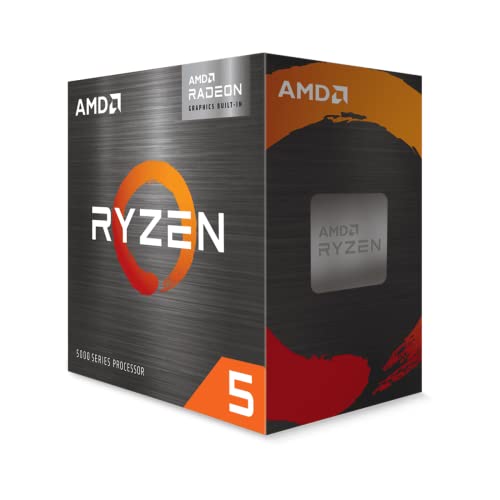
| AMD Ryzen 5 5600G | Always-on boxes | 6C/12T, 65 W, integrated graphics | ~$200 catalog price (varies) | Keeps the GPU's full VRAM free for cache |
| AMD Ryzen 7 5800X | Offload-heavy builds | 8C/16T, 105 W, PCIe 4.0 | ~$255 catalog price (varies) | The host to buy when context forces offload |
| Crucial BX500 1TB SATA SSD | Model library | 540 MB/s, 360 TBW | ~$163 catalog price (varies) | Cheap capacity; load time is a one-off cost |
Prices are SpecPicks catalog prices at the time of writing and may vary. Check the linked product pages for current pricing.
Step 0: budget your KV cache before you budget anything else
The formula is short: bytes per token = 2 × layers × KV heads × head dimension × bytes per element. The factor of 2 covers keys and values, and FP16 uses 2 bytes per element. The layer and head counts below come from each model's published config, for Qwen3-8B, Qwen3-14B and Llama 3.1 8B. The totals are arithmetic.
| Model | Layers / KV heads / head dim | KV per token (FP16) | 8K FP16 | 32K FP16 | 32K q8_0 | 64K FP16 | 64K q8_0 | 64K q4_0 |
|---|---|---|---|---|---|---|---|---|
| Llama 3.1 8B | 32 / 8 / 128 | 131,072 B | 1.00 GiB | 4.00 GiB | ~2.1 GiB | 8.00 GiB | ~4.3 GiB | ~2.3 GiB |
| Qwen3-8B | 36 / 8 / 128 | 147,456 B | 1.12 GiB | 4.50 GiB | ~2.4 GiB | 9.00 GiB* | ~4.8 GiB* | ~2.5 GiB* |
| Qwen3-14B | 40 / 8 / 128 | 163,840 B | 1.25 GiB | 5.00 GiB | ~2.7 GiB | 10.00 GiB* | ~5.3 GiB* | ~2.8 GiB* |
\*Qwen3 runs 32,768 tokens natively and 131,072 with YaRN, per the Qwen3-8B model card, so its 64K rows assume YaRN is enabled. Llama 3.1 8B's config sets max_position_embeddings to 131,072.
The quantized-cache figures use llama.cpp's block sizes: 8.5 bits per element for q8_0 and 4.5 for q4_0. Now add the weights. Q4_K_M files are 4.58 GiB for Llama 3.1 8B, 4.68 GiB for Qwen3-8B and 8.38 GiB for Qwen3-14B.
| Model + context | Weights + FP16 cache | Fits 12 GB? | Weights + q8_0 cache | Fits 12 GB? | Fits 24 GB (FP16)? |
|---|---|---|---|---|---|
| Llama 3.1 8B @ 32K | ~8.6 GiB | Yes | ~6.7 GiB | Yes | Yes |
| Qwen3-8B @ 32K | ~9.2 GiB | Yes | ~7.1 GiB | Yes | Yes |
| Qwen3-14B @ 32K | ~13.4 GiB | No | ~11.0 GiB | Tight | Yes |
| Llama 3.1 8B @ 64K | ~12.6 GiB | No | ~8.8 GiB | Yes | Yes |
| Qwen3-14B @ 64K | ~18.4 GiB | No | ~13.7 GiB | No | Yes |
Compute buffers and the CUDA context add roughly another gigabyte, so treat "Tight" as "probably not without trimming." Measured behavior on the RTX 3060 page at Hardware Corner matches this table. Its Qwen3 14B Q4_K results stop at 16K context, and its Qwen3 8B Q4_K results reach 32K.
In llama.cpp, the cache types are set with --cache-type-k and --cache-type-v (default f16), per the llama-server README. A quantized V cache requires flash attention. With the default -fa auto, llama.cpp enables it automatically, and passing -fa off alongside a quantized V cache is an error.
🏆 Best Overall: MSI Gaming GeForce RTX 3060 12GB
Spec chips: 12 GB GDDR6 · 192-bit memory interface · 170 W graphics card power · 550 W required system power · PCIe 4.0
The MSI Gaming GeForce RTX 3060 12GB is the most affordable current-production way to hold an 8B model and a 32K FP16 cache entirely in VRAM. NVIDIA's RTX 3060 family page lists 12 GB of GDDR6 at 170 W, with 550 W of required system power. Hardware Corner lists 360 GB/s of memory bandwidth, about seven times dual-channel DDR4-3200's 51.2 GB/s. That gap is why offloading costs so much.
Hardware Corner's long-context measurements are the numbers that matter for this build. Qwen3 8B Q4_K generates 55.2 tok/s at 4K, 42.0 at 16K and 31.9 at 32K. Prompt processing falls from 1,696.8 to 764.7 tok/s over the same range. Qwen3 14B Q4_K generates 31.2 tok/s at 4K and 22.7 at 16K, with no 32K result, which matches the Step 0 math. At short context, the llama.cpp CUDA scoreboard records the RTX 3060 12GB at 2,407.67 tok/s prompt processing and 76.92 tok/s generation on Llama 2 7B Q4_0 with flash attention.
Pros
- Holds an 8B Q4_K_M model plus a 32K FP16 cache with ~3 GiB to spare
- 31.9 tok/s generation at 32K context on Qwen3 8B, per Hardware Corner
- 170 W card power fits a 550 W system budget
- Twin-fan cooler suits the long sustained loads of long-context prefill
Cons
- A 14B model at 32K needs q8_0 cache and still runs tight
- 64K on anything larger than 8B needs a second card
- Prefill slows by more than half from 4K to 32K, so very long prompts take time
See Full Details → · Check current price on Amazon from the product page. Price may vary.
💰 Best Value: ZOTAC Gaming GeForce RTX 3060 Twin Edge OC 12GB
Spec chips: 12 GB GDDR6 · same RTX 3060 GPU · compact dual-fan design · 170 W reference card power
The ZOTAC Gaming GeForce RTX 3060 Twin Edge OC 12GB is on this list as the second card. Pairing two 3060s gives a 24 GB budget, which is the cheapest way to hold a 14B model at 64K with FP16 cache (~18.4 GiB, from the Step 0 table), or an 8B model at 100K+. The Twin Edge's compact dual-fan cooler makes two-card spacing easier on consumer boards than a thicker triple-fan card would.
The strongest public evidence for the pairing is a September 2026 field report from a user running a 27B model on two RTX 3060s. In llama.cpp, prompt processing started near 620 tok/s and held about 450 tok/s at ~100K context. Generation started at 40-42 tok/s and held about 35 tok/s at ~100K. The same two cards logged 49.2-63.8 tok/s generation under vLLM tensor parallelism with FP8 KV cache. The author capped both cards at 135 W from the 170 W default. These are self-reported community numbers, not a controlled benchmark.
Pros
- Doubles the cache budget to 24 GB for 64K-100K contexts
- Community report: ~35 tok/s at ~100K context on a 27B model across two 3060s
- Compact cooler helps two-card airflow
- Same CUDA stack as the first card; llama.cpp splits layers automatically
Cons
- Two cards roughly double GPU power, to 340 W at default limits
- Layer splitting adds capacity, not speed, on models that already fit one card
- Consumer AM4 boards often split lanes to x8/x8 or worse with two cards
See Full Details → · Check current price on Amazon from the product page. Price may vary.
🎯 Best for Always-On Boxes: AMD Ryzen 5 5600G
Spec chips: 6 cores / 12 threads · 65 W default TDP · Radeon graphics (7 cores) · PCIe 3.0 · dual-channel DDR4-3200
The AMD Ryzen 5 5600G earns its slot through its integrated graphics. On a long-context build, every megabyte of VRAM is cache. A GPU that also drives a desktop loses some of it to the display; InsiderLLM measured ~0.5-1 GB lost on an RTX 3060. Plug the monitor into the 5600G's Radeon graphics and the 3060 keeps all 12 GB for the model.
AMD's 5600G specification page lists 6 cores, 12 threads, a 65 W default TDP, 2 memory channels at up to 3200 MT/s, 7 graphics cores and PCIe 3.0. For a model held entirely in VRAM, the host CPU mostly tokenizes input and schedules work, and six Zen 3 cores are enough for that. The 65 W TDP matters for a box that stays on around the clock, idling between requests.
Pros
- Integrated graphics frees the GPU's full 12 GB for weights and cache
- 65 W TDP suits a 24/7 inference server
- Six cores are enough for fully GPU-resident inference
- Low platform cost on AM4
Cons
- PCIe 3.0 halves per-lane bandwidth versus the 5800X; it matters most when loading models and least during layer-split inference
- Weaker than the 5800X once layers or experts spill into system RAM
- Dual-channel DDR4 caps memory bandwidth at 51.2 GB/s
See Full Details → · Check current price on Amazon from the product page. Price may vary.
⚡ Best Performance: AMD Ryzen 7 5800X
Spec chips: 8 cores / 16 threads · 105 W default TDP · PCIe 4.0 · DDR4-3200 · discrete GPU required
The AMD Ryzen 7 5800X is the host to buy when long context forces offload. Sometimes the model plus cache won't fit in VRAM and you'd rather run slowly than shorten the context. Then the CPU computes the offloaded layers, and cores plus memory bandwidth set throughput. AMD's 5800X product page lists 8 cores, 16 threads, a 105 W default TDP, PCIe 4.0 and memory up to 3200 MT/s. It notes "Discrete Graphics Card Required", which gives up the 5600G's display advantage.
Set expectations with the published numbers. Dual-channel DDR4-3200 moves 51.2 GB/s against the RTX 3060's 360 GB/s (Hardware Corner). InsiderLLM measured Qwen3-14B Q4_K_M at 35.9 tok/s fully on an RTX 3060, 5.7 tok/s with half the layers in RAM and 3.05 tok/s with every layer in RAM. The extra cores narrow that gap without closing it. The same source shows a sparse MoE model offloads far better: 38.9 tok/s with expert offload.
Pros
- Eight cores for CPU-side layer or expert computation
- PCIe 4.0 for faster model loads and a better second-card link
- Headroom to run the agent harness, embeddings and a vector store alongside inference
Cons
- No integrated graphics, so a GPU gives up VRAM to the display unless the box runs headless
- 105 W TDP is higher for always-on use
- Offloaded dense layers still run near 5.7 tok/s at best, per the measurement above
See Full Details → · Check current price on Amazon from the product page. Price may vary.
🧪 Budget Pick: Crucial BX500 1TB SATA SSD
Spec chips: 1 TB · 540 MB/s sequential read · 360 TBW endurance · 3-year warranty · 2.5-inch SATA
The Crucial BX500 1TB SATA SSD is the model-library drive. Long-context work tends to collect models: an 8B for fast iteration, a 14B for quality, a YaRN-extended variant, and several quants of each. Per Tom's Hardware's BX500 review, the 1TB model reads at 540 MB/s and is rated for 360 TBW, with a 3-year warranty. A 1 TB drive (about 931 GiB formatted) holds roughly 200 8B Q4_K_M files at ~4.6 GiB each, or a practical working set of mixed quants.
SATA's main cost is load time, and a public measurement puts a number on it. bestin-it loaded a 19.92 GiB model in 57.97 seconds from a SATA SSD and 25.74 seconds from NVMe. Time to first token after loading was identical: 0.178 s on SATA and 0.184 s on NVMe. That test used an Intel D3-S4510, not a BX500, but both are SATA-bound near 540-560 MB/s. For a long-context server that loads once and runs for hours, the extra half-minute is paid once.
Pros
- Cheap capacity for a multi-model library
- 360 TBW is plenty for a read-mostly workload
- Inference speed after load is unaffected, per the NVMe vs SATA measurement
- Keeps large GGUFs off the boot drive
Cons
- Model loads take roughly 2.25× longer than on NVMe
- DRAM-less SATA design; not suited to heavy sustained writes
- Uses a SATA port and power lead that some compact builds lack
See Full Details → · Check current price on Amazon from the product page. Price may vary.
What to look for in a long-context inference workstation
VRAM vs KV cache math
Compute the Step 0 numbers for your target model and context before shopping. A card that fits the weights is not necessarily a card that fits the context. For 8B-class models, the cache at 32K is roughly the size of the Q4_K_M weights. For 14B-class models at 64K, the cache is larger than the weights.
Cache quantization
The q8_0 cache halves the cache, and llama.cpp enables it with two flags (--cache-type-k q8_0 --cache-type-v q8_0). It is the cheapest way to add context capacity. The q4_0 cache frees more memory, but it is more likely to affect long-range recall. Validate it on your own retrieval or agent tasks before relying on it.
Memory bandwidth and dual channel
Offloaded layers run at system-memory speed. Dual-channel DDR4-3200 provides 51.2 GB/s, about a seventh of the RTX 3060's 360 GB/s. Always populate both channels. Single-channel memory halves the already-low bandwidth.
PCIe lanes for a second card
Layer-split inference sends only small activations between cards, so x8/x8 or even x4 links cost little. Tensor parallelism, as in vLLM, exchanges data far more often and benefits from wider links. The 5600G runs PCIe 3.0 and the 5800X runs PCIe 4.0, per AMD's specification pages.
PSU headroom and transient spikes
NVIDIA lists 550 W of required system power for a single RTX 3060. For two cards, add at least the second card's 170 W and leave margin for transient spikes. A quality 750 W unit is a sensible floor for a two-3060 build with a 105 W CPU.
Drive capacity for model libraries
Weights accumulate quickly. Plan for 1 TB dedicated to models if you keep more than a handful of quants, and put the library on a different drive from the OS.
When this build is right, and when it isn't
The single MSI RTX 3060 12GB is right for 8B-class models at up to 32K context with FP16 cache, or ~64K with q8_0 cache. It isn't right for 14B+ models at 32K+ context. The Step 0 table shows those don't fit without heavy cache quantization.
The second card (ZOTAC Twin Edge) is right when you need 14B at 64K, or any model at ~100K, entirely in VRAM. It isn't right if your contexts stay under 16K. Then it adds power draw and cost with little benefit.
The Ryzen 5 5600G is right for an always-on, fully GPU-resident server where every megabyte of VRAM counts. It isn't right if you plan to offload regularly. The 5800X's extra cores and PCIe 4.0 help there.
The Ryzen 7 5800X is right when context requirements outgrow VRAM and you accept offload speeds. It isn't right for a headless-optional always-on box, where the 5600G's integrated graphics and 65 W TDP make more sense.
The Crucial BX500 is right for a read-mostly model library. It isn't right if you swap models many times an hour, where NVMe's ~2.25× faster loads add up.
FAQ
How much VRAM does the KV cache actually consume at 32K context? It depends on the model's layer count and KV-head layout, not its parameter count alone. From the published configs, Llama 3.1 8B needs 4.0 GiB of FP16 cache at 32K, Qwen3-8B needs 4.5 GiB and Qwen3-14B needs 5.0 GiB. Add the Q4_K_M weights and a roughly 1 GB runtime buffer. On a 12 GB card, the 8B models fit at 32K while Qwen3-14B does not without cache quantization.
Does more system RAM help if I am running out of VRAM? It lets the run complete instead of failing, but it doesn't make it fast. InsiderLLM measured Qwen3-14B Q4_K_M at 35.9 tok/s fully on an RTX 3060 and 5.7 tok/s with half its layers in system RAM. Dual-channel DDR4-3200's 51.2 GB/s is the ceiling. Buy RAM for a deliberate offload build; buy VRAM if you want full-GPU residency.
Is one 12 GB card or two better for long context? One card holds 8B models at 32K with FP16 cache, or at 64K with q8_0 cache. Two cards give a 24 GB budget: a 14B model at 64K with FP16 cache, or roughly 100K context on mid-size models, where a community report shows ~35 tok/s generation on a 27B model. Start with one card and enable cache quantization. Add the second when you measure yourself hitting the ceiling.
Do I need an NVMe drive for model storage, or is SATA fine? SATA is fine for inference. A published comparison loaded a 19.92 GiB model in 57.97 s from SATA and 25.74 s from NVMe. Time to first token after loading was the same on both, about 0.18 s. The difference is a one-time load cost. Capacity matters more than interface speed for a model library, so a 1 TB SATA drive is the budget pick.
What PSU should I size for this build? NVIDIA lists 550 W of required system power for one RTX 3060, whose card power is 170 W. A two-card build adds another 170 W of GPU load, so a quality 750 W unit with transient headroom is a sensible floor alongside a 105 W Ryzen 7 5800X. Capping both cards at 135 W, as one dual-3060 builder did, lowers sustained draw further.
Sources
- NVIDIA GeForce RTX 3060 family page, accessed 2026-09-17
- Hardware Corner RTX 3060 12GB LLM benchmarks, accessed 2026-09-17
- llama.cpp CUDA performance discussion #15013, accessed 2026-09-17
- Tom's Hardware Crucial BX500 review, accessed 2026-09-17
- AMD Ryzen 7 5800X product page, accessed 2026-09-17
Related guides
- Best parts for a dual RTX 3060 24GB local LLM build
- Best always-on local LLM server parts
- Best parts for a CPU-offload local LLM build
- RTX 3060 benchmarks
— Mike Perry · Last verified 2026-09-17
Citations and sources
- NVIDIA GeForce RTX 3060 family page: 12 GB GDDR6, 192-bit interface, 170 W card power, 550 W required system power.
- Hardware Corner RTX 3060 12GB LLM benchmarks: Qwen3 8B and 14B prompt processing and generation at 4K-32K context; 360 GB/s bandwidth.
- llama.cpp discussion #15013: RTX 3060 12GB Llama 2 7B Q4_0 scoreboard row (with flash attention).
- llama-server README:
--cache-type-k/--cache-type-voptions and allowed cache types. - Qwen3-8B config.json, Qwen3-14B config.json and Llama 3.1 8B config.json: layer and KV-head counts for the cache math.
- Qwen3-8B model card: native 32,768-token context, 131,072 with YaRN.
- bartowski Llama 3.1 8B GGUF, Qwen3-8B GGUF and Qwen3-14B GGUF: Q4_K_M file sizes.
- Field report: 2× RTX 3060 24 GB: dual-card long-context throughput and power limits.
- InsiderLLM: Qwen3.6-35B MoE locally: offload measurements on an RTX 3060 and display VRAM overhead.
- AMD Ryzen 5 5600G specifications: 6C/12T, 65 W, PCIe 3.0, DDR4-3200.
- AMD Ryzen 7 5800X product page: 8C/16T, 105 W, PCIe 4.0.
- Tom's Hardware Crucial BX500 review: 540 MB/s read, 360 TBW on the 1TB model.
- bestin-it: NVMe vs SATA LLM model loading: 19.92 GiB load in 57.97 s (SATA) vs 25.74 s (NVMe); identical time to first token.
This piece is editorial synthesis based on publicly available information. No independent first-party benchmarking is reported.