As an Amazon Associate, SpecPicks earns from qualifying purchases. See our review methodology.
Who runs documents locally, and why
The people who run document AI on their own hardware usually aren't hobbyists chasing a benchmark. They're the office manager with twelve years of scanned invoices, the paralegal whose discovery set can't leave the firm's network, the clinic that has to digitize intake forms without uploading patient records, and the small accounting shop that pays a per-page cloud OCR bill every month and has noticed that bill growing. For these readers, privacy is often a compliance requirement, and per-page pricing punishes the exact moment they finally decide to digitize the archive.
The hardware question is confusing because "document AI" is really two workloads, and they want different silicon.
The first workload is fast extraction: turning a PDF or scan into text, reading order, tables and headings. Classical OCR engines like Tesseract and layout pipelines like Docling do this well, and much of the work is CPU-bound. IBM's Docling technical report measured 1.57 pages per second on a 16-core Xeon E5-2690 system and 2.45 pages per second on an Apple M3 Max, both CPU-only.
The second workload is understanding: a vision-language model (VLM) that looks at a page image and answers questions about it. It can read handwriting, a stamped approval, or a table that defeats a parser, and it can pull out "the invoice total and due date" as JSON. That workload lives and dies on GPU memory.
A good local document rig handles both. The CPU churns through the easy 80% of pages, and the GPU is reserved for the pages that need a model to think. The picks below cover every node in that pipeline, from the GPU box down to a small always-on capture board. The winner is a 12 GB RTX 3060, because 12 GB is where the current generation of open document models starts to fit.
Comparison table
| Pick | Best For | Key Spec | Price Range | Verdict |
|---|---|---|---|---|
| ZOTAC RTX 3060 Twin Edge OC 12GB | Vision-language document models | 12 GB GDDR6, 360 GB/s | ~$500 at last check | The 12 GB floor that open document VLMs are built for |
| MSI RTX 3060 Ventus 2X 12G | Same workload, alternate board | 12 GB GDDR6, 192-bit bus | ~$500 (list $629) | Same GPU; buy whichever is cheaper that day |
| AMD Ryzen 7 5800X | Batch classical OCR and layout parsing | 8 cores / 16 threads, 105 W | ~$255 | Keeps the CPU side of the pipeline from starving the GPU |
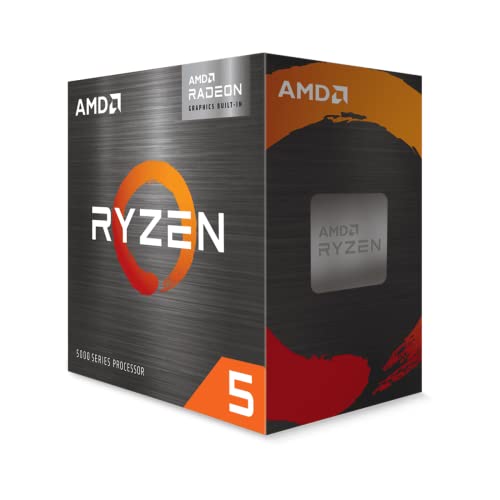
| AMD Ryzen 5 5600G | Always-on ingest node | 6 cores / 12 threads, 65 W, iGPU | ~$200 | Low-power scan-folder watcher, no discrete GPU needed |
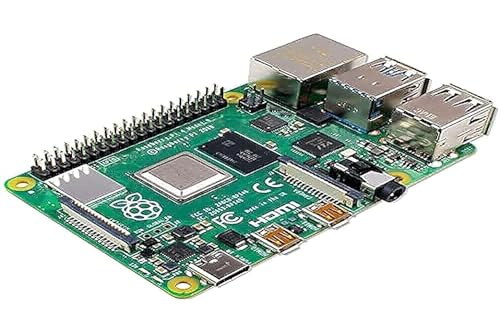
| Raspberry Pi 4 Model B | Edge capture and queueing | Quad Cortex-A72 @ 1.8 GHz, 5 V / 3 A | ~$123 | Captures and forwards pages; it can't run a VLM |
Prices come from the SpecPicks catalog at the time of writing and change often. The price on the retailer page when you visit is the one that counts.
🏆 Best Overall: ZOTAC Gaming GeForce RTX 3060 Twin Edge OC 12GB
12 GB GDDR6 · 192-bit bus · 360 GB/s · 3,584 CUDA cores · 170 W board power · dual fan with Freeze Fan Stop
Pros
- 12 GB of VRAM clears the minimum published for olmOCR, the most widely deployed open PDF-to-text VLM pipeline
- CUDA support means vLLM, Transformers, llama.cpp and PaddleOCR all run without workarounds
- Fans stop at idle, which matters on a box that waits for scans most of the day
- 170 W board power runs on a mainstream 550 W PSU
Cons
- 12 GB is a floor, not headroom: full-resolution scans of dense pages can push a 7B-class VLM past it
- Current street pricing sits well above the card's $329 launch MSRP, so check used listings before paying new-card prices
This is the card to buy when the GPU is doing the "understanding" half of the pipeline. According to TechPowerUp's RTX 3060 12 GB spec sheet, the GPU pairs 12 GB of GDDR6 with a 192-bit bus for 360 GB/s of bandwidth. That's modest next to newer cards, but the capacity is what matters most here.
Look at where the open document models land. The olmOCR toolkit from AllenAI says it needs a recent NVIDIA GPU "with at least 12 GB of GPU RAM" and quotes a cost of "less than $200 USD per million pages converted." Its authors test on an RTX 4090, L40S, A100 and H100, so the 3060 sits right at the floor. You'll get the pipeline running, but it won't be quick.
Smaller specialist models give you more room. PaddleOCR-VL is a 0.9B-parameter document parser that pairs a NaViT-style visual encoder with ERNIE-4.5-0.3B. Its paper reports an OmniDocBench v1.5 overall score of 92.56, ahead of MinerU2.5-1.2B at 90.67, and 1.22 pages per second on an A100 through vLLM. At 0.9B parameters the BF16 weights are under 2 GB, so a 12 GB card has room for batching and a second model. The paper's 43.7 GB average VRAM figure reflects how vLLM reserves memory on an 80 GB card, not what the model needs.
The general-purpose VLMs are the tightest fit. Per its Hugging Face model card, Qwen2.5-VL-7B scores 95.7% on DocVQA and 864 on OCRBench. At roughly 8 billion parameters it needs about 16 GB in BF16, so on this card you run it at 8-bit (about 8 GB) or 4-bit (about 5 GB).
💰 Best Value: MSI GeForce RTX 3060 Ventus 2X 12G
12 GB GDDR6 · 192-bit bus · 360 GB/s · dual fan · single 8-pin power
Pros
- Same GA106 GPU and same 12 GB memory configuration as the ZOTAC, so it has the same model compatibility
- The SpecPicks catalog shows it below its $629 list price
- A plain dual-fan design with no RGB or proprietary software needed
Cons
- Neither card is quiet under sustained full load, and a long batch OCR job is exactly that
- At roughly the same price as the ZOTAC, the "value" label depends entirely on which board is discounted the day you buy
The MSI RTX 3060 Ventus 2X 12G is the alternate for when the ZOTAC drifts out of its price band. It isn't a different tier. Both boards use the same GPU with 12 GB on a 192-bit bus, so every VRAM figure in this guide applies to it too. For document AI, the thing to avoid is the 8 GB RTX 3060 variant that shares the name. It has a narrower 128-bit bus and loses the 4 GB that makes olmOCR-class pipelines viable. Check for "12G" in the product title before you pay.
Both are compact dual-fan cards, so the practical difference comes down to your case and your room. If the rig will sit in an office running overnight batches, give it a case with two intake fans. A dual-fan 170 W card under hours of sustained load makes itself heard in a small room, and the fan curve goes up with case temperature. If the rig lives in a closet or a server rack, noise matters less than which card is cheaper.
The pairing advice is the same as for the ZOTAC: a 550 W or larger PSU and a PCIe 4.0 x16 slot, although a PCIe 3.0 slot costs little for inference because the model stays resident in VRAM once loaded.
🎯 Best for Batch CPU Extraction: AMD Ryzen 7 5800X
8 cores / 16 threads · 32 MB L3 cache · 105 W TDP · AM4 socket
Pros
- Eight full Zen 3 cores give you eight parallel Tesseract or layout-parser workers
- 32 MB of L3 cache helps the image preprocessing that every OCR pipeline starts with
- AM4 boards and DDR4 are cheap, so the saving goes toward the GPU
Cons
- No integrated graphics, so a discrete GPU is required even for display
- 105 W TDP needs a proper tower cooler, not the stock-cooler class of the 5600G
The CPU is the part people under-buy on a document rig, and it's usually what makes the GPU look slow. Every page has to be rasterized, deskewed, binarized and segmented before any model sees it. Classical OCR engines are CPU-only by design. The practical scaling trick with Tesseract is to run one single-threaded worker per core rather than one multithreaded process.
The AMD Ryzen 7 5800X has eight cores and sixteen threads with 32 MB of L3 and a 105 W TDP, per AMD's product page. For scale, the Docling report's CPU-only numbers go from 0.94 pages per second on the Xeon system at 4 threads to 1.57 pages per second at 16 threads using the pypdfium backend. More threads help, but not linearly. Treat those figures as an order-of-magnitude guide for a modern 8-core desktop chip and measure your own documents. Scanned pages that need full OCR run slower than born-digital PDFs with an embedded text layer.
The architectural reason this pick matters is simple. If the CPU only keeps up with 1 page per second of preprocessing, a GPU that could run 3 pages per second through a VLM waits two-thirds of the time. Balance the two halves of the pipeline.
⚡ Best Performance per Watt for Always-On: AMD Ryzen 5 5600G
6 cores / 12 threads · 65 W TDP · Radeon integrated graphics (7 CUs) · AM4 socket
Pros
- Integrated graphics means a complete, headless-capable box with no discrete GPU
- 65 W TDP runs on the bundled cooler and a small PSU
- Six cores are enough to OCR a scan-folder's daily trickle as it arrives
Cons
- The Radeon iGPU borrows system RAM and isn't a practical host for a 7B VLM
- The APU's PCIe 3.0 limit and smaller cache make it a weaker main rig than the 5800X
Not every document workflow is a nightly bulk job. Many are a trickle: a front-desk scanner that drops a PDF into a shared folder every few minutes, all day. For that you want a low-power machine that watches the folder, runs classical OCR the moment a file lands, makes the text searchable, and queues anything that needs a VLM for the GPU box to handle later.
The AMD Ryzen 5 5600G fits that role well. Its 65 W TDP and integrated Radeon graphics let you build a full small-form-factor machine with no graphics card, and six Zen 3 cores comfortably keep up with a front-desk scanner's pace. Be candid about the ceiling. The iGPU can run small language models through Vulkan backends, as our RTX 3060 12GB vs Ryzen 5 5600G iGPU comparison shows, but a vision-language model processing high-resolution page images is a different load entirely. Keep the VLM on the 3060 and let the 5600G do the queueing.
A good pattern is to run both machines. The 5600G is the always-on front end that handles OCR, indexing and search. The 3060 box wakes on demand, or on a schedule, to work through the queue of hard pages.
🧪 Budget Pick: Raspberry Pi 4 Model B
Broadcom BCM2711 quad Cortex-A72 @ 1.8 GHz · 1–8 GB LPDDR4 · Gigabit Ethernet · 2× USB 3.0 · 5 V / 3 A USB-C
Pros
- Tiny, silent and cheap to leave running around the clock
- USB 3.0 ports take a document scanner or a USB SSD for the page spool
- Gigabit Ethernet moves page images to the GPU box without becoming a bottleneck
Cons
- Can't run a vision-language model at a usable speed
- The listing we link is the 4 GB model. Buy the 8 GB board if you plan to run Tesseract on multiple pages in parallel
The Raspberry Pi 4 Model B is the edge node of this pipeline, not its brain. According to the Raspberry Pi 4 specifications, it's a quad-core Cortex-A72 at 1.8 GHz with 1 to 8 GB of LPDDR4-3200, Gigabit Ethernet, two USB 3.0 ports, and a 5 V / 3 A USB-C power input. That makes it a good capture device. Plug in a sheet-fed scanner, or mount a camera over a copy stand, and it can deskew, crop and forward pages.
It can also run Tesseract locally for rough searchable text on simple printed pages, which is useful when the GPU box is off. What it can't do is anything vision-language. Keep your expectations there and the Pi becomes the cheapest way to make document capture continuous rather than a chore someone does on Fridays. If you're also using it as a small file server, our guide to storage for a Raspberry Pi 4 home server covers how to keep the spool off the microSD card.
What to look for in local document-AI hardware
VRAM floor for a vision-language model at page resolution
Start from the model's weight size. A roughly 8B-parameter VLM needs about 16 GB in BF16, about 8 GB at 8-bit and about 5 GB at 4-bit. Then add the page. That second number is the one people forget, and it's why 12 GB is the practical floor even though a 4-bit model file looks like it would fit in 8 GB.
Why image tokens dominate the context budget
According to its model card, Qwen2.5-VL maps each 28×28-pixel area of an image to one visual token, and it suggests a range of 256 to 1,280 tokens per image to balance speed and memory. Do the arithmetic for a US Letter scan at 300 DPI: 2,550 × 3,300 pixels comes to about 91 × 118 patches, or roughly 10,700 tokens for one page. The same page at 150 DPI is about 2,650 tokens. On a document model, the page resolution you pick can change the context budget more than the model choice does. Cap max_pixels deliberately.
Memory bandwidth versus core count
On the GPU, the decode loop streams weights once per output token, so bandwidth (360 GB/s on the 3060) sets the ceiling on how fast extracted text streams out. On the CPU, preprocessing and classical OCR run in parallel across pages, so core count matters more than clock speed. Buy cores for the CPU and memory capacity plus bandwidth for the GPU.
Storage for the page corpus
Weights load once per session, and a page image is a few hundred kilobytes, so a decent SATA SSD keeps up with day-to-day work. SATA stops being enough during a first-time bulk import and index build over tens of thousands of scans, where random reads pile up. See our best SSD for local LLM model storage guide if you're building for a large archive.
The most-missed step: size for peak page resolution
Builders test with a clean single-column letter, see comfortable VRAM headroom, and then crash on the first 11×17 engineering drawing or dense two-column journal page. Find your worst document and test with that. Whether it fits on your GPU decides whether a run completes or falls back to slow CPU offload.
Real-world numbers from published sources
| Workload | Hardware | Published figure | Source |
|---|---|---|---|
| Docling PDF conversion, pypdfium backend, 16 threads | Xeon E5-2690 (16 cores) | 1.57 pages/s | Docling technical report |
| Docling PDF conversion, pypdfium backend, 16 threads | Apple M3 Max | 2.45 pages/s | Docling technical report |
| Docling PDF conversion, native backend, 4 threads | Xeon E5-2690 | 0.60 pages/s, 6.16 GB peak RAM | Docling technical report |
| PaddleOCR-VL 0.9B document parsing, vLLM | NVIDIA A100 | 1.22 pages/s, 1,881 tokens/s | PaddleOCR-VL paper |
| olmOCR PDF linearization | Any NVIDIA GPU ≥12 GB | <$200 per million pages | olmOCR README |
These are the authors' own numbers on their hardware, not SpecPicks measurements. Use them to understand how the workloads compare, not to predict exact throughput on your documents.
Common pitfalls
- Buying the 8 GB RTX 3060. It shares the name and loses both capacity and bus width. Look for "12G" or "12GB" in the title.
- Feeding VLMs full-resolution scans by default. At 300 DPI a single page is about 10,700 visual tokens on Qwen2.5-VL. Downsample to the lowest resolution that still reads your smallest font.
- Sending every page through the VLM. Born-digital PDFs already contain a text layer, and even scanned pages usually OCR cleanly on the CPU. Route only low-confidence pages to the GPU.
- Under-buying the CPU. A GPU waiting on preprocessing gives you a GPU's price with a CPU's throughput.
- Running the capture node off a microSD card. A Pi writing page spools all day will wear out cheap SD media. Use a USB SSD.
When NOT to build a local document rig
Skip the GPU entirely if your documents are born-digital PDFs with clean text layers. A CPU-only Docling or Tesseract setup on the 5800X or 5600G will cover you. Skip local hardware altogether if you process a few hundred pages a month with no privacy constraint, because you'd need years of cloud bills to pay back even a $500 card. And if your core workload is multi-page bundles analyzed in a single pass, with several resident models, skip the 12 GB tier and budget for a 24 GB card from the start.
FAQ
How much VRAM does a document-understanding model actually need?
More than the parameter count suggests, because a page image is expanded into hundreds or thousands of image tokens before the language model sees a word. A model that runs comfortably on eight gigabytes for chat can exceed twelve once you feed it a full-resolution scan. Size for your worst page, not your average one: a dense multi-column A4 scan at high DPI is the case that decides whether the run completes or falls back to painfully slow CPU offload.
Do I still need classical OCR if I have a vision-language model?
Usually yes, and running both is the cheaper architecture. A conventional OCR engine extracts text and layout at high speed on CPU cores, and the vision-language model is reserved for the pages that need interpretation — handwriting, stamps, tables that defeat a parser, or questions about the document. Sending every page through the expensive model wastes the GPU on work that an eight-core processor finishes in a fraction of the time and energy.
Can a Raspberry Pi 4 run document AI on its own?
It can run capture, deskew, queueing and light classical OCR, but not a vision-language model at usable speed. Its value in this build is as the always-on ingest node: it watches a scanner or camera, normalizes pages, and hands work to the GPU box over the network. That split keeps a 5-volt, 3-amp board running around the clock instead of a desktop, and it is the cheapest way to make the pipeline continuous rather than manual.
Does the storage choice matter for a page corpus?
Less than builders expect, up to a point. Model weights load once per session and page images are small, so a decent SATA drive keeps up with everything except a first-time bulk import of tens of thousands of scans. The threshold worth watching is random-read throughput during indexing and embedding of a large archive, where a faster drive shortens the initial build. Day to day, capacity and reliability matter more than interface speed here.
When should I buy a bigger card instead of the 12GB pick?
When your pages are consistently high-resolution multi-page bundles, when you need to batch several documents per pass rather than one at a time, or when you want to keep a second model resident for embeddings alongside the vision model. Those three conditions are what push a workload past twelve gigabytes. If none apply, the extra spend buys headroom you will not touch, and the money is better placed in cores or storage.
Sources
- TechPowerUp — NVIDIA GeForce RTX 3060 12 GB specs (accessed 2026-09-24)
- AMD — Ryzen 7 5800X desktop processor (accessed 2026-09-24)
- Raspberry Pi — Raspberry Pi 4 Model B specifications (accessed 2026-09-24)
- AllenAI — olmOCR on GitHub (accessed 2026-09-24)
- Docling Technical Report, arXiv:2408.09869 (accessed 2026-09-24)
- PaddleOCR-VL paper, arXiv:2510.14528 (accessed 2026-09-24)
- Qwen — Qwen2.5-VL-7B-Instruct model card (accessed 2026-09-24)
- Tesseract OCR on GitHub (accessed 2026-09-24)
Related guides
- Best GPU for Local LLMs Under $400 in 2026
- Best Parts for a Local RAG Document-QA Workstation in 2026
- Best SSD for Local LLM Model Storage
- Best Hardware for Running Small Language Models Locally in 2026
For model-specific walkthroughs on the same 12 GB card, see Baidu Unlimited OCR on an RTX 3060 12GB and running Mistral's OCR model locally.
Prices and availability change frequently — the price shown on the retailer page at the time of your visit is authoritative. As an Amazon Associate, SpecPicks earns from qualifying purchases.
This piece is editorial synthesis based on publicly available information. No independent first-party benchmarking is reported.
— Mike Perry