As an Amazon Associate, SpecPicks earns from qualifying purchases. See our review methodology.
If your older gaming PC has no M.2 slot, buy the Crucial BX500 1TB SATA SSD. It caps out at the SATA III interface ceiling of roughly 540 MB/s sequential read, uses a mature 3D NAND design, drops into any 2.5-inch bay or 3.5-inch adapter, and turns a five-minute boot into a fifteen-second one on a machine that predates PCIe 4.0. Below is the full ranked list, the interface homework you need to do before ordering, and the honest cases where a $60 upgrade is the wrong purchase.
Why a SATA SSD is still the biggest upgrade on an aging PC
There is a very specific class of computer that lives in a home office corner: a Sandy Bridge or Haswell tower from 2012 to 2016, a spinning hard drive that squeaks on cold mornings, and a machine that still runs the games and applications the owner cares about. It does not need a new GPU. It does not need more RAM. What it needs is the boot drive replaced.
The single largest felt improvement any of us has ever bolted onto an old PC is a solid-state drive. Not because the sequential numbers on the box look impressive, but because the mechanical seek time of the old spinning disk was hiding every other slowness in the machine. Boot time, game level loads, application launches, the pause between clicking a menu and the menu appearing — every one of those was gated by a millisecond-scale head seek, and an SSD collapses that to microseconds. That is why a $60 SATA SSD makes an eight-year-old machine feel new in a way that a $600 GPU on the same box cannot.
This is a buying guide. If you are here to shop and leave, the winner is the Crucial BX500 1TB. If you have an IDE-only retro build, you want the Transcend CF133 CompactFlash with a passive CF-to-IDE adapter. Everyone else, read on.
Key takeaways
- A SATA III SSD is the single largest felt upgrade on any pre-M.2 PC. The interface is fifteen years old and every machine with a SATA port supports it.
- Interface matters. SATA III caps at 550 MB/s; SATA II caps at 300 MB/s; IDE and PATA are a different world and need a CompactFlash or adapter path.
- Endurance rating (TBW) matters less than model reputation for a boot drive. A well-reviewed budget drive at 300 TBW is more than plenty for a decade of home use.
- Cloning is safer than a clean install when the machine has years of accumulated software and license activations. Use a USB adapter and keep the original drive intact.
- Verify AHCI vs IDE mode in BIOS before you clone. Switching modes after cloning can render Windows unbootable.
Step 0 — identify your interface
Before you can pick a drive, you need to know what plug it will land in. Pop the side of the case, look at the motherboard, and count the horizontal L-shaped ports along the edge. Look at the existing hard drive too — the shape of its cable is a dead giveaway.
SATA III ports were standard from about 2011 onward and are the interface a modern 2.5-inch SATA SSD is built for. Any Ivy Bridge, Haswell, Skylake, or later platform is here. Full 550 MB/s sequential reads land in your lap the moment you plug the drive in.
SATA II was the ceiling from roughly 2004 to 2010, and you will find it on Core 2 Duo, LGA 775, and early LGA 1156 boards. A modern SATA SSD works fine — the interface negotiates down automatically — but the sequential ceiling drops to about 300 MB/s. That still smokes any spinning disk from the same era; you keep the entire random-access advantage that makes an SSD feel fast.
IDE / PATA is the ribbon-cable interface that ruled the 1990s and early 2000s. Pentium III, Pentium 4, and early AMD Athlon builds are here. You cannot plug a modern SATA SSD into an IDE cable, but a passive CompactFlash-to-IDE adapter turns a CF card into a solid-state IDE drive. This is the canonical path for period-correct Windows 98 and early Windows XP builds. The Best SSDs and Adapters for Retro PC Builds in 2026 guide walks through the adapter selection in detail.
Comparison table
| Pick | Best For | Key Spec | Price Range | Verdict |
|---|---|---|---|---|
| Crucial BX500 1TB | Best Overall — the default answer | 540 MB/s read, 3D NAND | $60-$80 | Buy this unless something below rules it out |
| SanDisk SSD Plus 480GB | Best Value — second drive or laptop revival | 535 MB/s read, DRAM-less | $40-$55 | Excellent for capacity per dollar |
| Samsung 870 EVO 250GB | Best Performance — SATA ceiling | 560 MB/s read, MJX controller | $55-$70 | The tuning benchmark for SATA III |
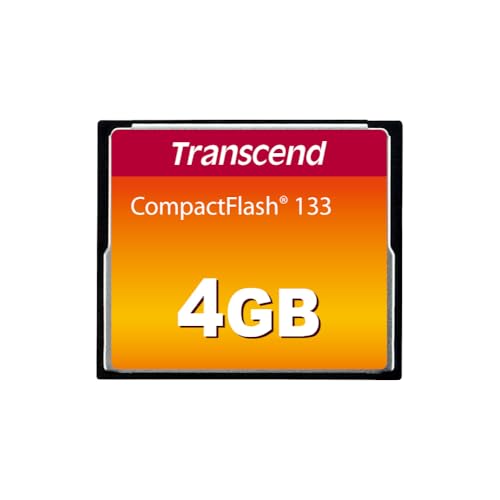
| Transcend CF133 4GB | Best for Retro IDE Builds | CF card, IDE via adapter | $10-$18 | The Windows 98 answer |
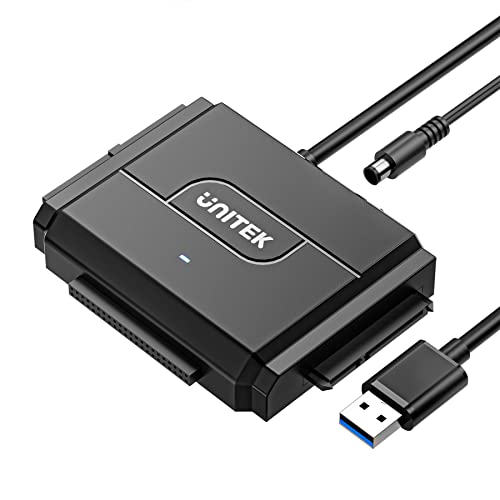
| Unitek SATA/IDE USB 3.0 Adapter | Budget Pick — clone before you commit | USB 3.0, dual-drive | $25-$35 | Buy it with any of the above |
🏆 Best Overall: Crucial BX500 1TB 3D NAND SATA 2.5-inch
The Crucial BX500 1TB is the drive we recommend without asterisks for any pre-M.2 machine that will accept a 2.5-inch SATA target. Crucial is a Micron consumer brand, and Micron owns the NAND fab, which is why the BX500 line has held its street price and its reliability numbers over multiple generations of the flash. This particular SKU has racked up more than 131,000 verified user reviews, which is more real-world data on a single drive than most competitors will ever accumulate.
Pros
- Sequential read up to 540 MB/s, which saturates the SATA III interface without excuses.
- 3D NAND cell design, meaning multiple bits per cell but with the vertical stacking that gives modern durability numbers.
- 1TB of capacity for the price of a mid-range dinner. This is the point where storage stops being the bottleneck on any use case a home PC will see.
- Weighs almost nothing, does not need a power connector on 2.5-inch models beyond the standard SATA power cable, and runs cold enough that no case airflow drama applies.
Cons
- DRAM-less controller. For sustained heavy writes it slows to spinning-disk speeds — see the FAQ below on why this matters less than the spec sheet suggests.
- 2.5-inch form factor only. If your case has 3.5-inch bays and no 2.5-inch mount, you need a $5 adapter bracket. Most modern cases include one.
The Crucial BX500 product page documents the endurance rating (rated at hundreds of terabytes written for the 1TB SKU) and the five-year warranty. For a boot drive that will see maybe a hundred gigabytes of writes per year in normal home use, that endurance number is closer to a mathematical limit than a practical one.
Buy it now: Crucial BX500 1TB on Amazon. Prices verified 2026-07-30 and move a few dollars either direction week to week.
💰 Best Value: SanDisk SSD Plus 480GB
The SanDisk SSD Plus 480GB is the drive we recommend for the second bay in a two-drive setup or for reviving a laptop that will act as a spare. SanDisk is a Western Digital brand, so the same NAND supply chain that sits in every WD Blue SSD lands in this budget line. That is why the SSD Plus is not the fastest drive on the SATA III bus but is one of the more reliable budget picks.
At about half the capacity of the BX500 for about two-thirds the price, the SSD Plus makes sense for a specific case: you already installed a BX500 as your Windows boot volume and now you need somewhere to put the game library. Or you have an old ThinkPad or MacBook Pro that needs a second life as a couch machine, and you do not need a terabyte to hold the operating system and Firefox.
Sequential read hits 535 MB/s at the top of its curve, close to the SATA III ceiling, and the 3D NAND generation SanDisk uses is well past the endurance quirks of earlier planar TLC. It is a good drive; it is not the drive to buy if you can afford the BX500's extra capacity for a small price bump.
🎯 Best for Retro Builds: Transcend CF133 CompactFlash + IDE Adapter
For a period-correct Windows 98 SE or early Windows XP build, you cannot plug a SATA drive into an IDE cable. What you can do is buy a Transcend CF133 4GB CompactFlash card and pair it with a passive CF-to-IDE adapter. CompactFlash speaks the IDE / PATA protocol at the electrical level, so the adapter is nothing more than a form-factor converter with no active silicon. The card presents to the BIOS as a hard drive and the system boots off it exactly as it would off a Quantum Fireball.
Two caveats matter. First, the write-endurance ceiling on consumer CF is lower than a real SSD, so this is a system drive for a hobby machine that runs a few hours a week, not a workstation. Second, CF133 rates the card at up to 30 MB/s, and older motherboards will not saturate even that. It is still an order of magnitude faster than any mechanical IDE drive of the era, and it is silent and cold.
The killer feature is reliability. A 25-year-old spinning IDE drive has hours to live; a CompactFlash card in the same slot will outlive the machine. For retro builders this is not a nice-to-have — it is the difference between a machine that boots and a machine that does not.
⚡ Best Performance: Samsung 870 EVO SATA SSD 250GB
The Samsung 870 EVO 250GB is the drive to buy when you need to know that no other SATA drive is going to be measurably faster. Samsung's MJX controller is the reference implementation of a SATA controller in the same way that a Wilson tennis ball is the reference tennis ball. It hits 560 MB/s sequential read, meaning it saturates SATA III at the interface ceiling, and it does so with DRAM-cached write behavior that keeps sustained writes above the burst rate longer than any budget drive.
Why 250GB and not 1TB? Because at 250GB the price-per-gigabyte gap between the 870 EVO and the BX500 is small enough that the performance premium is real value. At 1TB the same premium doubles in absolute terms and the Crucial drive becomes the smarter buy. Buy the Samsung when your Windows install and your working set fit in 250GB; use a separate large drive for bulk storage. Samsung's 870 EVO product documentation publishes the endurance numbers and the five-year warranty details.
🧪 Budget Pick: Unitek SATA/IDE USB 3.0 Adapter
Buy this before you buy any of the drives above. The Unitek SATA/IDE USB 3.0 Adapter is a $30 dock that accepts a 2.5-inch or 3.5-inch SATA drive on one side and an IDE ribbon on the other. It gives you two capabilities you need.
First, cloning. You plug the new SATA SSD into the Unitek dock, boot the old PC normally, run a cloning tool (Macrium Reflect Free is the classic; Clonezilla is the open-source path), and end up with a bootable copy of the old drive on the SSD without ever opening the case. You then swap the drives and the machine boots off the SSD as if nothing had changed.
Second, drive rescue. When the old spinning drive starts making noise, plug it into the dock and pull the data before the drive fails entirely. This is not a hypothetical use case — half the reason to buy an SSD upgrade in the first place is that the drive it replaces is about to fail. The Unitek dock is the tool that lets you get the data off in the twenty minutes you have before the head sticks. It is reviewed in detail on Tom's Hardware's best-SSDs guide as a companion tool for storage upgrades.
What to look for in a storage upgrade for an older PC
Interface ceiling
Read the section above. If your board is SATA II, do not pay the SATA III premium; the interface caps you at 300 MB/s no matter which drive you buy. If your board is IDE, no modern SATA drive plugs in at all; you need the CompactFlash path.
DRAM vs DRAM-less controllers
DRAM caches on an SSD store the flash translation layer — the map from logical sector to physical NAND cell — and speed up small random writes. A DRAM-less design keeps that map in a small slice of the NAND itself, which is slower to update. In a mixed home-use workload the difference is smaller than the spec sheet suggests. For a workstation or a machine that runs sustained database writes, buy DRAM-equipped. For a gaming PC and a general-use desktop, buy on capacity per dollar and ignore the label.
Endurance ratings
Total Bytes Written (TBW) is the manufacturer's rated endurance. A 1TB consumer drive typically carries a rating around 300-400 TBW. That is 300-400 terabytes of writes, which for a home PC that writes maybe 100 GB per year means 3000 years of writes. Endurance is not the failure mode you should worry about on a boot drive.
2.5-inch bay and bracket clearance
Modern cases include a 2.5-inch mount as standard; older cases do not. If your machine only has 3.5-inch bays, buy a $5 metal adapter bracket at the same time. Some SSDs ship with one in the box; check the listing.
Cloning vs clean install
Cloning is the low-risk path when the old install is healthy and licensed. Clean install is the right call when the machine has years of accumulated software, malware history, or an operating-system upgrade in the queue.
TRIM support on legacy chipsets
TRIM is the OS-to-drive command that tells the SSD which blocks are unused. Every Windows version from 7 onward supports it and every SATA SSD honors it. On very old chipsets running IDE mode instead of AHCI, TRIM may not pass through. Enable AHCI in the BIOS before you install Windows.
The most-missed step — AHCI vs IDE mode in BIOS
This is the one thing that catches people. Your motherboard has a storage-mode toggle in BIOS. AHCI is the modern setting that supports TRIM and command queueing; IDE (or "legacy") is the old setting that emulates a 1990s-era controller. On a boot drive that started life in IDE mode, switching to AHCI after Windows is installed usually produces a boot loop, because Windows loads the wrong storage driver on the first boot after the change.
The fix is well documented but easier to avoid. Before you clone, enter BIOS, switch the storage mode to AHCI, boot into Windows, verify the old spinning disk still works, and only then do the clone. If you have already cloned and now cannot boot, boot into Windows Safe Mode once, which lets Windows install the AHCI driver; then reboot normally.
FAQ
Will a SATA III SSD work in a motherboard that only has SATA II ports?
Yes — the interface is backward compatible and the drive will negotiate down to the SATA II link rate automatically. You lose sequential throughput, capped around 300 MB/s instead of roughly 550 MB/s, but you keep the entire random-access and latency advantage that makes an SSD feel fast in the first place. On a machine that old, the felt improvement in boot time and game level loads is still dramatic, because mechanical seek time was always the real bottleneck rather than raw bandwidth.
Should I clone my old drive or do a clean install?
Clone if the existing installation is healthy and you value the setup time; clean install if the system has years of accumulated software or you are changing the storage controller mode. Cloning with a USB adapter is the low-risk path because the original drive stays untouched until you have booted successfully from the new one. Verify that your cloning tool aligns partitions correctly — misaligned partitions carried over from a mechanical drive cost measurable write performance on flash.
Does a DRAM-less SSD matter for gaming?
Less than the spec sheet suggests for a gaming workload. DRAM-less designs slow down most under sustained heavy random writes, which is closer to a video-editing or database pattern than to loading game assets. For an operating system drive and a game library that is mostly read, the difference against a DRAM-equipped drive is small enough that capacity per dollar usually wins. Choose the DRAM-equipped drive if the machine doubles as a workstation.
Can I really use CompactFlash as a hard drive on a retro PC?
Yes, and it is a common approach for period-correct Windows 98 and early XP builds. CompactFlash speaks the IDE/PATA protocol natively, so a passive adapter is all that stands between the card and the drive header — no controller translation involved. The tradeoff is write endurance and the fact that consumer CF cards were never designed as system drives, so keep a disk image backup. It remains far quieter and more reliable than a thirty-year-old spinning disk.
When is a storage upgrade the wrong thing to buy?
When your actual complaint is frame rate rather than load time. An SSD does nothing for in-game FPS once assets are loaded, so if the machine stutters mid-match the money belongs in a GPU, more system memory, or better cooling instead. Storage is the right upgrade when boot takes minutes, when levels take longer to load than to play, or when you are simply out of capacity. Diagnose the symptom before spending.
Top picks
#1: Crucial BX500 1TB 3D NAND SATA
Verdict: Best Overall — the default answer for any pre-M.2 machine. 540 MB/s sequential read, 3D NAND, 1TB for well under $100, and 131k user reviews with no systemic reliability issues. Buy this unless something in the interface section rules it out. Amazon listing.
#2: SanDisk SSD Plus 480GB
Verdict: Best Value — half the capacity of the BX500 for about two-thirds the price, ideal for the second bay in a build or for reviving an old ThinkPad. WD-owned SanDisk NAND, 535 MB/s read, DRAM-less controller but adequate for a game-and-boot workload. Amazon listing.
#3: Samsung 870 EVO 250GB
Verdict: Best Performance — the reference SATA III controller from Samsung's MJX generation, saturating the interface at 560 MB/s and holding sustained writes longer than budget drives. Buy at 250GB where the price premium is small; buy the BX500 for larger capacities. Amazon listing.
#4: Transcend CF133 CompactFlash + IDE adapter
Verdict: Best for Retro IDE Builds — the only reasonable answer for a Windows 98 or early XP machine with no SATA ports. Passive CF-to-IDE adapter presents the card as a drive; consumer-grade endurance means keep an image backup. Amazon listing.
#5: Unitek SATA/IDE USB 3.0 Adapter
Verdict: Budget Pick and companion tool — buy this before or with any of the drives above. It lets you clone the old drive without opening the case and rescues data from a dying spinning disk. Also handy for data recovery from IDE drives pulled out of retired machines. Amazon listing.
Related guides
- Best SSDs and Adapters for Retro PC Builds in 2026
- Best SSD and Controller Pairing for a Living-Room Gaming PC
- Best SSD for a Raspberry Pi 4 Media Server in 2026
- Don't Buy Cheap SSDs: Hidden Risks Explained (2026)
Citations and sources
- Crucial BX500 SSD product page — endurance, warranty terms, and controller family.
- Samsung 870 EVO product documentation — MJX controller specifications and sustained-write behavior.
- Tom's Hardware — Best SSDs — third-party testing framework and companion-tool guidance.
— Mike Perry · Last verified 2026-07-30