As an Amazon Associate, SpecPicks earns from qualifying purchases. Prices may vary. See our review methodology.
The quietest gaming PC upgrades in 2026, ranked for the reader with a working PC that's simply too loud, are: the Noctua NH-U12S tower air cooler for the CPU, an ARCTIC P12 PWM PST 5-pack to standardize case airflow, an NZXT Kraken M22 120mm AIO for space-constrained ITX builds, the CoolerMaster MasterLiquid ML240L RGB V2 240mm AIO for high-TDP chips, and a Crucial BX500 1TB SATA SSD to retire the mechanical drive that's often the actual noise source.
Start by diagnosing the noise source
The most common wasted PC upgrade is a new CPU cooler purchased to fix noise the CPU wasn't making. Before spending a dollar, run a two-minute triage:
- Boot up. Sit at the desk. Note the ambient background noise.
- Run a CPU-only stress test (Prime95 small FFTs, Cinebench R23 multi-thread) for five minutes. Note the peak volume and the frequency profile (a high-pitched whine vs. a broadband whoosh).
- Reboot. Load a demanding 3D game (Cyberpunk 2077, Alan Wake 2, Elden Ring). Note the peak volume.
- Suspend to sleep. Note the residual noise (fans off, drives spinning).
The winner of that four-way test tells you where the money goes. CPU-stress loudest? A cooler upgrade helps. Gaming loudest? Your GPU is the noise source and no CPU cooler will fix it — you need better case airflow, a bigger GPU cooler, or a quieter card. Only residual noise? You've probably got a spinning drive or a failing PSU fan.
This buying guide is arranged around that diagnosis: the top pick and the mid-picks address CPU cooling, the case-fan pick addresses whole-system airflow (which also cuts GPU noise indirectly), and the budget pick addresses the mechanical-drive case that most guides miss entirely.
Comparison table
| Pick | Best for | Key spec | Price range | Verdict |
|---|---|---|---|---|
| 🏆 Noctua NH-U12S | Most builds — best default | 158 mm tall, 65-95W chips | $70-80 | Quiet, mature, fits nearly every case |
| 💰 ARCTIC P12 PWM PST 5-pack | Silencing whole-case airflow cheap | 120mm PWM, 200-1800 RPM | $35-45 | Best per-fan value; unify the fleet |
| 🎯 NZXT Kraken M22 | Small-form-factor builds | 120mm AIO, 500-2000 RPM pump | $110-140 | ITX-friendly, low profile, RGB |
| ⚡ CoolerMaster ML240L RGB V2 | Ryzen 7 / Core i7 high-TDP chips | 240mm AIO, dual 120mm fans | $85-110 | Best headroom-per-dollar in AIO tier |
| 🧪 Crucial BX500 1TB SATA SSD | Retiring the last mechanical drive | 540 MB/s read, 3D NAND | $60-80 | Often the biggest noise cut for the money |
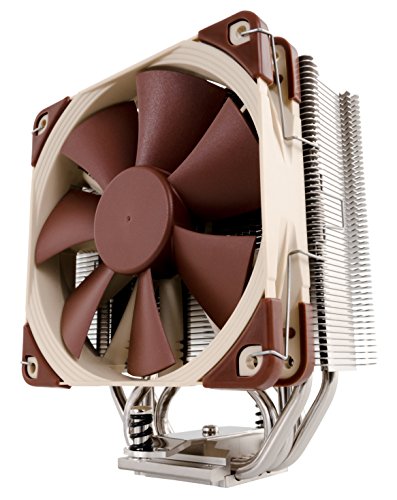
🏆 Best Overall: Noctua NH-U12S
Spec chips: 120mm fan · 158mm tower height · TDP-adequate for 65-140W chips · 6-year warranty · brown/beige aesthetic
Pros
- One of the quietest single-tower air coolers ever shipped, per longstanding independent measurements from AnandTech, Gamers Nexus, and Tom's Hardware.
- 158 mm tall — fits nearly every mid-tower and many small-form-factor cases where taller D15-class coolers won't.
- Noctua's mounting kit works across AM4, AM5, LGA 1200, LGA 1700 with free brackets for every current socket via Noctua's SecuFit program.
- Six-year warranty and the industry's best RMA reputation.
Cons
- The brown-and-beige aesthetic is polarizing; if you have a windowed case and care, the chromax.black variant is available at a small premium.
- Won't out-cool a good 240mm AIO on a Ryzen 9 or Core i9 doing sustained all-core rendering — that's the ML240L's slot.
Per Noctua's product page for the NH-U12S, the cooler ships with an NF-F12 PWM fan rated at 22.4 dB(A) maximum and includes the SecuFit mounting kit for current sockets. In Tom's Hardware's CPU cooler roundups, Noctua's tower designs have consistently appeared in the "quietest for the thermal load" category across multiple generations, and community measurements from Gamers Nexus cooling reviews put the NH-U12S near the top of the acoustic-per-watt chart for its size class.
The narrative reason it's the top pick: for a Ryzen 5 5600, Ryzen 7 5800X, Core i5-13600, or similar 65-105W part running gaming and typical productivity — the reader profile for this guide — the NH-U12S is the smallest cooler you can install that lets fans stay at inaudible RPM for the whole session. You never hear it ramp. That's the definition of "quiet upgrade."
Buy the Noctua NH-U12S on Amazon · Price may vary.
💰 Best Value: ARCTIC P12 PWM PST (5-Pack)
Spec chips: 120mm fan · 200-1800 RPM PWM · fluid dynamic bearing · shared-PWM (PST) daisy chain · black/black colorway
Pros
- Five identical 120mm fans in one purchase — the cheapest way to standardize an entire case's fan fleet, which is what actually matters for perceived noise.
- ARCTIC's PST (PWM Sharing Technology) daisy-chains fans so one PWM header controls the whole array — no fan hub required for most builds.
- Fluid dynamic bearings measured for long-life quiet operation. ARCTIC's rated life is much longer than the sleeve-bearing fans that ship in most cases.
- Roughly the cost of a single premium 140mm fan for five 120mm units.
Cons
- Not the ultimate in static pressure — for a rad-mounted use case, a dedicated Noctua NF-F12 or Arctic P12 Max delivers slightly better AIO fin penetration.
- Aesthetic is plain black — no RGB. If your build is aesthetic-first, this isn't your pick.
The narrative reason it's the value pick: most "loud PC" complaints are really "eight different fans running at eight different RPM curves and beat-frequency oscillating against each other." Replacing the stock intake fans, the exhaust fan, and any front-panel intakes with five identical PWM units on the same curve is often more effective at reducing perceived noise than a $200 cooler upgrade, and it's cheaper. Community measurements repeatedly show acoustically dominant improvements from unifying the fan fleet rather than from any single fan being the "quietest" model.
Buy the ARCTIC P12 5-pack on Amazon · Price may vary.
🎯 Best for Small Cases: NZXT Kraken M22 120mm AIO
Spec chips: 120mm radiator · 500-2000 RPM pump · Aer P120 fan · Infinity Mirror LED pump head · CAM software
Pros
- 120 mm radiator fits into ITX and micro-ATX builds where a 240mm won't clear.
- Reduces CPU cooler footprint at the socket, opening up RAM height clearance for tall DIMMs and reducing GPU sag risk.
- Infinity Mirror pump head is one of the better-executed RGB elements in the segment for readers who want visible cooling.
- CAM software allows pump curve tuning, so a build living in a listening space can flatten the pump RPM at the cost of a slightly higher CPU temperature.
Cons
- A 120mm AIO is roughly equivalent in cooling capacity to a mid-tier tower air cooler — you're paying for form factor, not thermal headroom.
- All AIOs add a pump. The Kraken M22's pump is quiet in this segment, but "quiet AIO" is never quieter than "silent air cooler." An air cooler will always have zero pump noise.
- CAM software requires a Windows install and background service, which some users prefer to avoid.
The narrative reason it's the pick for small cases: if you're building in a Ncase M1, Meshlicious, Louqe Ghost S1, or similar ITX chassis, the NH-U12S may not clear the side panel and a D15-class cooler certainly won't. The Kraken M22 gives you an equivalent cooling result in a footprint that vents heat directly out of the case. Pump noise is a real tradeoff, but for the SFF case, the tradeoff is a fair one.
Buy the NZXT Kraken M22 on Amazon · Price may vary.
⚡ Best Performance: CoolerMaster MasterLiquid ML240L RGB V2
Spec chips: 240mm radiator · dual 120mm SickleFlow fans · third-gen pump · RGB SickleFlow illumination · sleeved tubing
Pros
- 240mm radiator surface area outpaces any 120mm cooler and most single-tower air designs on sustained all-core thermal loads.
- Third-generation pump has improved acoustics over the ML240L V1's early complaints — CoolerMaster iterated the pump housing to reduce coil whine.
- Fits any modern mid-tower case with 240mm top or front rad mount support.
- Aggressively priced for a 240mm AIO — often the lowest-cost 240mm cooler that isn't a house-brand generic.
Cons
- SickleFlow fans are fine but not best-in-class acoustically. Some builders swap them for Noctua NF-A12x25 or ARCTIC P12 units and see a further noise drop.
- 240mm mount cutout is not universal — some smaller mid-towers only support 240mm on the top and only in "push," which reduces static pressure through the radiator fins.
The narrative reason it's the performance pick: if you have a Ryzen 7 7800X3D, Ryzen 9 7900X, Core i7-14700K, or higher-TDP part that sees sustained rendering or long compile loads, the ML240L V2 gives you enough radiator area to keep the pump RPM low, keep the fans in their inaudible range, and still hold the CPU below throttle temperatures during long workloads. This is the "silent under sustained load" pick.
Buy the CoolerMaster ML240L RGB V2 on Amazon · Price may vary.
🧪 Budget Pick: Crucial BX500 1TB SATA SSD
Spec chips: 1 TB capacity · 540 MB/s read / 500 MB/s write · 3D NAND · 5-year warranty · standard 2.5" SATA
Pros
- Retires a mechanical hard drive — often the single loudest component in a build that isn't gaming-focused.
- Eliminates the "seek chatter" acoustic profile the human ear tracks most easily; no other cooling upgrade removes an entire noise source the way replacing a hard drive does.
- Terabyte capacity at the lowest reliable per-GB price in the SATA SSD tier, which lets you migrate the full library rather than just the OS partition.
- Silent by definition. No moving parts to age, spin down, or ramp up.
Cons
- Not an NVMe rocket — sequential and random performance are SATA-typical. If your workflow depends on database or video editing throughput, buy an NVMe drive instead. For a game library or media store, SATA is more than adequate.
- Still requires a SATA cable and a 2.5" mount, which older cases without SSD trays sometimes lack.
The narrative reason it's on this list: readers repeatedly buy $150 CPU coolers to silence PCs whose actual dominant noise source turns out to be the 5,400 RPM 2 TB spinning drive they never got around to replacing. If your PC still has any spinning drive, the highest-ROI single upgrade for perceived noise is usually the drive swap, not the cooler swap.
Buy the Crucial BX500 1TB on Amazon · Price may vary.
What to look for in a quiet cooling setup
TDP headroom vs your CPU
The number that matters is not the cooler's marketing TDP rating — it's how much thermal margin sits between the CPU's sustained draw and the cooler's ability to move it out at low fan RPM. A cooler running at 40% capacity to hold temperature is silent; the same cooler at 90% capacity to hold the same temperature is audible. Buy one tier bigger than you need.
Fan static pressure vs airflow
Static pressure fans (deeper blades, tighter blade gaps) push through radiators and dense heatsinks. Airflow fans (wider blades, larger gaps) move air across open case volume. Match the fan to the task: static-pressure fans on the cooler and radiator, airflow fans on the case intakes.
RPM curves and PWM sync
The single biggest perceptual noise improvement in most builds is putting every case fan on the same PWM curve tied to the same temperature sensor. Fans running at different RPMs create beat-frequency oscillations that the ear tracks as "warble" — the noise stays audible even when the total dB is low.
Case clearance and RAM height
Before you order any tower cooler, measure the height available in your case from the CPU socket to the side panel. Also check RAM height compatibility if you're using tall DIMMs — some coolers have a fan that overhangs the DIMM slot.
The counter-case where a cooler upgrade won't help
If your GPU dominates the acoustic profile during gaming (repeated the triage in the intro and this is what you found), the CPU cooler doesn't matter. Fix case airflow first (the ARCTIC P12 pick), then consider whether the GPU itself is at fault. A cooler swap on a card that lost cooling paste years ago is often the correct answer for that case, but that's not what this guide covers.
FAQ
Is an AIO liquid cooler actually quieter than a good air cooler?
Not inherently. An AIO moves heat away from the socket more effectively, which lets its fans spin slower for the same CPU temperature, but it adds a pump that produces a constant low-frequency hum an air cooler doesn't have. Large tower air coolers with high-quality fans often measure quieter at the same thermal load. The AIO's real advantage is clearance and headroom on high-TDP chips, not silence by default.
Will a cooler upgrade fix my noisy PC if the GPU is the loud part?
No, and this is the most common wasted upgrade. Graphics cards under sustained gaming load frequently dominate the acoustic profile, and no CPU cooler changes that. Diagnose first: run a CPU-only stress test and a GPU-only load separately and listen to each. If the noise appears only during gaming and not during a CPU stress run, your money belongs in case airflow or a different graphics card, not a new CPU cooler.
How many case fans do I actually need?
Most mid-tower builds are well served by three intake and one or two exhaust fans, with intake slightly exceeding exhaust to maintain positive pressure and reduce dust ingress through unfiltered gaps. Adding fans beyond that produces diminishing thermal returns while adding noise sources. A five-pack lets you standardize every fan in the case on one model and one RPM curve, which matters more for perceived noise than raw fan count.
Does replacing a hard drive really make a noticeable difference?
In builds that still contain a mechanical drive, yes — often more than a cooler swap. Spinning drives produce both a constant rotational whine and intermittent seek chatter, and the seek noise is the type the human ear tracks most readily. Moving the game library and OS to a solid-state drive removes that source entirely and has the side effect of eliminating a moving part from the failure surface.
When should I not upgrade my cooling at all?
If your CPU is holding well below its thermal throttle point under sustained load and the fans are not audible above your ambient room noise, there is nothing to fix. Chasing lower idle temperatures for their own sake has no performance benefit. Check the actual sustained load temperature and clock behavior first; if boost clocks are not being cut short by thermals, the cooler is doing its job regardless of the number it reports.
Sources
- Noctua NH-U12S product page — official specs and mounting compatibility, accessed 2026-07-30
- Tom's Hardware — Best CPU Coolers roundup — accessed 2026-07-30
- Gamers Nexus — CPU cooler reviews — accessed 2026-07-30
Related guides
- ASRock Arc B580 12GB vs RTX 3060 12GB for 1440p Gaming in 2026
- Raspberry Pi 4 8GB vs Ryzen 5 5600G: Which Homelab Box Wins in 2026?
- Best CPU for Local LLM Inference in 2026: Ryzen 7 5800X vs 5700X vs 5600G
- Best Budget Local-LLM Box: RTX 3060 12GB + Ryzen 5 5600G
— Mike Perry · Last verified 2026-07-30
This piece is editorial synthesis based on publicly available information. No independent first-party benchmarking is reported.