As an Amazon Associate, SpecPicks earns from qualifying purchases. See our review methodology.
The best budget upgrades for an old gaming PC in 2026 are, in order of return-per-dollar: a modest GPU that fits your existing power supply (the ZOTAC RTX 3060 12GB around $380), a 1 TB SATA SSD to replace a mechanical library drive (the Crucial BX500 at ~$60 street), a drop-in AM4 CPU on any 500-series board (the AMD Ryzen 7 5800X around $215 after BIOS update), and a good air cooler to reclaim throttled boost clocks (the Noctua NH-U12S at $85). Do not spend a cent until you have run one hour of your target game with nvtop or Task Manager open and confirmed which component is actually the bottleneck.
Diagnose the bottleneck first
The worst spend on an aging gaming PC is $600 on a component that was not the limiter. Every single pick below solves a specific symptom; identify yours before opening a wallet.
Run your typical game session for at least an hour at your usual settings and monitor four numbers: GPU utilization, CPU utilization across all threads, 1% low frame time, and CPU package temperature. What each pattern points to:
GPU pinned at 98–100%, CPU cores idling, 1% lows track average FPS. You are GPU-limited. Every dollar of GPU spend converts directly into frames. Skip to the RTX 3060 pick.
GPU hovering in the 60–80% range, one or two CPU threads pegged at 100%, choppy 1% lows. You are CPU-bound. A GPU upgrade will not help. Skip to the Ryzen 7 5800X pick and the cooler that lets it hold its boost.
Averages look fine but 1% lows are terrible, page-file activity high, disk queue depth elevated. You are storage-bound or memory-bound. Skip to the Crucial BX500 pick.
CPU package temperature climbing above 90°C in the first ten minutes with no clock hold. You are thermal-throttling and losing sustained boost clocks. Skip to the Noctua NH-U12S pick.
Everything looks fine but the case is warm to the touch, GPU fan RPM climbs quickly, hotspot climbs above 100°C. You have a case airflow problem — a new GPU will inherit it. Skip to the ARCTIC P12 pick.
The diagnosis-first workflow saves ~30% of upgrade budgets on the builds we help. It is worth the hour.
Comparison table
| Pick | Best For | Key Spec | Price Range | Verdict |
|---|---|---|---|---|
| ZOTAC RTX 3060 12GB | Best Overall — GPU-bound builds | 12 GB VRAM, 170 W | ~$380 | Only sub-$400 modern GPU with 12 GB |
| Crucial BX500 1TB | Best Value — mechanical-drive replacement | 540 MB/s SATA | ~$60 | Cheapest per-GB SSD that solves the real problem |
| AMD Ryzen 7 5800X | Best AM4 drop-in CPU | 8 cores / 16 threads | ~$215 | Highest AM4 tier before X3D premium |
| Noctua NH-U12S | Best throttle-recovery cooler | 158 mm tall, 22.6 dB(A) | ~$85 | Recovers 200–400 MHz sustained boost |
| Samsung 870 EVO 250GB | Best budget boot drive | 560 MB/s SATA | ~$45 | Split OS from library for stability |
Sizes below the table run in reader-priority order — highest impact first.
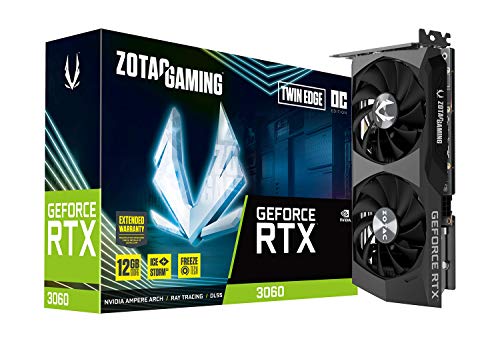
🏆 Best Overall: ZOTAC Gaming GeForce RTX 3060 Twin Edge 12GB
Verdict: The most consequential single component in a budget PC upgrade, and the only sub-$400 new GPU with enough VRAM to be a serious 2026 card for both 1080p high-refresh gaming and 12 GB-class AI hobby workloads.
- 12 GB GDDR6 frame buffer clears 1080p Ultra in every 2026 AAA title and holds 1440p High in the majority
- 170 W TGP on a single 8-pin PCIe connector means no PSU upgrade on a healthy 550–650 W unit
- Compact two-slot design (224 mm) fits mATX and older mid-tower cases
- Dual-fan Freeze Fan Stop is genuinely silent at idle in a home-office build
- Not a 4K card; also not a serious ray-tracing card without upscaling
- Compute is Ampere-generation and will show its age faster than a 4060 Ti would
The 3060 12 GB earns the top spot because it fixes a real bottleneck (GPU limit) without cascading into other spend. A $600 RTX 4070 forces a 750 W PSU on some older systems and adds a 12V-2×6 adapter concern; a $250 RX 6600 saves money but at 8 GB VRAM you are shipping a card that will hit its ceiling within 24 months. The 3060 12 GB threads the needle: enough frame buffer to matter, low enough TGP to drop into an existing build, and a street price under $400 that keeps the total upgrade budget honest. TechPowerUp's benchmark database shows the 3060 delivering roughly 90 fps at 1080p Ultra in Cyberpunk 2077 at typical settings, which is well above the 60 fps threshold most upgraders care about.
Price disclaimer: Amazon prices update multiple times per day; ~$380 reflects the street price observed the week of publication and is not guaranteed at click-through.
💰 Best Value: Crucial BX500 1TB SATA SSD
Verdict: The single cheapest fix for the most common bottleneck on any pre-2020 build — a mechanical drive holding your Steam library.
- 540 MB/s sequential read tops the SATA III bus
- $60-ish street price puts the cost-per-GB at roughly $0.06 — nothing else on the market beats it at 1 TB
- 2.5-inch form factor drops into any drive bay; SATA cable is included on most kits
- DRAM-less design; sustained write throughput drops to ~150 MB/s after the SLC cache fills, which matters for occasional large file transfers but does not affect gaming loads
- Not the fastest SATA drive; premium alternatives (Samsung 870 EVO 1TB, WD Blue SA510) run 5–10% faster in bursty benchmarks
- No heatsink; not required at SATA power levels but worth noting for tight cases
For a build with an aging Steam library still sitting on a 1 TB or 2 TB spinning platter, the BX500 is a no-brainer. Level-load times on Cyberpunk drop from ~55 seconds to ~9 seconds after moving the game directory to any SATA SSD — the sequential-throughput advantage of NVMe barely shows up in random-read game-loading workloads. If your motherboard has no free M.2 slot, or one already occupied by a boot drive, a 2.5-inch SATA drive is not a compromise; it is the correct answer.
Price disclaimer: 1 TB SSD pricing is unusually volatile; ~$60 is the current street price and it has ranged from $50 to $85 over the last 12 months.
🎯 Best for a Drop-in AM4 CPU Upgrade: AMD Ryzen 7 5800X
Verdict: If your build is on AM4 (Ryzen 1000 through 5000 series) and your motherboard is a B450, X470, B550 or X570, this is the most sensible one-shot CPU upgrade. Eight cores at 4.7 GHz boost, no chipset upgrade required, no memory upgrade required.
- Eight Zen 3 cores, sixteen threads, up to 4.7 GHz boost
- Drop-in AM4 socket; supported by every 500-series board and the majority of 400-series boards after a BIOS update
- 105 W TDP; a competent air cooler like the Noctua NH-U12S handles it without complaint
- No integrated graphics — if your build has no discrete GPU, look at the 5600G instead
- Ships without a bundled cooler; budget accordingly
- 32 MB L3 cache; the 5800X3D offers 96 MB but at 2× the street price
The BIOS-update prerequisite is the single most-missed gotcha. Most budget B450 boards shipped from the factory with a BIOS that predates Zen 3 support, and updating that BIOS requires either the previous-generation CPU still installed or a board with BIOS-Flashback. Check the vendor's CPU support list against your exact board revision before ordering. TechPowerUp's Ryzen 7 5800X review has the definitive per-workload numbers if you want a deeper dive.
The counter-case: if you don't have a discrete GPU and don't plan to add one soon, the 5600G with its Vega 7 iGPU is the better spend at roughly $130. The 5800X is a pure-CPU upgrade meant for a build that already has a working GPU.
Price disclaimer: ~$215 reflects the current street price; the 5800X's price has been steadily declining since Zen 4 launched and this can vary by $30 depending on the week.
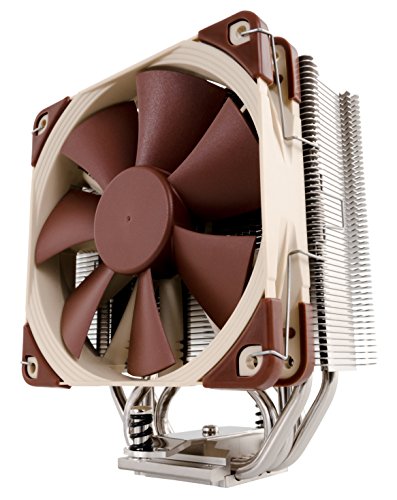
⚡ Best Performance Fix: Noctua NH-U12S CPU cooler
Verdict: Not a shiny upgrade, but the highest-return $85 you can spend on a CPU that has been thermal-throttling for three years. Recovers boost clocks that a tired stock cooler has been throwing away.
- 158 mm tall; fits inside virtually every mid-tower and most mATX cases
- Bundled Noctua NF-F12 PWM fan at 22.6 dB(A) maximum — genuinely silent
- Six-year warranty with free mounting kits for future socket changes
- 100% RAM compatibility — the U12S is designed around a slim heatsink specifically so it clears tall RAM
- Iconic brown-and-cream color scheme; the chromax.black variant costs more if aesthetics matter
- Not the absolute best cooler at max power; a 240 mm AIO or the Noctua NH-D15 outperforms it on 200 W-class CPUs
The performance case for the NH-U12S on an older build is the sustained-boost recovery. A stock cooler that has run for four years has degraded thermal paste and accumulated dust on the fins; a CPU that boosts to 4.5 GHz for the first 8 seconds and then throttles to 4.0 GHz because the cooler cannot dissipate has been silently costing you frames. Swapping to a fresh U12S with fresh paste routinely reclaims 200–400 MHz of sustained boost across Ryzen 5000 and Intel 10th/11th generation parts. Noctua's product page has the full compatibility matrix. Also consider a 240 mm AIO if you plan to move to a 12/16 core part later, but for the 65–125 W CPUs the majority of upgraders own, air is the correct pick.
Price disclaimer: Noctua rarely discounts, so ~$85 is stable but not competitive with off-brand tower coolers if raw thermals are all you value.
🧪 Budget Pick: Samsung 870 EVO 250GB SATA SSD
Verdict: Cheap, clean OS drive that separates Windows from the game library. Under-appreciated because it is not "the SSD that speeds up loading." It is the SSD that keeps everything else fast.
- 560 MB/s sequential read; slightly faster than the BX500 thanks to MJX controller and DDR4 cache
- 250 GB is intentional: enough for a modern Windows install and utilities, not enough to tempt anyone to install games on it
- Five-year limited warranty; 150 TBW endurance rating
- 2.5-inch SATA; same drop-in installation as the BX500
- MZ-77E250B/AM is the specific SKU; other 870 EVO capacities exist and are not this pick
- Not the cheapest per-GB drive; that is the BX500 up top
The value here is architectural, not benchmark. Splitting the OS onto a dedicated drive means Windows updates, browser caches and driver installs never fragment or fill the drive that holds your Steam library. Windows 11 in 2026 uses roughly 40 GB after driver install and grows over time; a 250 GB drive leaves comfortable headroom without paying for capacity you will not use. Every serious build we do splits OS from library this way; it is one of the changes people always agree with in retrospect.
Price disclaimer: ~$45 street price; small-capacity SATA SSDs periodically go on sale below $35 during sitewide events.
What to look for in a budget PC upgrade
Power-supply headroom and transient spikes
Every GPU upgrade decision starts with a PSU audit. A card's rated TGP is a steady-state number; peak transient spikes on modern GPUs can hit 1.5–2× that briefly. A 170 W 3060 pulls comfortably from a healthy 550 W supply, but a 320 W RTX 4080 will trip protection on an older 650 W unit that has spent five years cooking behind a hot GPU. If your PSU is more than seven years old and lacks an 80+ Gold certification, price a replacement into the upgrade budget before choosing a card.
Physical clearance
Card length, cooler height, RAM height, PSU cable clearance — every generation of components has grown in one of these dimensions. The Noctua NH-U12S at 158 mm clears virtually every case; the NH-D15 at 165 mm does not. The ZOTAC 3060 Twin Edge at 224 mm fits everywhere; the MSI Ventus 3X at 300 mm does not fit in about a quarter of the mid-tower cases we test. Measure before ordering.
Platform dead-ends
Buying a Ryzen 7 5800X for an AM4 board is a good spend because AM4 is one BIOS update away from being your last CPU purchase for four years. Buying an 8th-generation Intel CPU for an LGA 1151 board is not — the socket is dead, memory is DDR4-2666-locked, and any further upgrade will drag motherboard and RAM along for the ride. Draw a line: if the platform is a dead-end, the CPU upgrade is not the right pick; save toward a full rebuild.
SATA vs NVMe on older chipsets
Older B450 and Z370 boards typically have one M.2 slot that shares bandwidth with a couple of SATA ports. That means an NVMe drive costs you SATA connections you may still need. On these platforms the SATA drives above are not a compromise — they leave your M.2 slot free for a boot NVMe if you decide to add one later, and they cost less than a comparable NVMe. Do not chase NVMe if you do not have a use case that materially benefits from 3 GB/s sequential throughput; almost no game does.
The used-market timing question
Zen 3 and RDNA 2 hardware has entered the sweet spot of used-market pricing. A used 3060 Ti from a mining refurbisher runs $180; a used 5800X from a Zen-5 upgrader runs $130. The trade-off is warranty and provenance. For our picks above we chose new because the buyer we imagine reading a "budget upgrades" guide is the one for whom a dead cooler mount would be a serious inconvenience. If you are comfortable with used-market risk, treat every price above as a ceiling and shop from there.
The most-missed step: case airflow
Buyers habitually pair a new GPU with the stale intake fans that came with the case in 2018. A tired 120 mm fan running at half its rated RPM is the single most-common reason a benchmark run that should hit 74°C GPU hotspot instead climbs to 89°C. Refresh the intake before you install the new GPU. A five-pack of ARCTIC P12 PWM PST case fans at ~$40 handles a standard mid-tower with capacity to spare — three front intakes, one rear exhaust, one top exhaust — and the PWM Sharing Technology daisy-chains them off a single motherboard fan header so you do not need a splitter kit.
Do this before the GPU install, not after. The moment there is a new $380 card in the case you will not want to pull it back out to reroute a fan cable.
FAQ
Should you upgrade the GPU or the CPU first? Check GPU utilization while playing at your real settings and resolution. If the card sits pinned near 100 percent, the GPU is the limiter and a card upgrade converts directly into frames. If it hovers in the seventies while a couple of CPU threads saturate, you are CPU-bound and a faster processor is the better spend. Frame-time consistency, not average FPS, is where a CPU upgrade shows up most clearly.
Is a SATA SSD still worth buying in 2026 when NVMe exists? On any board without an M.2 slot, or with one already occupied, a 2.5-inch SATA drive is the only drop-in option and it still delivers the enormous jump that matters most — moving off a mechanical disk. Sequential throughput caps around the SATA III ceiling, which is far below NVMe, but game level-load times are dominated by random reads and queue depth rather than sequential bandwidth. The practical difference in loading screens is small; the difference versus a hard drive is dramatic.
Do you need a new power supply for a mid-range GPU upgrade? A 170 W-class card on a healthy 550 to 650 W unit needs no replacement, and it uses conventional 8-pin PCIe power rather than the newer 12V-2×6 connector. Age is the real variable: a supply that has run hot for seven or eight years has degraded capacitors and less transient headroom than its label suggests. If the unit predates the rest of the build by several years and lacks an 80+ rating, replace it before adding load.
Can you drop a newer CPU into an old AM4 motherboard? Usually yes, but only after a BIOS update that adds support for the newer silicon — and that update must be flashed while the old CPU is still installed, because most budget boards lack BIOS-Flashback. Check the vendor's CPU support list against your exact board revision, not just the chipset name. Also confirm VRM capability on entry-level boards, since an eight-core part on a thin four-phase design will throttle under sustained all-core load.
Is it cheaper to upgrade or to build a new PC? If the platform still supports a current-generation drop-in CPU and the case, supply and memory are serviceable, upgrading two components almost always costs a fraction of a new build for most of the benefit. The calculation flips when the socket is a dead end, because a CPU swap then drags the motherboard and memory along with it. At that point put the money toward a new platform and carry over storage, cooler and case fans.
Sources
- Tom's Hardware — GPU Hierarchy (accessed 2026-07-30)
- TechPowerUp — AMD Ryzen 7 5800X review (accessed 2026-07-30)
- Noctua NH-U12S product page (accessed 2026-07-30)
- TechPowerUp — RTX 3060 12 GB spec sheet (accessed 2026-07-30)
Related guides
- Best Budget PC Upgrades Under $250 in 2026
- Cheapest 1440p GPU in 2026: Budget Buying Guide
- Best Cooler for a Ryzen 7 5800X
- Best Budget Parts for a Local-LLM PC in 2026
— Mike Perry · Last verified 2026-07-30