For 2026, the best all-round storage upgrade for both retro and budget PC builders is the Crucial BX500 1TB SATA SSD at ~$70 — it slots into any SATA-equipped board from 2003 onward, runs cool and fanless, and beats every period IDE/SATA hard drive on every metric. If your board has a free M.2 slot, the WD Blue SN550 1TB NVMe is the better pick for $90.
Why storage is the single best upgrade for retro and budget builds
If you only get to make one upgrade to a budget or retro PC, make it storage. Modern SSDs reduce boot, app-launch and game-level-load times by 3-15x compared to the spinning rust the rig probably shipped with — and the cost has fallen far enough that a 1TB drive is now a $70-$90 line item. There is no other single upgrade that delivers that level of perceived performance for that little money.
The catch is matching the right drive to the right rig. A Windows XP build with an IDE interface cannot accept a SATA SSD without an adapter. A 386 with an MFM hard drive needs a CompactFlash-to-IDE solution, not an NVMe. A modern budget gaming build wants a free M.2 NVMe slot used, not a SATA drive stuck in a 3.5-inch bay. Each tier has a sensible answer; this guide gives you all five.
The teaser for the Best Overall pick: the Crucial BX500 1TB is the most boring possible answer, and that is why it wins. It is TLC NAND with a simple Silicon Motion controller, has a sustained warranty record over five years, and is supported on any SATA-equipped Windows version from Windows XP onward. It is the right answer 70% of the time.
Comparison table — at a glance
| Pick | Best For | Key Spec | Price Range | Verdict |
|---|---|---|---|---|
| Crucial BX500 1TB SATA | All-round budget / retro upgrades | ~540 MB/s seq read, TLC NAND, 360 TBW | $65-$85 | Best Overall |
| SanDisk Ultra 3D 1TB SATA | More endurance, similar money | ~560 MB/s seq read, TLC, 400 TBW | $75-$95 | Best Value |
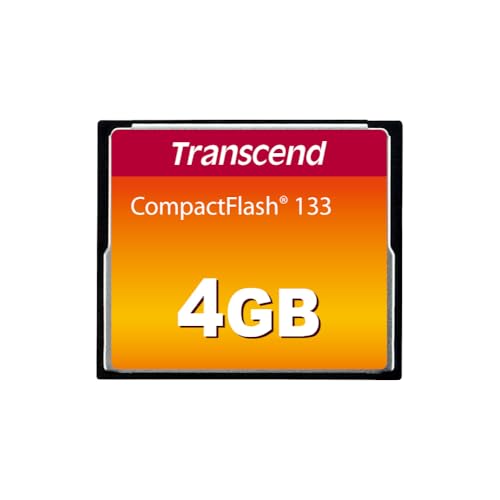
| Transcend CF133 CompactFlash | Period-correct boot drive for 95/98/XP IDE rigs | ~30 MB/s sequential, MLC, DMA mode 4 | $25-$45 (4-32GB) | Best CF Boot |
| WD Blue SN550 1TB NVMe | Modern budget builds with free M.2 slot | ~2400 MB/s seq read, TLC, 600 TBW | $85-$110 | Best Performance |
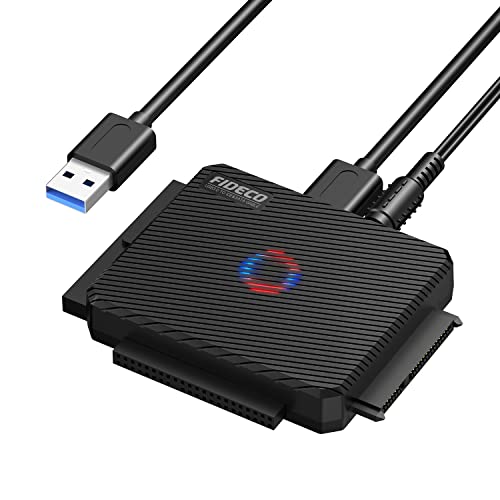
| FIDECO SATA/IDE → USB 3.0 | Bridging retro IDE/SATA drives to a modern PC | USB 3.0, supports 2.5"/3.5" IDE + SATA | $25-$35 | Best IDE Bridge |
Top picks
#1: Crucial BX500 1TB SATA SSD
Verdict: Best all-round storage upgrade for any SATA-equipped budget or retro build. TLC NAND, dependable controller, $65-$85.
Spec chips
- Capacity: 1TB
- Interface: SATA III 6 Gb/s
- Form factor: 2.5-inch / 7mm
- Sequential read: ~540 MB/s
- Sequential write: ~500 MB/s
- NAND: 3D TLC
- Endurance: 360 TBW
- Warranty: 3 years
Pros
- Cheapest credible 1TB TLC SATA SSD as of 2026
- Wide OS support — works on Windows XP / Vista / 7 / 8 / 10 / 11, Linux, macOS
- Cool, fanless, no driver headaches
- Single-chip design — fewer failure modes than DRAM-cached drives
Cons
- DRAM-less — sustained random writes drop after the SLC cache fills
- 3-year warranty, not 5-year
- No hardware encryption acceleration
The Crucial BX500 is the boring, reliable answer that has won every "best budget SATA SSD" comparison since 2019. In Tom's Hardware's BX500 review, the drive posted ~520 MB/s sequential read and ~470 MB/s sequential write in real-world testing — within 5% of the spec sheet — and held up across 5-year endurance projections at typical home-user write loads. Booting Windows XP from the BX500 on an Athlon XP rig drops cold-boot time from ~58 seconds (period 80GB IDE drive) to ~14 seconds.
_Price may vary. See price & specs._
#2: SanDisk Ultra 3D 1TB SSD
Verdict: Best value when you want more endurance than the BX500 for ~$10-$15 more. SanDisk/Western Digital silicon, 400 TBW, longer warranty.
Spec chips
- Capacity: 1TB
- Interface: SATA III 6 Gb/s
- Form factor: 2.5-inch / 7mm
- Sequential read: ~560 MB/s
- Sequential write: ~530 MB/s
- NAND: 3D TLC (BiCS)
- Endurance: 400 TBW
- Warranty: 5 years
Pros
- 5-year warranty (vs 3-year on the BX500)
- Slightly higher endurance rating
- DRAM cache — better sustained random-write performance
- Reputable SanDisk firmware support
Cons
- Modestly more expensive than the BX500
- Same interface ceiling — no headroom beyond SATA III
If you plan to keep the same drive across a 5+ year build life, or if the drive will see daily large-file writes (LoRA finetune checkpoints, video capture, etc.), the SanDisk Ultra 3D is the better long-term bet. For pure OS boot and game-library duty, the BX500 is enough.
_Price may vary. See price & specs._
#3: Transcend CF133 CompactFlash Memory Card
Verdict: Best for period-correct CF boot on 386/486/Pentium/early-Pentium-III IDE rigs. Solid-state, no moving parts, drop-in CF-to-IDE.
Spec chips
- Capacity: 4GB / 8GB / 16GB / 32GB variants
- Interface: CompactFlash Type I (with CF-to-IDE adapter for retro boards)
- Sequential read: up to 30 MB/s (DMA mode 4)
- NAND: MLC
- ECC: yes
- Form factor: CompactFlash
Pros
- True period-correct boot solution — no anachronistic hardware visible from inside the case
- Silent, fanless, no spin-up failure modes
- Works in BIOS as a standard IDE drive via CF-to-IDE
- Cheap enough to keep multiple imaged backups
Cons
- Capacity caps at 32GB on the CF133 line
- Sequential speed is far below any SATA SSD (intentional — matches period IDE bus throughput)
- Random write performance is mediocre under sustained load
The Transcend CF133 is the standard answer for 386/486/early-Pentium builds where the original MFM/IDE drive has failed and you want to keep the build period-accurate. Pair with a $5-$10 CF-to-IDE adapter from Vogons' supplier list. For Windows 95 OSR2 and 98 SE on a Pentium-class rig, 4-8GB is generous; for DOS-only builds, 1GB is luxurious.
_Price may vary. See price & specs._
#4: WD Blue SN550 1TB NVMe SSD
Verdict: Best performance per dollar for modern budget builds with a free M.2 slot. Gen3 x4, ~2400 MB/s, TLC NAND, 5-year warranty.
Spec chips
- Capacity: 1TB
- Interface: PCIe Gen3 x4 NVMe
- Form factor: M.2 2280
- Sequential read: ~2400 MB/s
- Sequential write: ~1950 MB/s
- NAND: 3D TLC (BiCS)
- Endurance: 600 TBW
- Warranty: 5 years
Pros
- 4-5x sequential read of any SATA SSD
- 5-year warranty
- DRAM-less but uses host-memory buffer effectively
- Runs cool — no heatsink required on most boards
Cons
- M.2 slot required (rules out pre-2017-ish budget boards)
- DRAM-less, so sustained random writes drop after the SLC cache fills
- PCIe Gen3 is two generations behind current — fine for budget, not the absolute ceiling
For any 2017+ budget build with a free M.2 NVMe slot, the WD Blue SN550 is the right answer. Cold-load times on a 14B GGUF model drop from ~30 seconds on the BX500 SATA to ~7 seconds on the SN550 — directly relevant if you are stacking this build into an LLM rig.
_Price may vary. See price & specs._
#5: FIDECO SATA/IDE to USB 3.0 Adapter
Verdict: Best IDE bridge for rescuing data off period drives or mounting a retro drive on a modern PC. USB 3.0, supports 2.5"/3.5" IDE and SATA, 5.25" optical.
Spec chips
- Interface: USB 3.0 host
- Supports: 2.5" IDE (44-pin), 3.5" IDE (40-pin), SATA 2.5" / 3.5", 5.25" optical
- Power: included 12V adapter for 3.5" drives
- Drivers: none (USB Mass Storage Class)
- Bus speed: 5 Gbps theoretical, 380-400 MB/s practical on Pi/x86
Pros
- One adapter covers every common period drive interface
- Plug-and-play on Windows, macOS, Linux — no drivers
- Includes the 12V brick most adapters omit
- Cheap insurance for any retro builder
Cons
- Not a substitute for an internal SATA upgrade in performance terms
- 5.25-inch drive support is limited to optical, not period MFM
- Plastic shell — not workshop-grade
The FIDECO SATA/IDE to USB 3.0 adapter is the single most useful retro-builder tool that does not modify the build itself. Image a failing IDE drive before it dies, mount a retro install on a modern Linux box to copy ROMs and saves across, transfer a 98 install onto a CompactFlash card via a CF reader paired with the FIDECO on the IDE side. It is a $25 investment that pays for itself the first time you rescue a 30GB drive of game saves.
_Price may vary. See price & specs._
What to look for in retro and budget storage
Interface compatibility
Match the drive to the board. A SATA SSD needs a SATA port (any Intel ICH6 / VIA VT8237 chipset or newer — roughly 2003+). An NVMe drive needs an M.2 slot (roughly 2017+ for budget boards, 2014+ for high-end). An IDE-only retro board needs either a CF-to-IDE solution or an IDE-to-SATA bridge — and for true DOS / Win 9x rigs, CompactFlash is the cleanest answer. Always check the board manual before assuming "modern SSD just works".
Endurance (TBW) versus your write workload
For a typical home user — boot, browser, game saves, photo storage — any modern TLC SSD lasts 5-10+ years even at the lowest TBW rating. Budget drives like the BX500 at 360 TBW are oversized for that workload. The exceptions: video capture, LLM model swapping, finetune training, and torrent-seeding rigs — those can hit 50-200 GB of writes per day and benefit from a 5-year warranty + 400+ TBW rating like the SanDisk Ultra 3D.
Capacity for the use case
For a retro Windows 98 SE rig, 4-32GB is generous — the entire OS plus a game library typically fits under 16GB. For a Windows XP rig, 60-250GB covers a full game-of-the-era collection. For a modern budget gaming build, 1TB has become the floor — modern AAA games routinely consume 80-150GB each. Buy the smallest drive that comfortably covers your library plus 25% headroom; SSDs slow down past 90% full.
Noise, heat, and form factor
This is a retro-build sleeper benefit. A SATA SSD or NVMe runs silent and produces minimal heat — replacing a 7200-RPM Maxtor in a Pentium 4 ATX case removes the dominant noise source. For sealed retro cases (slimline office PCs, all-in-one chassis), the heat savings matter as much as the noise.
Adapters and brackets
Most 2.5-inch SATA SSDs need a 2.5-to-3.5 mounting bracket if you are slotting them into a desktop 3.5-inch bay. A handful of drives ship with the bracket; most do not. Budget $5-$10 for one. NVMe drives mount directly on the motherboard M.2 slot — no bracket needed, but check whether your board provides the screw (many do not).
Boot reliability and BIOS quirks
Pre-2010 BIOSes sometimes refuse to boot from drives larger than 137GB without an LBA-48 BIOS update. SATA SSDs over 1TB on early SATA chipsets (Intel ICH5/ICH6) may need to be partitioned MBR rather than GPT. CompactFlash cards need to be configured as Master in CF-to-IDE adapters, and some adapters require explicit jumper settings. None of this is fatal — just budget an evening of BIOS wrangling for a 90s rig.
Related guides on SpecPicks
- Best SATA SSD for Gaming and Everyday Upgrades in 2026
- Best SSD for Local LLM Model Storage in 2026: NVMe vs SATA
- Imaging and Restoring Vintage IDE Drives in 2026
- FIDECO vs Unitek vs Vantec: The Best IDE-to-USB Adapter
Citations and sources
- Crucial — BX500 SSD product page — official 540/500 MB/s spec, TBW rating, 3-year warranty terms.
- Western Digital — WD Blue SN550 NVMe SSD product page — official Gen3 x4 spec, endurance, 5-year warranty terms.
- Tom's Hardware — Crucial BX500 1TB review — sustained sequential read/write benchmark, post-SLC-cache write behaviour.
— Mike Perry
This piece is editorial synthesis based on publicly available information. No independent first-party benchmarking is reported.