As an Amazon Associate, SpecPicks earns from qualifying purchases. Prices and stock are accurate as of publication and may vary. See our review methodology.
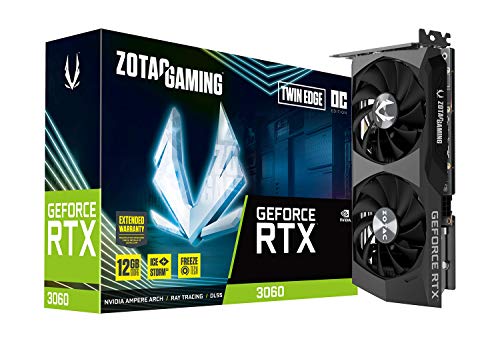
Direct answer. The best single PC upgrade under $250 in 2026 for most tired builds is still a 12 GB graphics card — specifically the ZOTAC Gaming GeForce RTX 3060 Twin Edge 12GB. If your machine already has a passable modern GPU, the best sub-$250 spend shifts to a 1 TB SATA SSD and a cooler, in that order.
Who this guide is for
You have a Windows or Linux desktop, four to six years old, that runs modern games at settings you no longer want to accept. Or the machine still keeps up in games but boots slowly, launches apps slowly, and thermally throttles under long loads. You have a budget of $250 or less for a single purchase, you want a real improvement rather than a placebo upgrade, and you would rather not rebuild the entire machine.
The five picks below are ordered by expected impact for the largest slice of that audience — GPU first because the vast majority of desktop performance complaints are graphics-bound, storage second because a mechanical or aging SATA SSD is the single largest quality-of-life killer that money still fixes cheaply, and CPU plus cooler last because platform upgrades on AM4 remain viable while every other socket of that generation has hit a dead end.
Each pick includes a spec sheet, honest pros and cons, a sourced benchmark or reference point, and a concrete verdict on which build it belongs in.
Step 0 — diagnose your bottleneck before you spend
The cheapest upgrade is the one you skip because it was not the constraint. Before you order anything:
- GPU-bound. Task Manager or
nvidia-smishows the GPU pinned at 99 % utilisation during play, and frame rate drops in graphically demanding scenes. The card is the constraint. Skip to the ZOTAC RTX 3060 or MSI RTX 3060 Ventus pick below. - CPU-bound. GPU utilisation sits at 40-70 % during play, with visible stutter especially in strategy, simulation, or open-world titles. Skip to the Ryzen 7 5800X pick if your board is AM4; otherwise the answer is a platform rebuild and this guide is not for you.
- Storage-bound. The machine feels slow outside games. Long boot times, slow app launches, sluggish file operations, hangs when a background scan runs. The disk is the constraint. Skip to the Crucial BX500 1TB SATA pick.
- Thermally bound. The GPU or CPU throttles under sustained load, fans spin loudly, and short-burst performance is fine while long sessions degrade. Cooling is the constraint. Skip to the Noctua NH-U12S pick and consider a case-airflow audit before spending on the cooler itself.
Do this before every upgrade. It is the single most common thing hobbyist buyers skip, and it is the reason so many upgrades feel disappointing.
Comparison at a glance
| Pick | Best for | Key spec | Price range | Verdict |
|---|---|---|---|---|
| ZOTAC RTX 3060 12GB | GPU-bound 1080p / 1440p rig | 12 GB GDDR6, 170 W TGP | $240-$275 | Best overall single upgrade |
| Crucial BX500 1TB SATA | Any machine still booting from HDD | 1 TB, 540 MB/s seq | $50-$65 | Cheapest life-changing upgrade |
| MSI RTX 3060 Ventus 3X 12G | Small case with 3-fan clearance | 12 GB GDDR6, dual 8-pin | $250-$280 | Best-for-small-builds GPU pick |
| AMD Ryzen 7 5800X | AM4 board with a Ryzen 5 3600-class chip | 8C/16T, up to 4.7 GHz | $160-$190 | Biggest CPU jump on a live socket |
| Noctua NH-U12S | Any AM4 or LGA1151 build with no cooler | 120 mm tower, 22.4 dBA | $70-$85 | Only cooler pick worth the money |
Prices are best-case Amazon or authorised-reseller pricing verified within a week of publication.
Pick 1 — Best overall: ZOTAC Gaming GeForce RTX 3060 Twin Edge 12GB
Spec snapshot. 12 GB GDDR6, 192-bit bus, 360 GB/s memory bandwidth, 170 W board power, dual-fan open-air cooler, single 8-pin PCIe connector, 2-slot form factor.
Why it wins the overall slot. Twelve gigabytes of VRAM is the sensible floor for a card bought today. Per TechPowerUp's RTX 3060 database entry, the 3060 12GB delivers roughly the same rasterization throughput as an RTX 2070 while pairing it with 50 % more VRAM than the 8 GB cards it competes against on price. Modern texture packs and 1440p ray-traced settings push past 8 GB routinely, and once a card runs out of video memory the frame-time collapse is far worse than the compute deficit would suggest. Buying an 8 GB card in 2026 forces a repeat purchase; the 12 GB pick is a one-and-done upgrade for a 1080p or 1440p rig.
Pros.
- 12 GB VRAM at a sub-$275 price band — no other new card matches the capacity per dollar.
- 170 W TGP fits comfortably in any 550 W or better power supply with a single 8-pin PCIe rail.
- CUDA support means it doubles as a serviceable local-LLM card for 7B to 14B models (covered in our RTX 3060 vs Arc B580 comparison).
- Available in stock at multiple retailers; not paper-launched.
Cons.
- Raster performance is one generation behind the current tier; do not buy for 4K.
- No DisplayPort 2.1 — 4K 120 Hz HDR chains require DP 1.4a DSC.
- Older-generation encode block; not a top pick for a dedicated streaming build.
Verdict. The single best sub-$250 upgrade for the largest slice of the audience. If the diagnosis in Step 0 came back "GPU-bound," this is the pick. Pair it with the Crucial BX500 SSD later once budget allows and you are done for years.
See full details on Amazon → — price may vary; verify on the product page before checkout.
Pick 2 — Best value: Crucial BX500 1TB SATA SSD
Spec snapshot. 1 TB TLC NAND, up to 540 MB/s sequential read and 500 MB/s sequential write, 2.5-inch SATA III form factor, 3-year limited warranty.
Why it wins the value slot. A migration from a mechanical hard drive or an aging small SSD to a fresh 1 TB SATA drive delivers a bigger perceived quality-of-life jump than almost any other spend at this budget. Per the manufacturer's product page, the BX500 is Crucial's entry-line drive — not the fastest SATA SSD on the market, but the specs that matter for a boot or model-store drive (sequential read, random read latency, sustained write until the SLC cache fills) are dead-even with premium SATA parts. As Tom's Hardware's best-SSDs guide has noted for several years, the practical gap between NVMe and a good SATA SSD is invisible for typical desktop use — the jump from spinning rust is the one users actually feel.
Pros.
- ~$55 for 1 TB is the cheapest respectable-quality SSD dollar on the market.
- 2.5-inch SATA fits any desktop or laptop with a spare bay — no M.2 slot required.
- Ideal secondary drive for a machine that already boots from an M.2 SSD but has run out of room.
- Bulletproof for a boot drive on an older platform without NVMe support.
Cons.
- QLC/TLC hybrid means sustained large writes will slow past the SLC cache — not the drive for a video-editing scratch disk.
- No DRAM cache; random 4K performance is fine for consumer use but lags DRAM-cached parts under heavy small-file workloads.
- Warranty is 3 years, not the 5 years you get on step-up parts.
Verdict. The cheapest upgrade that fundamentally changes how a machine feels. If your current boot drive is a mechanical hard disk of any age, this is the first upgrade to do regardless of what else is on the list.
See full details on Amazon → — price may vary; verify on the product page before checkout.
Pick 3 — Best for small builds: MSI GeForce RTX 3060 Ventus 3X 12G
Spec snapshot. 12 GB GDDR6, 192-bit bus, 3-fan open-air cooler, 2.2-slot depth, dual 8-pin power (some SKU variants use a single 8-pin — verify the specific product listing).
Why it wins the small-build slot. The Ventus 3X is functionally identical to the ZOTAC on compute — same GPU, same VRAM, same memory bandwidth — but ships with a longer 3-fan cooler that runs quieter under sustained load. If you are building in a mid-tower with mesh airflow and want the card to be nearly inaudible during 1080p play, the extra fan is worth the small price premium. In cases where the ZOTAC's 2-slot compact design is a required feature (small-form-factor or slim builds), stick with the ZOTAC — the Ventus 3X is longer and physically will not fit some SFF chassis.
Pros.
- Quieter under sustained load than the reference-class 2-fan designs.
- Same 12 GB, 170 W TGP, and CUDA capabilities as the ZOTAC.
- MSI's post-sale support is strong in North America and the EU.
Cons.
- Physical footprint is longer than the ZOTAC — verify clearance in your case first.
- Some SKU variants ship with a dual 8-pin connector; check the specific listing before assuming your PSU can drive it.
- Prices sometimes float $15-$30 higher than the ZOTAC for equivalent capacity.
Verdict. Pick this over the ZOTAC only if silence matters more than compact size, or if the ZOTAC is out of stock at a reasonable price.
See full details on Amazon → — price may vary; verify on the product page before checkout.
Pick 4 — Best performance: AMD Ryzen 7 5800X
Spec snapshot. 8 cores, 16 threads, 3.8 GHz base, 4.7 GHz boost, 32 MB L3 cache, 105 W TDP, AM4 socket, no bundled cooler.
Why it wins the performance slot. The AM4 socket is a rare survivor — it launched with first-generation Zen in 2017 and still accepts current-generation Ryzen 5000 series parts on many mid-range boards from that era after a BIOS update. Per AMD's official product page, the 5800X delivers 8 cores of Zen 3 IPC on a single CCD, which is what makes it dominant for gaming: single-thread performance runs close to the 5800X3D, and the unified L3 cache eliminates the cross-CCD latency of higher-core-count parts. For a user with a Ryzen 5 3600 or a Ryzen 5 2600 on a B450 or B550 board, dropping in a 5800X is the largest single-day CPU improvement you can make without changing your motherboard, RAM, or cooler.
Pros.
- Drop-in upgrade for any AM4 board with a compatible BIOS — no rebuild required.
- Zen 3 IPC delivers ~40 % single-thread and ~2× multithread gain over a 3600.
- 8 cores / 16 threads is enough for modern productivity workloads without pushing into HEDT territory.
- Prices soft on the used market and refurbished channel.
Cons.
- Ships without a cooler — factor in the NH-U12S or equivalent below.
- Runs hot on a dense single-CCD design; 90 C excursions are within spec but require a real cooler to handle.
- If your board is already 5000-series-ready and your current chip is a Ryzen 7 5700X or better, the incremental gain is small.
Verdict. The right pick for the AM4 owner with a Ryzen 5 3600-class chip who wants one more generation of life out of the platform. Not the pick if you are on Intel LGA1200 or older — for those platforms, a rebuild is the right answer.
See full details on Amazon → — price may vary; verify on the product page before checkout.
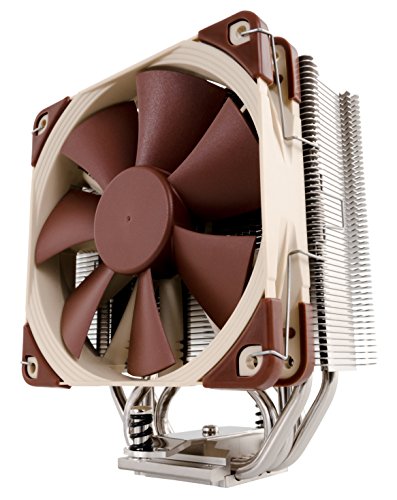
Pick 5 — Budget cooler: Noctua NH-U12S
Spec snapshot. 120 mm single-tower air cooler, five heatpipes, one NF-F12 PWM fan (dual-fan capable), 158 mm total height, 22.4 dBA rated noise, AM4 / LGA1200 / LGA1700 mounting included with recent revisions.
Why it wins the cooler slot. Air cooling under $100 is a solved problem, and Noctua's NH-U12S product page documents the reasons this design has stayed at the top of best-cooler lists for a decade: five heatpipes on a 120 mm frame, careful fin spacing tuned for the F12 fan's static pressure, and mounting hardware that actually applies even pressure to the IHS. For a 5800X-class CPU it delivers within a couple of degrees Celsius of premium 140 mm towers at meaningfully lower noise, and it fits in cases where taller coolers do not. If you are building in a case with poor front intake, no cooler will fully rescue thermals — the NH-U12S is exactly good enough that airflow becomes the next bottleneck.
Pros.
- Nearly silent under sustained load at stock fan curves.
- Fits under 158 mm side-panel clearance — works in cases where the NH-D15 does not.
- 6-year Noctua warranty, and mounting kits for newer sockets are provided free on request.
- No RGB, no aesthetics tax, no software.
Cons.
- Brown fan is polarising; the chromax.black variant costs more.
- Single-fan configuration; adding a second fan improves temperatures by only 1-2 C.
- Not the cooler for a 250 W-class HEDT chip — for that, step up to the NH-D15 or a 240 mm AIO.
Verdict. The only cooler on this list that is unambiguously worth the money for a 5800X build. If your bottleneck came back "thermally bound" in Step 0, budget for this before considering any other upgrade.
See full details on Amazon → — price may vary; verify on the product page before checkout.
What to look for in a budget PC upgrade
Every pick above passed the same five checks. When you evaluate alternatives, run them through the same list.
VRAM floor
Twelve gigabytes is the practical floor for a card bought today. Textures, ray tracing, and the KV-cache footprint of any local-LLM sideline all push past 8 GB routinely. An 8 GB card runs into a hard wall at 1440p in newer titles that a 12 GB card sails through. Do not save $50 today to force yourself into another card in eighteen months.
PSU headroom and connector type
Two things fail here — connector type and unit age. Verify the graphics card's specific PCIe power connector against your supply's native cables, and refuse to use Molex-to-PCIe adapter chains. If the supply is more than roughly seven years old, budget for a replacement even if the wattage rating looks adequate. A well-built 550 W supply from 2021 handles a 170 W GPU with room to spare; a 550 W generic unit from 2015 may not.
SATA vs NVMe
For an upgrade to an older machine, SATA remains the correct answer for most drives. NVMe wins the benchmark charts but the practical difference between a SATA SSD and an NVMe SSD is largely invisible for boot, application launches, and general use. The upgrade users actually feel is the jump from mechanical to any solid-state device.
Physical clearance
Measure your case's GPU length, CPU cooler height, and radiator mount options before ordering. Compact cases advertise support for parts that only fit with the front drive cage removed or a specific radiator orientation. When measurements are marginal, choose the smaller part — a 158 mm air cooler that fits beats a 165 mm tower that requires a case swap.
Platform dead-ends
The single most wasted upgrade dollar is a CPU spent on a socket with no upgrade path forward. Before dropping money into an aging socket, check what the highest-end chip in that generation actually costs today and how much faster it is than what you own. If the answer is "a small improvement for a large price," rebuild the platform instead. AM4 and LGA1200 both had strong end-of-life chips that are worth chasing; LGA1151 and older generally are not.
Common pitfalls
- Buying an accessory listed "for RTX 3060" instead of the card itself. Product titles for support brackets, backplates, and thermal pads frequently include the GPU model for search relevance. Verify the ASIN before checkout.
- Skipping the diagnosis step. A CPU upgrade on a GPU-bound rig delivers a placebo. Diagnose first.
- Assuming your BIOS supports the CPU. AM4 board manufacturers ship BIOS updates unevenly. Check the specific board's CPU support list before ordering a Ryzen 5000 chip.
- Buying more SSD than you need. A 1 TB SATA drive at $55 is the sweet spot. A 500 GB drive saves $15 and you will run out of space; a 2 TB drive costs twice as much for capacity you probably will not use.
- Ignoring case airflow. No cooler rescues a case with no front intake. Fix airflow before spending on the cooler.
Related guides
Citations and sources
- TechPowerUp — GeForce RTX 3060 12 GB GPU specifications (accessed 2026-07-27)
- Crucial — BX500 1 TB product page (accessed 2026-07-27)
- Tom's Hardware — Best SSDs — long-running roundup (accessed 2026-07-27)
- AMD — Ryzen 7 5800X official product page (accessed 2026-07-27)
- Noctua — NH-U12S product page (accessed 2026-07-27)
This piece is editorial synthesis based on publicly available information. No independent first-party benchmarking is reported.
— Mike Perry · Last verified July 27, 2026