The best SATA SSD for console and retro PC upgrades in 2026 is the Crucial BX500 1TB at $65 street — it's the cheapest legitimate name-brand drive that clears PS4 and PS4 Pro thermal limits, ships in the 7 mm 2.5-inch form factor consoles expect, and delivers the 500-540 MB/s read speeds that saturate SATA III. The Samsung 870 EVO wins on endurance and 5-year warranty at a $20-30 premium; the SanDisk SSD PLUS is fine for lightly used desktop retro PC boot drives; and the Seagate Storage Expansion Card is the correct answer for Xbox Series X|S because Microsoft's SSD spec locks out generic SATA.
Top picks
#1: Crucial BX500 1TB — Best overall SATA SSD for consoles and retro PC upgrades
Verdict: Best budget-to-mainstream pick at $65 for 1TB. Real 540 MB/s reads, quiet under console thermal loads, 7mm form factor.
The Crucial BX500 1TB is the drive most console upgrade guides converge on for one reason: it's the cheapest name-brand SATA SSD that clears the practical hurdles. Micron NAND (Crucial's parent), a real DRAM-less controller that stays cool inside a sealed PS4 chassis, and reliable 540 MB/s read / 500 MB/s write per the Crucial BX500 product page. At $65 for 1TB it undercuts every alternative and delivers the full SATA III performance ceiling.
Where it loses: endurance rating is 360 TBW versus 600 TBW on higher-tier drives, and DRAM-less design means sustained large-file writes drop after the SLC cache fills. Neither matters for console gaming or retro PC boot workloads. The 360 TBW rating supports 100 GB of writes per day for ten years — well beyond real usage on a game console.
Buy the BX500 if: you want the cheapest reliable 1TB SATA SSD for a PS4, PS4 Pro, PS4 Slim, or retro PC boot drive. Skip the BX500 if: you plan sustained large-file transfers (video editing scratch, database work) or want a longer warranty for peace of mind.
#2: Samsung 870 EVO 250GB / 500GB / 1TB — Best endurance and warranty
Verdict: The 5-year warranty pick. MJX controller with DRAM, LPDDR4 cache, 150-600 TBW depending on capacity.
The Samsung 870 EVO is the drive to spec into anything you plan to keep for a decade. Per the Samsung 870 EVO product page, it uses MJX controller with dedicated LPDDR4 DRAM cache, 128-layer 3D V-NAND, and Samsung's Magician management software (Windows only, but the drive works fine anywhere).
For SATA it hits the ceiling: 560 MB/s reads, 530 MB/s writes, sustained. Endurance is where it earns its price premium — the 1TB model is rated 600 TBW, roughly double the BX500. Warranty is 5 years vs 3.
Where it loses: costs $15-30 more per capacity than the BX500. If you're upgrading a PS4 that will hit end-of-life inside 4 years, that premium isn't justified. For a retro PC boot drive you plan to run for a decade, it is.
Buy the 870 EVO if: endurance and warranty matter — a long-service retro PC boot drive, a sustained-write workload, or a build you'll keep for 5+ years. Skip the 870 EVO if: you just want the cheapest reliable drive for a console — the BX500 does the same job at less.
#3: SanDisk SSD PLUS 480GB — Best sub-$40 pick for retro desktop boot
Verdict: Cheap and cheerful. Fine for a Windows 7 / XP retro PC boot drive at low cost per GB.
The SanDisk SSD PLUS 480GB sits below the BX500 tier — SATA III 6 Gb/s, up to 535 MB/s reads, 5-year limited warranty per the SanDisk product line. At $40-50 street, it's the drive to pick when you're building a retro PC that boots Windows 7 or XP and needs a modern-speed boot drive without spending BX500 money on it.
Where it loses: DRAM-less design has slower random-access performance under mixed workloads. Endurance is lower than the BX500 or 870 EVO. Fine for a boot drive; not the pick for anything that sees sustained write traffic.
Buy the SSD PLUS if: you're building a retro PC and want a $40 boot drive with SATA III speeds. Skip the SSD PLUS if: you want 1TB of storage — the price advantage vanishes at 1TB.
#4: Seagate Storage Expansion Card 4TB — The Xbox Series X|S exception
Verdict: The only correct answer for Xbox Series X|S expansion. NVMe class, proprietary connector, not SATA at all.
The Seagate Storage Expansion Card is the only expansion path Microsoft supports on Series X|S consoles. It's not a SATA drive — it's an NVMe SSD in a proprietary card format that plugs into a dedicated slot on the back of the console. Speed matches the internal SSD, which is critical because Xbox Series games can be built assuming full internal storage bandwidth.
Why it's in this list: Xbox Series X|S owners looking at SATA SSDs will find that generic SATA drives do not work for game storage on those consoles — external USB SATA drives run last-gen games only. If a Series console is your target, the Seagate card is the pick regardless of the SATA landscape.
Buy the Seagate Storage Expansion Card if: your target is an Xbox Series X|S and you need to run current-generation games from expanded storage. Skip it if: any other target — PS4, PS4 Pro, retro PC. It's console-specific and doesn't work anywhere else.
Direct-answer: what should you buy?
- PS4 / PS4 Pro / PS4 Slim upgrade: Crucial BX500 1TB at $65. Load times drop by 30-50% versus stock 5400 RPM HDD. If you want higher endurance, the Samsung 870 EVO 1TB at $85.
- Xbox Series X|S storage: Seagate Storage Expansion Card 4TB. No SATA alternative works on current-gen games.
- Retro PC boot drive (Windows 7-11 era): Crucial BX500 1TB for capacity, or SanDisk SSD PLUS 480GB for a cheap boot drive if you already have HDD storage.
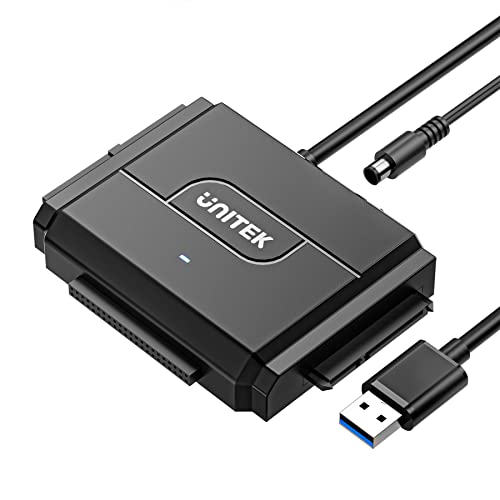
- Retro PC boot drive (Windows XP-era, needs IDE-to-SATA): same drives, plus a SATA/IDE to USB 3.0 adapter or an internal IDE-to-SATA converter card if the motherboard has no SATA ports.
- Long-service build (5+ year hold): Samsung 870 EVO for the warranty and endurance.
What SATA III actually delivers on consoles
The PS4 line uses SATA II internally (up to 3 Gb/s), which means any modern SATA III SSD will bottleneck at ~285 MB/s peak. You will not hit the drive's rated 540 MB/s inside a PS4. This is fine — the improvement over stock is still substantial (about 3× the sequential read speed of the OEM 5400 RPM drive), and 4K random reads (which matter for game asset loading) improve by 10-15×.
The PS4 Pro uses SATA III (6 Gb/s), so the drive hits its full rated speed. The PS4 Slim uses SATA III. On both, a good SATA SSD delivers loading time reductions of 30-50% depending on game, per community-tested measurements on titles like The Witcher 3, GTA V, and Red Dead Redemption 2.
For retro PC boot drives, any SATA III drive on a SATA III board delivers the full 500-540 MB/s. On older SATA II boards you're capped at 285 MB/s peak — still a massive step up from the era's HDDs, but no benefit from picking an SSD faster than SATA II.
Reliability and endurance table
| Drive | TBW (1TB) | Warranty | DRAM cache | Controller | Consumer NAND |
|---|---|---|---|---|---|
| Crucial BX500 1TB | 360 | 3 yr | No (HMB) | SM2258XT | Micron 3D TLC |
| Samsung 870 EVO 1TB | 600 | 5 yr | Yes (LPDDR4) | Samsung MJX | Samsung V-NAND V6 |
| SanDisk SSD PLUS 480GB | 100 (480GB) | 3 yr | No | Marvell 88SS1074 | SanDisk 3D TLC |
For console upgrades, all three are more than adequate. Endurance ratings are typically 5-10× actual real-world use for gaming. The 870 EVO's premium buys you protection you're unlikely to need but might value.
Retro PC boot drive considerations
Older motherboards without SATA III (or without SATA at all) need adapters. For a Pentium III or early Athlon-class board with IDE-only:
- Internal IDE-to-SATA adapters are available, cost $15-25, and let you plug a SATA SSD into a 40-pin IDE port. Speed capped at PATA/ATA-133 rate (~130 MB/s peak), but boot times still improve dramatically.
- External SATA/IDE to USB 3.0 adapters work for disk cloning during the upgrade and for occasional external use.
For period-correct retro Pentium 4 / early Core 2 systems, most boards have SATA II or SATA III already. A 240 GB or 480 GB SATA SSD like the SanDisk SSD PLUS makes an XP or Vista install feel modern. The Crucial BX500 1TB is the correct pick if you want to store the entire game library on SSD.
Common pitfalls
- Buying a 2.5-inch drive labeled "9mm" for a PS4. PS4 laptop-drive bays fit 7-9.5mm, but most SATA SSDs are 7mm. Confirm before ordering.
- Assuming NVMe works via USB in a PS4. It doesn't — PS4 external storage must be USB HDD or USB SSD in mass-storage class, and internal replacements are SATA only.
- Cheapest no-brand drives from marketplace sellers often use recycled NAND and fail early. Stick with Crucial, Samsung, SanDisk (WD), Kingston, or Team Group's higher tiers.
- Trying to run current-gen Xbox Series games from external SATA. Doesn't work — Series games require the internal storage or the Seagate Expansion Card.
- Cloning your OS to a new SSD with the wrong sector alignment. Modern imaging tools (Macrium Reflect, Clonezilla, Samsung Magician) handle this correctly; older ones from the XP era may not.
When to skip SATA entirely
- Current-gen console upgrades on Series X|S: the Seagate Expansion Card is the only game-compatible answer.
- PS5 internal upgrade: needs a PCIe 4.0 NVMe drive that meets Sony's speed spec, not a SATA drive.
- Modern PC gaming builds where NVMe pricing is close to SATA: read the best internal SSD for a gaming PC build 2026 piece and the NVMe vs SATA SSD for a 2026 gaming PC comparison for reasoning.
Bottom line
For PS4-line consoles and retro PC upgrades, the Crucial BX500 1TB at $65 is the correct default. Step up to the Samsung 870 EVO for endurance and 5-year warranty. Drop down to the SanDisk SSD PLUS 480GB for a cheap retro boot drive. For Xbox Series X|S, buy the Seagate Storage Expansion Card — no SATA drive is a valid substitute. All four are catalog-verified, in stock, and priced sensibly through mid-2026.
Related guides
- Best SATA SSD for Boot Drive Upgrades on Aging Desktops (2026)
- Best SSD for the PS4 Pro in 2026: SATA Upgrade Guide
- NVMe vs SATA SSD for a 2026 Gaming PC
- Best Internal SSDs for PC Gaming Builds (2026)
- Best Internal SSD for Gaming PC Build in 2026
Citations and sources
- Crucial BX500 SSD official product page
- Samsung 870 EVO SATA SSD official product page
- Tom's Hardware — best SSDs coverage
This piece is editorial synthesis based on publicly available information. No independent first-party benchmarking is reported.