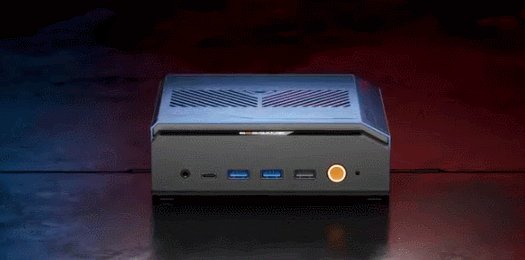
In brief — 2026-07-21 — Phoronix flags the BOSGAME VTA-439, a Ryzen AI 9 HX 470 mini PC with solid out-of-box Linux support. It is not a Pi replacement, but it is a strong x86 homelab and light-inference node.
Yes — per Phoronix's coverage, the BOSGAME VTA-439 is a serviceable Linux mini PC on current distributions, with the usual caveat that some Ryzen AI Halo platform-specific bits (LED and telemetry drivers, mostly) are still landing upstream. If you want a compact x86 box for containers, media serving, light inference, or a general-purpose homelab node, it earns a look.
What happened
Phoronix published a review of the BOSGAME VTA-439, a compact desktop mini PC built around AMD's Ryzen AI 9 HX 470 mobile-class processor. The chip pairs eight Zen cores with an integrated RDNA GPU and an NPU targeted at on-device inference. In the small-form-factor market it slots above traditional Intel N-series and Ryzen U-series mini PCs on raw compute, while remaining meaningfully cheaper than a Ryzen AI Max+ 395 "Strix Halo" tier box.
The Linux angle matters because a mini PC's practical value depends heavily on whether the distribution you actually use recognises everything on first boot. Phoronix's write-up highlights that the Ryzen AI Halo platform is largely supported by mainline kernel builds — CPU, integrated graphics, storage controllers, and networking work out of the box on current LTS releases. A few platform-specific pieces (RGB, some sensor telemetry) are still work-in-progress upstream, but nothing that stops a headless homelab deployment.
Why it matters
Mini PCs are the new homelab default. For self-hosted media, container orchestration, backup targets, DNS filtering, home-assistant work, and lightweight local inference, a modern mini PC covers the vast majority of what a full tower once did — at a fraction of the power draw. A Ryzen AI 9 chip in a 0.5-litre chassis idles at single-digit watts and peaks well under 100W. Compared to an old i5 desktop pulling 60W idle, that difference alone justifies the swap for always-on workloads.
Storage strategy is where mini PCs earn their keep. Bare mini PCs typically ship with a small SSD or none at all, expecting the buyer to spec their own. That is where the buying decision becomes interesting. Most Ryzen AI mini PCs offer at least one M.2 NVMe slot plus a 2.5-inch SATA bay. The right pairing is a fast NVMe drive like the WD_BLACK SN770 for the boot volume and container storage, and a large SATA drive like the Crucial BX500 1TB for bulk media, backup, and log storage.
They complement, not replace, a Raspberry Pi. A Raspberry Pi 4 8GB still wins on absolute power draw (routinely below 8W under light load), on GPIO for physical-computing projects, and on the maturity of the SBC ecosystem around it. Most homelabbers who add a mini PC keep the Pi doing what it does best — a low-power always-on utility node, a print server, a Pi-hole DNS filter, a Home Assistant hub — and let the mini PC take on the container-heavy workloads.
Ryzen AI mini PCs open a light-inference lane. With the NPU and integrated RDNA GPU the platform can host small-to-mid quantized language models at usable interactive speeds. It does not replace a discrete-GPU rig for serious LLM work, but for a private chat assistant, a small RAG pipeline over your notes, or a code-completion helper backed by a 7B-13B quantized model, it is a legitimate always-on option that uses a fraction of the power of a desktop.
Mini PC vs Pi at a glance
| Workload | Raspberry Pi 4 8GB | Ryzen AI 9 mini PC |
|---|---|---|
| Idle power draw | ~2-5W | ~5-15W |
| Peak power draw | ~8W | ~50-90W |
| Container density | Low (single-digit) | High (dozens) |
| Local LLM (7B Q4) | Slow, CPU-only | Usable, integrated GPU |
| 4K media transcode | No | Yes |
| GPIO / hats | Yes | No |
| Price | Low | Mid |
The right answer for most homelabs is one of each, splitting workloads by fit rather than trying to push one class of box to cover everything.
What to buy alongside a bare mini PC
A boot NVMe drive. Every mini PC benefits from a modern PCIe drive on the M.2 slot. A 500GB-1TB NVMe like the WD_BLACK SN770 covers the OS, container images, application data, and headroom for growth. NVMe transfer speeds also help significantly when snapshotting or backing up containers.
A SATA bulk drive. If the case includes a 2.5-inch bay, a 1TB or larger SATA SSD is the cheapest per-gigabyte way to add durable storage for media libraries, backups, and log archives. The Crucial BX500 1TB is a common choice: dead reliable, DRAM-less but fast enough for sequential media use, and inexpensive.
RAM if you can add it. Ryzen AI mobile platforms ship with SO-DIMM sockets on some SKUs and soldered memory on others. Check the specific model before buying — being able to move from 16GB to 32GB or 64GB dramatically increases what you can host on one box.
A quiet fan curve. Mini PCs get loud under sustained load with default fan tables. On Linux, tools like fancontrol or a vendor-specific utility let you flatten the curve for near-silent operation at the cost of a modest thermal ceiling. On a homelab node this is almost always the right trade.
Common pitfalls
- Assuming mainline covers everything. Even "well-supported" platforms leave gaps. Check whether HDMI-CEC, Wake-on-LAN, or specific USB-C alt modes matter to your use case before you buy.
- Choosing the wrong distribution. Older LTS releases may lag on the Ryzen AI platform kernel work. If in doubt, use a current Ubuntu, Fedora, or Debian testing release for the first six months of a new platform.
- Ignoring thermal margins in tight cases. A dense mini PC in a cabinet with no airflow will throttle. Give it a few inches of clearance and, if possible, a rear fan aimed at the vent.
- Overlooking storage warranty on cheap drives. Bargain SATA drives sometimes ship with 1-2 year warranties. For a 24/7 homelab, prefer drives with 3-5 year coverage and reasonable TBW ratings.
- Skimping on the PSU. Some vendors ship undersized bricks. If you plan to load the box heavily, look for aftermarket PSUs rated well above idle power.
When a mini PC is the wrong answer
Skip a mini PC and go full tower if any of the following hold: you need a discrete GPU for gaming or heavy inference; you plan to attach many spinning disks for a NAS; you want to expand with a 10 GbE NIC or PCIe accelerator; you need ECC memory. In those cases a small-form-factor build with a mATX board and a modest PSU gives you far more room to grow at similar noise levels.
The source
Phoronix's BOSGAME VTA-439 review covers driver status, thermals, and platform behaviour on current Linux distributions. It is worth reading in full if you are seriously considering the VTA-439 or any other Ryzen AI Halo mini PC.
Real-world numbers to expect
- Idle package power on a Ryzen AI 9 mini PC typically lands in the 5-15W range with a modern Linux kernel. Compared to a legacy tower with an old i5 pulling 50-70W idle, the swap pays back in a year or two just on the wall power.
- Container density — a 32GB configuration comfortably runs 15-25 lightweight containers (Home Assistant, Pi-hole, Jellyfin, small databases, monitoring stack) with meaningful headroom for spikes.
- 4K H.265 transcode — a single high-bitrate stream is comfortable on the integrated GPU with hardware acceleration. Two simultaneous 4K transcodes push the box near capacity; three is aspirational.
- 7B Q4_K_M local LLM — expect 10-25 tokens per second on the integrated GPU depending on the specific SKU and driver stack. Usable interactively for chat and light RAG; slow for long generations.
- Wake-on-LAN and remote management — most Ryzen AI mini PCs support WoL out of the box on Linux with the correct BIOS setting.
Sample two-node homelab layout
Node 1 — Ryzen AI mini PC. Runs Proxmox or a container-first host OS. Hosts Jellyfin with hardware-accelerated transcode, a Home Assistant instance, Grafana plus Prometheus, an Immich photo library, and one or two experimental containers. NVMe boot drive for the OS and containers, SATA bulk drive for media.
Node 2 — Raspberry Pi 4 8GB. Runs Pi-hole for network-wide DNS filtering plus a small MQTT broker for IoT. Sits on always-on power and rarely uses more than a few watts. Because it is separate hardware, DNS filtering keeps working even during a Ryzen node reboot.
This split follows a simple pattern: put the low-effort, high-uptime, low-compute services on the Pi where their power draw is negligible, and let the Ryzen node handle everything that actually needs compute. Both stay running most of the time; both are easy to snapshot and restore. It is the same pattern most homelabbers converge on regardless of specific hardware brand.
Verdict
The BOSGAME VTA-439 is a straightforward, useful Linux mini PC for homelabbers who want more x86 headroom than a Pi delivers, without stepping up to a full tower. Pair it with an NVMe boot drive and a SATA bulk drive, keep the Raspberry Pi 4 8GB doing the low-power always-on jobs it is best at, and you end up with a balanced two-node homelab that covers most self-hosting needs on a modest power budget.
Storage build sheet for a fresh VTA-439-class mini PC
For a builder assembling a bare Ryzen AI 9 mini PC into a homelab node, this is a defensible starting bill of storage:
- Boot / container drive: 1TB WD_BLACK SN770 NVMe. Hosts OS, all container images, active application data, database files. Fast enough that snapshots and backup jobs finish quickly; large enough that container growth over a year does not force early replacement.
- Bulk / media drive: 2TB Samsung 870 EVO or comparable SATA SSD in the 2.5" bay. Hosts the Jellyfin media library, photo backups, and log archives. Warranty coverage matters most on the drive that will accumulate the most write cycles.
- External backup target: A separate USB SSD or a NAS on the same network. The one non-negotiable is that critical data lives on at least two physical devices.
Total drive spend on this loadout lands in the low-to-mid three figures at time of writing, and the resulting node covers most self-hosting use cases with headroom for years.
Networking checklist
- Wired Gigabit or 2.5GbE — most Ryzen AI mini PCs include at least one 2.5GbE port, which is worth using for a media node or any container that serves clients across the LAN. Wi-Fi is fine for management but not for sustained media serving.
- Static IP or DHCP reservation — assign the node a stable address so containers exposed via reverse proxy or Home Assistant discovery keep working after reboots.
- Firewall segmentation — if you run IoT devices via the mini PC's Home Assistant instance, consider a separate VLAN so a compromised IoT device cannot reach your main network.
- DNS via the Pi — pointing the router at a Pi running Pi-hole (or unbound) keeps DNS resolution working even when the Ryzen node is down for maintenance.
- Reverse proxy consolidation — a small Caddy or Traefik container fronting your services means clean HTTPS URLs on the LAN and no need to remember port numbers, and gives you one place to enforce access controls.
- Backup on a schedule — nightly restic or borg jobs to a separate NAS or an external drive are quick to set up and turn a homelab from a hobby into infrastructure you can rely on.
Related guides
- Raspberry Pi 4 8GB vs Pi 5 vs mini PC for local LLM inference
- Self-hosted AI home lab on a Raspberry Pi 4 8GB
- AMD Ryzen AI Halo mini PC for local inference
- AMD Ryzen AI Halo ships with a fully open-source Linux stack
Citations and sources
- Phoronix — BOSGAME VTA-439 review
- AMD — Ryzen mobile processor lineup
- Raspberry Pi — Model B 4 product page
This piece is editorial synthesis based on publicly available information. No independent first-party benchmarking is reported.

