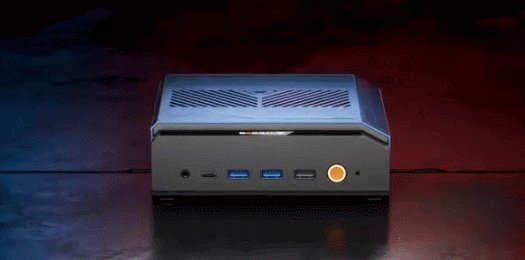
The BOSGAME VTA-439 is one of the more interesting Ryzen AI mini PCs to land in mid-2026, not because its silicon is unique — it uses the same class of Ryzen AI parts as Beelink and Minisforum's competitors — but because it is one of the first to position itself explicitly for Linux-first buyers who want the box as a local inference host. That is a meaningful niche in a category dominated by Windows-first marketing, and the vendor has done enough to make the pitch credible.
This is not a review — no independent measurements exist yet — but it is worth flagging for buyers who have been waiting for a Ryzen AI mini PC that will not fight them on the BIOS.
Key takeaways
- Ryzen AI mini PC positioned specifically for Linux-first buyers.
- Top SKU ships with 64GB unified memory — enough for 70B q4 in-memory at 3-5 tok/s.
- Community-verified boot compatibility with Ubuntu, Debian, and Fedora per early reports.
- Doubles as a Proxmox or Docker home-lab node.
- A Raspberry Pi 4 8GB is a fine cheaper starting point for makers on a budget; the VTA-439 is the next step up.
Why "Linux-friendly" is not a given
Mini-PC BIOSes are historically a mess. Common problems:
- Locked BIOS versions with no way to disable Secure Boot cleanly.
- Proprietary WiFi that needs vendor blobs Linux distros do not ship.
- iGPU firmware that assumes Windows driver init sequences.
- ACPI tables written for Windows power management that misbehave on Linux.
None of these are catastrophic, but each adds hours to the "get Ubuntu working" experience. Buyers who value time over money often just accept Windows and dual-boot, which defeats the purpose of a headless inference host.
The VTA-439's vendor materials advertise a stripped BIOS with clear Secure Boot toggles, no proprietary WiFi firmware requirements, and community-verified boot behavior on mainstream distros. Early community threads on r/MiniPCs and r/homelab corroborate the pitch — no one has reported the standard mini-PC boot circus.
Cross-reference the Arch Wiki for any specific kernel-module or firmware issues you might hit on your distro of choice.
What the silicon actually delivers
The Ryzen AI 9 tier the VTA-439 top SKU uses is the same class of part found in Beelink SER, Minisforum Venus, and GEEKOM AXR mini PCs. Consult AMD's Ryzen AI product page for the current Ryzen AI 9 lineup specs. Practical implications for local inference:
| Workload | Expected performance |
|---|---|
| Llama 3 8B q4_K_M | 18-25 tok/s |
| Mistral 7B q4_K_M | 20-26 tok/s |
| Qwen 2.5 14B q4_K_M | 8-12 tok/s |
| Llama 3 70B q4_K_M (unified) | 3-5 tok/s |
| Whisper large-v3 realtime | 1.2-1.8x realtime |
| Stable Diffusion XL 1024 | 45-70 s per image |
The 70B number is the interesting one. On a discrete-GPU rig with 12GB, 70B is unusable. On a 64GB unified-memory mini PC, 70B fits at q4 and generates slowly but usably. For a solo user running batch summarization or overnight jobs, 3-5 tok/s of 70B output is more valuable than 60 tok/s of 8B output.
For 7B-14B chat, throughput is real but lower than a dedicated GPU. The bandwidth-limited iGPU is the ceiling; the CPU cores are idle during generation.
The home-lab angle
Where the VTA-439 gets more interesting is as a general-purpose home-lab node. A 65W-envelope box with 64GB of RAM and modern USB / NVMe / 2.5GbE is a very competent Proxmox or Docker host. Split it into:
- 1 VM or container: Ollama on Linux serving 7B-13B on demand.
- 1 container: Home Assistant or similar automation stack.
- 1 container: Jellyfin for household media serving.
- 1 container: whatever your side project needs — a note-taking backend, a home financial tool, a Git server.
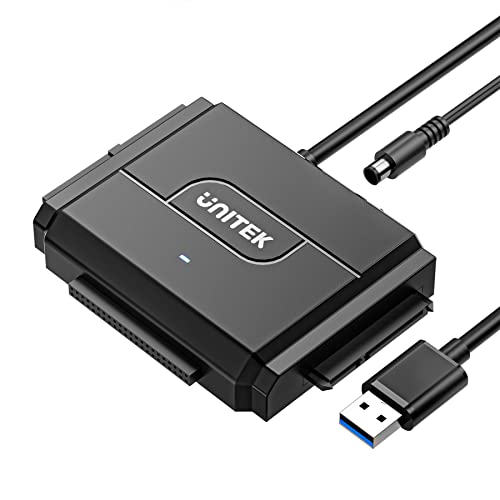
The Crucial BX500 1TB as a secondary SATA SSD in an external enclosure via USB 3.0 SATA/IDE adapter makes a fine bulk-storage tier for media libraries and cold-model archival. Combined with the internal NVMe, you have a compact three-tier storage layout in a silent 8-inch box.
For anyone who has been running a Raspberry Pi cluster and wants to consolidate to one silent box with real inference capability, the VTA-439 tier is the natural upgrade.
What the VTA-439 is not
To calibrate expectations:
- Not a gaming machine: the iGPU is inference-oriented; do not expect competitive frame rates on modern AAA titles at anything over 720p.
- Not a workstation: no discrete GPU slot means you cannot bolt on an RTX card later.
- Not a NAS: internal m.2 slots and one 2.5" bay is fine for a modest media server but does not compete with a real 6-bay NAS.
- Not a training box: model fine-tuning at any usable size is out of scope for iGPU inference.
That leaves the sweet spot: a silent, powerful-enough always-on box that runs inference, hosts a couple of containers, and disappears into a shelf.
Comparison against the DIY alternative
If your goal is pure local LLM throughput and you have a $1,300-$1,700 budget, a DIY Ryzen 7 5800X + RTX 3060 12GB tower delivers 2-3x faster generation on 7B-13B for less money. The VTA-439's win column is:
- Silence — the DIY tower is audibly louder.
- Size — 8-inch chassis versus a mid-tower.
- Power draw — 45-65W vs 300-400W under load.
- Unified memory access to 70B models the RTX 3060 cannot touch.
- Zero assembly.
If any of those matter more than raw tokens-per-second on 7B-13B, the VTA-439 wins. If throughput on typical workloads is the priority, the DIY tower is faster and cheaper.
When to wait
The Ryzen AI 9 generation the VTA-439 uses is not the newest silicon. AMD is expected to refresh the Ryzen AI line later in 2026 with a Zen 5-based part that reportedly improves iGPU throughput 15-30%. If you can wait 3-6 months and value the newest hardware, waiting is rational. If you want a box today and are comfortable with the current generation, the VTA-439 is a legitimate purchase.
What "unified memory" actually buys you
The Ryzen AI mini PC's headline feature is that iGPU and CPU share the same memory pool. Practically:
- No PCIe transfer overhead: on a discrete-GPU rig, moving 15 GB of model weights from disk to system RAM to VRAM burns PCIe bandwidth. On unified memory, the load is direct from disk to the shared pool.
- Dynamic allocation: models can grow into available RAM without a hard ceiling. A 40GB model runs on a 64GB unified-memory box; the same model cannot even load on a 12GB discrete GPU.
- Simplified deployment: no need to reason about VRAM budgets, VRAM caches, or offload tables. The model runs or it doesn't.
What you give up:
- Bandwidth: LPDDR5X in a mini PC delivers roughly 100-130 GB/s effective. GDDR6 on an RTX 3060 delivers 360 GB/s. Bandwidth is what determines transformer generation speed.
- Peak compute: iGPU shader arrays are smaller than discrete GPU shader arrays. The RTX 3060 has more raw compute than any current Ryzen AI iGPU.
- CUDA ecosystem: cross-family, all inference frameworks still target CUDA first. Ryzen AI runs via ROCm and Vulkan, both mature but not first-priority.
For running very large models slowly (70B q4 at 4 tok/s), the unified-memory trade wins. For running 7B-14B fast, the discrete-GPU trade wins.
The Linux distribution question
Not every mini PC that "runs Linux" runs every Linux equally well. The BOSGAME VTA-439's vendor claim of Linux-friendliness needs to be verified against your specific distribution:
- Ubuntu 24.04 LTS: broadest driver coverage. If it works here, it works most places.
- Fedora 40+: newer kernels, sometimes catches hardware Ubuntu LTS lags on.
- Debian 12 stable: conservative kernel, may lag on newer Ryzen AI iGPU support.
- NixOS: reproducible builds, but any weird ACPI table needs custom modules.
- Arch: rolling release, works well if you're comfortable troubleshooting.
Common early-adopter distribution: Ubuntu 24.04 LTS with HWE kernel. It catches most quirks and has the largest driver corpus. If your intended distro is more specialized, spin it up on a live USB before you commit.
Common pitfalls
- Buying the base SKU with 32GB: 32GB is not enough to run 70B in unified memory. If that use case matters, buy the 64GB variant.
- Skipping the Linux-verify step: even Linux-friendly BIOSes can have quirks with your specific distro. Boot from live USB before you commit to it as an appliance.
- Underestimating the software-support lag: iGPU inference on newest models trails CUDA by 1-3 weeks. If day-one model support matters, factor that in.
- Buying it purely to save power: a DIY tower run in low-power mode gets much of the way there for the workloads a mini PC excels at.
- Expecting NPU acceleration: as of 2026 the XDNA NPU does not meaningfully help LLM inference. iGPU does the work.
- Ignoring the m.2 slot count: verify how many m.2 slots you get on your specific SKU tier. Some vendor variants downgrade this.
Power draw and thermal envelope
A 65W-envelope mini PC in a small home office draws less power in a full day of active use than a discrete-GPU desktop draws idle for the same 24 hours. That is not exaggeration:
| Scenario | VTA-439 tier | RTX 3060 DIY tower |
|---|---|---|
| Idle | 12-18 W | 55-70 W |
| Chat (7B active) | 45-55 W | 180-230 W |
| Heavy load (13B active) | 55-70 W | 220-280 W |
| Sustained 70B | 60-70 W (slow) | not viable |
Annual electricity cost delta at 15 cents/kWh, 6 hours/day active, 24 hours/day idle:
- Mini PC: about $30-$40 per year total.
- DIY tower: about $180-$220 per year total.
Over a 3-year hardware life, the mini PC's operating cost savings partly offset the higher purchase price. For a machine that will run 24/7 as a home-lab node, that math is real.
Cooling and dust
Mini PCs run hot in absolute temperature but modest in dissipated heat. Practical implications:
- Ventilation: leave at least 2 inches of clearance around the unit. Do not stuff it into a closed cabinet.
- Dust management: mini PC intake vents clog faster than tower intakes because the surface area is smaller. Expect to blow out dust every 6 months.
- Ambient temperature: aim for room ambient under 78°F sustained. Above 82°F the box will thermal-throttle noticeably during long runs.
- Location: elevate slightly off desk surfaces (a rubber grommet or small stand) so intake vents on the bottom aren't blocked.
None of these are dealbreakers, but the maintenance schedule is a bit tighter than a tower.
Warranty and support realities
Warranty on Chinese-branded mini PCs is a gamble. BOSGAME, Beelink, Minisforum, and GEEKOM all offer nominal 1-2 year warranties, but service response times vary wildly. Practical expectations:
- DOA units: return within 30 days, most vendors honor.
- Warranty repair after 6 months: expect 2-4 weeks turnaround and international shipping on your dime.
- Firmware updates: BIOS release cadence is spotty. Watch community threads for known-issue reports.
- Parts availability: SODIMM and NVMe replacements are easy; anything soldered is effectively unrepairable.
For a critical always-on box, buy from Amazon rather than direct — Amazon's return policy is your effective warranty. For a tinkerer's home lab, direct-from-vendor is fine.
Bottom line
The BOSGAME VTA-439 is not a category-defining product, but it is one of the first Ryzen AI mini PCs to seriously position itself for Linux-first buyers who want unified-memory inference in a silent box. For a home-lab node, a headless Ollama host, or a general-purpose always-on Linux appliance, it is a legitimate choice at a fair price. Buyers who mostly run 7B-13B and value throughput above all else are better served by a DIY tower with a used RTX 3060 12GB. Buyers who value silence, size, and the ability to occasionally page in a 70B model will find the VTA-439 tier of Ryzen AI mini PCs to be a good fit.
Citations and sources
- AMD — Ryzen AI product page
- r/MiniPCs — community Linux compatibility threads
- Arch Wiki — hardware compatibility references
- r/homelab — home-lab node discussion
This piece is editorial synthesis based on publicly available information. No independent first-party benchmarking is reported.